DC Comics Tries for Diversity With Justice League United

This first appeared on Splice Today.
_________

Comic book readers are often seen as a drooling collection of adolescent babymen, trapped in their parents’ basement where they freebase Cheetos and giggle blankly at Power Girl’s boob window.

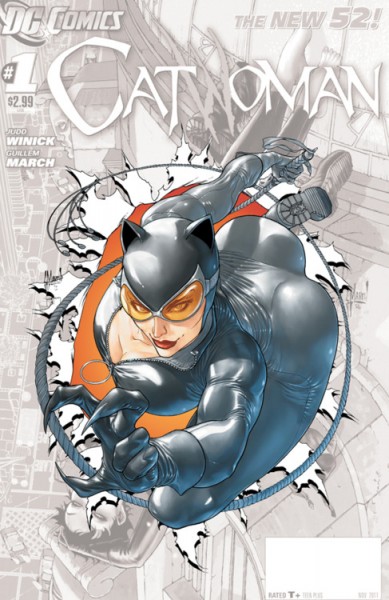
This is a false and even ridiculous stereotype — and yet, over the last few years, DC comics has been working overtime to convince the public that it is all too, too true. Back in 2011, when they launched their new 52 marketing initiative and rebooted numerous titles, DC decided to turn the character Starfire, best known for her appearance on the Teen Titan animated series for kids, into a sex-hungry amnesiac whose main personality trait is a desire to sleep with as many men as possible. At the same time, they launched their new Catwoman series with an image that suggested that the heroine’s ass had attained sentience and was attempting to reach through her spine and throttle her cleavage. Then, at the end of 2013, the company objected to a storyline in which Batwoman, their one high profile lesbian character, planned to get married. DC insisted that this was not because of homophobia, but because their characters can’t get married because the audience is made up of delicate little flowers who are afraid of commitment and marriage in any form. More recently, DC released Teen Titans #1, and put an underage girl with enormous breast implants front and center on the cover. When writer Janelle Asselin pointed out that this was not ideal , the comics community responded by soberly and maturely deluging her with rape threats. Way to buck the stereotype, fellas.

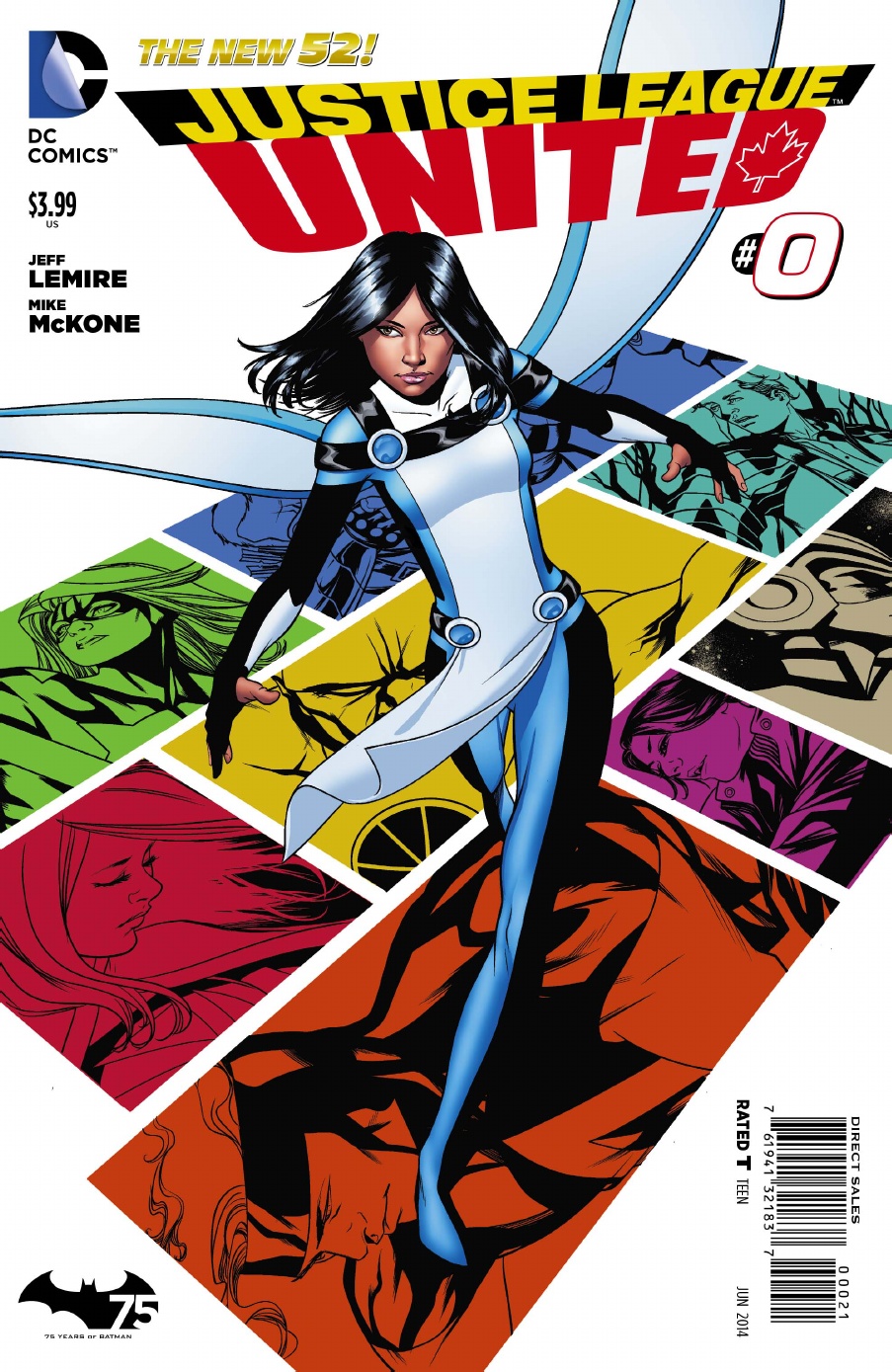
Given this recent history of utter cluelessness and insensitivity, I was not sure what to expect from DC’s new Justice League United #0. Presumably inspired by the huge success of Marvel’s new teen Muslim hero Ms. Marvel, Justice League United introduces a new female Cree Native American hero named Equinox. There are few enough non-white heroes that any addition to their number is welcome. But, given DC’s track record, the chances that the character would be treated with respect, or even minimal intelligence, seemed low.

In the event, Justice League United #0 is not especially sexist or racist. That is a very low bar, though, and while the comic clears it, that is about as much as can be said in the story’s favor. Writer Jeff Lemire’s script is a masterpiece of poor pacing; heroes and villains pop up here and there almost at random as the setting lurches from space to some sort of comics convention to Canada to wherever. There’s no sense of suspense; it’s just one damn thing after another, with characters we care nothing about burbling out default tough-guy schtick and anonymous villains rolled out to make the sort of portentous threats you’d expect from villains. Artist Mike McKone provides typically ineffectual mainstream art, neither consistently stylized enough to be interesting nor competent enough to attain even the basic anatomical accuracy which is supposedly the goal.

Despite the fact that Equinox’s appearance has been heavily promoted, the character herself barely shows up, and her walk-on is almost aggressively anonymous. Miyahbhin chats with a friend briefly, goes home, encounters some sort of weird stranger who turns into a monster and then vanishes, leaving Miyabhin’s granny to comfort her. You get no sense of Miyabhin as a character, or of her relationship with her friends or her grandmother. It’s just another in a series of meaningless special effects moments before we zip off to the next random plot point.
 

Justice_League_United_Vol_1_0_Variant

 
The difference with G. Willow Wilson’s Ms. Marvel series couldn’t be more stark. There, the series is all about Kamala Khan’s sense of being stuck between the different norms of her American culture and her Pakistani family. Transforming into a superhero is interesting because it links up with Kamala’s story of trying to assimilate and stay true to herself. We care about the superheroics, in other words, because we care about Kamala. In contrast, Miyabhin is just one more blob of gaudy computer coloring to throw at the wall.

What’s perhaps most striking about the comic is its utter indifference to new readers. Again, this is a first issue introduction to a new series with a character who seems specifically designed to appeal to an audience outside the core superhero demographic of 20-30 year old guys who have been reading superhero comics for decades. And yet, there’s almost no effort to introduce us to the characters, or even to tell us what they can do (there’s some banter about the limits of Animal Man’s powers which I guess is supposed to be helpful, but mostly just seems clumsy.) The last couple of pages shift to a confrontation between Lobo and Hawkman which is completely unmotivated and disconnected from everything else in the issue. I even know more or less who Lobo and Hawkman are, and I sure didn’t care that they were going to fight. What would someone who hadn’t read thirty years of DC comics make of their stand-off?

Even when DC specifically attempts to reach out to new audiences, and even when it attempts to include female and minority characters in a respectful manner, it is badly hampered by its incompetence, its basic lack of professionalism, and, above all, by an overwhelming, all-encompassing insularity. Even with the best will in the world, Jeff Lemire, Mike McKone, and DC editorial simply have no idea how to tell a story that will appeal to anyone but the tiny group of fans who are determined to read about DC characters no matter how low the quality of the product in which those characters appear. Justice League United, for all its faults, does prove that that insularity doesn’t necessarily have to result in insensitive assholery. But it shouldn’t be a surprise that it often does.
Dream a Dream of Public Domain

83a9b71fb4becb2def2a5fe1be240d33_large

 
This piece first ran on Splice Today
__________

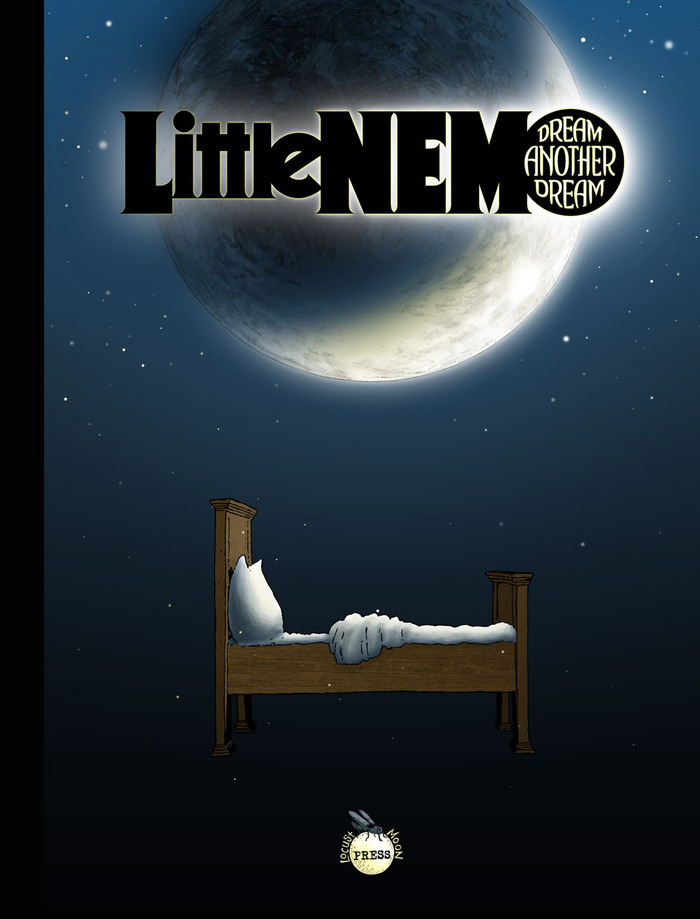
“Now that most of Winsor’s work is public domain he can be imitated by lesser artists with a fraction of his skill and vision,” artist Fil Barlow quips in his contribution to the kickstarter-funded Winsor McCay tribute anthology Little Nemo: Dream Another Dream. The volume — paying homage to the famous newspaper comic in which Nemo falls asleep each night, dreams fantastical dreams, and then falls out of bed into waking in the last panel, —features an embarrassment of talent. Starting with Gerhard’s magnificent Escher-like frontispiece, the oversize volume, which ran a successful  kickstarter campaign, includes ravishing full page works by Craig Thompson, Bill Sienkiewicz, P. Craig Russell, Jill Thompson, Carla Speed McNeil, and just about everyone else you can think of in the world of comics.

And yet, despite the skill on display, Barlow’s snark still has bite. If there’s one person in the world of illustration who’s inimitable, that person would be Winsor McCay, with his walking beds and giant dragons and monstrous geese, his inexhaustible drawing facility and equally inexhaustible imagination. McCay already drew the perfect Little Nemo. Why does anyone else need to bother?

Barlow suggests that others are bothering, or are able to bother, because McCay’s work is out of copyright. Public domain has left McCay’s corpus defenseless before the onslaught of rabid artistic poachers.

It’s certainly true that an independent publication on the scale of Dream Another Dream wouldn’t have been feasible for copyrighted work; you can’t just start a Mickey Mouse Kickstarter project without Disney’s say so and expect that to be okay. But just because a comic remains in copyright is hardly a guarantor that the original artistic vision will be left politely alone. Copyrighted characters are regularly reinterpreted across multiple media by artists who have little interest in, and often seemingly little knowledge of, the original creations. As just one example, the hunky salt-of-the-earth Kryptonian-battling Superman in Man of Steel doesn’t have a whole lot to do — visually, conceptually, or ideologically — with the quasi-socialist high-jumping basher of corrupt mine-owners that Siegel and Shuster invented way back there in the Great Depression. The forthcoming Dr. Strange movie will almost certainly abandon Steve Ditko’s visual style and Stan Lee’s overcarbonated prose for something blander and more conventional.

Being public domain doesn’t make Little Nemo uniquely vulnerable, then. On the contrary, being public domain seems to afford him some measure of protection. When you’re owned by a large conglomerate, there’s no telling what sort of sordid nonsense will happen to you under the auspices of “official” continuity — a villainous thug may turn into a dashing anti-hero, a warrior woman can be changed into an amnesiac sex doll. Why not, if it’s good for business?

Public domain, though, seems to at least potentially change the incentives. Nobody owns Nemo. He doesn’t belong to a corporation; he belongs to everyone. And since he belongs to them, the artists in this anthology treat him as if he’s in their care.

Not that all the cartoons here are necessarily reverent. Alexis Ziritt’s psychedelic Jack Kirby meets Day of the Dead space skull vomit is about as far as you could get from McCay’s preternaturally neat art nouveau style, while R. Sikoryak’s Freud/Little Nemo team-up introduces the kind of layered dream interpretation that McCay’s dazzling surfaces deliberately, and even ostentatiously, avoided. Even when artists in the volume deliberately subvert McCay, though, it’s McCay they’re deliberately subverting. It’s his original that they’re playing with, or riffing off of, or questioning. Sometimes it’s just an affectionate nod to his themes, as in Carla Speed McNeil’s adorable fantasy of a giant cat. Sometimes it’s a clever stylistic nod, as in Moritat’s use of imagery from Asian prints, neatly suggesting some of the sources (perhaps once or twice removed) for McCay’s own visuals.

And in many cases, it’s a tribute to the amazing way McCay put together a page. Paolo Rivera’s tour de force juxtaposition of the song “Row, Row, Row Your Boat” with a self-referential meta-adventure narrative, for example, seems only tangentially related to Little Nemo’s art; the visuals seem to owe as much to Hergé as McCay, and the verbal economy certainly isn’t inspired by McCay’s meandering repetitive prolixity. And yet, McCay’s hand is there, in the way that the page is seen so strongly as a spatial and temporal whole. McCay wouldn’t speed up time, or have his narrative loop back around, the way that Rivera does, but Rivera is able to do it because of the ideas, and the tool-kit, McCay gave him.

Admittedly, some piece in the book don’t gel. Peter Bagge’s wise-cracking, clunky cartooning style is a particularly poor fit for McCay’s elegant wonder; Dave Bullock and Josh O’Neill’s use of received fantasy adventure tropes seems like a waste next to McCay’s much less hidebound flights of fancy. But even the failures are talking to the original, not stealing from it, or ignoring it in the name of some larger cinema audience determined by focus group. We tend to see copyright as a way to protect intellectual property from abuse or misuse, but this tribute volume suggests that it may have the opposite effect. A dream isn’t meant to sit forlornly by itself in a bank vault with a bunch of lawyers; it’s meant to get out and inspire people. The more artists take from McCay, the bigger McCay gets. The more public Nemo becomes, the bigger the domain of his dream.

Utilitarian Review 12/20/14

Wonder Woman News

Sean Kleefeld gave my Wonder Woman book a 9 out of 10 at Freaksugar and said various nice things about it.

Amazon says they’ll have copies of the book to ship on the 25th — so a way to use your Christmas money, if Wonder Woman, bondage, and/or feminism are things you would like to use your Christmas money for.

Also Kailyn Kent reviewed my book on Amazon and said she liked it. If you have gotten a copy and feel so moved, please consider reviewing the book on Amazon or Goodreads or B&N or wherever you do reviewing. Marketers and such tell me those things help.

On HU

Featured Archive Post: Matthew Brady on why Geoff Johns’ Green Lantern is the worst comics series ever.

Me on Batman and special guest villain: racism.

Me on Liberace and Dick Grayson in the flaming closet.Cathy G. Johnson on Mike Dawson’s “Overcompensating” and abuser logic.

Chris Gavaler on how genre is merging with literary fiction.

Michael Carson on why more war movies should be like Nightcrawler.

Brian Cremins on learning the classics from comics and Power Records.

Me on lit fic and why Ian McEwan’s The Innocent is a romance.
 
Utilitarians Everywhere

At the Atlantic I wrote:

—about Alaska’s new sex trafficking laws, which aren’t working.

— about Chicago’s history of torture.

At Pacific Standard I asked what is the point of academic book publishing.

For Ravishly.com:

—I talked about GQ covers and how men and women are both sexually objectified, but in different ways.

—I talked about Nicki Minaj’s Feelin’ Myself and why only female masturbation songs are sexy.

— I did a list of black women in rock.

At Splice Today:

—I write about Edward Baptist’s history of slavery and alternatives to white savior narratives.

—I argues that Jeb Bush is not a bad candidate.

— I contributed to the best music poll.
 
Other Links

Mike Dawson responded to Cathy G. Johnson’s post here about his comic.

Lisa Levy on the rise of the literary espionage novel.
 

BettyDavis2

The 15 Best Albums of the Year

You can find several of my best of picks at the Splice music poll…but I thought I’d list all the top 15 here. From best to not as best:

1. Jordannah Elizabeth — Bring to the Table
2. Open Mike Eagle — Dark Comedy
3. A Sunny Day in Glasgow —Sea When Absent
4. Jason Eady — Daylight & Dark
5. Akkord — Akkord
6. Katy B — Little Red
7. Artificial Brain —Labyrinth Constellation
8. clipping. — Clppng
9. Smetana Trio — Ravel, Shostakovich: Piano Trios
10. SZA — Z
11. Abjo — Soulection White Label
12. Tinariwan— Emaar
13. Hurray for the Riff Raff — Small Town Heroes
14. Mirel Wagner — When the Cellar Children See the Light of Day
15. Teitanblood — Death

List your best albums of the year in comments, if you’re so moved.
 

401235

The Innocent Genre

Earlier this week, Chris Gavaler argued that literary fiction is now willing to incorporate genre fiction — unless the genre fiction is romance. Chris argued that the exclusion of romance was due to the fact that “the new literary landscape allows anything but a convention-determined plot outcome.” Romance requires a formulaic happy ending; literary fiction requires a non-formulaic (often unhappy) ending. Thus, the two may never flirt, fall head over heels, and/or consummate.

I think Chris is wrong for a number of reasons. First, romance is a lot less formulaic than this suggests. But, more importantly, the premise is false. Literary fiction and romance cross-pollinate all the time. In fact, in many cases the basic lit fic plot is romance. Much of the traditional literary fiction canon — Jane Austen, Charles Dickens, E.M. Forster, Anna Karenina, F. Scott Fitzgerald, big chunks of Shakespeare, D. H. Lawrence, Henry James, and on and on — is based around romance plots. Lit fic doesn’t incorporate romance as genre, or see romance as genre, because romance, when in a lit fic setting, is always already lit fic. The distinction between lit fic and romance is really almost entirely a matter of marketing. And since it’s just a matter of labeling, removing the labeling makes the genre, as genre, disappear.
 

51AqkeAh6cL._SY344_BO1,204,203,200_

 
As an example, look at Ian McEwan’s “The Innocent.” Like many romance novels, it’s got a historical setting — in this case early Cold War Germany — and the richness of the period detail is part of the sensual appeal that distances the reader from hearth and home, providing a setting for a different, fantasy love affair. And all the hallmarks of romance are there, from the instant, shocking moment of initial recognition (“Years later, Leonard had no difficulty at all recalling Maria’s face. It shone for him the way faces do in certain old paintings”) to explicit sex, and even to hints (and more than hints) of sexual violence and rape. Pamela Regis’ eight essential elements of the romance novel are all carefully articulated, from the meeting through the betrothal, and not excluding the point of ritual death — which here, in an excess of punctilliousness, involves an actual, accidental but brutal murder (of Maria’s abusive ex), and an extended dismemberment and disposal of the corpse.

It’s true that the precise order of Regis’ elements are somewhat scrambled — the moment of ritual death occurs after the betrothal, for example. And there are long, unexpected dislocations between one element and another. Most notably, Maria and Leonard actually break up and leave each other for decades, both marrying others and having children, before finally (tentatively) planning to reunite at the very conclusion of the book.

If you hadn’t read many romance novels, you might conclude that this was lit fic running roughshod over convention and breaking out of the romance genre straight-jacket. But, the truth is, romance novels mess with Regis’ order all the time, and aren’t even adverse to throwing some years and intervening marriages between the meeting and the final consummation. Kathleen Gilles Seidel’s folk rock romance “Til the Stars Fall,” for example, has its main characters meet during college and break up; Krissa rushes into a marriage with another guy and has several children before she divorces and she and Quinn reunite. Pam Rosenthal’s regency “The Slightest Provocation” is about a husband and wife who have fallen out; the plot is to get them back together, not to unite them in the first place. If you wanted, you could argue that McEwan is more unconventional because the ending is more indeterminate — but on the other hand, you could argue that Seidel is more unconventional because the main emotional energy in the book is on the relationship between Quinn and Krissa’s brother Danny, rather than on the relationship between Quinn and Kirssa.

There is one aspect of The Innocent which marks it as literary fiction rather than romance: it’s told from the man’s perspective. For most of the novel, most of the time, you’re inside Leonard’s head. This is virtually never the case in the romance novels I’ve read, where consciousness is generally split between the male and female leads. Even here, though, McEwan does not abandon convention entirely. At important points in the narrative, you shift into Maria’s head — as if to assure readers that yes, this is a romance, and not (despite the title) a lit fic bildungsroman, or a lit fic male psychodrama. McEwan carefully puts you in Maria’s head to let you see Leonard from her perspective, and understand why he’s attractive. After he tells her he’s a virgin, for example, you get this.

For hers was the laughter of nervous relief. She had been suddenly absolved from the pressures and rituals of seduction. She would not have to adopt a conventional role and be judged in it, and she would not be measured against other women. Her fear of being physically abused had receded. She would not be obliged to do anything she did not wants She was free, they both were free, to invent their own terms. They could be partners in invention. And she really had discovered for herself this shy Englishman with the steady gaze an the long lashes, she had him first, she would have him all to herself. These thoughts she formulated later in solitude.

You need this passage for the same reason you need both perspectives in a romance novel — so that Maria is a person, rather than simply a reward or an object of desire. Or, if you prefer, so that Leonard too is a reward and an object of desire — so that the story is about a relationship between two people, rather than about only one.

Similarly, when Leonard confusedly tries to initiate a BDSM scenario and ends up almost raping Maria, we’re mostly in his head — but we switch to her memory of seeing another woman raped during the war by Russian soldiers. The abusers perspective, the novel insists, is not the most important one, or the only one; Leonard wants to make her a part of his fantasy life entirely, but she is her own person. And finally, at the end, after the murder of the ex boyfriend and the break-up, and after the two have lived their lives, and had their separate marriages, the final words of reconciliation, by letter, are Maria’s. As a result we actually end up learning more about her life than Leonard’s — we know about her marriage, her kids, and about her continued love. “And in all this time I’ve thought about you. A week hasn’t passed when I haven’t gone back over things, what we might or should have done, and how it could have been different.” And yes, even that romanticization and flirtation with infidelity is a romance trope.

“The Innocent” shows that romance can be incorporated seamlessly into literary fiction — or rather, that what is needed is not incorporation, but merely a slight change in perspective. If the new lit fic purveyors of thrilling tales avoid romance, it is not because romance is conventional, but because one big convention of lit fic is romance. It’s embarrassing, when you want to go slumming with genre, to have the world find out that you’ve been happily married to her the whole time.

Bruce Goes Camping


liberace

 
The Batman TV Show is known for its campiness, but it reaches an apotheosis of arch gay subtext in the episode with Liberace as the villainous pianist Chandell and his evil(ler) twin brother, the cigar-chomping, Harry — who essentially gives Liberace the opportunity to don butch drag.

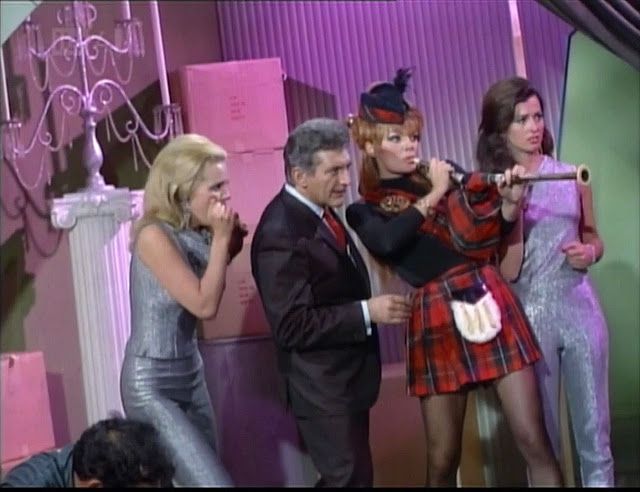
I’ve mentioned before in this series that the Batman TV show tends to play shell games with objects of desire; the camera lingers on scantily clad lovelies, who then express visible/audible lust for the delectably paunchy Batman. That scrambling of hetero and homo (whatever the identity of the watcher) reaches its apotheosis in this episode, which features not the usual single villainness, but three, who improbably dress up in Scottish highlander garb (with mini-kilts) and/or Orientalist Balinese wisps of nothing. They undulate sensuously about the screen, and especially around Liberace, who undulates sensuously himself about a besotted Aunt Harriet. Chandell’s manly charms conceal and reveal his manly charms, just as Harry imitating Chandell reveals the truth of Liberace elaborately imitating himself — and someone else.

The Chandell episode is wonderful in part because it is the most explicit revelation/elaboration of the meaning of the show’s camp, and the one which connects the show’s irony and flamboyance most directly to drag and homosexual performance. Liberace’s presence is not just a camp display in itself; it infects everyone and everything around it; with Chandell nearby, Bruce and Dick rushing into a closet can’t help but have a double meaning. Then there’s the scene where Dick is sitting and sighing with a high school sweetie — and suddenly he gets a call from Batman, and instantly dumps ice cream in his girl’s lap so he can talk to his true love. A crime fighter has to make sacrifices, he sighs — but his eagerness to drop that desert suggests that maybe he’s protesting too much.

The message of the camping here isn’t just “Batman and Robin are gay!” Rather, it’s that heroism is a pantomime of masculinity, linked to and comparable to Liberace’s multiple pantomimes, and dependent on a deferred sensuality, in which the fetishization of women is rerouted into a fetishization of masculinity. Thus, the show suggests, it is Liberace, with his double identity, his capes, his colorful costumes, and his virtuoso mastery, who is the greatest superhero of them all.
 

Utilitarian Review 12/13/14

Book News

Official release date for “Wonder Woman: Bondage and Feminism” is still January 14 — but the Kindle edition is now available for download at Amazon.

If you look at that link you’ll see that there’s also been several reviews posted by folks who got early copies: Albert Stabler, Adrian Bonenberger, and Peter Sattler all said very kind things about the book.

And hey, if you download the Kindle version and love it and want to share the love, please leave a review on Amazon. Every little bit helps, they tell me.

On HU

Featured Archive Post: Julian Chambliss on the slimming down of Amanda Waller.

Me on Adam West’s worst villain.

Me on the sensuality of Bat-gas.

Charles Bell on Atari, past and present.

Osvaldo Oyola on Serial, Lost, and the virtues of endings that don’t end.

Chris Gavaler on TV superheroines of his lovelorn youth.

Chris Gavaler on post-traumatic superhero syndrome.

Michael A. Johnson on the Judith Forest hoax and the crisis of authenticity in autobio comics.
 
Utilitarians Everywhere

At the Atlantic I wrote about comics’ gendered insecurities, cosplay and pop art.

At Pacific Standard I wrote about

Donald Pfaff, who says our brains are hard-wired for altruism. I am skeptical.

— Edward Baptist’s book on the history of slavery and how America is built on torture.

At Reason I wrote about:

— why many sex workers have criticized Anita Sarkeesian.

Eric Posner’s book about the problems with human rights law.

At Ravishly.com I wrote about

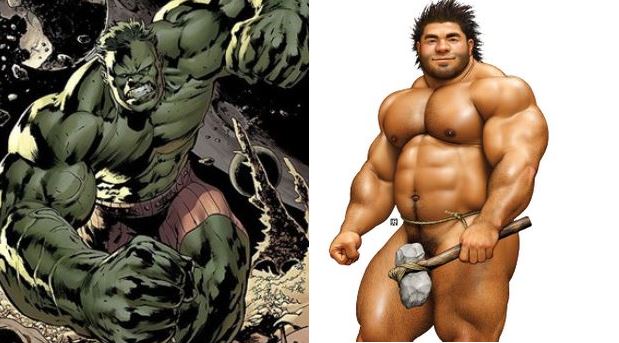
— Fantagraphics’ new gay manga anthology Massive and how we all eroticize men.

Taylor Swift, Beyonce and the dreary pedestal of white perfection.

Maddie and Tae and feminism and sexism in country music.

At Splice Today I wrote about:

publishing my book and experiencing neurotic terror.

—the fact that nobody really cares that much about the New Republic.

I got mentioned in this press release about trans porn star Mia Isabella. (very NSFW)
 

Other Links

Ta-Nehisi Coates on TNR and race.

Jonathan Bernstein makes the case that John Boehner is a great speaker of the house.

Helen Redmond on the problem with draconian painkiller regulations.
 

manga lead