Utilitarian Review 11/29/14

On HU

Featured Archive Post: Conseula Francis on teaching the Boondocks.

Peter Sattler on Jill Lepore’s Wonder Woman.

Me on how Adam West is the cruellest Batman of them all.

Kim O’Connor on John Porcellino’s Hospital Suite.

Kate Polak on Pride of Baghdad and teaching the invasion of Iraq.

Chris Gavaler on Taylor Swift and the Zombie apocalypse.

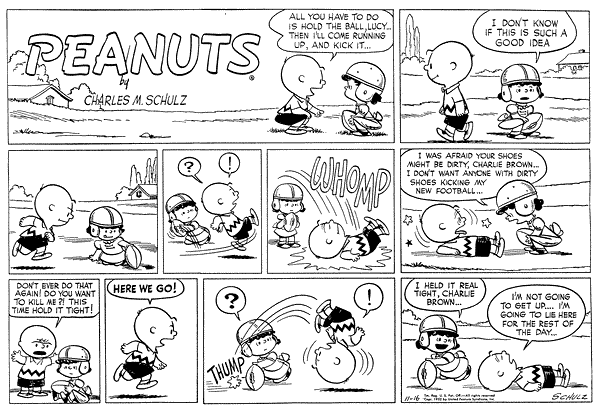
A brief thanksgiving post on football, Lucy, and failure.

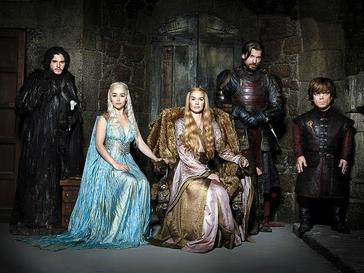
Me on why mainstream magazines cover game of thrones.
 
Utilitarians Everywhere

At the Chronicle of Higher Ed I wrote about being scooped by Jill Lepore.

At Pacific Standard I wrote about the history of highbrow vs. lowbrow.

On Newstalk I chatted about why we need more spoilers.

At Splice Today I wrote about

— Ursula K. Le Guin and why fantasy isn’t necessarily anti-capitalist.

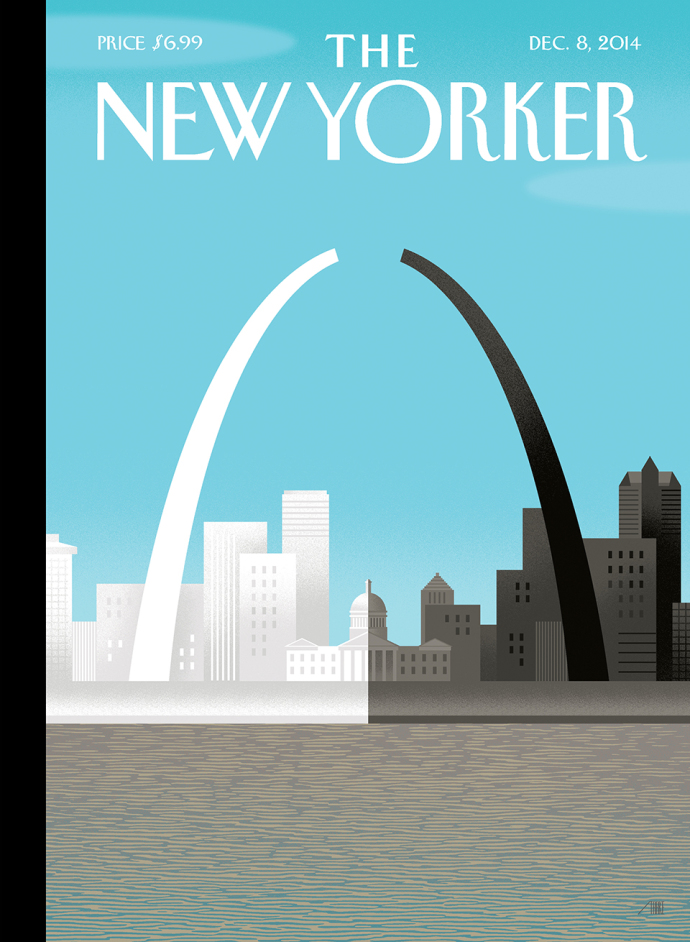
—the crappy Ferguson New Yorker cover.

At the Chicago Reader I wrote briefly about the blues rock band Trampled Under Foot.
 
Other Links

Jordannah Elizabeth with a liberating love mixtape.

538 on the statistical rarity of not getting a grand jury indictment.
 

Cover-Story-Ferguson-Arch-690-942-26114404-1

Why Mainstream Magazines Cover Game of Thrones

This first appeared on Splice Today.
_______

Recently Dylan Matthews at Vox pointed out that not many people actually watch Game of Thrones, or Mad Men, or any of the most-critically-important-shows-on-television (TM). Instead, people watch NCIS, or Big Bang Theory, or, occasionally, reruns of Big Bang Theory or NCIS. One Sunday, in fact, a new Mad Men episode got fewer viewers than 8 different Law & Order SVU reruns.

So the question is, why do mainstream sites (like The Atlantic, or Salon, or Slate) cover certain shows obsessively while other, more popular shows, are ignored?

At first this may seem like a question that needs no particular answer. Critical enthusiasms and popularity are often at odds with each other. Critics loathed The Other Woman, but it did fine with the public; everybody it seems hates Justin Bieber except for all those millions of people who don’t. Critical darlings and popular favorites often don’t align; why should they here?

The thing is, though, that mainstream publications are in the business of getting clicks — and, as such, they actually do tend to often cover what is popular. The Atlantic writes about Beyoncé, and Star Wars, and Harry Potter and, Miley Cyrus. As far as films and music and YA novels go, the mainstream is right there with the unwashed, and/or washed hordes. But with television there’s a disconnect. How come?

I can’t answer that question specifically — but I think in general the choices people make about what is important in art have less to do with some sort of absolute critical/popular divide than they do with genre.

Folks usually think of genre as a convenient way to divide up art or literature, but the truth is that genre is a lot more than a categorization system. In fact, as Carl Freedman points out in his book Critical Theory and Science-Fiction, genre isn’t really a subset of art at all. Rather, art is a subset of genre. Hemingway’s novels are literature; Hemingway’s laundry lists are not. A judgment about what something is as genre precedes, and enables, the judgment of whether something is art — or, indeed, whether something is worth talking about at all.

The distinctions between NCIS and Breaking Bad may not look like a genre divide — both are dramas. But genres can actually be formed or coalesce in lots of different ways. The shows that get talked about tend to come from certain networks (HBO, Netflix) and have certain broad characteristics— as Kailyn Kent says, the Golden Age of Television could easily be called “The Golden Age of Gritty Shows About Conflicted Sociopaths.” The genre of television-worth-talking-about may not be specifically defined, but that doesn’t necessarily mean it can’t be used as a heuristic to decide what’s worth covering and what is a laundry list.

When you’re looking for it, you can see that genre distinctions actually affect coverage in lots of ways. It’s true that Harry Potter is extremely, awesomely popular — but Nora Roberts is extremely, awesomely popular too, selling twenty-seven books a minute according to a rare mainstream profile in The New Yorker. But you don’t see coverage of the latest Nora Roberts novels excitedly discussed at all the big websites. In part, perhaps, that’s because Nora Roberts novels don’t often get made into films — but that seems like it just begs the question, why don’t these incredibly popular novels get made into films?

There’s nothing innately wrong with using genre as a filter. In the first place, it’s unavoidable. Given the massive glut of culture sliding endlessly past our computer monitors, consumers and journalists alike need some way to sort through it. Genre’s a convenient rule-of-thumb; it tells you what might be of interest and what will make your eyes glaze over. In many cases, genre provides, not just a filter, but a community of like-minded folks, and even a self-description and an identity. To keep up with Mad Men or Orange Is the New Black is to be a particular kind of person, accepted into a certain kind of community and certain kinds of discussions. It’s a fandom. Genre shapes art, but it shapes people too.

The one danger of genre and of fandom is insularity. Again, genre sets the bounds not just of what you like, but of what you see as noteworthy or speakable. In that context, it can be easy to forget that other art, or other communities, exist. That can mean, as Vox suggests, that you start to think everyone is watching Mad Men rather than Big Bang Theory.

It can also dovetail, or reproduce other, less pleasant social divisions, though. Genres aren’t always as starkly linked to marginalized identities as the hillbilly/race records division was in the 1920s. But still, race, gender, and class, are often bound up in genre marketing and consumption, which means that ignoring certain genres in favor of others can have political and social implications. The fact that mainstream publications have so little interest in romance novels seems like it has something to do with the way that women, and femininity, are excluded from critical discussions in favor of more male-or-masculine-friendly genres, including YA novels in which the women heroes at least get to kill people. Along the same lines, it’s not exactly an accident that mainstream best music lists always seem to rate white rock (generally by guys) ahead of soul music or hip hop.

None of which is to say that folks shouldn’t like what they like, or shouldn’t pay attention to what they want to pay attention to. But it’s worth thinking about the way that what we like, and what we pay attention to, is often decided before we’ve really made a conscious choice about it. We like to think of art as opening possibilities. But it’s perhaps just as true to say that art, as genre, can often close us down, and make us narrower.
 

Game_of_thrones_cast

I’m Going to Lie Here for the Rest of the Day


238445.full

 
I think this is the first Charlie Brown/Lucy football strip. Later it becomes about Lucy’s cruelty and Charlie Brown’s sad sack hopefulness, but this one is just about the little kid misunderstanding. it’s Lucy who’s trying her best and failing — though, of course, Charlie Brown’s still the one who ends up flat on his back.

We’re taking the day off today. Not sure what posting will be like through the weekend, though probably there will be something or other up. Enjoy the day off if you’ve got it, and don’t let the five year old hold your football.
 

The Cruellest Batman of Them All

My family is happily watching our way through the newly released Batman TV 60s TV show DVDs; I think we’re up to 14 out of 120 episodes now.

For the most part the Batman TV show is remembered as goofy fun — and goofy fun it is. But the first two episodes (with Frank Gorshin’s Riddler as the villain) are unexpectedly…not dark exactly, and not grim, but cruel in a way that’s all the more shocking for being casually off-hand.

A couple of times in the show, Bruce Wayne, with little prompting, segues into a discussion of his murdered parents. It’s presented as pro-forma and, with Adam West’s tongue-in-cheek delivery, as fairly ridiculous. The show essentially sneers at murder and childhood trauma; they’re presented as ridiculous.

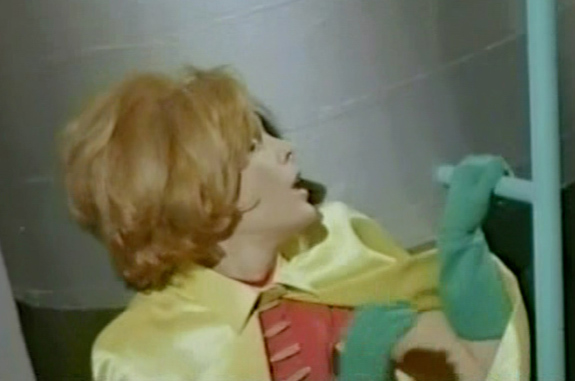
Even more egregious is the fate of the Riddler’s girlfriend, Molly (Jill St. John). Molly dresses up as Robin (insert disquisition on camp here) and tricks Batman into letting her into the Batcave. She then runs up to the atomic pile that powers the cave. Batman begs her to come down, but she mutters vaguely about being scared, and, overacting all the while, spins, staggers, and falls into the reactor even though Batman is standing like a foot away from her holding out his hand. Batman mutters something regretful about how he wishes he could have saved her (“Poor deluded child!”), and the show barrels on cheerfully. Molly’s death, like the Wayne’s, is viewed as a joke. Batman’s traumatic backstory and the tragic death of the villainness are both portrayed as glib narrative heart tuggers — cynical melodramatic boilerplate.
 

BatTV-SC-S1E02-Molly-68

 
The rest of the shows I’ve seen so far don’t engage in this kind of sneering; it seems like an early tonal blip. It’s interesting just how jarring that blip is, though. Grim and gritty in genre is usually seen as brutal, or tough — blood on the Batglove is a sign of unflinching viciousness, as is shooting Batgirl in the stomach. But I think in a lot of ways the Adam West Batman is actually meaner than Frank Miller or Alan Moore. Those guys took violence seriously, they treated bloodshed with reverence, at least in the sense that bloodshed was important to them and meaningful in their writing. But for the 60s Batman, violent, hideous death is just a punch line. Or maybe after all the 60s Batman just shows that violence in Batman is never anything but a punch line; in its cynicism, it reveals the callow cynicism of all that grim and gritty violence that. How many times can you shoot Bruce Wayne’s parents before you start to feel like Bat-trauma is just another disposable Bat-product?

Utilitarian Review 11/22/14

On HU

On Thai pop singer Pamela Bowden and why the world’s too big for best of lists.

I concluded our roundtable on the Best Band No One Has Ever Heard Of with a discussion of why some music (and some roundtables) aren’t popular.

I argued that the secrets in Jill Lepore’s Wonder Woman history aren’t actually secrets.

Chris Gavaler on the history of transsexual supervillainy.

Jared Hill on Arthur C. Clarke, prognosticator.

Roy T. Cook wonders if a Batman comic in color is a different comic from the same(?) Batman comic in black and white

Kailyn Kent on how absurdity becomes conservatism in the film Snowpiercer.
 
Utilitarians Everywhere

At the Atlantic:

—I reported on We Charge Genocide how Chicago’s human rights violations were presented to the UN.

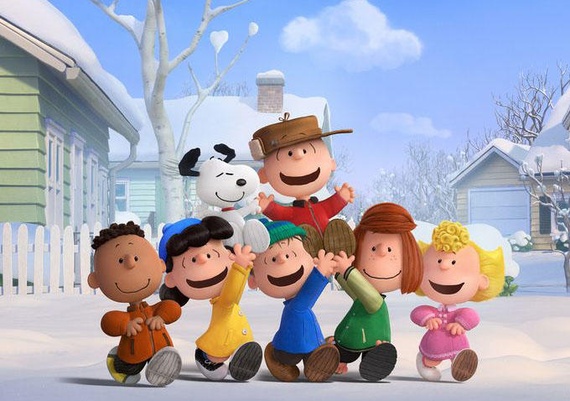
—I said that the new Peanuts film looks like cheery, ugly crap.

— I interviewed Martin Paul Eve about open access to academic work in the humanities.

At Comic Book Resources I argued that diveristy is a superhero tradition.

At the LA Review of Books I wrote about Sergei Lukyanenko’s The Genome and how the fault is in our genre, not our genome.

I got interviewed on the Irish pop culture show the Green Room about spoilers. (I’m towards the beginning of the hour.

At Splice Today

— I interviewed the wonderful psychedelic soul musician Jordannah Elizabeth.

— I point out that Hillary Clinton is really popular and is almost certainly going to win the Democratic nomination.

— I make fun of Paul Krugman’s pop culture writing.
 
Other Links

Laura Hudson with a fantastic piece on Twine and diversity in video games.

Greg Hunter takes down Fukitor at tcj; nice exercise in biting the hand.

Imran Siddiquee on how teen dystopias imagine everything getting worse except racism and sexism.

Emily Witt on Laura Kipnis’ bad book about men behaving badly.
 

lead

Peter Sattler on Jill Lepore’s Wonder Woman

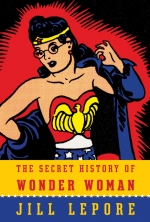
lepore_wonder_woman_coverEarlier this week Jeet Heer and I had a long conversation about Jill Lepore’s Wonder Woman and it’s strengths and weaknesses. Comics scholar Peter Sattler weighed in with a long comment, which I thought I’d highlight here.

Just finished the book, Noah, and I hope you won’t mind if I use this as a place to write a few thoughts, which I think intersect with your conversation.

1. Lepore’s lack of engagement with more current Wonder Woman scholarship, at least in her notes, is striking, especially considering her attention to far more recent writings on such figures as Wertham (e.g., Beaty, Tilley). Nonetheless, I think that Jeet’s genre-based point speaks a bit to this: Lepore is not invested in the “secrets” of today, as much as the secrets of yesterday — the past that ends mainly with her narrative, in the 1970s.

2. That said, I take Noah’s point about how the issues of queer identities — and even the practices of queer life in mid-century America — is barely a topic for this book. Lepore actually spends little time talking about sex, sexuality, or theories of same (Marston’s or otherwise). Dramatically more space is given over to issue of suffrage, to the economics and power dynamics of women’s work, to the lie detector and its place in the juridical-military system, and to the shitty way that women are treated by men. The material on sexuality is there, but hardly dwelt on or analyzed. Indeed, with its New Age and Aquarian designations, Marston’s ideas about love and submission as much an object of fun as anything else.

3. But to be clear, the lack of a “queer” history or theoretical context is certainly intentional and not an oversight. The “secret history” of Wonder Woman, for Lepore, is not a secret of sex or love or the closet; it is a secret history of politics. It is a story of the deep roots of feminism: it’s about the fight for women’s rights. (Even the discussion of chains, for example, focuses far more explicitly on its ties to feminist imagery than to kink.) And the book’s commitment is to tracing those roots as thoroughly as possible. An alternate title might have been “the political origins of Wonder Woman.”

4. Pace Noah, I don’t think Lepore does much to privilege her own or her reader’s sleuthing skills. Unlike her New Yorker article, Lepore never puts herself into this story, trying desperately to break through the walls of silence. The “secret” framing — just like the academic framing — is actually pretty thin. It’s the intersection of documents and stories in the middle that counts.

5. When it comes to the “waves of feminism,” Lepore both wants and does not want to make the argument that seems to be promised. She definitely has a passage on the forgetfulness of the radical wing of the second wave, with Shulamith Firestone visiting Alice Paul and not being able to identify portraits of the nation’s most famous feminists (and the Red Stocking’s hatred of Wonder Woman). And she then paints post-Roe feminism as a process of in-fighting, with people trying to out-radicalize each other.

At the same time, I think her heart wasn’t really in this: the real story is over, and she seems to be looking for a quick rhetorical punch. As a historian, she’s just not that invested in her New Yorker claim that Wonder Woman is “the missing link” (ha!) chaining the suffrage movement to “the troubled place of feminism a century later.”

6. A telling moment: Lepore tell us that historians have tended to use the “wave” metaphor to imply that nothing much happened in feminism between the 20s and the late 60s. Here is the totality of that argument: “In between, the thinking goes, the waters were still.” The note to this passage, oddly, only refers to writers who have challenged the “wave” metaphor — which Lepore then does herself later, saying we should call it a river. Oddly enough, it is Lepore who then makes the claim that nothing much has happened in feminism between 1973 and today, characterizing the years as a series of generation of women, all eating their own mothers.

7. The book is the most exciting and well-researched piece of scholarship related to comics I have ever read. At the same time, I hesitate to call it “comics scholarship,” per se. And this isn’t simply a matter of guarding the field’s borders, keeping it safe from poachers. THE SECRET HISTORY OF WONDER WOMAN, in the end, just doesn’t seem particularly interested in Wonder Woman comics, Wonder Woman stories, or Wonder Woman art — except as “telling” and glittering superficialities of a much more interesting biographical and historical tale.

She does not spend much time looking at Wonder Woman as an artistic creation, giving shape to particular concepts or exploring certain obsessions. Rather, the links of the comics to history emerge in the book as series of equations, or even one-way vectors: Hugo Münsterberg => Dr Psycho; Appellate Judge Walter McCoy => the stammering Judge Friendly from the comic strip; Progressive Era fights and imagery => Wonder Woman’s fights and imagery; Marston later behavioral troubles with his children => Wonder Woman’s later stories with kids named Don and Olive.

Moreover, these claims are not so much supported as *revealed* — and very briefly revealed, in most cases — like when Lepore parenthetically discloses that Marston had written a story about Wonder Woman and rabbits after talking for a page or so about the pets at Cherry Orchard. Large passages of the book take this form: tell an exciting and detailed story about Marston or Sanger, then close the chapter or section by saying, in essence, “this happen in Wonder Woman too.”

8. This isn’t to say that the book doesn’t change the way we look at Wonder Woman. The comic, after one is done with Lepore, seems to just vibrate with historical energy: the last, unexpected explosion of Progressive Era feminism. But it is not really a book about Wonder Woman; it is a book about Marston and the world of women in which — and out of which — he made his fame.

Marston comes across, in the end, as a classic American charlatan and genius — and a genius due in no small part to his charlatanism. He is a huckster, a relentless self-promoter, an almost unending failure, and even (in my opinion) a misogynist. His heart, politically, is in the right place, but his ego and his loins are often someplace else.

9. Perhaps this makes the biggest secret of Wonder Woman the fact that she ended up existing in a such a potent and coherent form at all, coming as she did from the mind of a man who (after reading Lepore’s account) seems to have been a mass of contradictions, opportunism, and outright absurdity.

Luckily, the book seems to say, the women in his life and his world were strong enough, politically and philosophically, to counteract Marston’s personal weaknesses.

The book’s biggest secret: Women and feminism — not Marston — created Wonder Woman.

Not The Secret History of Wonder Woman

lepore_wonder_woman_coverI reviewed Jill Lepore’s book The Secret History of Wonder Woman over at the Atlantic a little bit back. I had one serious issue with it which seemed like it was probably not of much interest for a mainstream venue. But I thought I’d point it out here.

That issue is…the title, and in many ways the thesis of the book, are misleading. Lepore presents the Marston family history of polyamory, and therefore the connection between Wonder Woman creator William Marston and his lover Olive Byrne’s aunt Margaret Sanger, as unknown. If this was the first book you’d ever read about Marston and Wonder Woman, I think you’d come away with the impression that Lepore is the first one to reveal that Marston and his wife Elizabeth lived in a polyamorous relationship with another woman (Olive Byrne).

This is most obvious at the very end of the book. Lepore says, “The veil of secrecy kept by the family over Wonder Woman’s past proved impossible to lift.” She then cites writers in 1972 and 1974 who apparently didn’t know about the polyamory (Joanne Edgar and Karen Walowit.) She writes “The secrecy had consequences” and argues that there was a distortion because of this in the understanding of feminism. Margaret Sanger in the 1910s through Wonder Woman in the 1940s through WW fan Gloria Steinem in the 1970s were all connected. Because people didn’t know about the Marston/Sanger connection, they saw feminism as waves rather than as a continuous whole.

The problem with that thesis is that people have in fact known about the Marston/Sanger connection for around 15 years (or at least, that was the best guess of folks on the Comix-Scholars list serve, where these matters were recently discussed.) Marston’s polyamory was written about as early as the late 90s, and it was certainly widely known after Les Daniels wrote about it in the Complete Wonder Woman at the beginning of the 2000s. Lepore could easily have said that; Les Daniels is mentioned in her notes, and this would be the place in her narrative to acknowledge him and earlier researchers. But she doesn’t. As a result, readers are likely to believe that they’re the first ones who are learning about these “secrets.”

This isn’t to say that Lepore discovered nothing. She had access to tons of archives no one else has seen, and she has numerous jaw-dropping revelations — that the Marston polyamorous relationship appears to have included another woman (Marjorie Huntley), that Marston, Elizabeth,and Olive participated in New Age feminist sex parties, that Olive and Elizabeth were bisexual (a point that seemed fairly obvious, but has been disputed.) The book is important for anyone who cares about the early Wonder Woman, and Lepore’s work is in many regards ground-breaking. Which makes it all the more frustrating that the book’s thesis seems to rest on the revelation of the one secret Lepore didn’t discover.

As a result of this confusion, the book ends up being unnecessarily ungenerous to the numerous scholars who’ve written about the Marston Wonder Woman over the last 15 to 20 years. But more than that, I don’t think it’s ideal to frame the story of Marston and his family in terms of secrets. The closet is among other things a relationship with, or lever for, power. By urging the reader to adopt the position of the knower or the revealer, Lepore makes the story of Wonder Woman about the reader’s and the author’s rush of discovery — about the revelation of truths that the Marston family wanted to hide. The point of the story becomes not what Marston and Elizabeth and Olive made of their lives and politics and sexualities, but what secrets the book can uncover. Lepore doesn’t really contextualize that in terms of the history of gay identities or marginalized sexual identities, or of the closet; she doesn’t present the secrets as part of a history of practices that have both protected and trapped queer people, nor does she discuss Marston’s work as itself engaged with, or part of a tradition of, queer theory. I think that ends up positioning the Marstons as objectified others for the book’s readers, which again sits uneasily with the history of the closet and of the marginalization of queer people and alternative sexualities, whether lesbian or polyamorous.

Not that that’s the only takeaway from the book, certainly. And I do think Lepore is right that the history she uncovers, even if it isn’t a secret exactly, demonstrates that feminist history is more varied than people tend to think. Most obviously, the Marstons show that sex-positive and queer feminisms were around long before the third wave. Hopefully Lepore’s book will make that fact better known, and the next folks to write about Marston and his meaning can take it as more common knowledge, rather than as a revelation.

Update: Peter Sattler has a great follow-up to this post here. Jeet Heer also has a bunch of thoughtful comments below; so scroll down and then click over to Peter’s post if you want to continue the conversation (I’ve closed comments here to keep the conversation easier to follow over there.)
______
If you’re interested in reading me babble on more about Wonder Woman, I have a book coming out shortly. Lots of info and links about that here.