The Best Roundtable No One Has Ever Heard Of

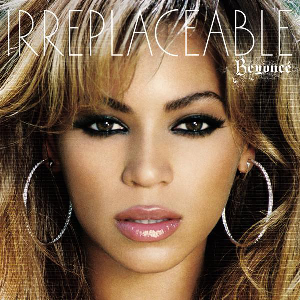
Irreplaceable

 
One of the things you discover when running a roundtable on unpopular music is that the music tends to be unpopular. While we certainly had some readers and some discussion as we talked about obscure old blues, obscure punk, obscure world music, and obscure Jpop, in general this has not been a high water mark for traffic on the site. We probably would have done better to do a roundtable on Beyoncé or even the Rolling Stones. It’s the artists with lots of fans, it turns out, who have a lot of fans. There are some people, maybe, who want to discover new things, or are intrigued by a random band name (Virgin Black! Wilmer Broadnax!) But for the most part people want to hear about something they’ve already heard about. I’m not usually one to see the critic as parasite, but it’s pretty clearly true that attention to criticism is dependent on the extent and success of the subject of the criticism’s marketing campaign.

So it’s clear why no read the roundtable. But why aren’t these bands popular to begin with? In some cases, the answer seems like it’s probably just bad luck. If you live in New Zealand, the likelihood of massive success in the States (or worldwide) is going to be substantially reduced. If you never managed to put out an album because of mismanagement or happenstance, the chances of longterm notoriety are much reduced.

At the same time, though, it’s often the case that “bad luck” can be read as “wrong genre.” In his piece on The Music Machine, Sean Michael Robinson points out that 60s psychedlia was a time of album worship. In some times and some eras (early rock, for example), putting out singles might not have marked you as marginal, but not when the Music Machine was playing. Along the same lines, Paige McGinley explained that the blues nostalgist enthusiasm for the male guitar performers is a big part of the reason why Esther Mae Scott, who blues woman in the Ma Rainey tent show tradition, has no recorded music online. Rahawa Haile argues that Eritrean music is marginalized because of an intra-African history of colonialism, where Eritrea is seen by as a kind of embarrassing footnote to the much better known tradition of Ethiopian music. Ben Saunders explains that the Cardiacs were too prog for punk and (presumably) too punk for prog; the incompatible mix of genres left them without a logical fanbase or audience.

Other performers here are simply from genres that don’t garner tons of mainstream attention: Wilmer Broadnax in quartet gospel; Jane Jensen in goth; Windahm Hell in extreme metal. And some, like Natural Snow Buildings or Sleepy John Estes seem to have deliberately oriented themselves towards a smaller audience, either by eschewing traditional marketing or by situating themselves deliberately as local rather than national or international performers. Sometimes genre consigns you to obscurity and sometimes, some artists choose (relative) obscurity as a genre.

Either way, though, I think the roundtable shows pretty conclusively that what lasts, or what is famous, or what’s in the canon, has only a tangential relationship to what is “best” — in part because issues of genre comes before what’s considered best, rather than after. When Rolling Stone makes a list of the greatest bands of all time, performers in Eritrea and New Zealand and Thailand aren’t on the radar. When people talk about the greatest blues performers, it’s men they’re thinking of often, not women. When they talk about greatest singers, gospel isn’t considered. When they talk about greatest albums, you don’t list acts that don’t have an album. Music that’s unheard is generally unheard not because it’s somehow worse than music that is heard, but because somewhere along the way, it was in that set of things that got filtered out.

The genre of things that got filtered out is never going to break blog traffic records. But, like any genre, its fans will testify to its virtues. Thanks to Ben Saunders for coming up with the idea for this and helping to organize it, and to all the contributors, readers, and commenters for joining us. It’s been a great roundtable, even if (or partially because) not many have listened to it.

Utilitarian Review 11/15/14

Wonder Woman Conquers the World!

I’m starting to get some reviews in on my Wonder Woman book. I’ll list them in Utilitarian Review weekly as they come in. For a complete list of reviews/interviews/events/articles and more related to my book, go here.

And the first full review of the book is from Publisher’s Weekly.
 
On HU

Featured Archive Post: Bill Randall answers the question What is Manga?

We finished our last full week of the Best Band No One Has Ever Heard Of roundtable. Entries included:

A thread on the Best Artist No One Has Ever Heard Of (I voted for my friend Bert Stabler, because no one appreciates him enough.)

Chris R. Morgan on the punk pain of Thoughts of Ionesco.

Otrebor on classical music and metal in Windham Hell and Virgin Black.

Dana Schechter on the mysterious psych folk duo Natural Snow Buildings.

A.Y. Daring on EGOIST, the band behind the anime “Psycho-Pass”.

Quinn Miller on Norma Tanega’s “Walking My Cat Named Dog.”
 
Utilitarians Everywhere

At the Atlantic I wrote about:

the glorious salvation of Beyonce fan fiction.

Nicki Minaj, superheroes, and fascism. (I also woke up very early and stuttered my way through an interview with the CBC on the same topic.)

For Pacific Standard I wrote about Jeffrey Zacks’ Flicker and how our brains can’t tell film from reality.

At Reason I wrote about how the UK copyright system is even worse than ours.

For the U of C Magazine I wrote about Wonder Woman and Bella and why the greatest superpower is love.

At CBR I explained why Adam West Batman is the only real Batman.

At the LA Review of Books I explained why spoilers are good, and all your art shoudl be spoiled.

I discovered that this transcript of my interview on CNN about Emma Watson, men, and misogyny is online.

At Splice Today I complain about the tragedy of Noah. Get your own damn name, stupid kids.
 
Other Links

Janell Hobson on Nicki Minaj and the performance of white supremacy.

Mary McCarthy, on why she feels it’s important to acknowledge that her sister’s death was a suicide.
 

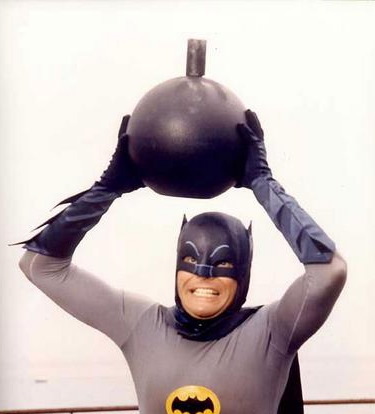
Adam+West+Batman+Bomb

The World’s Too Big For Best

This first appeared way back in 2009 in the Chicago Reader. It seemed like a good fit for our roundtable on The Best Band No One Has Ever Heard Of.
__________
 

bowden_coverMagnum

 
It’s December, which means it’s time for me, as a dutiful blogger, critic, and self-appointed cultural arbiter, to put together my best-of lists. I need to listen to that Raekwon album again to confirm that I really do think exactly the same thing everyone else thinks. I need to check back in with that Mariah Carey album to make sure I really do think exactly the opposite of what everyone else thinks. I need to compare Of the Cathmawr Yards by the Horse’s Ha with Grizzly Bear’s Veckatimest and Antony & the Johnsons’ The Crying Light to figure out which romantic, indie-folk-tinged work of idiosyncratic genius is the most geniuslike. I need to decide if I have to download the new Lightning Bolt album (legally, of course) and form an opinion on it, or whether it’d be safe to simply put it on my list on the assumption that it sounds like all the other Lightning Bolt albums.

At least that’s what I should be doing. Unfortunately . . . well, I’ve gotten kind of sidetracked. Some weeks ago, I was googling an artist from the Sublime Frequencies anthology Thai Pop Spectacular when I stumbled on an utterly bizarre video for a Thai song called “Sao Esan Raw Ruk” by a woman named Pamela Bowden.


[Pamela Bowden] – Sao Isan Raw Ruk by yinyinren

 
In the video the apparently Caucasian Bowden wiggles carefully to the beat, alternately as a blonde in a green tube top with green star-spangled pants and as a brunette in a black strapless dress. A large freestanding cylinder, like a hybrid of a gazebo and a generator, serves as a backdrop for erratically synchronized choreography featuring a handful of other dancers, all dressed in tight, cheerfully sexy red-and-black outfits. From time to time a boxy tunnel of green gridwork floats behind them, apparently on loan from Tron.

I enjoyed the campy staging, but what really hooked me was the hook. “Sao Esan Raw Ruk” weds overdriven techno-pop to what from my uneducated perspective sounded like traditional Thai rhythms and instrumentation. The result is a little like American pop’s Bollywood fusions—e.g., Amerie’s “Heard ‘Em All”—though the Bowden song has a stiffer beat and less sinuous, more percussive Eastern interpolations. The whole package feels like some sort of robotic exotica, with all the resolutely corny unhipness that implies—except that Bowden’s pure, light phrasing occasionally detaches itself and goes wandering free, a little throb of lyricism amid the frantic thumping. The song is funny, surprising, impossibly catchy, and unexpectedly affecting. If it had come out this year—the video I saw was posted in 2007, which ruled that out—I would’ve put it on my best-of list without blinking.

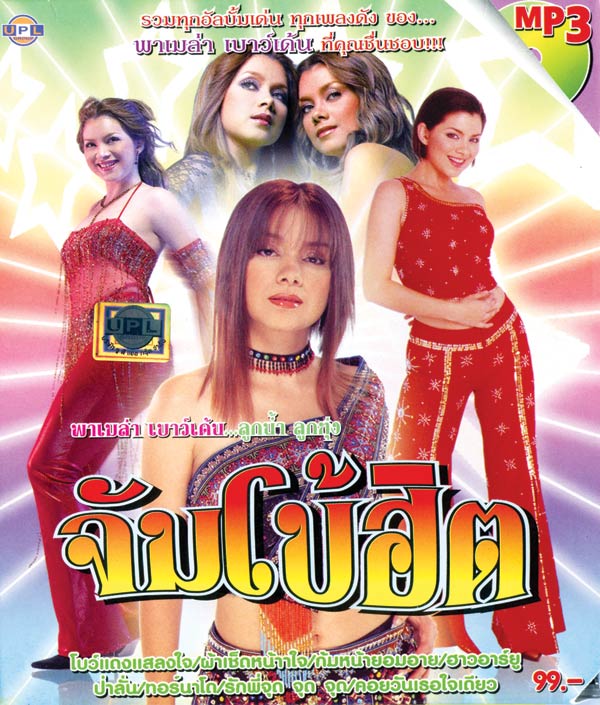
Finding more of Bowden’s videos wasn’t difficult. And I did manage to obtain a collection of six of her albums, sold as MP3s on a single disc called Pamela Bowden—Jumbo Hit, from the online store eThaiCD. For a non-Thai speaker like me, though, figuring out when those albums and videos were released—or indeed learning much of anything about Bowden—proved a lot trickier. But after a few weeks of moderately obsessive effort, I did manage to piece together some tentative biographical information (and, thanks to the Internet and the staff of Noodles Etc. in Hyde Park, some even more tentative English translations of titles).

Like many Thai pop stars, Bowden is mixed race; from the tidbits I’ve found scattered online, my best guess is that she’s partly Australian. (Though she’s a natural brunette, she sometimes plays up her Westernness by going blonde.) I’m reasonably sure that her first album was 1995’s Pretty P. The hit from that record is a by-the-numbers new-wavish pop-punk tune called “Sorry.” Its video features lots of neon colors and various nerdy guys who are all hyperbolically intimidated by Bowden’s tight DayGlo clothes and general hotness. The beat is overdriven and irritating, the guitar is formulaic, and Bowden sounds thin and strained trying to make herself heard over both.

Pretty P was a commercial success, if not an aesthetic one, and Bowden went on to make at least four more albums in the same vein. Then in the early aughts she switched genres to luk thung. Luk thung is often described as Thai country music, mostly because of its content. The lone blogger at Lukthung & Morlam (loogthung.blogspot.com), who asked to be referred to only as Chris, told me that the songs tend to be about “the poor country dweller who comes to the cruel city, or the hard life of a farmer.”

Traditionally luk thung has emphasized relatively slow songs, with expressive singing and lots of throbbing vibrato. Bowden did at least one album in this vein: Kaew Ta Duang Jai (“Waterfall in the Heart”). Videos for the album show Bowden in formal but still tight-fitting attire, singing midtempo luk thung standards to tasteful accompaniment.

To American ears the style is more like cabaret or torch song than country, with tinges of Memphis soul in some of the horn arrangements. Bowden is front and center in a way she tends not to be in her poppier efforts, and she sounds fantastic; her pure voice gently sways rather than swings along to the beat, and there’s just a hint of the keening bite that gives character to much Thai singing. The best track may be “Ao Kwam Kom Kuen Pai Ting Mae Kong” (“The Sadness of Leaving Mekong”), where she switches between short, careful phrases and extended quasi-yodels, the precision of the first accentuating the heartbreak in the second.
 

But albums like Kaew Ta Duang Jai are retro exercises. Luk thung has changed drastically in the past ten years, cross-breeding with pop and another rural style called morlam. According to Chris, “You can listen to 5 ‘lukthung’ songs and hear 5 totally different styles of music!”

Bowden’s other records from this decade bear that out. “Wud Jai Kun” (“Test One Another”) from 2002’s Bow Daeng Saraeng Jai (“Red Bow”) opens with what sounds like a saxophone strangling a duck and then goes into an off-kilter Latin beat interrupted by occasional big-band horns. Another song from that album, “Ruk Tai Luey” (“Love With All Your Heart”), dips into cheesy disco funk, with Bowden rhythmically talk-singing like an early rapper. “Noo Mai Dai Len” (“I Can’t Play) from 2003’s Pah Ched Nah La Jai (“Goodbye Heart”) is a three-way grudge match between a house DJ, a hopped-up brass band, and a classic-rock guitarist, with a funk bassist doing laps around the carnage. And then there’s E Nang Dance and E Nang Dance 2, which feature the remarkable blend of Thai pop and techno that was my first exposure to Bowden.


Perhaps, as Chris says, this all coalesces logically into a single genre if you can understand the lyrics. But when I watch the video for “Sao Esan Raw Ruk,” with the gazebo tube and the floating Tron bits and the spangled dancing girls, I find it hard to believe that what Bowden’s singing has anything to do with rural poverty. The title translates roughly to “Looking for Young Love,” which isn’t all that helpful.

For half a moment, I thought I was going to be able to clear this up, as well as fill in all the other gaps in my Pamela Bowden knowledge. After I’d been trying to track her down for several weeks, Chris pointed me to her Facebook page, and when I got in touch she cheerfully agreed to answer a list of questions. But . . . well, presumably catering to an American reviewer is a low priority when your music is basically unavailable stateside. The only information I was able to get from her by press time—she was charmingly apologetic but, she said, very busy—is that she plans to release a new album, Pamela Krajiewbarn, in mid-December.

Which means that, even though “Sao Esan Raw Ruk” turned out to be from 2004, I could still put Bowden on my best-of list for 2009!

Except, of course, that by the time I get a copy of Pamela Krajiewbarn shipped from eThaiCD it’ll probably be mid-January.

But that’s OK. After all, there are probably a bunch of great Thai albums from this year that I haven’t heard—not to mention Laotian albums, Indian albums, and, for that matter, American albums. As amazing a tool as the Internet can be, national boundaries, language barriers, and simple time constraints are still, as it turns out, a really big deal.

Certainly it’s fun to categorize and put things in order and make definitive pronouncements. (Ina Unt Ina’s “Teacher” is the best song of the year, dammit!) But it’s nice too to remember that it really isn’t possible to judge the totality of the world’s music, or even anything close to it. As C.S. Lewis put it, “Be comforted, small one, in your smallness.” Whether or not I download that Yeah Yeah Yeahs album, the world is still going to be bigger than my list. Which is a reassuring thought.

Addendum: Thanks to the power of the internet, I was contacted by an interested Thai speaker, who told me what the deal is with Sao Esan Raw Ruk. The name means “Esan Girl Looking for Love” and does (much to my surprise) tell the story of a simple country girl searching for love in the big city. It’s a traditional song, and Bowden apparently sings many of the lyrics with more than a touch of ironic sass; she deliberately plays up a country Esan accent as she explains that she is a simple country girl with dark skin and little knowledge of love — even though, obviously, she’s a light-skinned half-European wearing tight clothes and shaking about on the dance floor.

Not sure anyone else cares all that much, but learning this pretty much made my week.

Best Artist No One Has Ever Heard Of

This is loosely part of a roundtable on the Best Band No One Has Ever Heard Of. The index to the roundtable is here.
_________
We ended up with an interesting thread on the best writer no one has heard of last week, so I thought I’d try again. Not sure if this is easier or harder than best writer? I guess we’ll see.

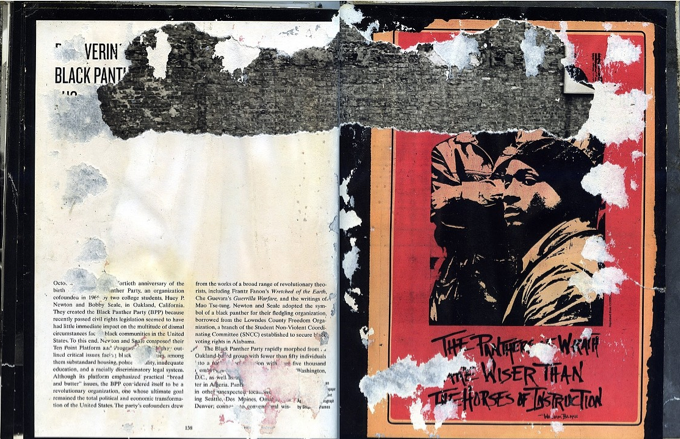
For me I think the best relatively obscure artist I know is my dear friend and sometime collaborator Bert Stabler, who works in a variety of mediums. His website is here. I really like this piece.
 

Screen Shot 2014-11-08 at 4.42.56 PM

Here’s the description that goes along with it.

Wall of Truth
2011
Collage
I was laid off from my art teaching job in July 2011, and books I brought back from my art classroom were put in my basement. This series was created by scanning what happened after my basement flooded, and, after letting the books dry out for several weeks, I opened this beautiful book of Black Panther photography by Stephen Shame. It, along with dozens of other lovely books, was ruined. I was rehired two weeks later.

So who would you pick as the best artist no one has ever heard of? Let us know in comments.

Wonder Woman: Bondage and Feminism — Links Page

ProductImageHandler

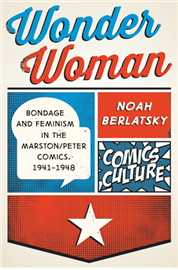
My book, Wonder Woman: Feminism and Bondage in the Marston/Peter Comics is coming out January 14, 2015 (that’s the official release day; availability may vary a bit from place to place.) I’m going to use this page to house links to interviews, reviews, and so forth.

Excerpts

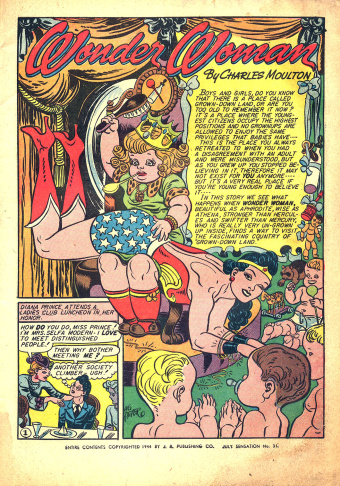
A color gallery of images discussed in the book.

The Atlantic has an excerpt adapted from the book’s intro.

Purchase Copies

Rutgers (20% discount here!)

Amazon

Google Play

Barnes and Noble

Interviews (most recent first)

Nell Minow interviewed me for Huffington Post.

Tara Burns interviewed me for Vice.

Catherine Kustanczy interviewed me for Mic (and did a review of the book, too.)

Suzette Chan interviewed me at Sequential Tart.

Lauren Davis interviewed me at io9.

Paul Semel at his site.

Alex Deuben at Comic Book Resources.

Arielle Bernstein interviewed me at the Rumpus.

On KPCC’s The Frame (audio and text)

Reviews (most recent first)

Anita McDaniel reviewed my Wonder Woman book at the American Journal of Communications.

Chris Reyns-Chikuma at Belphegor.

Joan Ormrod at Cinema Journal (behind paywall.)

Peter Tupper discusses my arguments about Wonder Woman and bondage.

Kent Worcester at Portside says nice things about my book at the end of this review.

Brian Patton in the Journal of Comics and Graphic Novels (paywalled, but you can see the first bit.)

Jancy Richardson at Movie Pilot puts together an article of my Vice quotes on Wonder woman and the coming kinky matriarchal utopia.

Cia Jackson has a review at The Comics Grid.

Irene Javors has a review at The Gay & Lesbian Review.

Natalia Mehlman Petrzela at Public Books.

Matthew Cheney at the Mumpsimus.

Joan Hilty at Wellesley’s Women’s Review of Books.

Liz Baudler at New City.

Aimee Levitt with a brief review and a preview of a reading.

Jeff Hill recommends the book for comics studies and women’s history classes. (Listen up, academics!)

Sheryl Kirby reviews my book and Jill Lepore’s together.

Tim Hanley at The Comics Journal. (Tim had a little more to say at his blog here.

Suzette Chan at Sequential Tart.

Emily Ballaine at Publik/Private reviews the book and thinks about comics as art and bondage as feminism.

Sean Kleefeld at Freaksugar (rates the book 9 out of 10!)

Publisher’s Weekly Review

Monika Bartyzel mentions my book in a piece on the upcoming Wonder Woman film.

Articles by me on Wonder Woman (most recent first)

On why Wonder Woman needs her Lasso of Control back. (New Republic)

On how copyright restrictions made writing about Wonder Woman difficult. (Pacific Standard)

On William Marston as male feminist. (Ravishly.com)

On publishing my book and being plunged into a neurotic fugue of terror. (Splice Today)

On the trauma of having Jill Lepore write your book. (Chronicle of Higher Education)

On Wonder Woman, Bella from Twilight, and love as a superpower. (University of Chicago Magazine)

On Why Marston Would Approve Of Laverne Cox as Wonder Woman (Comic Book Resources)

On Jill Lepore’s The Secret History of Wonder Woman. (Atlantic)

We don’t need no stinking Wonder Woman movie. (Wired)

Tim Hanley’s Wonder Woman: Unbound. (Salon)

Wonder Woman shouldn’t be a film sidekick. (Atlantic)

The patriarchal assholery of the Azzarello/Chiang Wonder Woman. (Atlantic)

The gayness of the Marston/Peter Wonder Woman comics. (Slate XX)

Wonder Woman Blogging

All HU pieces on Wonder Woman.

A roundtable celebrating the book release, including interviews, reviews, and more.

A roundtable on the last Marston/Peter Wonder Woman.

I blogged through every issue of the Marston/Peter Wonder Woman.

I look at post-Marston/Peter Wonder Woman, for better and (mostly) worse

Events (may be subject to change)

Wednesday, January 28, 6:00 PM
Signing at First Aid Comics
1617 E 55th St, Chicago, IL 60615

Thursday, February 26, 7:30 PM
Reading at Women and Children First
5233 N Clark St, Chicago, IL 60640

Saturday, March 7, 6:00 PM
Reading at Indy Reads Books.
911 Massachusetts Avem Indianapolis, IN

Wednesday, March 11, 6:30 PM
Reading at 57th Street Books
1301 E 57th St, Chicago, IL 60637

Saturday, March 14, 2:00 PM
Reading at Urbana Free Library
210 W Green St, Urbana, IL 61801

Monday, March 23, 6:30 PM
Discussion with Sharon Marcus at The Institute for Public Knowledge
20 Cooper Square, 5th Floor, New York, NY

94654-eight


Utilitarian Review 11/8/14

On HU

Featured Archive Post: Kailyn Kent on comics and deskilling.

Our roundtable on the best band no one has ever heard of continues.

Betsy Phillips on regional influences on Sleepy John Estes.

A thread on the best writer no one has ever heard of.

Osvaldo Oyola on retro brit pop band Thumb of the Maid.

Kinukitty on the non-dreary goth of Jane Jensen.

Paige McGinley on great blueswoman Etta Mae “Mama” Scott.

Me on Wilmer Broadnax, a trans man in gospel.

Jordannah Elizabeth on Betty Carter.
 
Utilitarians Everywhere

At the Atlantic I wrote about how arts degrees very rarely lead to a career in the arts.

At Pacific Standard I wrote about how science, religion, and art are all tied together. (a review of Lawrence Lipking’s What Galileo Saw)

At Splice Today I wrote about:

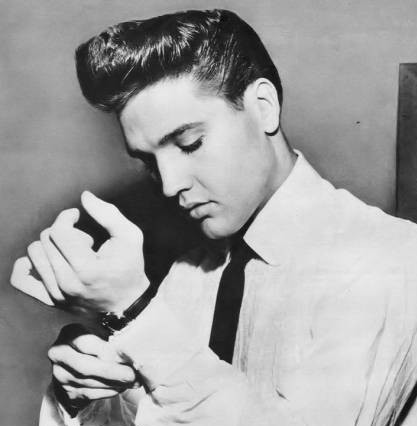
—Elvis, the vapid, sexy pop confection of his day.

Annie Lennox and white people singing Strange Fruit

Carl Wilson’s piece on Jian Ghomeshi and why you (yes you) should avoid the second person.

At the Chicago Reader I wrote about the lovely bluegrass band the Dry Branch Fire Squad.
 
Other Links

Janell Hobson on Dear White People.

Elizabeth Nolan Brown on how the passage of c36 isn’t going to help sex workers.

Monika Bartyzel on the feminism of Wonder Woman (she mentions my book!)
 

-Elvis-elvis-presley-32745175-417-426

Male and Female in Christ

This is part of a roundtable on The Best Band No One Has Ever Heard Of. The index to the roundtable is here.
___________

It’s not a coincidence that gender and genre have the same root. You can see that in romance novels, in metal, in superhero comics — and in classic gospel music.

As gospel scholar Anthony Heilbut has pointed out, gospel is actually two genres — gospel and quartet. Gospel singing, which featured a soloist or chorus with piano or organ backing backed, certainly had male stars (like Alex Bradford), but the biggest names were women like Clara Ward, Marion Williams, and Mahalia Jackson. Quartet singing, featuring acappella harmony performances, had some female stars (most notably, at the tale end of the genre’s existence, Mavis Staples), but was mostly performed by men.

The division might suggest a conservative, Christian, gendered division; men and women, separate but equal, inhabiting different spheres. In fact, though, the interaction of gender and genre in gospel is a bit more complicated. Gospel quartet was overwhelmingly male. But men (quartet or gospel) often demonstrated virtuosity by singing high tenor, trespassing on women’s range, as in this amazing performance by male soprano Carl Hall with the Raymond Raspberry Singers.


Or, as another example, here’s R.H. Harris’ light, lilting take on “His Eye Is One the Sparrow” with the Soul Stirrers.


At the same time as men soared up, female singers often laid claim to the earthy low rough-voiced virile registers.


Rather than a genre in which every gender is in place, then, gospel was a heavenly stew of cross-gender mimicry and performance; the intensity of the spirit burst the bounds of bodies, making women growl down low and men soar to the stratosphere. And just as it broke out of gender, the spirit went flying from genre to genre; Little Richard arguably invented rock by imitating Marion Williams (who in turn, as above, often adopted men’s deep rumble). Contemporary pop started when a man turned a woman’s voice from God to sin.

Little Richard’s violation of gender norms didn’t stop at his voice; part of the theatricality and scandal of his act was always the not very sublimated truth that he was gay. As Heilbut wrote in The Fan Who Knew Too Much, this was hardly unusual in the gospel community either, where sexualities, like voices, often didn’t fit neatly into stereotypical norms. Ruth Davis, Clara Ward, Alex Bradford, James Cleveland, and many others were homosexual — the high notes of the men and the rumbling low notes of the women served as a kind of holy camp, the visible, theatrical, open expression of a hidden truth about both gender and God.

Perhaps the most successfully closeted LGBT performer of the Golden Age of Gospel was the high tenor Wilmer Broadnax — often referred to as “Little Ax,” to distinguish him from his brother, Wilbur “Big Ax.”
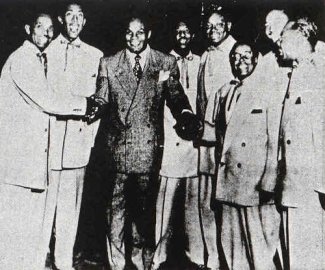
 

SpiritM2

 
Wilmer (sometimes “Wilmur”) is shown here with the Spirit of Memphis Quartet, his most famous gig; he’s the tiny man with glasses in the front row.

Wilmer was trans. No doubt his brother was aware that Wilmer (presumably initially Wilma) had been raised as a girl, but otherwise Little Ax seems to have passed as cis until after his death at the age of 77 in 1994 (he was murdered by his girlfriend, according to Heilbut).

Broadnax’s career as a quartet singer depended in large part on him being a man; again, there were female quartets, but they were far less common, and far less popular, than the male ensembles. But his career was also enabled by the fact that men in quartets could sing like women; Broadnax’s high tenor might have been marked as non-manly or unusual in some genres. But in quartet he’s just another guy who sings in the stratosphere.

Not to say that Little Ax was anonymous. As critic Ray Funk writes about Broadnax’s first recorded group, The Golden Echoes:

“Little Axe’s lead is absolutely distinctive on these cuts. He is the high lead that takes over from the baritone of Paul Foster. His voice is sweet but almost vicious, dripping with emotion, while Foster, in contrast, would offer almost a growl.”


In this amazing 1949 track, Broadnax picks up at around 1:04, finishing Foster’s line, so they seem to fuse into a single seamless multi-octave singer. At 1:25, Broadnax goes even higher, soaring into a Marion-Williams-like ““Ooooooo!”

That’s not the only thing Broadnax borrowed from female singers, according to Anthony Heilbut.

I admired [Broadnax’s] records largely because there was something nonquartet about his delivery. It was impassioned in a way that I associated with women singers of his gneration (he was born in 1915).


You can hear that passion in this performance for the “Spirit of Memphis”, in which Broadnax grabs the lead for a few seconds from (I believe) growler Silas Steel. He doesn’t get much space to work, but his electric moans and affirmations in the background, and his short moment in the spotlight, give the song an electric charge.

Broadnax’s connection to the female gospel tradition is perhaps even clearer in these late career performances, one with the Five Blind Boys of Alabama, and one with his own group on the hoary country classic “You Are My Sunshine.”


By this time acappella style had become less popular, and the addition of instrumentation (including too-insistent drums on “You Are My Sunshin”) puts Broadnax into something that sounds more like a rocking gospel setting. Rather than the interplay of voices, he’s running vocal variations over and around the groove. If you didn’t know he was a guy, these could easily be blow-out, earthy, growling performance by one of the great women of gospel

Again, what makes this more gospel than quartet is in large part that Broadnax has lowered and roughened his voice; he sounds like a woman specifically because he sounds like a woman imitating a man.


Broadnax is not a very well-known performer. There are a few famous names in quartet singing, but they’re all folks like Sam Cooke or Mavis Staples who crossed over to secular music. Even the best known quartet singers who stuck with quartet, like R. H. Harris, Claude Jeter, and Julius Cheeks, have barely any public profile. And though I think Broadnax has a claim to be as talented as any of them, as far as the pecking order went he was a respected but second-tier performer — an obscurity among obscurities.

Broadnax’s anonymity goes beyond that, though. Even among his peers and his (relatively) small audience, no one knew him. He lived his life in the closet, and he didn’t come out until he had passed away — a secret all the more total in that its revelation caused neither stir nor interest. Those who cared didn’t know, and when folks could know, nobody (except the indefatigable Anthony Heilbut) cared.

But that seems like an overly dour conclusion for such a powerfully joyful, uncategorizable performer. Broadnax didn’t hide, unknown, all his life. Rather, he took up his name and his suit and that amazing talent, and shouted what he was, in a voice that was as male as the female gospel performers, and as female as the tenors in male gospel quartet. Even if he isn’t famous down here, he’s found his place in that circle of singers where no one is unknown, singing as a man of God.
 

________
Years back, when I was active on Wikipedia, I wrote an entry on Broadnax for the site. I thought I’d reprint it here for archival purposes; it’s one of the most complete biographies on the web (this site has additional information.


Willmer “Little Ax” M. Broadnax, (December 28, 1916[1] – 1994) also known as “Little Axe,” “Wilbur,” “Willie,” and “Wilmer,” was an African-American hard gospel quartet singer. A tiny man with glasses and a high, powerful tenor voice, he worked and recorded with many of the most famous and influential groups of his day.

Broadnax was born in Houston in 1916. After moving to Southern California in the mid-40s, he and his brother, William, joined the Southern Gospel Singers, a group which performed primarily on weekends. The Broadnax brothers soon formed their own quartet, the Golden Echoes. William eventually left for Atlanta, where he joined the Five Trumpets, but Willmer stayed on as lead singer. In 1949 the group, augmented by future Soul Stirrer Paul Foster, recorded a single of “When the Saints Go Marching In” for Specialty Records. Label chief Art Rupe decided to drop them before they could record a follow-up, and shortly thereafter the Golden Echoes disbanded.[1]

In 1950, Broadnax joined the Spirit of Memphis Quartet. Along with Broadnax, the group featured two other leads — Jethro “Jet” Bledsoe, a bluesy crooner, and Silas Steele, an overpowering baritone. This was one of the most impressive line-ups in quartet history. The Spirit of Memphis Quartet recorded for King Records, and Broadnax appeared on their releases at least until 1952. Shortly after that, however, he moved on, working with the Fairfield Four, and, in the beginning of the 60s, as one of the replacements for Archie Brownlee in the Five Blind Boys of Mississippi. Until 1965 he headed a quartet called “Little Axe and the Golden Echoes,” which released some singles on Peacock Records. By then, quartet singing was fading as a commercial phenomenon, and Broadnax retired from touring, though he did continue to record occasionally with the Blind Boys into the 70s and 80s.

Upon his death in 1994, it was discovered that Broadnax was female assigned at birth.[2]

References

  1. Carpenter, Bil; and Kip Lornell. “Willmer Broadnax”. Allmusic.
  2. Anthony Heilbut, liner notes to “Kings of the Gospel Highway,” Shanatchie 2000 (discusses Broadnax’s gender)
  • Jason Ankeny, “The Golden Echoes,” Allmusic.
  • Opal Louis Nations, liner notes to “The Best of King Gospel,” Ace, 2003
  • Liner notes to Detroiters/Golden Echoes “Old Time Religion,” Specialty 1992
  • For year of death, see Archived February 4, 2005 at the Wayback Machine
  • For pictures of Broadnax with the Spirit of Memphis, see [1]