Utilitarian Review 4/20/13

News

HU contributor James Romberger and his son Crosby received an Eisner nomination for Best single issue for their Post York #1. All the Eisner nominations are here.

On HU

Featured Archive Post: I review Reinhold Kleist’s Johnny Cash biography.

I explain what Escher and Dr. Manhattan have in common.

I explain why Tim McGraw sucks.

We kicked off our comics and music roundtable. Posts this week:

Bert Stabler, Re(Dis)Membering Pushead, The Cheerful Blasphemer

Craig Fischer, “Poster Boy”

Brian Cremins, “Gil Kane, Memory Drawing, and Bob Dylan’s Self-Portrait

Betsy Phillips, “A Theory of Why the Two Iron Men Became One”

Qiana Whitted, “Sound and Silence in the Jim Crow South”
 
Utilitarians Everywhere

At the Atlantic I wrote about:

Shulamith Firestone and feminist utopian literature.

Willie Nelson’s jazzy new album.

Feminism’s conflicted hisotry with advancing day care.

At Splice Today I wrote about:

—who should own children.

Chris Connor’s classic Gershwin album.
 
Other Links

Sarah Kendzior on academia’s indentured servants.

Jonathan Bernstein on how to stop torturing, maybe.
 
This Week’s Reading

I finished Shulamith Firestone’s Dialectic of Sex, read Joanna Russ’ The Female Man, started a book about parking reform (no seriously), read some articles and book chapters about the Oneida community. Also still reading The Two Towers to my son.
 

images

Friday Utilitarian Music 4/19/13 — Midnight Girl in a Sunset Town

With some help from Derik Badman, I finally figured out how to upload zips to HU…which means I can provide music downloads again. This one is Midnight Girl in a Sunset Town.

Here’s the playlist

1.Don Quixote — Gordon Lightfoot
2.Man in Need — Richard Thompson
3.Something to Talk About — Bonnie Raitt
4.Midnight Girl/Sunset Town — Sweethearts of the Rodeo
5. Bluebird Wine — Emmylou Harris/Rodney Crowell
6. Lonesome, On’ry and Mean — Waylon Jennings
7. Little Chapel — Heahter Myles and Dwight Yoakum
8. Diggin’ Up Bones — Randy Travis
9. Hurt Me Bad (In a Real Good Way) — Patty Loveless
10. Love in Store — Fleetwood Mac
11. Bring Love — Carlene Carter
12. Double Knots — The Living Sisters
13. Matchbox — Willie Nelson
14. Witches Hat — Incredible String Band
15. Our Town — Jody Stecher and Kate Brislin
16. Little Matty Groves — Norman and Nancy Blake
17. The Needle and the Damage Done — Neil Young

You can download Midnight Girl in a Sunset Town here.

And let us know in the comments what you’re listening to.

Comics and Music Roundtable — Index

We’re going to be running a roundtable on comics and music over the next couple of weeks. This will serve as an index of posts in chronological order.
 

Bert Stabler, “Re(Dis)Membering Pushead, The Cheerful Blasphemer”

Craig Fischer, “Poster Boy”

Brian Cremins, “Gil Kane, Memory Drawing, and Bob Dylan’s Self-Portrait

Betsy Phillips, “A Theory of Why the Two Iron Men Became One”

Qiana Whitted, “Sound and Silence in the Jim Crow South”

Noah Berlatsky, “The Unheard Peanuts”

Kailyn Kent, “Phantom Music”

Marc Sobel, “A Review of Reinhard Kleist’s Johnny Cash: I See a Darkness

Michael Arthur, “Non-Canonical”

Ng Suat Tong, “Opera As Drama As Comics”

Chris Gavaler, “Top 5 Superman Songs of All Time”

Noah Berlatsky, “Klingklang Drawing”

Ng Suat Tong, “The Freewheelin’ Daredevil”

Subdee, “Phonogram 2: The Breakfast Club”

Russ Maheras, “Gene Simmons and Kiss: Channeling One’s Inner Superhero”

Noah Berlatsky,, “Presence”

Domingos Isabelinho, “Pamplemoussi by Geneviève Castrée”

Sean Michael Robinson, “Music or Comics, or Making a Joyful Noise”
 

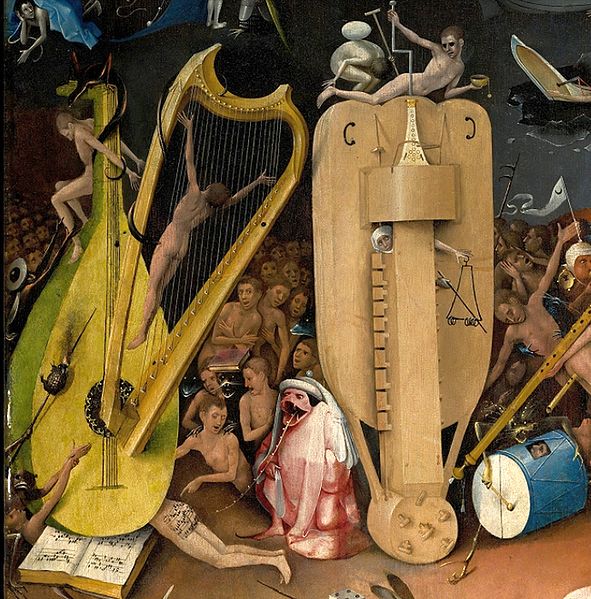
591px-Bosch,_Hieronymus_-_The_Garden_of_Earthly_Delights,_right_panel_-_Detail_musical_instruments_(left)


Emotional Tics

This first appeared on Splice Today.
________________
 

images

 
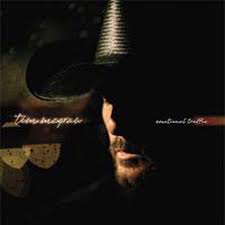
Tim McGraw’s Emotional Traffic starts out with a 90s emo whine. “I crawl out of my cradle down into my black hole/ and you just lay low/under your halo,” McGraw wails, pulling out the words with a little nasal catch like he thinks he’s Billy Corgan (there’s even a line in there about how he’s “silent in his cage”.)  The music is frat arena rock for sensitive new age post-grunge dipshits, the drums thumping along oh-so-earnestly as the guitars express sweeping self-pity through the portentous power of loud, muddy noodling.  If Kurt Cobain were alive to hear this, he’d probably shoot himself.

Not every song is that dreadful.  “One Part Two Part” is a bouncy 80s rocker that I”d probably really like if it were sung by Bonnie Raitt, but even McGraw’s testoster-anonymous vocals don’t ruin it entirely.  “Felt Good on My Lips” does the 90s post-grunge thing the way it should be done if it has to be; the slightly distorted chimey guitar intro is so generically perfect it’s impossible to link to a single source, which doesn’t stop it from being impossible to get out of your head.  The horny party-boy lyrics are irritating, but they could be worse, I suppose.  Rhyming “last call” and “lip gloss” isn’t exactly genius, but it’s marginally clever.  Credit where it’s due.

So, yes, this is not the worst album I’ve ever listened to.  It is, though, one of the most confusing.  I understand where mediocre pop music is coming from usually: Kelly Rowland, for example, is just trying to sound like the latest thing on the radio and failing because she doesn’t have good enough gimmicks and/or songwriting. Similarly, I get mediocre retro music: Joss Stone is just trying to sound like soul greats of the past, and failing because she doesn’t have good enough gimmicks and/or songwriting.

McGraw though, and country radio in general, is a puzzle.  Even factoring in the bland Ne-Yo duet, he’s certainly not trying to be up to the minute when the bulk of the album sounds like it could have been recorded two decades ago. But Emotional Traffic doesn’t make sense as a retro exercise either. McGraw isn’t trying to remind you of the Smashing Pumpkins or Nirvana or Bonnie Raitt the way Joss Stone wants you to think of 60s and 70s soul.

McGraw’s a country musician, and he does make occasional vague efforts to remind us of that.  “Better Than I Used To Be” is a relatively stripped down maudlin ballad with lots of pedal steel that I can imagine George Strait singing.  “Touchdown Jesus” is not, alas, a song about Jesus playing football, but its self-righteous litany of feel-good chicken-soup-for-the-soul parables punctuated by the banally triumphant title phrase is obviously a desperate bid for middle-American Christian cred.

But if you’re going for middle-American Christian cred, why on earth are your musical touchstones generic 80s and 90s pop rock?  Betty Wright as an icon of authenticity, okay.  George Strait?  Sure, if that’s where you’re at.  But the Foo Fighters?  What the hell?

You could argue that this sort of confusion has always been at the root of country music.  In his book Creating Country Music: Fabricating Authenticity, Richard Peterson argued that country as a genre was an essentially dialectical process, as old time hard core authenticity claims vied with new-fangled soft shell pop instincts.  Thus, you get Hank Williams, wearing a cowboy hat while playing new pop songs in a string band setting with vaguely rural themes, or Bob Wills, playing jazz and folk and blues and pop in a big band setting with some country instrumentation added.

In that context, maybe it makes sense that country is now just 20-year-old pop music sung by someone with a mild country accent who makes occasional references to Jesus.  Presumably listeners like hearing the same music that was on the radio when they were kids coupled with very mild evocations of the rural working-class setting in which that music was heard (or in which one enjoys imagining that it was heard, as the case may be).   When McGraw declares on “Die By My Own Hand,” the album’s final song that “It looks like you’ve left me with some habits I can’t break,” he could be talking about Emotional Traffic itself. The album feels like a tic, repeated not out of conviction, but simply because it’s trying not to think too hard about whatever it is it once loved.

Flatland

This first appeared on comixology.
___________

 

reptiles

 
The above is Reptiles, a lithograph print from 1943 by the famous Dutch artist M.C. Escher. Escher isn’t usually thought of as a comics artist. Yet, as this image shows, he was one — sort of.

So is this print a comic or not? Well, it depends on how you read it. The narrative here determines the form.

Do you see this as the story of a bunch of different reptiles crawling in single file out of an abstract design, over books and other objects, and back into the design? If so, then it’s a static illustration — a drawing of one moment in time.

On the other hand…do you see this as the story of a single reptile, depicted in various stages as it makes its journey from art to life and back again? If so then, despite the lack of panels, this is essentially a comic. It’s not a frozen moment, but a sequence.

Of course, you don’t really need to make a choice for one or the other. The title of the piece may indicate that there are a bunch of reptiles here, but much of the enjoyment of the image — and of Escher’s work in general — is the sense of moving pieces caught in a pleasurably regimented dance. Even if it’s not technically one reptile moving, the individuals are nonetheless interchangeable. You know that the reptile climbing the triangle is going to get to the top of the D & D die and that it’s going to blow smoke out of its nose when it gets there just as its predecessor did. The reptile blowing smoke will climb onto the little cup; the reptile on the cup will crawl back into the abstract pattern. Whether the image is showing a sequence as a comic would or merely implying it, the point is still that time and identity are flattened out across space.

Escher is hardly the only comics artist to use this sort of trick. Here’s a familiar example from Carmine Infantino.
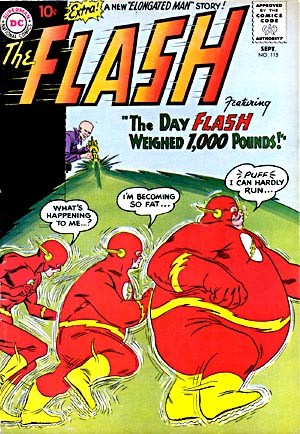
 

flash115

 
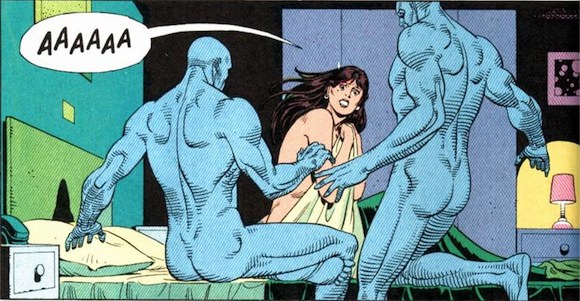
A more sophisticated use of the trope can be found in Alan Moore and Dave Gibbons’ Watchmen. In that book, the character of Dr. Manhattan (Jon Ostermann) is essentially an Escher lizard who has achieved self-awareness. He knows that time is a pattern, and (like the observer of the print) he can see that pattern all at once, from the moment he crawls up out of the flat drawing to the moment he crawls back into it. His lifetime is a clockwork puzzle, unchangeable and simultaneous. Sequence and stillness fuse, and in doing so call into question both free will and identity.
 

2manhattans

 
In the panel above, Moore and Gibbons emphasize Jon’s disjunction in time by giving him two bodies in the same space. Laurie’s shocked reaction points out the weirdness of her big blue boyfriend — but it also comments on the weirdness of the way in which comics depicts sequence. After all, there are many pages of Watchmen in which you see two Manhattans side by side, or one on top of the other.
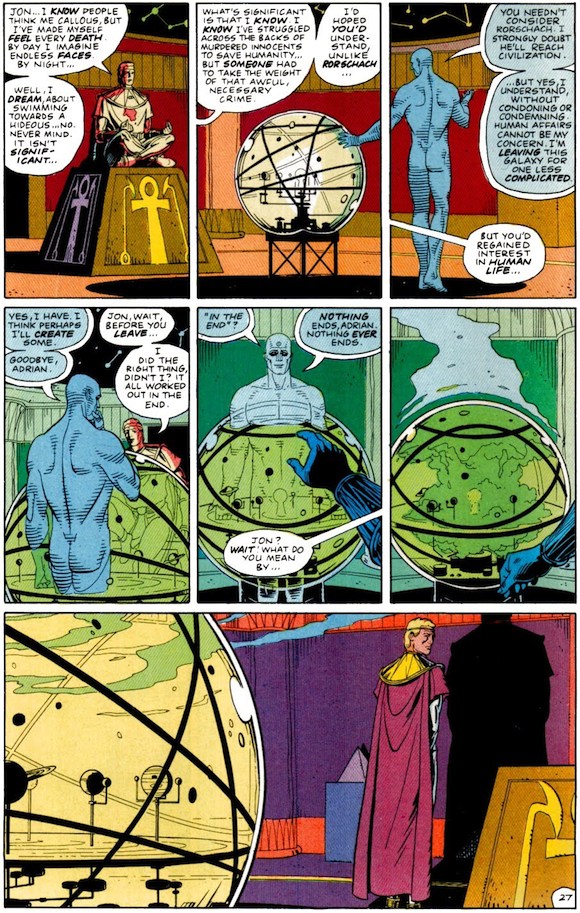
 

watchmen27

 
The difference between the first example and the second is not how many bodies (there’s more than one Manhattan in the second, too) but our perception of those bodies — not how many lizards are drawn, but whether we’ve decided to see them as a group or a sequence. Laurie is horrified when she wakes up in bed with double Jons because she’s suddenly allowed to view the world as Jon sees it — not as one body walking through time, but as multiple bodies in the same space. Her pleasure depends on not seeing the pattern.

Moore and Gibbons use the play of sequence and simultaneity to investigate comics form. But they also use it to look at how time and the perception of time affects human decisions and identity. Reptiles has more limited ambitions. Like most of Escher’s work, it’s clearly a goof, more in play than in earnest, posing frivolous questions (what kind of lizards are those? what’s in the book?) for the fun of it rather than for some profounder understanding.

And yet, the shallowness of Escher’s drawing is surely the point. Time becomes space when you flatten both out, but where can you go that isn’t flat? Laurie’s fright upon seeing the mechanics of narrative laid bare is itself part of the narrative, just as the lizards climbing up out of the page are still on the page. For those small animals, narrative is not a series of events; it has no starting point or ending point. Instead, it’s a cycle of greater and lesser abstraction; of flattening and inflating. Identity is the design of time dividing from itself; the only story is of story pulling itself from pattern and returning to it. Even the blue lizard watching lizards remains only the sketch of a lizard.

What makes Reptiles a comic, then, is the way that it crawls so determinedly betwixt and between the intriguing silence of those books and the flat silence of that pattern. If narrative is time and picture is space, these critters move through both and neither; they’re more amphibian than reptile. If they could talk, they might tell us not what it is to see all of time as a page, but rather what it is to be a surface — a space so thin it cannot tell whether it exists or not.

Utilitarian Review 4/13/13

On HU

Kailyn Kent points out that the New Yorker recycled a gag and no one noticed, cared.

Chris Gavaler on Nicholson Baker and superpowered sex offenders.

Featured Archive Post: Matthias Wivel on comics and classical art.

Jones, One of the Jones Boys on Jack Kirby and the visual logic of superhero fight scenes.

Richard Cook on the unexpected awesomeness of Breaking Dawn 2.

Kristian Williams on means and ends in V for Vendetta.

Me on Gwyneth Jones’ White Queen and reading as science fiction.

Chris Gavaler on transhuman eugenics.

Chris Connor asks what you’ve been listening to this week.

 
Utilitarians Everywhere

At Reason I review Alex Sayf Cummings’ new book on the history of music piracy.

At the Atlantic I talk about:

the benefits of overpraising Dads.

childishness in Romeo and Juliet.

— the amazing crappiness of the Band Perry’s new album.

At Splice I talk about:

Steven Landsburg and the freedom to rape.

Jimmie Rodgers vs. Brad Paisley, Louis Armstrong vs. LL Cool J.

 
Other Links

Johnny Cash and Joni Mitchell.

Johnny Cash and Louis Armstrong.

Conor Friedersdorf on the cost of the stigma against nudity.

Jesse Walker on integration and Southern music.

Susan Faludi on Shulamith Firestone.

Good Grief, Charlize.

Eric Berlatsky on love triangles and homosociality in the early Superman.

Isaac Butler defends Romeo and Juliet.

Madison Moore on the downsides of grad school.

Female geeks spoil everything.
 
This Week’s Reading

Finished Gwyneth Jones’ White Queen; read James Tiptree’s collection Ten Thousand Light Years From Home, which is pretty mediocre. Started rereading Shulamith Firestone’s Dialectic of Sex. Oh, yeah, and reread Romeo and Juliet…which is great!
 

berlatsky-3