The Boy Who Never Should Have Been

This first appeared on Splice Today.
____________

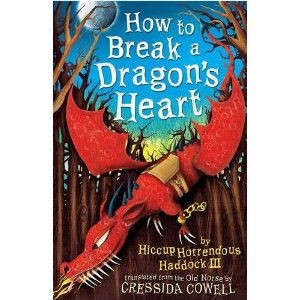
Cressida Cowell’s How to Break a Dragon’s Heart, like all the How To Train Your Dragon series, is told through a frame story. The hero, Hiccup Horatio Haddock III, is an old Viking warrior narrating the story of his adventures as an (insufficiently fierce, overly cerebral) Viking child.

The frame story doesn’t impinge too much on the narrative. It’s even unclear who the old Hiccup is supposed to be talking to…and the bulk of the book is in the third person, not the first, so it’s not like you’re insistently reminded that old Hiccup is doing the talking. Still, in this volume at least, the frame is thematically accented in the book’s creepiest scene. Hiccup has been imprisoned in a hollow tree by his arch-enemy, Alvin the Treacherous. Inside the tree with him, it turns out, is an old witch, who has been in the darkness so long she no longer needs light to see. Hiccup refuses to tell her who he is, and the witch proposes a game. She will tell him a story, and at the end of it, the two of them will try to guess each other’s names. Whoever guesses gets to kill the other. The witch, invisible in the dark, starts to speak with her disembodied voice…and to Hiccup’s horror she tells him the story of his own ancestors. Cowell actually draws in the tree bark as a kind of circular frame of rough blurry bark ringing the dialogue. Thus, in the visible ring the narrative goes round, Hiccup telling the story of the witch telling the story of Hiccup — who guesses the witch’s name just as she guesses his, and so, in a way, manages to tell her story too.

The insistence on the storyness of the story is a staple of much children’s literature, from Alice in Wonderland to the Never-Ending Story. It’s so associated with children’s lit, in fact, that you can sometimes forget that it’s also a solidly modernist obsession, used obsessively by Joseph Conrad, Faulkner, Borges, and others.

Modernists and children’s author use the frame story for similar reasons; it’s self-conscious. It acknowledges that the narrative is a game, which is nice for kids (who like games) and for sophisticated aesthetes (who like games as well.) And, in fact, that sense of playful whimsy, of a story that knows its own storiness, is one of the things I like most about Cowell’s series. Alvin the Treacherous’ constant horrible deaths and miraculous survivals, always returning with one less body part (this time he’s got a wooden nose); or the way the doomed heroic fiancés keep shouting “YOU BETCHA!” or “TOO RIGHT!” no matter how horrible the situation; or even Cowell’s delightfully scratchy, blobby artwork — it all emphasizes the createdness of the characters, they’re existence as cartoon tropes on the page. They aren’t real; they’re in a frame, and the pleasure is less in finding out what happened than in seeing the pieces fit into place, like Hiccup’s miraculous key which gets him out of the tree and frees the fiancés and releases the dragon with the broken heart.

It’s interesting to compare Cowell’s embrace of storytelling with those other more popular fantasy series. Harry Potter and Twilight aren’t any more real than How To Train Your Dragon, obviously…but they’ve both got a more fraught relation with the real. Neither Harry nor Twilight has a frame story…and in fact both are in many ways predicated on denying a frame and pretending that the fantastic is real. In Harry Potter, the world of magic exists unknown side-by-side with the real world, on magical railway platforms halfway between more mundane train stops, or in Quidditch games concealed in farmer’s fields. In Twilight, too, the vampires and werewolves are all around us, but we don’t know — only the reader does. Both series are about secrets and knowing truths. Harry is the Boy Who Survived, defined by his encounter, and escape, from the ultimate reality of death.

Hiccup, on the other hand, is, according to the witch, the “Boy-Who-Never-Should-Have-Been.” Hiccup’s father, it turns out, married the wrong person; prophecies went awry, stories went wrong, and the result was an accident of fate, a hiccup in the narrative. Hiccup isn’t but is, like a character in a book. “The story had done its work. Carried away by its power, Hiccup had betrayed himself and his identity,” Cowell writes. The narrative knows who you are, perhaps, because who you are is nothing but a narrative.

In the first words of the book, which are the first words of the frame, Hiccup says, “History is a ghost story.” In Harry Potter or Twilight, of course, the opposite is true – the ghost story, the magic, and the vampires are history. That’s why those series are replete with angst and darkness; they’re about convincing you they’re real, and the real is trauma. How To Train Your Dragon is much lighter fare; its witches are only voices, and you know they’ll stop when the story does. But what else will stop? If history is a ghost story, who’s telling it ? If there’s a frame, what’s outside it? A secret’s a truth; a story’s a mystery. Harry may have been born for glory, but Hiccup is born for who knows what — his future coming towards him like a ghost, frightening and awkward and indistinct, the story he will be.

Utilitarian Review 2/4/12

On HU

The week started out with Charles Reece and I in an epic Buffy vs. Twilight showdown.

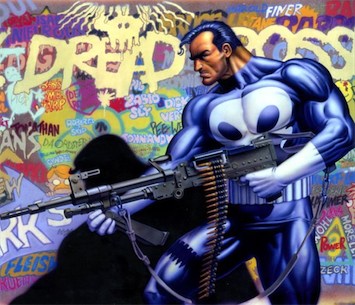
I talked about noir and violence in the Steven Grant/Mike Zeck Punisher.

Richard Cook discussed the found footage horror genre.

I talked about comics and Fredric Jameson’s theories of the postmodern.

Andrei Molotiu discusses the cracked allure of Frank Miller’s Holy Terror.

I talked about the Marston/Peter Wonder Woman and replicating postmodern pleasures.
 
Utilitarians Everywhere
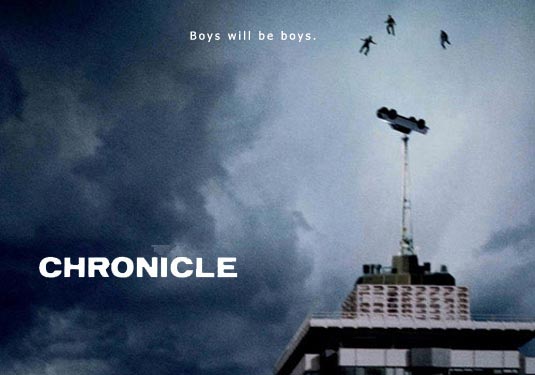
At the Atlantic I reviewed the surprisingly enjoyable new found footage superhero film Chronicle.
 
Other Links
Robert Stanley Martin reviews Lilli Carré’s Nine Ways to Disappear.

Chris Mautner on the Before Watchmen idiocy.
 

Bound to Blog: Wonder Woman #27

In theory, this is the penultimate issue of Wonder Woman written by William Marston. in fact, as I’ve mentioned several times already, it seems very possible that many of the stories were being ghosted by this point. As with the last few issues, this is simply not that great.

So rather than belaboring that fact, I thought I’d mention a couple of things here that interested me in light of my recent post about comics and postmodernism. As I noted in that post, comics is built around reproduction of imagery and the reinscription of inaccessible deep time (memory, history, past) as a manipulable surface. I think you could argue that that is the case even in comics like this one from the 40s, suggesting a kind of precocious postmodernism.

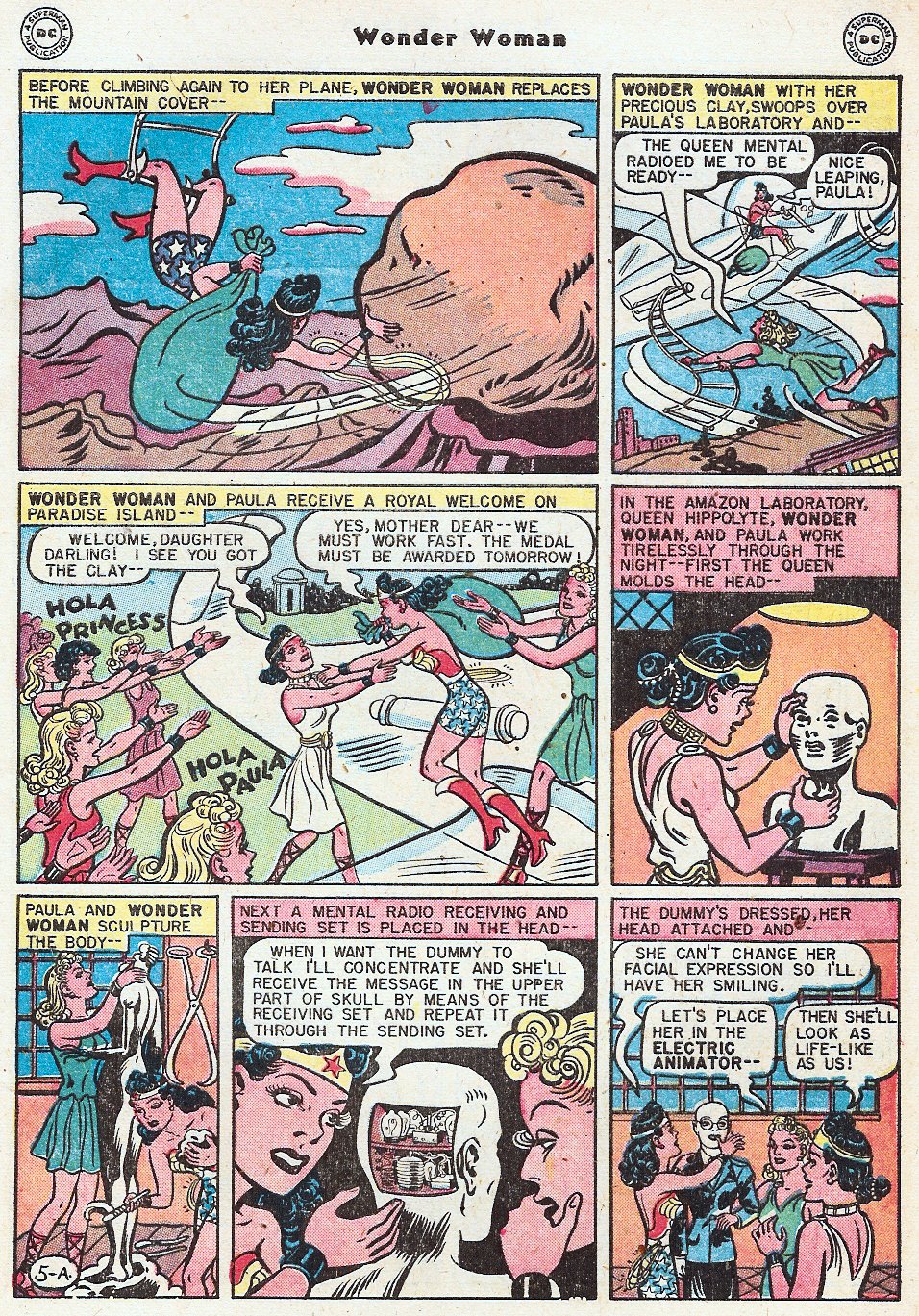
As an example, in the first story in this comic, Diana Prince has been asked to present a medal to Wonder Woman. So WW has to figure out a way for her and Diana, her alter ego, to appear together in the same place. The solution is a technological process involving the extraction of Amazonian clay from a volcano, followed by the molding of a Diana robot/dummy, and the copious deployment of technological gadgetry. In other words, the Amazons use labor, craft, genius, and ingenuity to create a complete, coherent masterpiece — which seems like an essentially modernist solution. The Diana Prince dummy is the pulp narrative equivalent of Van Gogh’s boots).

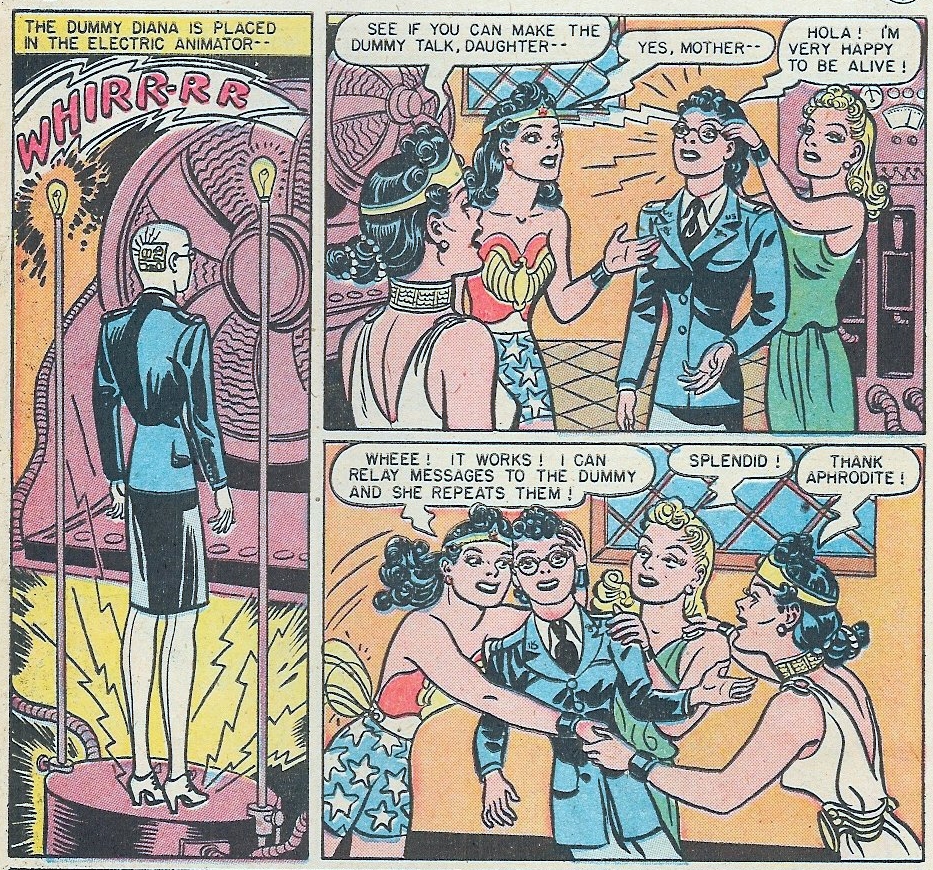
The nature of the comic, however, pushes against a modernist achievement. The Diana doll not only replicates the real Diana Prince; it replicates itself. The doll is an image, of course, but the image of that image is repeated panel after panel. In the upper right hand panel above, Wonder Woman makes the doll speak “Hola! I’m very happy to be alive!” The doll isn’t alive, it’s only an image of life — but, of course, Wonder Woman isn’t alive either; the speech bubble coming out of her mouth is just as ventriloquized (by Marston, or whoever is speaking as Marston) as the speech bubble coming out of “Diana’s.” The final panel, as Wonder Woman hugs her doppelganger, may in part be the euphoria of a work completed. But it also seems to be the libidinal excitement of the mirror stage, when the child sees and (mentally) embraces its own (false) image. Hippolyta, WW’s mother, of course, looks on proudly as her daughter coos at her own reflection. The celebration is of the self magically and infinitely reproduced, the image reified as product and sent forth into the world to multiply, flowing within and across borders in a delirium of multiplying jouissance.

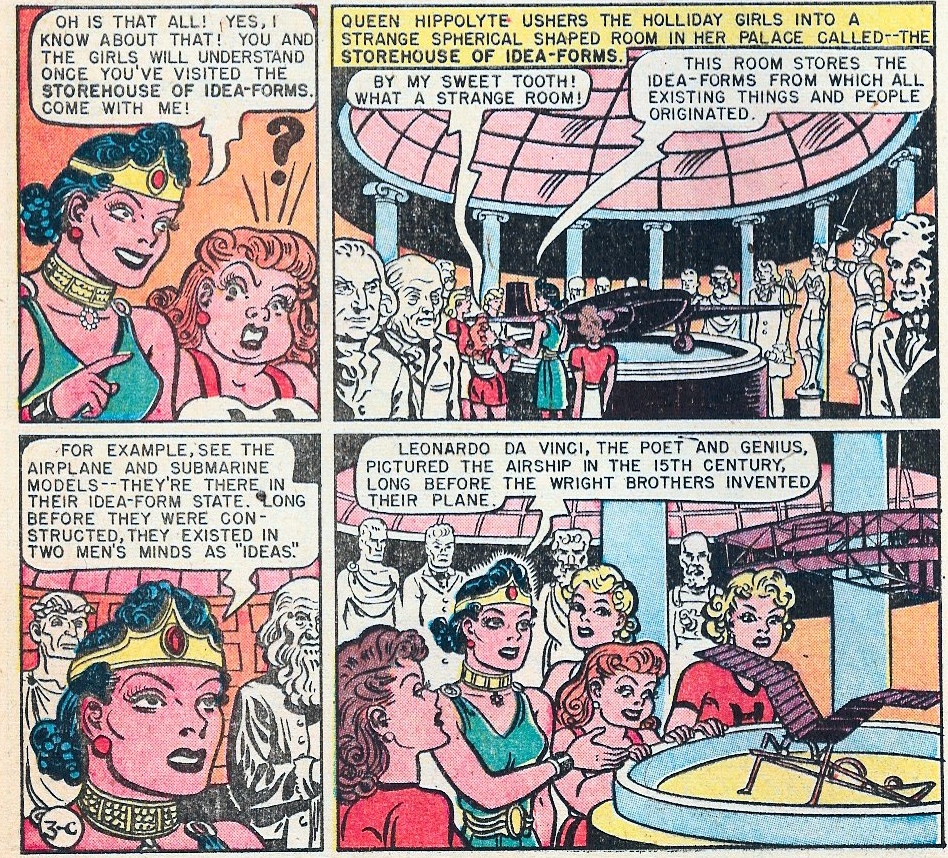
The third story in the volume has an even odder take on creativity and replication. Wonder Woman is flying the Holiday girls to Paradise Island when she is suddenly sucked out of her invisible plane. The girls land the plane, but are understandably concerned. Hippolyta, however, tells them she knows all about WW’s disappearance:

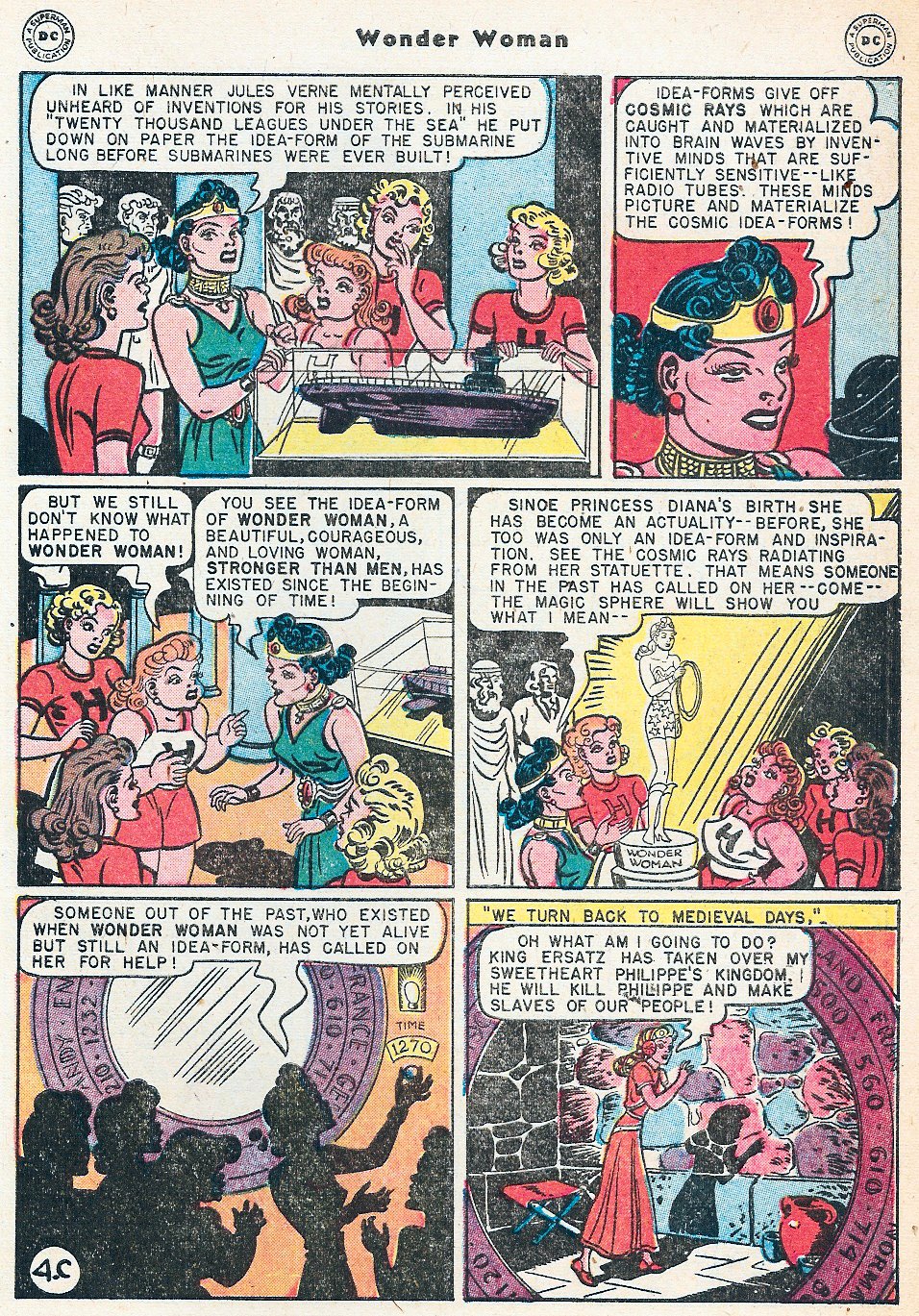
I think Marston must have written this — who else is going to spend panel after panel explicating garbled Platonism? And on he goes:

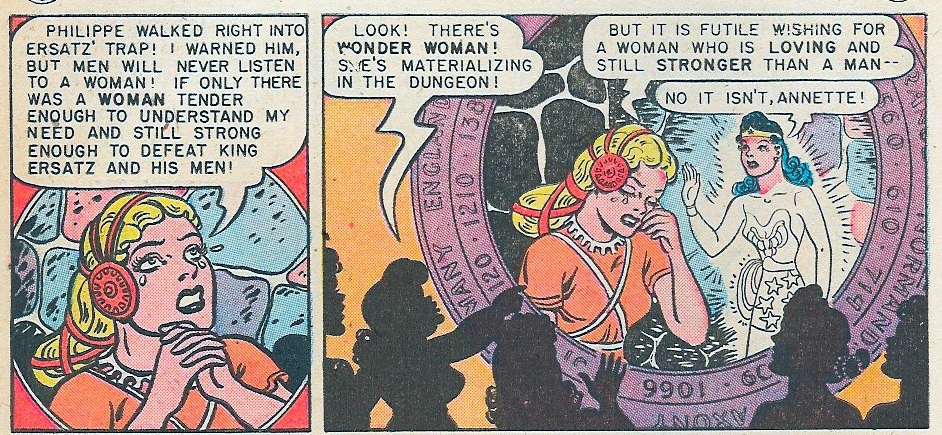
So, according to Marston, idea-forms send out cosmic rays to sensitive minds, reproducing themselves on the brain like film on a screen (Peter’s silhouettes in the bottom right as Hippolyta and the Holiday girls turn to look at the mirror/screen seems suggestive here.)

Plato said we could only see the flickering shadows of reality on the cave wall; Marston has reality beamed into our heads. Idea-forms aren’t the real tragically out of reach; they’re a fecund technology disseminated to all. Wonder Woman herself — a loving woman stronger than men — becomes a kind of viral idea, propagating itself across time and space. More than 70 years after Marston’s death, Alan Moore would create Promethea, an idea of a goddess which inhabits different women at different times. Moore thought Promethea was his own version of Wonder Woman. Based on this story, though it seems like Promethea wasn’t a version of Wonder Woman, but the idea-concept itself. The pomo version of Wonder Woman is simply Wonder Woman.

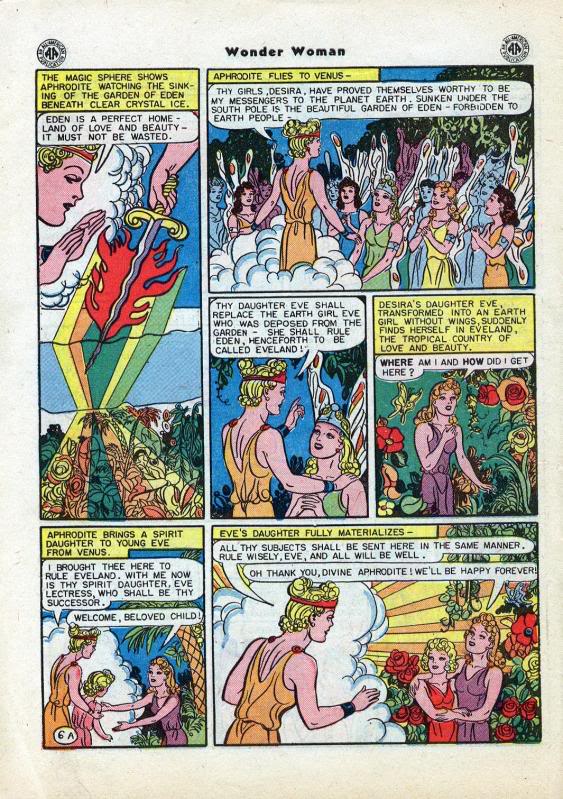
Post-modernism, which turns everything into a fetishized surface, obviously works well with Marston’s own proclivity to fetishize…well, everything. But I also wonder if his early-adoption of post-modernism might have something to do with his queerness — and perhaps his femininity. Certainly, the criticism of post-modernism as surface without depth, as merely decorative, echoes criticisms of female aesthetic endeavors, and indeed of women themselves. When you look at Harry Peter’s art (as in the image from Wonder Woman #13 below), you see pages stuffed with repetitive images of women holding, clasping, and touching each other, a consumable cornucopia of iterated catharsis.

If that also describes our post-modern landscape of bricolage, mash-up and meme, perhaps Luce Irigary should have substituted “postmodernism” for “woman”, and written:

So postmodernism does not have a sex organ? She has at least two of them, but they are not identifiable as ones. Indeed, she has many more. Her sexuality, always at least double, goes even further: it is plural….postmodernism has sex organs more or less everywhere.

Sequential Boots

Boots in Time
 
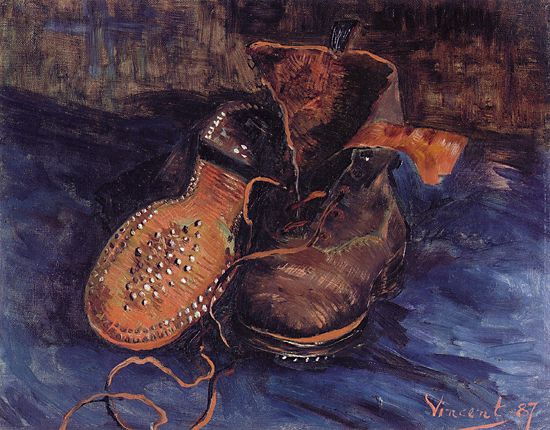
The first major touchstone in Fredric Jameson’s epic 1991 Postmodernism, or The Cultural Logic of Late Capital Capitalism is Van Gogh’s A Pair of Boots.

Jameson refers to this as “one of the canonical works of high modernism,” and goes on to argue:

that if this copiously reproduced image is not to sink to the level of sheer decoration, it requires us to reconstruct some initial situation out of which the finished work emerges. Unless that situation–which has vanished into the past–is somehow mentally restored, the painting will remain an inert object, a reified end product impossible to grasp as a symbolic act in its own right, as praxis and as production.

This last term suggests that one way of reconstructing the initial situation to which the work is somehow a response is by stressing the raw materials, the initial content, which it confronts and reworks, transforms, and appropriates. In Van Gogh that content, those initial raw materials, are, I will suggest, to be grasped simply as the whole object world of agricultural misery, of stark rural poverty, and the whole rudimentary human world of backbreaking peasant toil, a world reduced to its most brutal and menaced, primitive and marginalized state.

Fruit trees in this world are ancient and exhausted sticks coming out of poor soil; the people of the village are worn down to their skulls, caricatures of some ultimate grotesque typology of basic human feature types. How is it, then, that in Van Gogh such things as apple trees explode into a hallucinatory surface of color, while his village stereotypes are suddenly and garishly overlaid with hues of red and green? I will briefly suggest, in this first interpretative option, that the willed and violent transformation of a drab peasant object world into the most glorious materialization of pure color in oil paint is to be seen as a Utopian gesture, an act of compensation which ends up producing a whole new Utopian realm of the senses, or at least of that supreme sense-sight, the visual, the eye-which it now reconstitutes for us as a semiautonomous space in its own right, a part of some new division of labor in the body of capital, some new fragmentation of the emergent sensorium which replicates the specializations and divisions of capitalist life at the same time that it seeks in precisely such fragmentation a desperate Utopian compensation for them.

There is, to be sure, a second reading of Van Gogh which can hardly be ignored when we gaze at this particular painting, and that is Heidegger’s central analysis in Der Ursprung des Kunstwerkes, which is organized around the idea that the work of art emerges within the gap between Earth and World, or what I would prefer to translate as the meaningless materiality of the body and nature and the meaning endowment of history and of the social. We will return to that particular gap or rift later on; suffice it here to recall some of the famous phrases that model the process whereby these henceforth illustrious peasant shoes slowly re-create about themselves the whole missing object world which was once their lived context. “In them;” says Heidegger, “there vibrates the silent call of the earth, its quiet gift of ripening corn and its enigmatic self-refusal in the fallow desolation of the wintry field.” “This equipment,” he goes on, “belongs to the earth, and it is protected in the world of the peasant woman. . . . Van Gogh’s painting is the disclosure of what the equipment, the pair of peasant shoes, is in truth. . . . This entity emerges into the unconcealment of its being;’ by way of the mediation of the work of art, which draws the whole absent world and earth into revelation around itself, along with the heavy tread of the peasant woman, the loneliness of the field path, the hut in the clearing, the worn and broken instruments of labor in the furrows and at the hearth Heidegger’s account needs to be completed by insistence on the renewed materiality of the work, on the transformation of one form of materiality–the earth itself and its paths and physical objects–into that other materiality of oil paint affirmed and foregrounded in its own right and for its own visual pleasures, but nonetheless it has a satisfying plausibility. At any rate, both readings may be described as hermeneutical, in the sense in which the work in its inert, objectal form is taken as a clue or symptom for some vaster reality which replaces it as its ultimate truth.

For Jameson, if the painting is not to be decoration, if it is to have meaning, then it needs to include meaning — which is to say, narrative, or history. The decoration, the burst of color, is merely a surface to be consumed unless it has a context attached to it. That context is both the past (the long path of the immiserated peasant through his life of toil, up to his door, and to the moment when he removes these, his boots); the present (especially in Jameson’s second reading, where the painting creates the peasant woman and the field and the earth around itself) and the future (as the burst of Utopian color, the yearning towards a decidedly material relief.) The painting calls for a story to complete it.

This is obviously a very Marxist reading. But it’s also a comics reading.

At first calling it a comics reading may seem a little startling, because there is often a very strong push in comics crit against ideological readings. Recently on this site, for example, Matthias Wivel argued:

Which brings me to the other issue I have with the critical reception of Habibi, and comics in general: the lack of sensitivity to how the visuals are integrally determinant of the work. Critics tend not to look beyond the surface qualities of the drawing in comics, and then proceed to discuss whatever conceptual issues are at stake without devoting much attention to how those issues are manifested visually. Even a cursory examination of the reviews published so far of Habibi should demonstrate this. Only a few have been entirely positive and several have been strongly negative in the conceptual assessment of the book and its ‘writing,’ but the majority of the reviewers have nevertheless taken time to commend the ‘art.’

Matthias argues that critics “tend not to look beyond the surface qualities of the drawing in comics” — which can not entirely finesse Jameson’s point that drawings are, literally, surface. Matthias goes on to a lengthy and thoughtful discussion of, among other things, Thompson’s line. But the discussion of that line itself seems flattened by Matthias’ circumspect refusal to give it a context. He criticizes Thompson for failing to convey complexity of emotion — but why exactly are we supposed to desire complexity of emotion? He points out the lack of spontaneity in Thompson’s line — but why does it matter if the line is spontaneous or not? Without the ideology that Matthias denigrates, the critique is left foundering in a thin (because untheorized or acknowledged) humanism or else, as Jameson suggests, in the even thinner realm of decoration, where the ink is appreciated in its inkness, a connosieur’s pleasure. (One could, of course, defend connosieurs and decoration — but I don’t know how you could go about doing that without wading into the deeper shoals of ideology.)

To be fair, Matthias isn’t calling for non-ideological readings; just ideological readings which pay more attention to surfaces. But (as is the way with such things) he ends up so chary of ideology that he seems to be paying attention just to the surface — looking so closely at the trees that the forest drops out of the peripheral vision. Jameson insists on looking beyond the image, on saying where it is coming from and where it is going to. For Van Gogh’s shoes to have meaning, they have to be in the world, affected by it and affecting it; they have to be made for walking. Matthias, in contrast, seems at times to want the line to draw a circle around itself, keeping the world, with its messy moral judgments and harumphing ideology at bay.

What’s strange about this tack is that it seems to miss the essence of comicness — to call for a focus on surface when sequential art has that “sequence” right there in its name. The comic book does exactly what Jameson does; it provides the situation for each image, and for each image the situation.

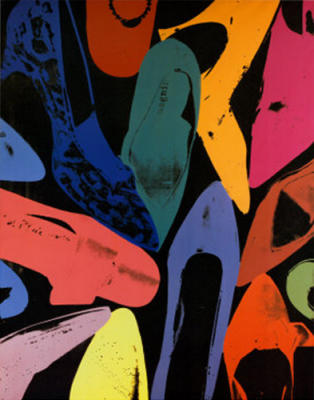
Comics in Jameson’s terms then seem to be what others have sometimes praised them for being; that is, resolutely committed to old-fashioned artistic values — a medium committed to Van Gogh rather than to Jameson’s post-modern exemplar, Andy Warhol:

Now we need to look at some shoes of a different kind, and it is pleasant to be able to draw for such an image on the recent work of the central figure in contemporary visual art. Andy Warhol’s Diamond Dust Shoes evidently no longer speaks to us with any of the immediacy of Var Gogh’s footgear; indeed, I am tempted to say that it does not really speak to us at all. Nothing in this painting organizes even a minimal place for the viewer, who confronts it at the turning of a museum corridor or gallery with all the contingency of some inexplicable natural object. Or the level of the content, we have to do with what are now far more clearly fetishes, in both the Freudian and the Marxian senses…. Here, however, we have a random collection of dead objects hanging together on the canvas like so many turnips, as shorn of their earlier life world as the pile of shoes left over from Auschwitz or the remainders and tokens of some incomprehensible and tragic fire in a packed dance hall. There is therefore in Warhol no way to complete the hermeneutic gesture and restore to these oddments that whole larger lived context of the dance hall or the ball, the world of jetset fashion or glamour magazines.

Yet this is even more paradoxical in the light of biographical information: Warhol began is artistic career as a commercial illustrator for shoe fashions and a designer of display windows in which various pumps and slippers figured prominently. Indeed, one is tempted to raise here–far too prematurely–one of the central issues about postmodernism itself and its possible political dimensions: Andy Warhol’s work in fact turns centrally around commodification, and the great billboard images of the Coca-Cola bottle or the Campbell’s soup can, which explicitly foreground the commodity fetishism of a transition to late capital, ought to be powerful and critical political statements. If they are not that, then one would surely want to know why, and one would want to begin to wonder a little more seriously about the possibilities of political or critical art in the postmodern period of late capital.

But there are some other significant differences between the high-modernist and the postmodernist moment, between the shoes of Van Gogh and the shoes of Andy Warhol, on which we must now very briefly dwell. The first and most evident is the emergence of a new kind of flatness or depthlessness, a new kind of superficiality in the most literal sense, perhaps the supreme formal feature of all the postmodernisms to which we will have occasion to return in a number of other contexts.

Van Gogh’s shoes look like they’ve just been tossed aside by a perambulating peasant; Warhol’s look like they’ve been purchased new from some shop window and then hammered flat. No one has worn them, no one will wear them; they are shoeness without story. If they have an ideology or a narrative, it is the narrative of no ideology and the ideology of no narrative.

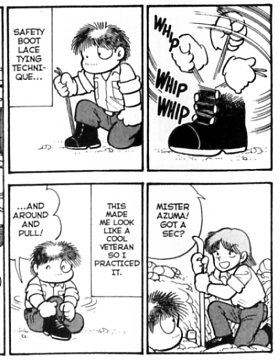
In contrast, consider this sequence from Hideo Azuma’s Disappearance Diary:

The worker’s shoe here is not abandoned as in Van Gogh; instead, it is in its place, on the foot of an actual worker, inside a narrative. The upper right panel, showing Azuma tying his own shoe, wraps itself in time, the hands creating a whirlpool of motion with the shoe an anchor at the center. If the shoe in Warhol is dead and the shoe in Van Gogh points to life, then this shoe is actually alive, tied up with time. Azuma is effectively pulling on the working class identity, with its manual facility and expertise (“this made me look cool like a veteran.”) There is no burst of color, and no utopian vision, but the motion lines and, indeed, the panel progression still energizes the images. The narrative is in the picture and the picture in the narrative; the boot is not just its surface, but, as with Van Gogh, its story.

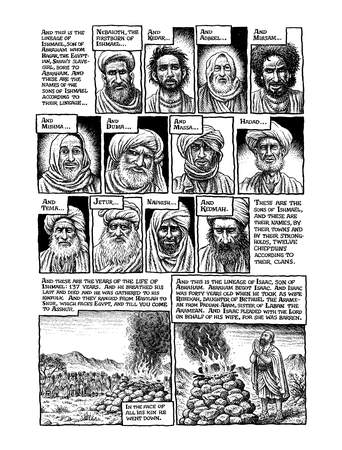
Comics then, can be seen less as an illustration of text than as a narrativizing of illustration — a form which pushes back against the shallowness of contemporary art practice by embracing the old-fashioned narrative and ideological virtues of prose. From this perspective, the achievement of R. Crumb’s Genesis is not giving flesh to every passage in the Bible, but rather giving narrative to every image. There are many, many Biblical paintings and drawings which show us Biblical characters as flesh and blood:

Crumb’s Genesis, however, is much more rare in insisting the the flesh of the Biblical image must be elaborated by the Biblical text itself. Crumb’s Bible is narrative; generations begatting through time, each with its own face that takes on weight only in relation to all the other faces.

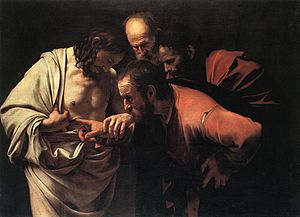
In this sense, Crumb and comics themselves can perhaps be seen as analogous to doubting Thomas. Seeing is not enough; you also need the experience of narrative and the word. If post-modernism proffers the dehistoricized image, comics insists on reinscribing it. Backwards looking in every sense, comics does not exist without the preceding panel, the one that gives the present depth and meaning.

 
Boots in Space
 
In Postmodernism, Jameson specifically claims that the distinction between the modern and post-modern is in post-modernism’s spatialization of time.

A certain spatial turn has often seemed to offer one of the more productive ways of distinguishing post-modernism from modernism proper, whose experience of temporality — existential time along with deep memory — it is henceforth conventional to see as a dominant of the high modern.

Thus, Van Gogh’s shoes, imbued with a past and a future, become Warhol’s shows, shorn of history, existing as pure space. Or (though Jameson does not use this example specifically) the painful, crushing sense of a life passing in a stymied claustrophobia in Kafka’s parable of the man at the door of the law is replaced in Borges’ story “The Double” with a miraculous simultaneity, as an older Borges and a younger Borges suddenly exist in the same space, so that time becomes not an unavoidable weight but a sleight-of-hand juxtaposition. As Jameson says, “Different moments in historical or existential time are here simply filed in different places; the attempt to combine them even locally does not slide up and down a temporal scale…but jumps back and forth across a game board that we conceptualize in terms of distance.”

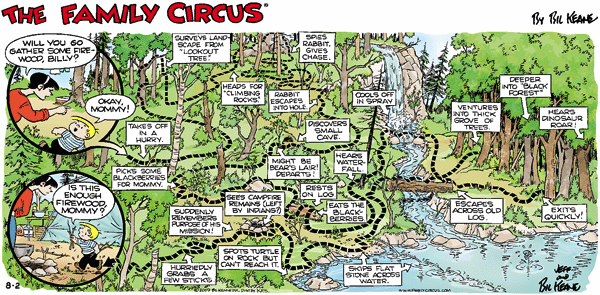
What would it look like if you turned time into space on a metaphorical gameboard? Maybe something like this?

The time of Billy’s journey is turned into a single schematic, a line which we can lightly trace. As Jameson says, different moments are simply filed in different places; the modernist pleasure of recuperation and depth is here replaced with the pleasures of surface and juxtaposition.

From this perspective, comics are not a backwards-looking modernist medium at all, but rather a post-modern engine for flattening time and narrative into space — of making time itself a manipulable, reified product. As an example, the Hideo Azuma boot-tying sequence:

Is the boot really energized and enriched by the narrative? Or does the existence of the narrative as spatial image allow time itself to become a mere decoration? The whipping hands and the boot so simplified it is almost a logo — Azuma presents this not so much as a specific boot in time, but as an iconic representation of a desirable skill, contained in a box and reproducible specifically for public consumption. Van Gogh’s boots were valuable for the life that had lived in them; Azuma’s are valuable because of their own image; they make him “look like a cool veteran.” Time — the working-class narrative of bootness — is flattened, mastered, and packaged for consumption. The boot points not to Marx’s utopian narrative, but to Lacan’s mirror stage; the exhilarating moment of mistaking a reflection for one’s past and one’s future.

You can similarly reinterpret Crumb’s Genesis.

Rather than using the narrative to give life to the image, the steady drumbeat of the images crushes the narrative. Generations are spread out across the page like moths pinned for display, or like collectable baseball cards. Narrative and ideology are systematized and controlled. The mystery of time becomes the fetish of space, patriarchs set together cheek by jowl with a repetitive obsessiveness reminiscent of Warhol himself.

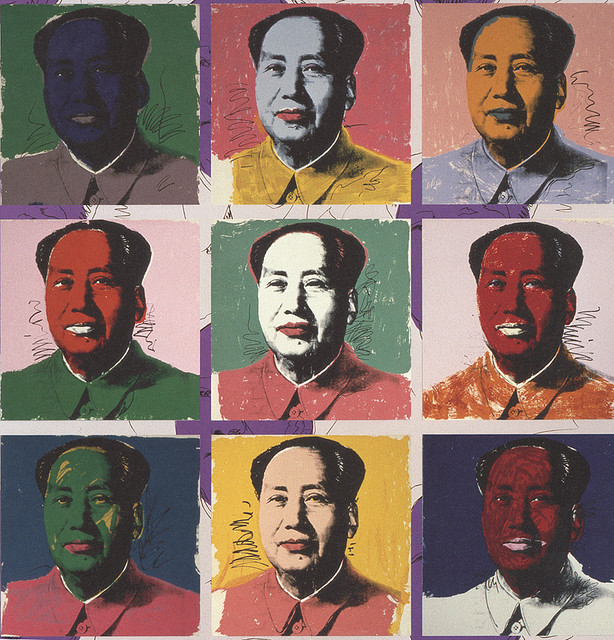
Warhol’s treatment of Mao is more explicitly parodic, but for that very reason it is almost more respectful. Mao and Mao’s image are, for Warhol, worth defacing and worth queering. Crumb’s Genesis, on the other hand, is treated as meaningless — one of the most consequent texts in history becomes a mere decoration, lines on paper. Ng Suat Tong’s is right that Crumb is “watering down” Genesis, but he’s wrong to think that this is a bug rather than a feature. If Crumb’s Genesis has a point, it is precisely the evacuation of content, the rendering of the Bible as merely another surface pleasure, its long history become a mere image no difference from any other that flickers across our optical nerves.

Jameson barely mentions comic book’s in Postmodernism; there’s one throw-away line in which he talks about post-modern bricolage as comic-book juxtaposition (and as schoolboy exercise.) In contrast, he devotes a great deal of time to video art, of which he says:

Now reference and reality disappear altogether and even meaning — the signified— is problematized. We are left with that pure and random play of signifiers that we call postmodernism, which no longer produces monumental works of the modernist type but ceaselessly reshuffles the fragments of preesistent texts, the building blocks of older cultural and social production, in some new and heightened bricolage: metabooks which cannibalize other books, metatexts which collate bits of other texts — such is the logic of postmodernism in general, which finds one of its strongest and most original, authentic forms in the new art of experimental video.


Nam June Paik, Electronic Superhighway

But if video art is the quintessential post-modern genre, perhaps it’s possible to see comic-books as its fuddy-duddy dialectical twin. Where video art fragments, comics reify. Where video art erases, comics embalm. Where video art heightens the ADD of advertisement, comics channels advertising’s depthless, deathless monomania.


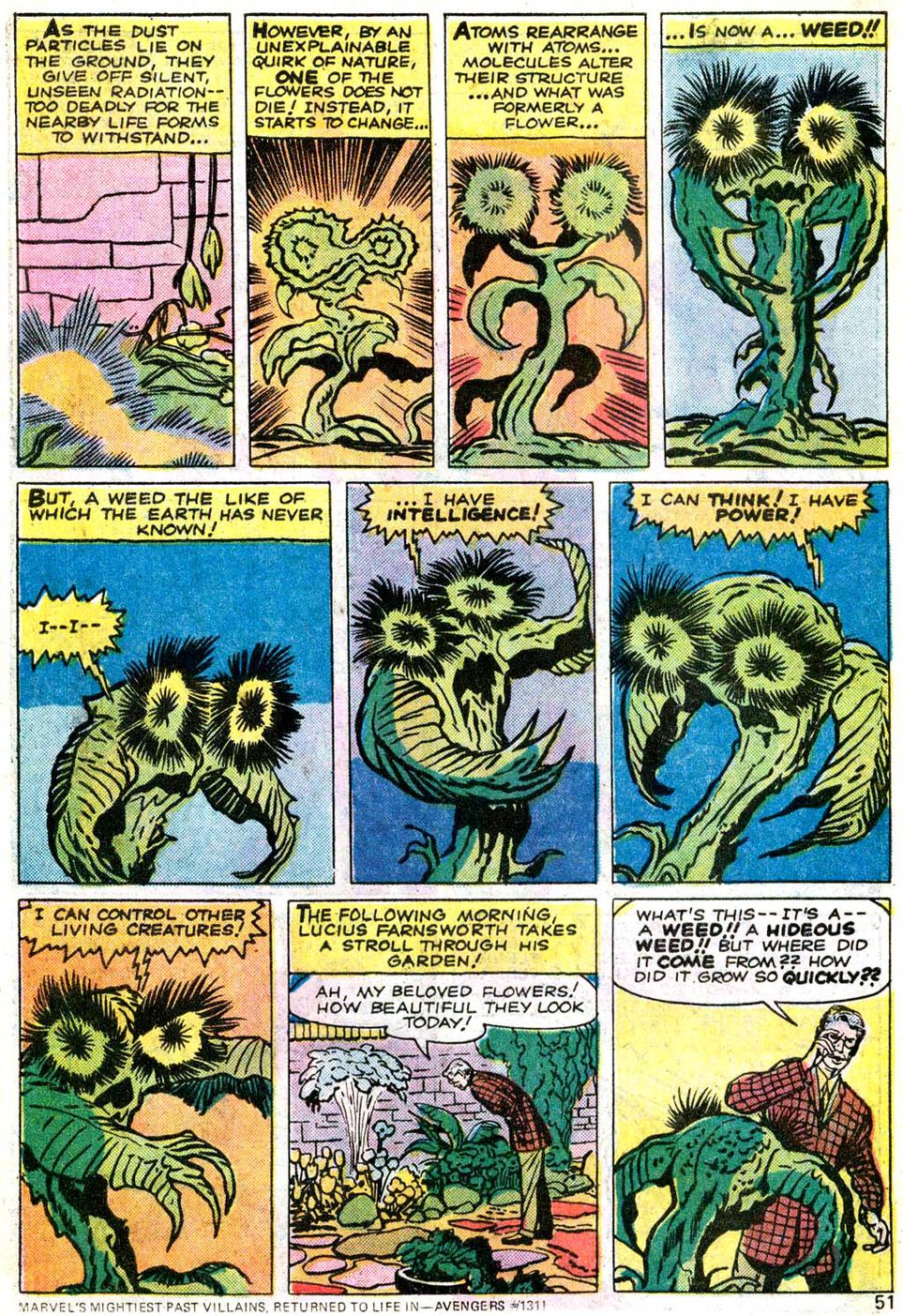
Stan Lee/Jack Kirby “Save Me From the Weed!”

Stan Lee’s advertising huckster sloganeering (“A weed the likes of which the world has never known!”) is the perfect soundtrack for a medium in which time passing is shown by compulsive iconic repetition. Kirby’s helplessly neotonic weed, straining virilely against its roots, is a pre-Internet self-contained viral meme, its image replicating across the page like an embedded video or Warhol’s fecund Maos. Video art fractures identity into a unassimilable riot of images; comics turns repetitive image into identity. The evil weed next to the evil weed next to the evil weed might as well be a series of toys each in its box on the shelf in Wal-Mart, every iteration a pitch for all the others.

Comics’ crass refusal of the past as history, its suffocating nostalgia for and commodification of even the most dunder-headed images simply because they are images, can be a depressing spectacle. Yet, if comics epitomizes some of the worst excesses of the zeitgeist, is that not a sign of its relevance? As Jameson notes, there is no getting outside post-modernism; to the extent that we have a narrative, it is our narrative; to the extent we have a surface, it is our surface. We can mourn the rich texture and context of Van Gogh, but our mourning is itself post-modern, a loss based in our position after the modern has gone. If we pick up Van Gogh’s shoes again:

to illustrate a point or create a narrative, then those shoes become ours, not his. They lose their lodging in the past and find a space in the present, digitally replicated ad infinitum, almost like a comic book.

Lost and Found Horror

The Blair Witch Project (1999) is the most likely starting point for the “found footage” sub-genre of horror. If you want to nit-pick, the first film to use the found footage concept was the Italian sleazefest Cannibal Holocaust (1980). But the film never pretended that the found footage (filmed by a “lost” documentary crew) was real in our world. Instead, the documentary footage was contained within a narrative that was clearly fictional. The Blair Witch Project, on the other hand, never stopped pretending. Even the marketing campaign (which included a fake documentary on the “legend” of the Blair Witch) passed the film off as real footage of the filmmakers’ last days.

Since Blair Witch there’s been a steady trickle of these films. They are not a new genre so much as a hybrid genre that steals ideas from older horror movies, and combines them with the conceit that the film depicts real events, or at least that the film was produced by individuals who are actually present within the story (usually amateur filmmakers). This means poor lighting, shaky camera-work, and unknown actors who can pass as normal people. But the films still contain the tropes that moviegoers expect from mainstream horror. After The Blair Witch Project (killer in the woods genre) came [REC] and its inferior American remake Quarantine (pseudo-zombie genre), Diary of the Dead (zombie apocalypse genre), Cloverfield (giant monster genre), Apollo 18 (alien genre), and Paranormal Activity (haunted house genre).

But how real is found footage? If I were being stalked by a ghost/slasher/zombie/serial killer/tropical cannibal, the last thing I would do is record my demise for posterity. No offense to my tiny audience, but I don’t give a flying fuck about entertaining you in my final moments. And who in their right mind would waste time  recording the ghost or giant monster that’s trying to kill them (as well as the touching romantic sub-plot during the lulls in the violence)? The common defense of the genre is that we live in the Youtube and cellphone camera age, and the genre simply reflects the fact that we are saturated with amateur video. But amateur footage of protests, crimes, terrorist attacks, etc. tends to be brief, incompetently filmed, and rarely has anything resembling likable characters or a plot. In other words, actual amateur video bares no resemblance to the professionally crafted narratives that lurk underneath the “found footage” concept. And there’s the little fact that it’s impossible to record video of ghosts, zombies, or giant monsters because those creatures don’t exist.

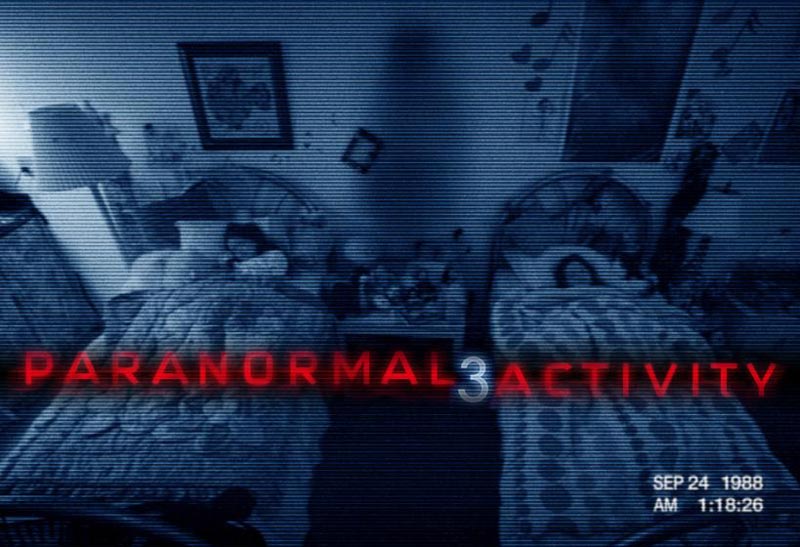
And yet audiences eat this shit up, and I’m right there with them. My favorite set of films in the genre is the Paranormal Activity franchise. The first Paranormal Activity is not particularly innovative. It’s cut from the exact same cloth as a thousand other haunted house movies, and it’s at least as campy as anything starring Vincent Price. But I found it scarier and far more entertaining than The Haunting, Amityville Horror, The Others, or any other haunted house movie that exists in a fictional universe. Paranormal Activity 3 is the perfect example of the genre. The entire premise is ridiculous: a demon is terrorizing a family in 1988, and the dad just happens to be an audio/video expert who rigs his house with video cameras and always walks around with a massive camcorder. The film is unabashedly cheesy, and even includes the old ghost-under-the-sheet gag. But it’s great! The simple plot sucks you in and the old-fashioned scares still work. The viewer quickly forgives the implausibility of a man walking around with a camcorder all the time, because how else would there even be a movie?

It’s not the phony realism that matters, but how that realism connects the audience with a familiar narrative. To put it another way, found footage works not because we belong to the Youtube generation, but because we belong to the Real World generation (youngsters can replace Real World with Survivor or Real Housewives of Who Cares or whatever reality TV series floats your boat). So-called reality TV is quite fake. Real people are encouraged to behave in unnatural ways for the sake of our entertainment. They are less inhibited, more reckless, and generally stupider when in front of the camera. Then a team of professional editors and writers crafts an artificial narrative from countless hours of random shit caught on tape. Through this process reality TV creates the ultimate illusion – that normal people are actually interesting to watch. Normal people can have exciting singing careers, or scheme to win a million dollars, or have lives filled with catfights, hot tub sex, and soap opera drama.

The found footage genre works in much the same way. The pretense that the film is real isn’t so much about fooling people but in bringing the audience further into familiar narratives that they love. The shaky camera and unknown actors create an illusion of reality. Scary and exciting things don’t just happen to movie stars. They can happen to normal people, just like you or me! But this illusion of reality is plastered over a conventional genre film. So the scares are structured in a narrative format that we instantly recognized and appreciate. In movies and in “real life,” a ghost wouldn’t reveal itself right away, but would instead spends several days doing little things to build up the suspense. It would be a disappointment if the “real” haunted house experience lacked the requisite tension and cheap thrills. After all, what’s the point of being haunted by a demon if he doesn’t even do it right?

Circle of Blood

This originally ran on Comixology.
____________________
“Super-hero” backwards is “noir.” The opposite of the upright avatar of justice with entirely sublimated sexual urges is the morally ambiguous anti-hero driven by money-lust and just plain old lust. The super-hero wears his underwear on the outside and saves the universe; the noir hero curses the universe and is pulled around by what’s inside his underwear. Noir is about shadows and helplessness and the best-laid illicit plans ending up in ruins; super-heroes are about light and empowerment and the best-laid illicit plans ending up in ruins.

Which is to say that, while super-heroes and noir appear at first to be irreconcilable, on closer look they do have a fair bit in common. They’re both male genre literature. They both have a strong moral code enforced by corporal punishment. And they both have, shall we say, ambivalent feelings about women. It makes sense, then, that there’s a long tradition of combining the two, starting at least with the first Batman stories, reaching its high point, I firmly believe, with Bob Haney’s goofily brilliant Batman/Deadman team up in Brave and Bold #101, and continuing on to this day with anything Frank Miller has ever touched (including, of course, Batman.)

One of the most interesting super-hero/noir mashups I’ve seen is the 1986 Punisher mini-series Circle of Blood by Steven Grant and Mike Zeck. The Punisher has always been only sort-of/kind-of a super-hero. He wears tights, but merely, you sense, because that’s the best way to stay inconspicuous in the hero-ridden Marvel multiverse. He fights for truth and justice, but he does it by shooting people.

Steven Grant is well known for his writing about comics as well as for his comics themselves (he did some guest-writing on my blog not too long ago), and you can see his critical acumen in his script. Basically, where Frank Miller tends to use noir to make his heroes seem even more bad-ass, Grant uses it to question and ultimately undermine the moral certainties on which the super-hero genre is based.

Zeck draws the Punisher as a pumped-up manly-man whose bobble-head is dwarfed by acres of steroidal flesh, and this is a good metaphor for the way Grant writes the character. From the neck down, the Punisher is a super-hero juggernaut, hyper-competently disposing of roomfuls of thugs in classic Bat-mode, or bashing his way through a prison in a fashion reminiscent of the contemporaneous Rorschach.

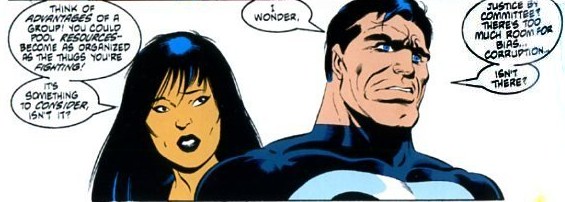
From the neck up, though, the Punisher isn’t hyper-competent at all. Instead, he’s more like the classic noir dupe. Though he has a certain tactical animal cunning, his inner monologue is obsessively repetitive in a way that suggests borderline idiocy — where Batman’s traumatic backstory has, supposedly, made him smarter, the Punisher’s has left him, in Grant’s writing, a monomaniacal mental and emotional basket-case. The Punisher is, like most noir men, childishly easy to fool. He stumbles into traps, is bamboozled by a shady conglomerate called the Trust, and, inevitably, betrayed by a woman. His solve-it-by-shooting-it approach to every problem results in heaps of dead bodies, including that of one child. Said child’s death sends our hero into a self-pitying funk, complete with flashbacks and profound utterances (“It’s got to stop. The poor children.”) which, at least from my perspective, makes him appear more damaged, dangerous, unsympathetic, and unheroic than ever.

The Punisher’s final act in the comic is to allow the woman who betrayed him (Angela) to fall off a cliff. His motivation seems less abstract justice than simple spite, and one has to wonder, as he limps off into the sunset, whether the world wouldn’t maybe be a safer place if the bad guys had won and offed this dangerously imbecilic killing machine. The use of noir here actually, and I think intentionally, calls the whole concept of super-heroics into question. The hired thugs in the series are dressed in the Punisher outfit and actually believe themselves to be the Punisher — and the parallel is quite clear. The Punisher himself, after all, seems like a brainwashed sleepwalker, not to mention a criminal. In the not-light of noir, the super-heroic law-and-order certainties become naïve, dangerous idiocy, while righteous vengeance turns into a flimsy excuse for self-aggrandizing fascistic violence.

Of course, you can turn this around and argue that the super-hero genre actually validates noir’s amorality. Just because Grant portrays the Punisher as a dangerous numbskull doesn’t mean that readers will stop identifying with him. He’s the hero, after all, and when, in his quasi-sentient way, he lets Angela fall to her death, you can certainly hear a chorus of “yeah, kill the bitch!” echoing from the peanut gallery. Does breaking a man’s little finger make Rorschach a monster, or does it make snapping people’s fingers seem kind of cool?

Probably both. Super-heroes and noir are polar opposites — but on a magnet, the poles are, of course, closely attached. Like Westerns, spy thrillers, and most male genre literature, both super-hero and noir are built around an exciting frisson of justified violence — a circle of blood. If you want to break out of that circle, you probably need to reach for a less closely-allied genre, or else try to dispense with genre altogether. Once you do that, of course, you’re talking to a much smaller audience, and not writing for a mainstream comics publisher. The irony is that by creating a thoughtful, popular comic questioning the Punisher’s war on crime, Grant probably helped to make that kind of war — with its more explicit blood, sex, and amorality — a mainstream staple.

Twilight vs. Buffy — Battle to the Death?

Inspired by Joy DeLyria’s post about Evil in Speculative Fiction, Charles Reece and I have been engaged in a knock-down/drag-out about the relative morality of Buffy’s vision of vampires and Twilight’s vision of vampires. It’s been pretty enjoyable, so I thought I’d highlight it in a post. My comments are in italics; Charles is in plain text.
_______________________
Noah: This is a way in which Twilight is much superior to Buffy, I think. Twilight vampires can choose good or evil just like the rest of us. Most of them choose evil because they need to drink blood and they’re very powerful, but it doesn’t have to be that way, as Carlisle and his family show.

This complicates the criticism that Bella should kill vampires the way Buffy does too. Vampires have souls in Twilight; killing them is as morally repugnant as killing people. Of course, they’re mass murderers too, many of them…but extrajudicial killing even of murderers is not morally neutral.
 
Charles:I think the veggie vampire idea is pretty dumb, too, certainly worse than Buffy’s problems. They’re a master race who are expected to treat us as equals. Yeah, bullshit. They might argue over whether they should breed us without legs and keep us in cages, though. If we were lucky, a Peter Singer would be turned. True Blood, as dumb as it is, is probably a more realistic depiction. They don’t eat us for pragmatic reasons, as a matter of realpolitik. We outnumber them and move about in the daylight (a problem that makes Twilight even dumber for getting rid of it).
 
Noah: I don’t really get your objection, Charles. You argue that they’re stupid because they’re not acting like a master race…but it’s you who is arguing that they’re a master race. That’s really not Meyer. She sees them as having souls. To the extent that the veggie vampires are better than us, it’s because they’re vegetarian. Suffering and renunciation makes you superior, not strength. I guess lots of people think that’s inherently stupider than realpolitik, but I strongly, strongly disagree.

Buffy raises theological issues (why are vampires hurt by crosses?) that it is completely unwilling to answer. Twilight is much more ready to confront them — by, for example, getting rid of the cross nonsense and talking explicitly about theology. Where Twilight’s world falls apart is not in the logic of the vampires per se, but with its secret world conceit. Vampires kill way too many people; either they would have been discovered, or else all of humanity would have been dead a long time ago. The mechanics just don’t work. (Buffy has this problem too…but it tends to get around it by just treating the whole thing as a joke. People just conveniently forget after they meet vampires, which is treated as a goof. This points to one of Buffy’s big strengths over Twilight, which is that the writing is much wittier and smarter on the microlevel, even if a lot of the big issue plotting is less thought through.)
 
Charles: By “soul”, I assume you mean a “conscience,” which we have, too, but if something’s deemed a lower form of life, we apply different rules. That’s why I think vegetarian vampirism is an inherently dumb idea, not necessarily the characters themselves for not eating humans. Basically, it’s a fantasy that power has no effect on beliefs. That’s pure bullshit.

I don’t see why masochism makes you more superior than strength. The former perfectly supports the latter.
 
Noah: No; by soul, Meyer means “soul”, not conscience. She’s a Christian. The two concepts aren’t reducible to each other. Buffy uses the former too; it just isn’t willing to think about what that means.

As for your comments on power — that’s just more realpolitik bullshit. Cynicism sneering at ideology by erasing its own deep commitment to its own ideology. If you think that’s sophisticated thinking, good on you I guess.

Meyer’s vision of renunciation and suffering is explicitly tied to love. Strength comes out of caring for others and for your family rather than from having super strength. Bella saves everyone she loves through nonviolence. Reducing that to masochism seems fairly myopic…but consistent with cynical realpolitik nonsense, sure.

It’s not a fantasy that power has no effect on beliefs. It’s a fantasy that human choices matter, and that power alone is not determinative of actions. For many of the vampires, power makes them cruel killers. Carlyle’s power, on the other hand, makes him a better man. It absolutely affects him; it just doesn’t have to make him a monster. If you reject that, you reject free will, and good and evil become meaningless. In that world, owning a gun means you’re inevitably going to start shooting your enemies in the head. I just don’t understand why that’s a complex or even remotely interesting moral vision.
 
Charles: Yes, of course Meyer believes in a soul, but who cares? Many power-mad people believe in a soul. My point to you was that you were setting it up as if it mattered to a godlike species with clearly superior power that they had a soul when it comes to how they’d treat us. What effect, if it’s not as a conscience, does having a soul have on them in that scenario? It would otherwise seem completely useless. Now, granting that (which you do with your talk of a free will), what’s the chance that a master species who needs us as food would treat us better than we treat chickens and cows or even indigenous populations of the past? It’s a fantasy about power, essentially worshipping it — submission, or what you seem to favorably call suffering and renunciation. I’d suggest that the only way the rights of humans would be recognized is through resistance. Unless, of course, you’re lucky enough to be turned. Even better if you’re turned by the good vampires, who keep their good old fashioned humanistic values, so none of this matters much to the silly narrative.
 
Noah: Human beings’ relationships with each other are often horrible, but it simply is not universally true that human cultures always in every instance treat neighboring cultures with less power as chickens. It’s not true that everyone with a gun always in every case shoots everyone who doesn’t have one. Suggesting that they do is knee-jerk cynicism. It just further justifies me in my long-held belief that at its heart realpolitik is deeply naive.

Maybe this confusion is because you haven’t read the books, but…it’s not the humans who submit and renounce. It’s Carlyle and his coven. The book doesn’t worship or idolize power (or, you know, not especially on the scale of pop culture.) On the contrary, it’s unusually committed to pacifism and resolving conflicts peacefully. Its moral center is occupied by a group which specifically renounces violence and bloodshed. Bella’s triumph is in forcing the vampires to resolve their problems peacefully. That’s fairly unusual by the standards of pop narrative, and I think meaningful (though not exactly logical.)

Part of your problem is that you want the vampires to be treated as a strictly materialist other race. Meyer doesn’t do that. The vampires are, among other things, angels; being transformed is a utopian dream of becoming perfected, where perfected means not just more powerful, but also more good, and less willing to use that power (also, and not coincidentally, it means becoming more egalitarian in terms of gender roles.)

Oh, and having a soul. Soul is really not a concept that can be reduced to material or psychological explanations; if it were, you wouldn’t need or use the concept at all. Lots of people with souls don’t have consciences; whether you can have a conscience without a soul is an interesting theological issue that I’m not up to parsing. Anyway, the point is that the soul is as much about your moral standing as it is about your actions, and as much about your relationship with god as with other people. You comment that lots of people who believe in souls act badly doesn’t actually have anything to do with the conversation, as far as I can tell. As Joy says, the point is that in the moral universe of Buffy, the vampires have no standing. In Twilight they do. That creates a very different ethical world.

That ethical world is not always thought through very clearly, and as John notes the banal wish fulfillment and the spiritual vision (not to mention sheer cluelessness) get in each other’s way to no small extent. But getting mad at it because it doesn’t embrace pragmatism seems really misguided. There are a lot of things that are silly about Twilight, but its failure to adopt the ethics and outlook of Richard Nixon is simply not one of them.
 
Charles:

it’s not the humans who submit and renounce. It’s Carlyle and his coven. The book doesn’t worship or idolize power (or, you know, not especially on the scale of pop culture.) On the contrary, it’s unusually committed to pacifism and resolving conflicts peacefully. Its moral center is occupied by a group which specifically renounces violence and bloodshed.

I’m not mad at it for being a fantasy like the unrealistic ones Joy is calling for. I’m not mad at all, in fact. I just don’t see it as any more plausible than the Buffyverse. It is, if anything, a step backwards. The only reason the humans don’t have to make the choice between resistance (as in Buffy to some degree) or submission is precisely because the good Twilight vampires choose to renounce their superiority. Basically, your defense is that it’s moral for the good guys to have power. How is that different from a Nixonian worldview? We avoid war because of a show of power against others who have power. Everyone is afraid of too many casualties on their respective sides. There’s your peace. Where we differ is that I find it highly implausible to draw any moral lesson from the narrative, since it relies on the assumption/hope/wish fulfillment that in the case of asymmetrical power, there will be a significant enough resistance against the biological and cultural order of things, “renunciation” of their status, from the haves to save the have-nots. Sure, there were admirable and highly moral people who recognized the rights of the redskins back before America was a country, but look how that turned out. If you insist on drawing a realworld moral analogy, then it fails miserably.

Regarding the soul, no, we don’t need the concept at all, but since we’re granting the supernatural worlds of these fantasies: Buffy and Twilight don’t much differ on their views. It’s the soul that functions to give an agent the ability to care about humans. Since Buffy’s vamps don’t have souls, it makes the human response more obvious: resist. With Twilight, since the vamps have souls, we have reason to question whether they might share some of our values. Okay, then deal with that. How should we react to them? Trust that enough of them are decent folk who’ll resist their biological urge and their superior power, or prepare for the possibility that they might just give in. Would angels, demons and vampires really be held to same morality as humans? More importantly, would such beings think that the same moral obligations obtain to their status? Meyer just assumes this to be case. I don’t, but I’m not a Christian.

What’s better about Buffy’s supernaturalism is that it doesn’t much trust in its inherent potential for goodness (I agree that all of these stories are inconsistent). It’s more skeptical of beings with great power. Angel was even more explicit regarding this, but essentially the powers-that-be weren’t obviously humanistic, like the good vampires of Twilight. And look at the guilt experienced by Angel, living off of rats, hiding from everyone for years, feeling remorse for what he did without a soul versus Edward who only fed on bad guys. Meyer really wants to believe in the goodness of power, so much so that she stacks the deck. That way, we don’t have to feel so bad about identifying with a vampire. Why would nonhumans be humanistic? That’s all fanciful nonsense. Fine by me, as long as you treat it as pure fantasy without drawing any realworld morality from it.
 
Noah: Charles, Twilight isn’t about a balance of power being the only way to create peace. Carlyle and his coven choose peace with humans because they believe it’s the right thing to do, not because they’re afraid of humans.

The difference between Buffy and Twilight is that Buffy arbitrarily decides that it’s bad guys are outside the moral order. It says that our enemies don’t have souls. I think that’s pretty profoundly different from saying that yes, your enemies are also people, even if they look and act very differently from you.

Both Buffy and Twilight are pretty into power. It’s a hard thing to escape in pulp narratives. I mean, can you think of any adventure narratives that unequivocally separate power and goodness? Twilight doesn’t do it entirely, but Carlyle is the book’s moral center, and the reason he is the moral center is not because he’s the best fighter or the most powerful (like Superman or Buffy) but because he chooses to go against his nature and not kill. He makes treaties with the wolves when he can; he doesn’t kill humans; he makes treaties with other vampires when he can.

You’re objection really is based on your insistence that (a) vampires aren’t human, and (b) the powerful will always prey on the weak. Twilight rejects both of those assumptions, the first because it believes that creatures with souls are creatures with souls and the second because it believes that creatures with souls have the ability to make moral choices. Again, I find those contentions entirely reasonable ethical descriptions, much more so than a naive mapping of Darwinism onto social interactions. You really think you need to be Christian to think that people who look differently from you might have some kind of moral standing?

Twilight’s commitment to the idea that people who look and behave differently from each other are still people is why it’s surprisingly queer friendly, by the by. Much more so than Hunger Games, though not more than Buffy, largely because Buffy’s desouling of the vampires isn’t grounded in any particular ideology — it’s just a convenient plot point. The show doesn’t really believe in it, so it doesn’t ever really work through the genocidal ethical implications consistently.
 
Charles:

Carlyle and his coven choose peace with humans because they believe it’s the right thing to do, not because they’re afraid of humans.

The balance of power is their acting on the behalf of humans against the bad vampires. They behave with human morality. That’s why they’re good, which brings me to:

Twilight’s commitment to the idea that people who look and behave differently from each other are still people is why it’s surprisingly queer friendly, by the by.

This is like those Christian de-queering camps, right? Love the gay as long as he behaves like you do. That’s not a celebration of difference. Good vampires are the humanistic ones who act against their kind.

You’re objection really is based on your insistence that (a) vampires aren’t human, and (b) the powerful will always prey on the weak. Twilight rejects both of those assumptions, the first because it believes that creatures with souls are creatures with souls and the second because it believes that creatures with souls have the ability to make moral choices.

Vampires are genetically different. I’m not sure why possessing a soul makes them the same as us. They’re beings of a different order, just like angels. They don’t have to face their mortality for one and need us as food for another. It’s simpleminded to assume they wouldn’t come up with a different morality. While it’s true that I’m not very trusting of power, my objection here has more to do with your belief that a carnivore is being moral only by not being a carnivore. Rather than address this potential conflict of moral systems, Twilight circumvents it with the fantasy of good vampires who’ll save us. Again, True Blood thinks this through a lot better than Twilight.

You really think you need to be Christian to think that people who look differently from you might have some kind of moral standing?

Quite the opposite.

Noah: The werewolves can’t act like us; they change into werewolves. Twilight is happy with people acting very differently as long as they don’t kill each other. It’s quite queer friendly, and not in a Christian gays-must-be-like-us-way. It’s less so than Buffy, which has actual gay characters and is definitely pro-queer, but much more so than Hunger Games, which peddles gay stereotypes with enthusiasm and equates gayness with decadence and evil.

Vampires aren’t genetically different. They don’t exist; they’re magic. They’re not carnivores unless they want to be, much like humans. It just seems silly to me to insist that any fantasy that doesn’t ascribe to materialist fantasies about the universal applicability of Darwinism to social situations is necessarily simplistic.

Also, relativism is not necessarily a more complex or thoughtful moral stand. Murder is wrong; I’m willing to go with that cross-culturally, thanks, even if it means that Aztec culture was really kind of fucked up.

C.S. Lewis has some really thoughtful things to say about why creatures who are intelligent and have souls are all much more alike than they are different in the first book of his space trilogy. And I believe that applies to angels for him too; angels aren’t different than us in the sense that we have nothing to do with them, so much as they’re different from us because they’re what we could be, or can aspire to. In any case, angels, humans, non-humans — we’re all part of the same moral world.

Which I really like about Twilight. There are just a lot of fantasy series, from LOTR to Buffy to Priest and on and on, where villains are denied moral status. Body count films can be really fun, but they really do play into the logic of war and genocide in a way that makes their prevalence a little disturbing. I’m happy to have a major megasuccessful series that explicitly rejects that, and says instead that killing is killing, even when the enemy is terrifying and seems so different that you are tempted not to call them human.

I don’t really get where you see the good vampires fighting on behalf of the humans in Twilight? That’s not the plot at all. The good vampires and the bad vampires are at each other’s throats (as it were) for reason having to do with their own internal politics. They defend Bella, but that’s because she’s family, not because she’s a human. Carlyle doesn’t kill humans, and works as a doctor to help humans, but he doesn’t set himself up as a superhero running around defending random humans from vampires. It’s not a fantasy about superpowered people saving everyone, as in most superhero comics — and, indeed, at the end, all the vampires haven’t been killed, and humans aren’t all “saved”. At least, the books aren’t like that, and the movies I”ve seen don’t seem to be either…I’m not sure where you’re getting that?
 
Charles: As with the vampires, the most moral werewolf is the one obsessed with a human. Jacob is moral for deserting his pack. The good vamps and the good werewolves are brought together over protecting a human. There’s no more of a notion that vampire or werewolves might have moral status outside of being just like humans than there is in Buffy. The essential difference is that Buffy uses her powers to combat evil rather than compromise with it.

If vampires aren’t genetically different, then why does it matter if Bella is a human or vampire when giving birth? Why do vampires need human blood? Why do vampires sparkle in the sunlight? Etc.. The magic has genetic effects.

And I’m not really talking about moral relativism, but the new universal biological order that would occur with the introduction of a new species superior to us on the food chain. Is it relativistic to suggest some animals eat other animals and some eat plants, and that affects how they see the world? Is that an excuse for murder? ‘Murder’ would get redefined universally in such a situation. At least, a new definition would have to negotiated.

And isn’t a major part of the internal conflict of vampires over how they relate to humans? Regardless, the main characters and their story has a lot to do with the vampires that the audience is supposed to sympathize with helping/saving/protecting the main human the audience is supposed to identify with. The more you defend Carlyle, the more he sounds just like the majority of the people on the planet. The family is most important, and he’ll do what he has to protect them, but not much else. Yeah, he’s a decent fellow (from a human perspective, at least), but that’s a pretty average moral center.
 
Noah: Wait…I think there is some nonsense in Twilight where she babbles about genetic difference. I had repressed it because it was idiotic….

It’s supposed to be really difficult for vampires to give up blood. Carlisle was the only one who did it, and he’s attempting to prosletyze other vampires to do it as well, by persuasion rather than by fighting them. Renunciation, self-sacrifice, love, starting with family but including others. I don’t see why that’s a worse morality than, hey, my enemies are absolutely evil, so I should kill as many of them as I can.

It’s certainly true that the plot revolves around Bella to a ridiculous degree. But I don’t think it’s right to say that Jacob is more moral because he’s more focused on humans. He isn’t more focused on humans; he’s only focused on Bella. And I don’t know that the book really presents him as a moral paragon; he’s pretty clearly a horny teenager, not a moral paragon. The book certainly believes that peace is good and prejudice against others who are different is bad, but again, I’m not really seeing what’s wrong with that or why it’s particularly unrealistic. Again, I just don’t believe that pragmatism is either more moral or more realistic than other philosophical systems, and applying pragmatism to vampires and werewolves seems kind of ridiculous on its face.
 
Charles:

Renunciation, self-sacrifice, love, starting with family but including others. I don’t see why that’s a worse morality than, hey, my enemies are absolutely evil, so I should kill as many of them as I can.

I’ll give this one more go: Renunciation, sacrifice, etc. aren’t inherently good acts. They’re good if done for a good cause (cf., a gay renouncing his desire to be more like — and thereby more accepted by — his conservative Christian family). The vampires are evil unless they act like humans. That’s no different from the Buffyverse. Buffy uses her power to vanquish evil. If your enemies are really absolutely evil, then fighting them is a good act. Instead, Carlyle is attempting to make compromises with those who want to devour us humans. I’d suggest that extremism in defense of not being eaten is no vice.

And what is Carlyle if he’s not pragmatic? That’s the position your defending, not me.
 
Noah: Are you on crack? The pragmatic choice for Carlyle is to accept that he’s a vampire and eat people. He needs blood; he’s a different species (as you’ve said) — surely the Obama solution is to just try to eat as few people as possible and maybe not torture them before finishing them off. Instead, Carlisle renounces his power out of love and decides to suffer so that others won’t be killed. Again, I fail to see why that’s a compromised renunciation.

And one more time…the vampires don’t act like humans. I mean, there are superficial similarities, but they still do stuff like go hunting with their bare hands and play vampire baseball and have sex for weeks at a time and so on and so forth. They are not unqueer, in various ways. They are seen as good not as long as they act like humans, but as long as they don’t kill people. Which really seems reasonable to me.

An eye for an eye is still pragmatism. Even so, the claim that genocidal warfare is necessarily safer and less destructive than moderate efforts at peace is neither self-evident nor, as far as I can tell from human history, accurate. Buffy makes genocidal warfare the easy choice by making the enemy utterly inhuman and outside moral strictures. Meyer isn’t willing to do that in the same way. In the Buffyverse, vampires really can’t choose good. In Twilight, they could all potentially stop killing people if they wished. That doesn’t excuse them at all; on the contrary. But it means that killing them isn’t different than killing a human murderer. As I said, I think that that’s a significant, and welcome, difference.