Utilitarian Review 1/28/12

On HU

In our Featured Archive Post, the mysterious cough syrup celebrates the work of Jason Overby.

I sneer at the saccharine atrocity that is the new muppet movie.

Tom Gill on a classic Tsuge manga.

Tom follows up with a discussion of Tsuge and the zen concept of evaporation.

I argue that sci-fi and fantasy takes on race need to be more aware of history.

Qiana Whitted discusses African-American literature and African-American classics the comic.

Joy DeLyria on good and evil in Buffy, Battlestar Galactica, and sci-fi/fantasy.

I put up a black and white gospel download mix.

Ng Suat Tong on Olivier Schrauwen’s The Man Who Grew His Beard.
 
Utilitarians Everywhere

At Splice Today I review Tim Wise’s new book Dear White People and disagree with him about Ron Paul.

At his blog Bert Stabler and I chat about academic Marxists.

At Splice again I argue that Newt Gingrich is good for no one.
 
Other Links

Elias Hiebert has a nice reply to my discussion of Crumb and blackface.

Jason Thompson has a massive essay at io9 about the collapsing manga industry.

Qiana has a post at her new blog about blackness in EC monster comics.

Rand Paul on the idiocy of airport security.

Matthias Wievel at tcj.com on the new Fanta Carl Barks collection.

Best Music Writing is now taking nominations for its 2012 anthology.
 

Tom Gill on Tsuge and Evaporation

In comments to his post on Tsuge, Tom Gill has a lengthy discussion of Tsuge’s relationship to the zen concept of evaporation. I thought I’d reprint it below.

Dear Domingos,

You ask: Do you think that the fish going away is a symbol of what Tsuge calls “evaporation”?

The short answer to your question is “yes indeed.” Evaporation, or jôhatsu in Japanese, is an important cultural trope in Japan. Certainly it relates to the Zen Buddhist idealization of “nothingness” (mu), which is discussed at some length in the interview you cite (originally in Japanese, translated into French). To disappear, to become nothing: that is the dream of Zen thinkers. In Tsuge’s works, (1) death, (2) escape, (3) enlightenment, (4) laziness/irresponsibility, are intertwined concepts. To evaporate is to die, to escape from responsibility, to disappear to a perhaps more enlightened elsewhere. As well as the philosophical/religious aspect of this metaphor there is also a political/sociological one. Tsuge’s semi-autobiographical heroes reject the materialism of mainstream society, or simply cannot relate to it. To be lazy, to refuse/fail to conform to the socially sanctioned image of the “salaryman” is a kind of statement, aligning one with a romantic, escapist, world-renouncing strand in Japanese culture. I discuss it as a masculine fantasy in a paper I published a few years ago: When Pillars Evaporate: Structuring Masculinity on the Japanese Margins.

Here I oppose the concept of evaporation/jôhatsu to that of the great pillar, or daikoku-bashira, which means both the central pillar supporting a house and a man who is the economic supporter of the household. I stumbled upon this theme while studying Japanese day labourers, the topic of my 2001 book from SUNY Press, Men of Uncertainty. This is why I am interested in Tsuge: he is a kind of hero of the jôhatsu side of Japanese culture. His comics, and also his essays, would no doubt appeal to the more thoughtful day labourer. It may be a translator’s little joke, but the prize-winning memoir of a day labourer, San’ya Gakeppuchi Nikki (A Diary of Life on the Brink in San’ya [a slum district of Tokyo]) was rendered into English as A Man with No Talents – essentially the same title as Tsuge’s book-length manga Munô na Hito, translated into French as L’Homme sans talent. The author of that book is totally anonymous, using the pseudonym Ôyama Shiro, and shuns publicity as Tsuge does.

What I am trying to say is that though Tsuge Yoshiharu is a unique artist/autor, he did not spring out of thin air. He is rooted in a strong tradition of world-renouncing, foot-loose, romantic losers. Like Tsuge and his fictionalized protagonists, day labourers traditionally drift from town to town, stay in the cheapest possible inns, and have no clear idea of their future. The Tsuge protagonist is described as a tramp or vagabond (clochard) in the interview you cite, probably a translation of “furôsha” – day labourers are frequently described similarly. Here is a short extract from my paper, which may be relevant to this discussion. In it I discuss what happens when older day labourers give up the struggle to make a living out of manual labour and apply for welfare.

getting welfare does inevitably affect one’s personal identity. Solitary day laborers have already abandoned or rejected the image of the daikoku-bashira as a man supporting a household; once they apply for welfare, they effectively admit that they cannot even support themselves.… Thus themes of strength and weakness, independence and dependence, mobility and immobility, twine themselves around the day laborer’s career and changing identity.

Protean Passivity at the Margins
These ambiguities are expressed in some of the language associated with day laboring. They often describe themselves as having “drifted” (nagareru) into the doya-gai (skid-row district), a term that elegantly combines the concepts of mobility and passivity. The imagery surrounding these drifting day laborers is often liquid and piscine. They are called ‘angler-fish’ (ankô) as they wait on the seabed of society for a job to come along. They may be caught in abusive labor camps called ‘octopus traps’ (tako-beya). When a man is mugged while sleeping in the street they call the incident a ‘tuna’ (maguro), likening the victim to a tuna helpless on a sushi chef’s chopping board. Day laborers who fail to get a job say they have ‘overflowed’ from the market (abureru); if depressed they may ‘drown themselves’ (oboreru) in vice; and when troubles appear insurmountable, they may disappear overnight, or as they put it, ‘evaporate’ (jôhatsu suru).

So Tsuge’s little fish comes from a strong cultural tradition in which fish and their environment are metaphors for the human condition. Consider also Tsuge’s salamander, and the floating fetus, in my previous contribution to the Hooded Utilitarian.

In the interview you cite, Tsuge describes a particularly literal and personal case of “evaporation” – when he decided to leave Tokyo, abandon his entire life, taking a train to Kyushu where he hopes to marry and settle down with a female fan of his work whom he has never met. (It is interesting to note that where male escape fantasies often include leaving one’s wife and family, for Tsuge married life is part of his post-evaporation scenario. Loneliness and desire are always in the mix for Tsuge.) He goes through numerous distractions, and actively considers marrying a couple of other women he meets on the way, but in the end he gives up and returns to Tokyo. The adventure is described in one of his essays, “Diary of an Evaporation Journey” (“Jôhatsu Tabi Nikki”), written in 1969, published in Yakô (Night Journey) magazine in 1981, and republished in his 1991 collection, Records of a Poor Man’s Travels (Hinkon Ryokôki)

He discusses it in the interview you cite, alluding to the final line, in which he states that he is now married with a kid, but feels that maybe this is his evaporated self. The implication seems to be that we cannot necessarily distinguish between the life we think we are actually living and those that we think we are merely imagining.

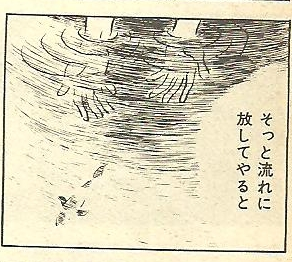
Anyway… yes, there is a desire expressed in the Nishibeta story to be like that little fish in the final frame, to swim away, down the river, destination unknown. Have you ever felt like doing that?

You can read all HU posts on Tsuge here.

Review: The Man Who Grew His Beard

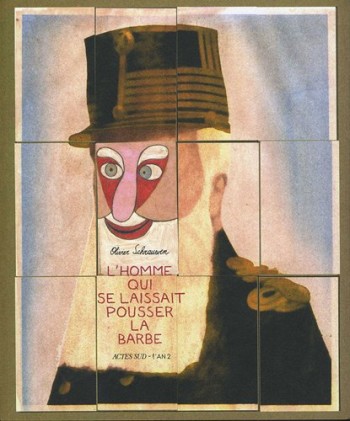
The Man Who Grew His Beard is a somewhat unexpected offering from Fantagraphics, a publisher known for its broad interests in classic American and European reprints, grungy undergrounds, “reality-based” dramas, and autobiography. The chief aspect which surprises in this anthology of stories by Olivier Schrauwen is its deeply entrenched formalism. Perhaps the closest thing to it in the Fantagraphics catologue might be Kevin Huizenga’s periodic forays into formal playfulness in Ganges, but even here the mood is much closer and more empathetic; not so much the arm’s length mental instability that can be found in Schrauwen’s narratives.

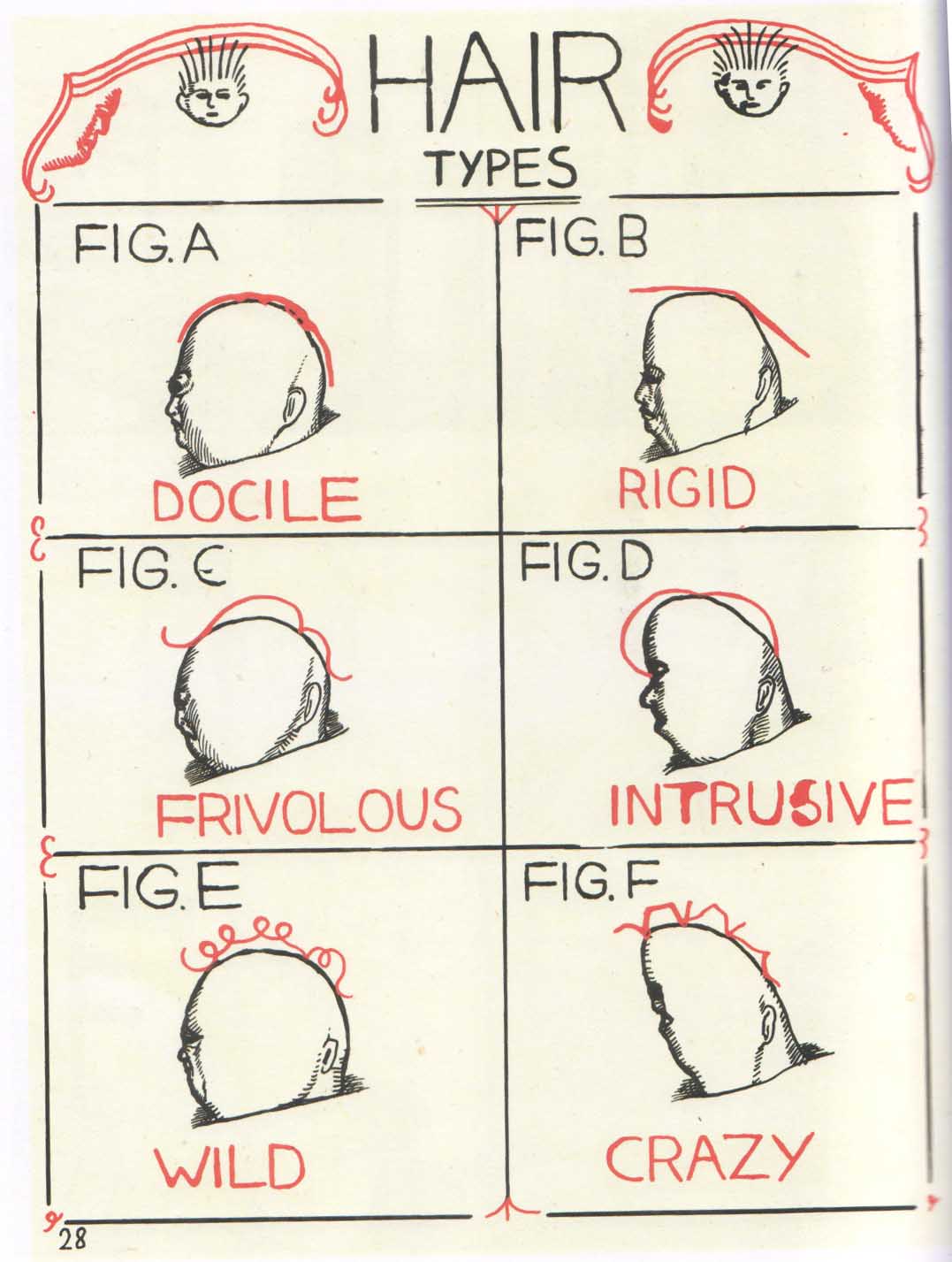
Schrauwen’s stories demand a certain degree of rereading, a flipping back and forth between pages and stories to decipher the playful code keys elaborating on the language of comics — the cartooning short hand, the persistent thematic fixtures and their variations. The story “Hair Styles”, for example, gives us a 6 fold division of grooming which is then further subdivided into a kind of follicular phrenology — a visual depiction of a kind of cartooning determinism where form dictates function.

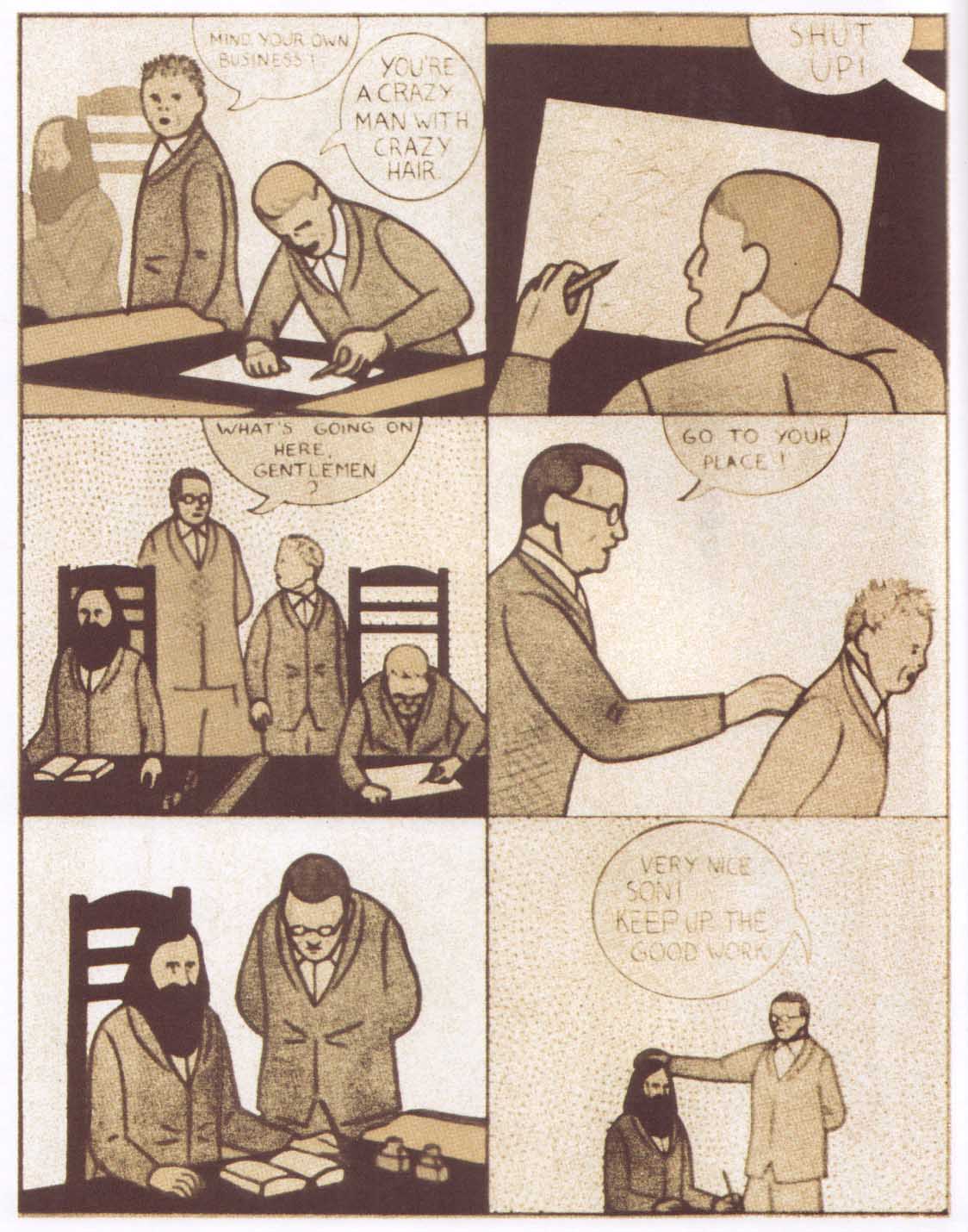
Thus, a character with “crazy hair” ultimately acts in a wild and disinhibited manner before being put in his place.


In contrast, the taxonomist among these practitioners is singled out for effusive praise by a bespectacled onlooker (one presumes an analogue for that species of writer now known as the comics critic).

The besuited illustrators are very far from the general conception of cartoonists and take on the semblance of academicians in a drawing room. The task at hand (the aforementioned taxonomy of cartooning hairstyles) and the nature of their dressing are intentionally incongruous. On the one hand, the story could be seen as mere playful nonsense. On the other, a wry comment on rigid or fanciful cartooning systems; a gentle poke in the ribs for those taken with definitions and categorizations, a reminder of the medium’s humble roots.

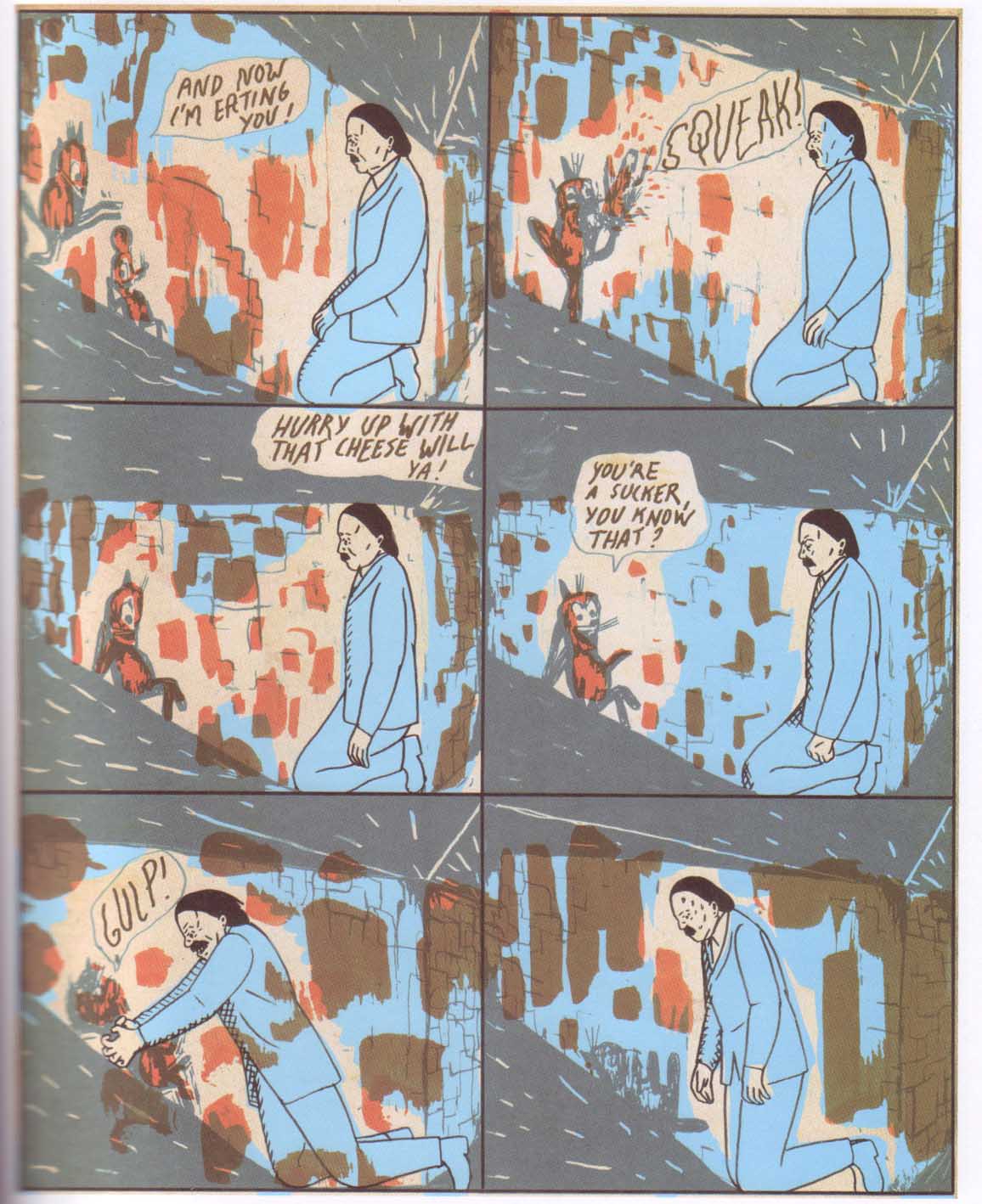
The rest of Schrauwen’s stories suggest that this is as much self-criticism as a humorous review of cartooning practices, for much of the work in this collection has a jaunty yet “high-minded” tone. This attitude is carried over to Schrauwen’s next story, “The Assignment”, where the participants are now challenged to create a story featuring a cat, a table, a bottle of milk, a mouse, a piece of cheese, and Mr. Peters.


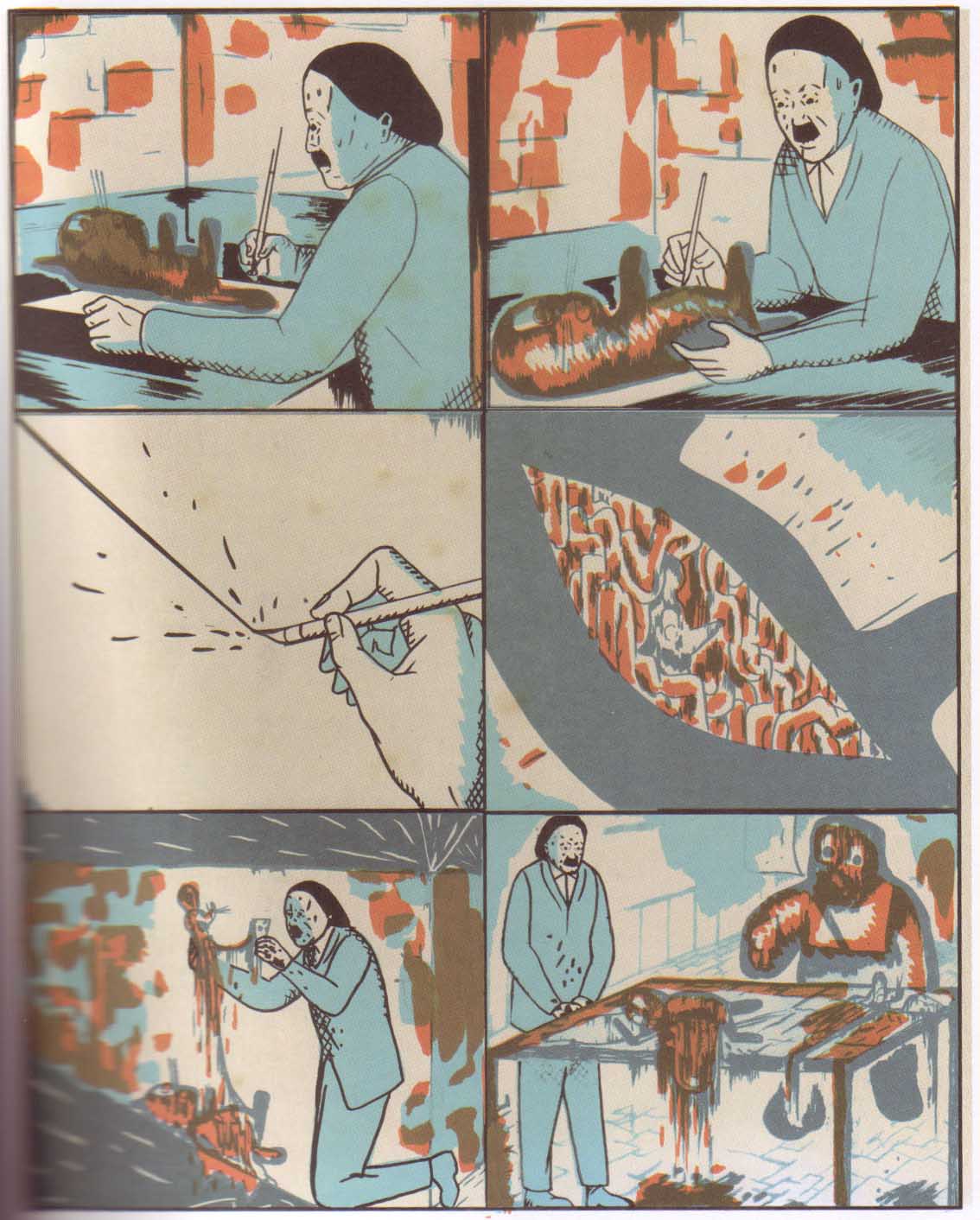
Part of this is a transposition of Mattioli’s Squeak the Mouse which is itself derived from Tom and Jerry. The final drawing of a dead cat is deemed unacceptable by the instructor-critic whereupon a graphic dissection of everything that has preceded this point is carried out — the gradual peeling back of the layers of skin and intestine of a dead cat to reveal a point of origin.


This codifying and deciphering of different realities is seen again in the story “Outside/Inside” which presents us first with the physical interactions of Schrauwen’s familiar bearded protagonist before proceeding to the multi-colored ramblings of a deranged mind to explain everything that has gone on before.

 ___

This motif is recalled in the penultimate story in this collection, “The Imaginist”, where the shadowy hues and lines capturing the broken, shriveled body of humble reality are juxtaposed with the kaleidoscope of hues which make up a stroke victim’s imaginary world. In all of these tales, there is the suggestion that there is nothing quite so shabby as reality.

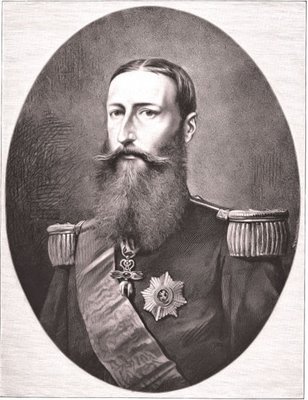
These exercises are diverting but fall short when compared to the first story in Schrauwen’s collection (the wordless “Chroma Congo”) where the barriers are flexible, mutable, and barely discernible; a world perched precariously on the edge of dreams and the fantasies of Leopold II (who appears again as a mystical talisman in “The Imaginist”).

 ___

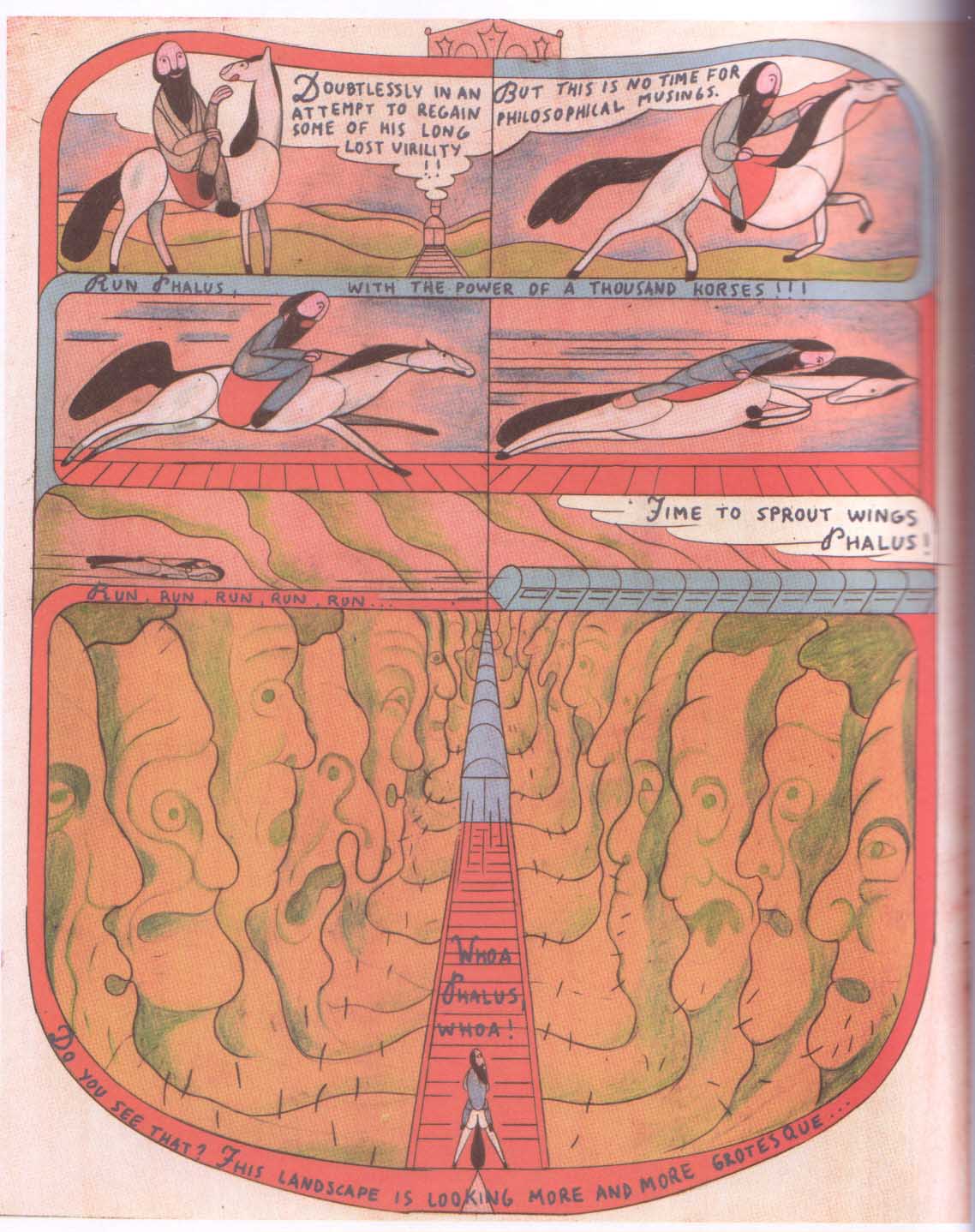
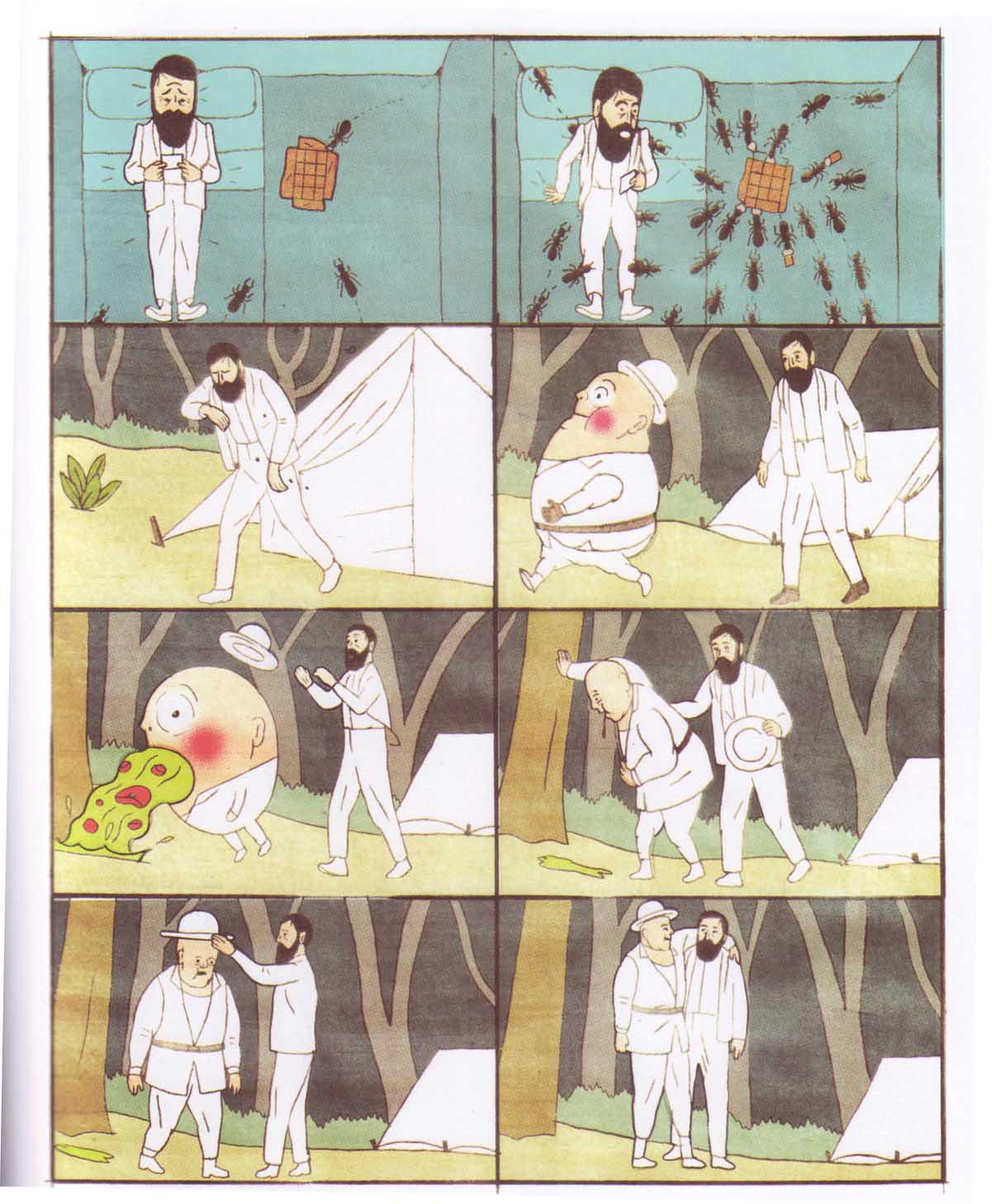
The protagonist (that familiar bearded figure again) is sensitive yet solitary, compassionate yet complicit. His rotting mind is conjured up in an ant-ridden slab of Belgian chocolate, the over-sized bilious faces, and the stunted monstrosities which inhabit the African landscape. It will come as no surprise that Schrauwen’s work has been compared to that of Winsor McCay (the colors, the permissive attitude towards perspective and proportion) both in reviews and in his publicity material.

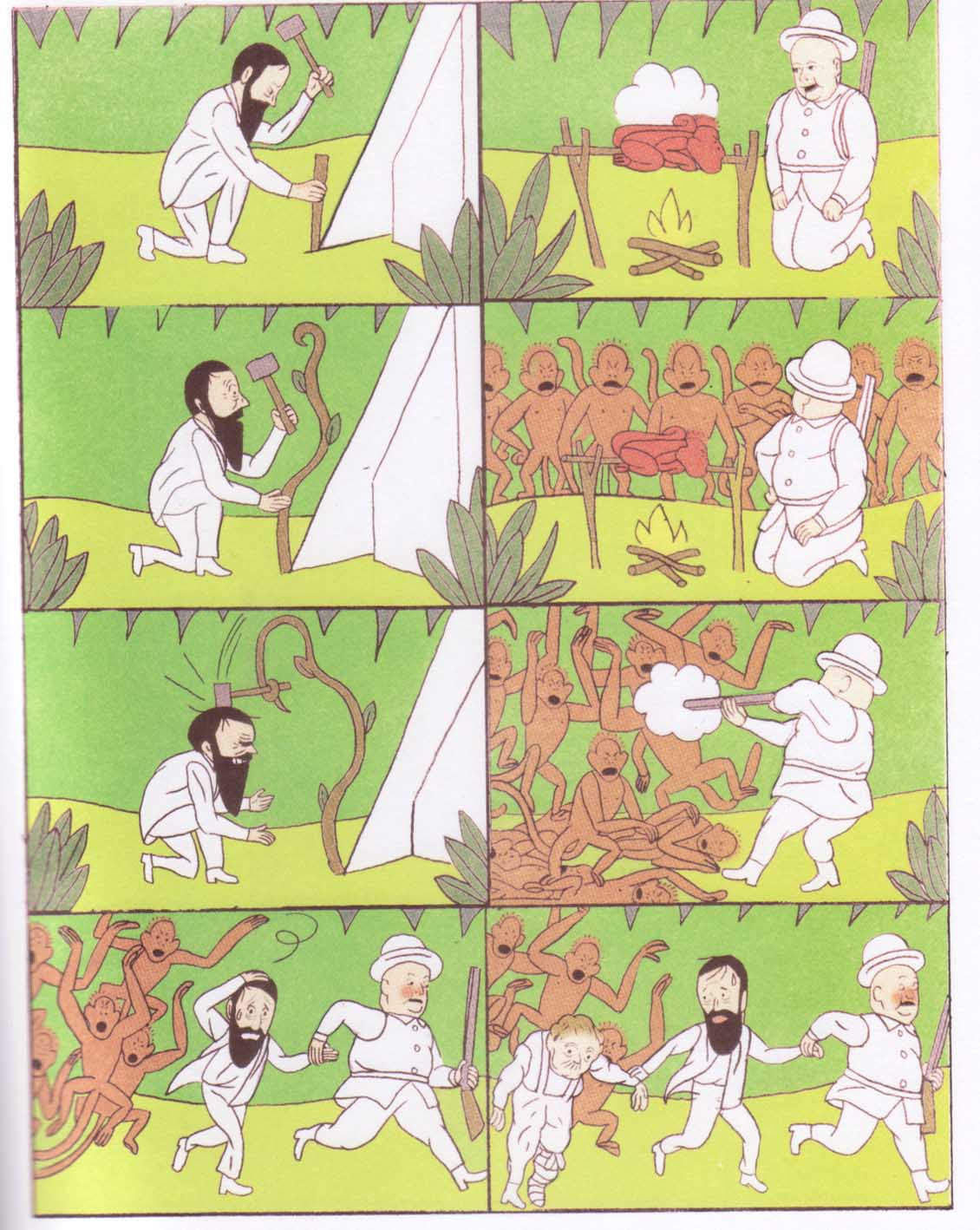
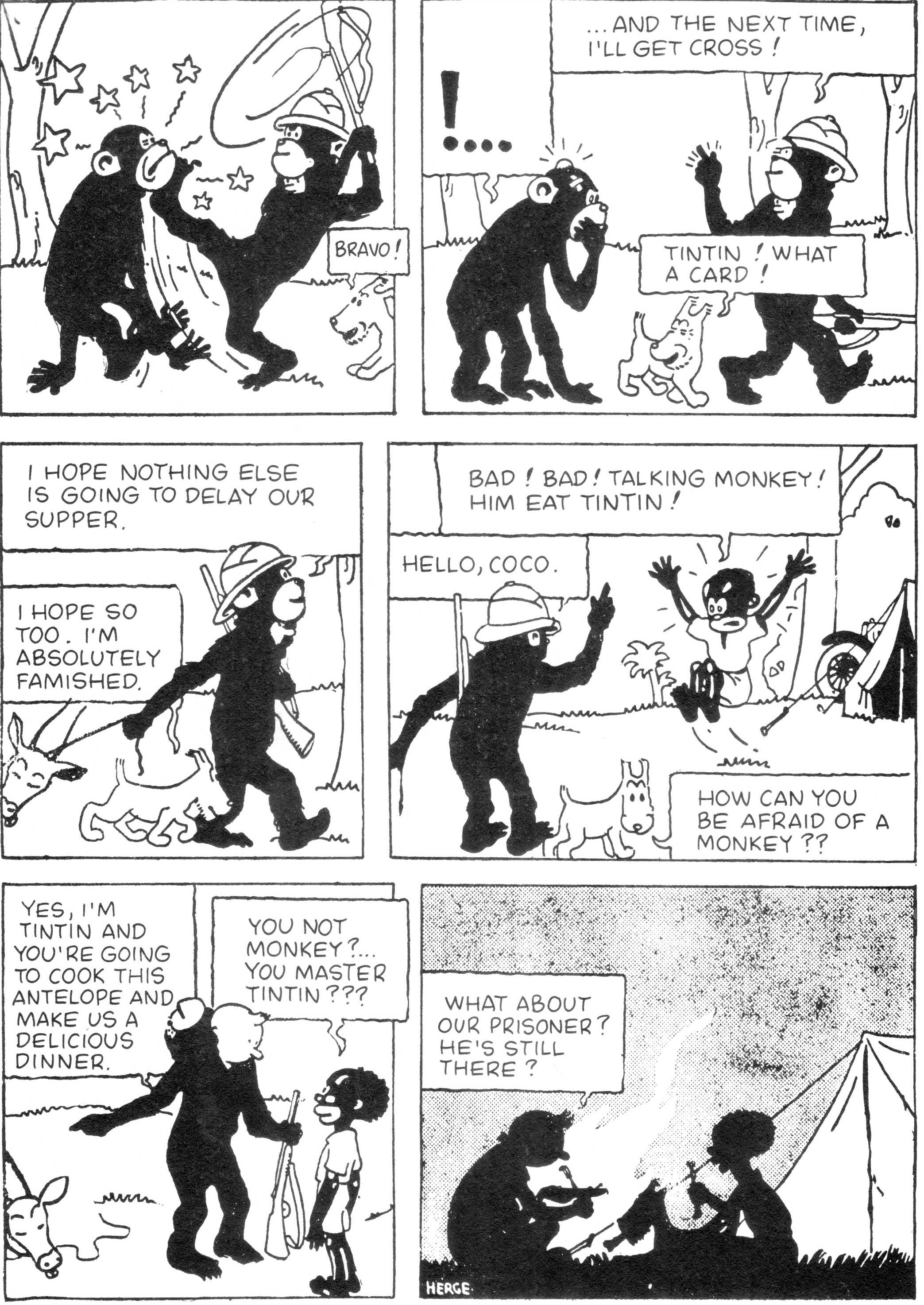
The chromatic shakiness — that disavowal of shadow in favor of bright, light pastels — recalls Herge’s Tintin, the riverboats which stream before our eyes, Conrad’s Heart of Darkness. There is not one glimpse of an actual African. This world of menacing hippos, screaming monkeys, and rifle safaris seems a silent comment on the validity of Conrad’s vision of a dark continent of swaying “scarlet bodies” wearing mangy skin[s] with pendent tail[s], shouting “periodically together strings of amazing words that resembled no sounds of human language”, “like the responses of some satanic litany”.

 ___

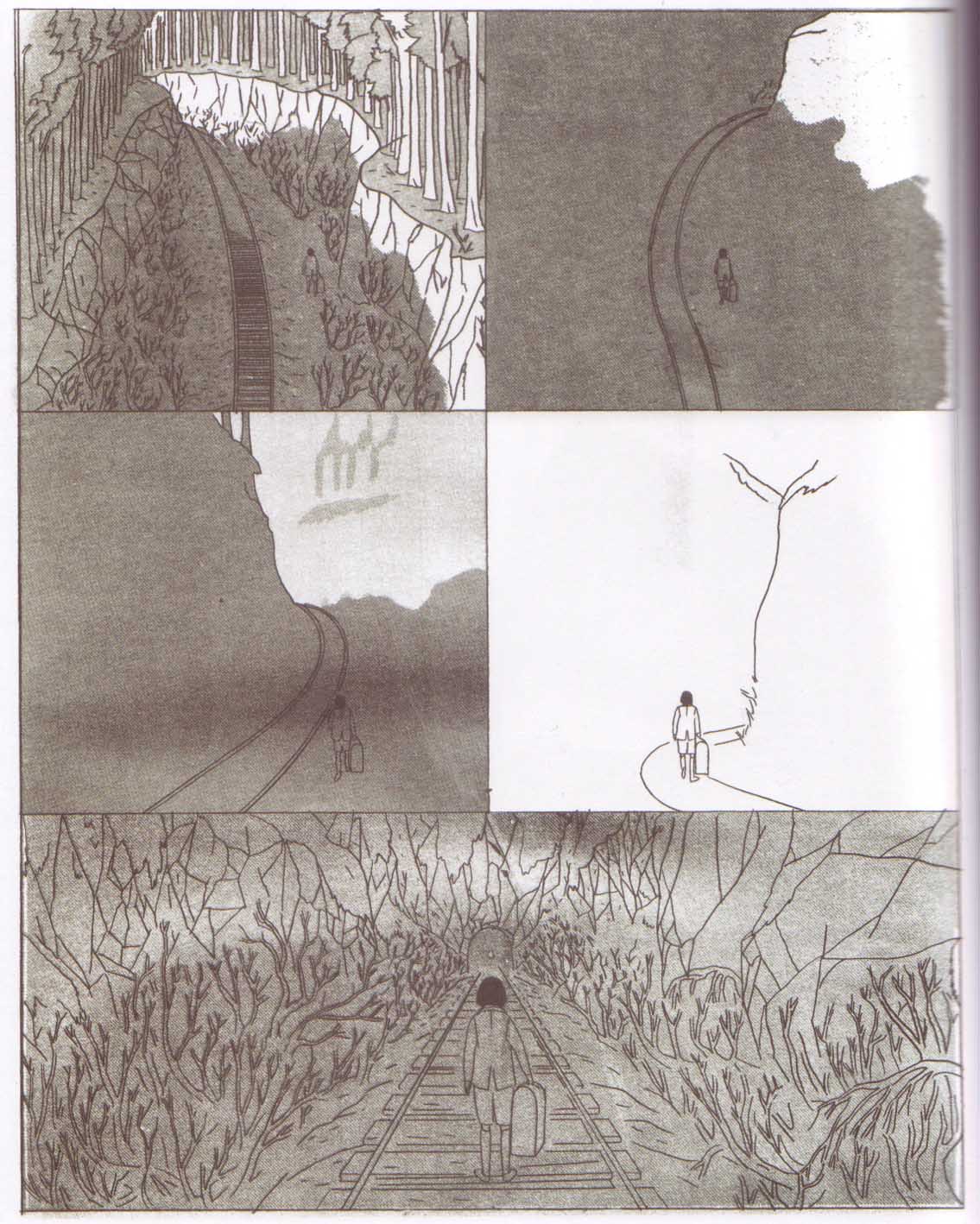
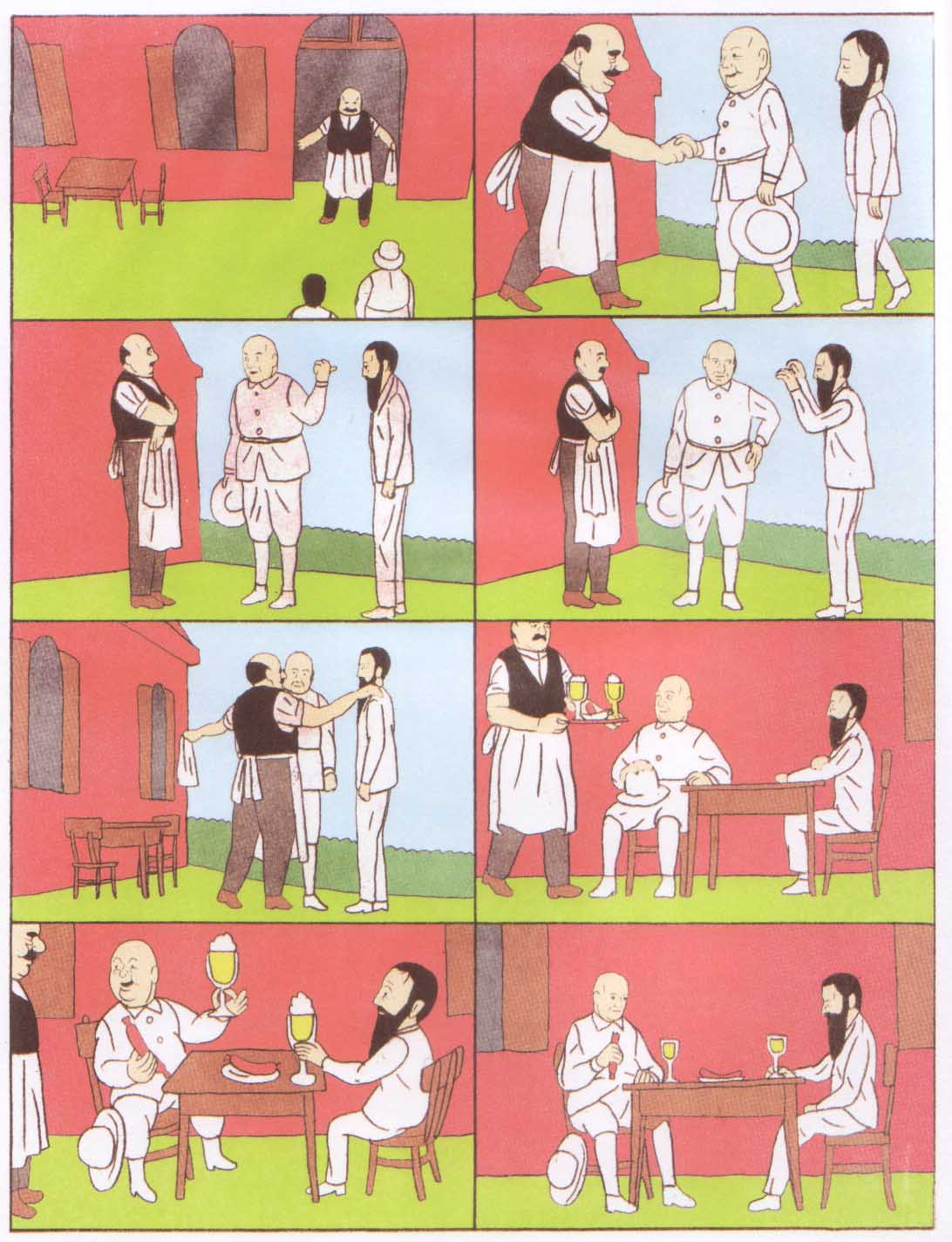
All of this far away from that semblance of normality (the Belgian sausages and cold beers at sundown) and civilization built on the banks of the Congo as seen in the final pages of the story.

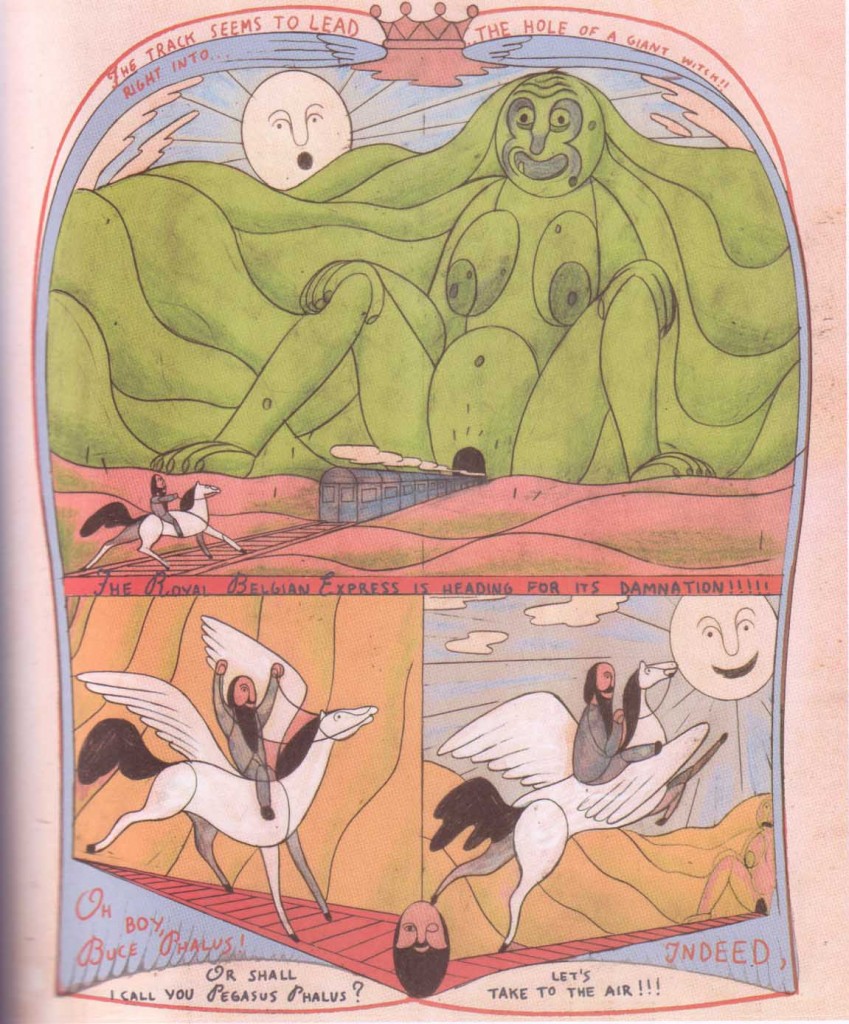
 The Royal Belgian Express “heading for its damnation”, the tracks seeming “to lead right into the hole of a giant witch.”

Further Reading

A review by Bart Croonenborghs

A review by John Dermot Woods at Faster Times

Music For Middle-Brow Snobs — The Old Gospel Ship

A white and black gospel mix; download The Old Gospel Ship.

1. The Old Gospel Ship — Ruby Vass
2. Were You There (When They Crucified My Lord) — Johnny Cash and Anita Carter
3. Green Pastures — Emmylou Harris and Ricky Skaggs
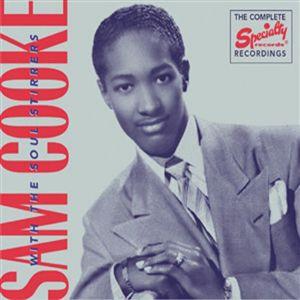
4. Touch the Hem of His Garment — Sam Cooke and the Soul Stirrers
5. Working on a Building — The Swan Silvertones
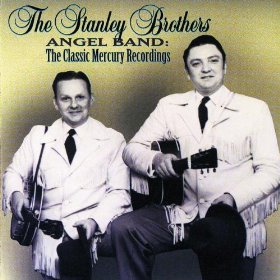
6. A Voice From On High — Stanley Brothers
7. Wreck on the Highway — Roy Acuff
8. He Will Set Your Fields on Fire — Kitty Wells
9. John the Revelator — Blind Willie Johnson and unknown female singer
10. Sinner Man — Sensational Nightingales
11. You’ve Got to Move — The Two Gospel Keys
12. Hammer and Nails — Staple Singers
13. O Death (Death in the Morning) — Marion Williams
14. A Conversation With Death — Lloyd Chandler
15. No Disappointment in Heaven — Bob Wills
16. Get Down On Your Knees and Pray — Del McCoury Band
17. By and By (part 1) — Soul Stirrers with R.H. Harris
18. By and By (part 2) — Soul Stirrers with R. H. Harris
19. Didn’t It Rain — Ward Singers
20. What Would You Give (In Exchange for Your Soul) — Bill Monroe and Doc Watson

On the Evils of Speculative Fiction

On Buffy the Vampire Slayer, Battlestar Galactica, et al.

Here’s the problem with fiction. In fiction, there is evil. “It’s actual, like cement” (Philip K Dick, The Man In The High Castle).

Take Lord of the Rings. The premise of the trilogy is that ring is evil. Galadriel could try to use it for good; so could Boromir; it would corrupt them. The end. Sauron is irrevocably corrupted. There is nothing redeemable about him; there is no good left in him. The ring is evil and will inevitably turn you evil; there’s no question in the readers’ mind that it should be destroyed.

You can’t ever have that in real life. There is nothing that can turn you irrevocably evil, and no person who is pure evil. You can posit that there are sociopaths who don’t have . . . whatever you want to call it: a moral compass, human empathy, remorse, a soul.  For the sake of argument, let us refer to the “soul,” with the understanding that it may not be a physical or even a mystical property. We may be simply referring to an idea that we impose upon our biological impulses and evolutionary development, an abstract that is an aspect of the larger abstract we call our consciousness or sapience, which allows society as we know it to exist.

“Evil” generally refers to those which lack this quality—“evil” people lack a conscience, compassion, or the ability to buy into the contract of human society.  But even if those people exist, we can never say for certain who is one.  Those who believe in the death penalty may say, “this person deserves to die,” and almost all of us may agree, “that person cannot function in society,” but none of us can actually look inside another human being and see if that thing, the soul, exists—not in the least because we don’t know what that thing is.

In fiction, however, you begin with a premise, and the reader assumes the premise is true for the universe of that story. The author can start with the premise that there is God, which means God exists in that universe. The author (not necessarily the narrator, who can’t always be trusted) can tell us there is evil, and there is. It is a fact of that universe, the way the existence of magic is a fact of Harry Potter’s world, the way vampires are a fact of Buffy’s, the way hobbits are a fact of Middle Earth.


This used to be what interested me about speculative fiction; it could be black and white.  Lord of the Rings was not meant to be ambiguous. It is meant as an exploration of archetypes, of the heroic saga, of myth and religion. The premise that evil exists is a very simple and common basis for millions of stories.

And although it will never be like that in the real world, maybe that oh-so-clear delineation will help us make distinctions in real life. Maybe we can use stories like Lord of the Rings, where the evil is recognizable, to more easily see it in our real lives. Maybe we can use that story to understand that power can corrupt, that even the best of intentions can go awry. Maybe when we feel temptation towards a thing we are more likely to stop and consider whether there is evil in it.

I started watching Buffy the Vampire Slayer for this reason.

I was in college and I had a horrible time there. I had few friends and I was very lonely, and I couldn’t read what I wanted because I had to read for class, and all of it was this Madam Bovary bullshit (sorry, Bovary fans) where everyone was morally reprehensible and I just hated everyone.  The world then seemed gray, and what I really wanted was Lord of the Rings or Star Wars—black and white. Or even Independence Day. What I really wanted was to feel comfortable hating something, vampires or aliens or what have you, something I didn’t have to question.

Hello, Buffy. I remember thinking the first few episodes of Buffy the Vampire Slayer—the first time you see a vamp’s face go bumpy, the first time Giles said that the person inside was dead when you became a vampire, the first time Buffy explained vampires were just demons—that this was exactly what I needed.

The premise of Buffy… in the beginning is that vampires are evil. It’s a fact of the universe, like the evil of the ring is of Lord of the Rings, like superpowers are in superhero comics, like vampires exist. It’s black and white. Good and evil. Old fashioned ass kicking.

And then morally gray stepped onto the scene.

Angel provides the morally gray, where not everyone who is a vampire is evil and should be killed. Angel proves that vampires aren’t just demons, with no vestige left of the human that inhabited the body. Angel proves that vampires are the evil in us all.

Angel asks the question of who we are and what we are capable of. Angel is the temptation toward evil, and also the love and hope that holds us from the brink of it. Angel plays the role of both Gollum and Frodo.  (Except he’s taller.  And wears a swirly coat.)

And yet, as with Lord of the Rings, black and white can be pretty firmly delineated when it comes to Angel—or at least, Joss Whedon, the writers, to some extent the text would like us to believe that. Angel has a “soul.” That’s why he’s different from other vampires. The other vampires are still evil and should be killed—no moral conundrum there.

We, the viewers, are familiar with the word “soul”, and so immediately define “soul” as compassion, conscience, what it takes to be functional in society, etc—however we have defined that word in the past.  As for how the soul is defined by the show, the only working definition we are given is “power of choice.”

Once Angel loses his soul, the implication is that he is incapable of behaving any other way than evil, or that he is capable but does not desire it. When Angel does have the soul, he still has the same evil impulses, but he desires to be a better man, and is capable of behaving as one. Therefore, the one definable thing that has been taken away from him is the desire or ability to act differently—the ability to choose.

Therefore, according to the premise of this universe, the soul includes the mechanism by which we choose. Vampires cannot choose to behave as they would if they did have that thing—the soul. And without that thing, they are evil. It is morally acceptable, even necessary, for Buffy to slay them. It’s the premise of the story. The show has given us what appears to be black and white to work with.

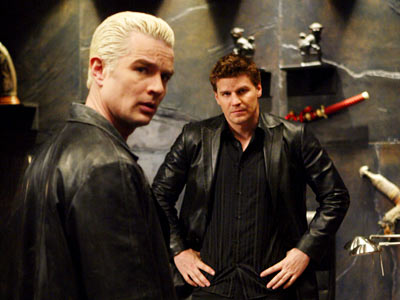
Enter Spike.

At the end of season six, Spike goes to Africa and earns his soul back.  Later, the show suggests that he did not choose to get a soul, that he thought he was getting a chip in his brain removed when he went to Africa. The text does allow for the possibility of this, and in doing so, the text is allowing for a vindication of Buffy, Angel, and the fact of black and white.

I.e., if Spike doesn’t choose to get his soul back, we accept the premise that was given to us by the creators of this universe: vampires cannot choose. Angelus cannot choose to be a good man, which exonerates Angel for Angelus’s (soulless Angel’s) behavior. We can also exonerate Buffy for slaying all those vampires.

But if Spike did choose to get his soul back, the metaphysics of this universe are actually different than we have been led to believe. If Spike can make the choice to earn his soul, then the definition of soul is not choice. It means any vampire can choose.

Yes, Spike had special circumstances. Yes, Spike’s a special guy. He’s a unique and beautiful snowflake and his love for Buffy is epic and pure. Maybe he’s the only vampire in the history of ever who would ever choose to earn his soul. But the point is, if Spike chose, then the premise of the universe does not include the fact that a vampire can’t choose. And if a vampire can choose, he can have a soul. And if he has a soul, he’s not evil—by the laws of this universe.

Where this really gets ambiguous is Buffy. If Spike did choose his soul, then the viewer doesn’t know what vampires are capable of either, or why they are the way they are. There is not metaphysical fact given by the premise of the show about what a vampire really is, what a soul really means, what a vampire is capable of. Because those facts are not given to use by the authors of this universe, we know no more about vampires in this universe than we do about human beings in our own. How, then, are vampires different than human beings?  Does this make Buffy a murderer?  What do we with vampires?  Is slayage the only option?
What I would have appreciated from Buffy the Vampire Slayer is those questions being asked.

I’m not condemning Buffy Summers. Vampires rape murder pillage kill and eat the babies, and those are evil things. And for the most part, vampires are not Spike; they will not choose to earn back their souls. Also, they need blood to live.  This, uh, is how they are different than human beings, and personally I have no idea whether murder would be a better answer than letting serial killer terrorists run amok. What I want is not for the show to tell us Buffy is wrong, but for that question to be asked.

The show does ask plenty of times if Buffy is wrong, but it’s never about slaying vampires. The problem is that the evil of vampires was the premise, remember? The story isn’t really about the villains, except for the exceptions that prove the rule.

Instead, this story was supposed to be a story about humanity, humanity struggling in the face of adversity, an undefeatable foe: evil. Lord of the Rings is not about whether the ring should be destroyed; the readers know, and Frodo knows: it must be destroyed. What the story is about is about how difficult it can be to do the things we know must be done; how much we long to give in. Doubt lies not in the duty itself, but in our ability to carry out the duty.

In Buffy the Vampire Slayer, slaying is supposed to be the same way. We’re never supposed to doubt that someone must slay. We are only meant to empathize that the call of slaying must lie with her, the sacrifices she must make in order to do it.

That’s why the writers/creators made Spike’s “choice” ambiguous. They did not want to deal with the consequences of changing the entire premise of the show. They did not want to go back and question every single thing Buffy had ever done, every vampire that died at her hands. They did not want to go through the trouble of really defining “soul”, or tear down everything they had built with Angel. They didn’t want to sully their black and white.

Who would? That would be a lot of work.

Battlestar Galactica, that’s who. Maybe the creators planned from the beginning to make us question whether the destruction of Cylons is actually murder. If they did, they didn’t quite let the viewers in on it from the beginning. (Even though the Cylons, er, “had a plan.”)

The premise for the show in the beginning, despite the Cylons’ pretensions to godliness, is that the robots are evil. This makes sense instinctively, because instinctively we feel that robots are soulless. When we talk about “soul” we’re talking about humanity. Even if we think of it as biological fact, as I do when I say that it’s an idea applied to biological and evolutionary impulses—well, robots aren’t biologic, and didn’t evolve. Robots don’t have souls. Robots are evil. It’s a fact.

Boomer, of course, is the initial exception; she is a Cylon, a robot, but she isn’t like the rest. All the other robots killed all the rest of humanity, but Boomer wasn’t a part of that. She doesn’t know she’s a robot; she feels like a human. That makes her different.

If this seems like twisted reasoning, it is. It’s also fairly typical. The recipe for your awesome Good Versus Evil fiction is to have a Big Bad, and then a Big Bad’s Henchman or Turncoat who provides the morally gray. Gollum, Darth Vader, Snape and/or Draco, Angel.  I could go on, but really I’m working with the broadest of broad references, here.

We recognize the truths Gollum and Angel gives us—evil is not in just some entity completely outside ourselves. It is within us all. Luke could become Anakin, if he did not resist at the crucial moment. Frodo can become Gollum; Harry can become Voldemort, and we could all be Boomer. What we must do is use our “soul” to resist the force of evil.

But over the course of the series, Battlestar Galactica becomes less and less about resistance, and more and more about understanding the Cylons. The Cylons almost destroying the human race, then hunting them down, then enslaving them in order to live peaceably with them, then sequestering themselves away from them, then returning to work together to find an Earth we can live on in peace is very much how more than one race of humans has behaved in the past.

And somewhere along the line, we have to ask that question again: what separates us from them? We assume at the beginning of the series that humans have a soul and the robots don’t, but as the pieces unfold, it becomes clear that nothing is so clear. We still don’t know what a soul is; we don’t know how to say who has one. We don’t know what evil is, or if it exists. The creators of this universe does not make evil the premise of this universe—or, actually, they did, and tore it down, revealing that absolutist constructs are part of the problem.

What juxtaposing these two shows against each other does for me is show something lots of mainstream speculative fiction does—even somewhat laudable fantasy, such as Buffy—versus what almost no mainstream speculative fiction does—except Battlestar Galactica, and other key exceptions.  A lot of mainstream speculative fiction these days is constructing morally absolute circumstances, waving a hazy hand that suggests there might be morally gray somewhere, and in the end, the bad guys die, the good guys win, the end.

Of course, I am using the term “mainstream” loosely.  The most popular show on television is still (I think?) American Idol—which, I suppose, one can argue broaches all kinds of questions about morality and evil, but frankly I’m not equipped to approach such questions.  And speculative fiction has always had a very large corner on addressing questions about moral absolutism and relativism, the definition of humanity, the composition of the soul and the quality of mercy—and the very best of speculative fiction does so very well.

However, it is impossible to deny that even just the last decade or so has seen a remarkable increase in popularity of speculative fiction, which is noticeable in particular on television and the big screen.  As a fan of speculative fiction myself, I’m pretty happy about this, but find myself considerably disappointed by the handling of questions that are so often central to speculative fiction.

We could talk now about the moral obligation of art, but I do think a purpose is served through beauty. Beauty can make as much a difference in someone’s life as asking them to question can. Sometimes, beauty itself is purpose enough; asking beauty to serve any other purpose than to be beautiful misses the one truth we know for certain above all in this existence. We don’t know why we’re here, or what we should do, but we know this truth, and it is both heart-rending and full of joy: we are.

The model of good versus evil in literature isn’t wrong. It seems that there is a tradition in literature, of which the Christian Bible is just one element, of this good versus evil, black and white, Joseph Campbell’s heroic journey. Lord of the Rings and Star Wars are purposeful reflections on this tradition, explorations of an essential story which resonates deeply within us all, or said story would not have survived so long. Exploring this tradition and continuing to riff on it is vital, I think.

But I also think it is vital to question this tradition, and to find out with what inside us it resonates. There are stories which use the binary model and then break it, and we need those stories too.

Of course, there are plenty of stories that don’t even reference that model. All modern literature has gone morally gray. Hello Madam Bovary; where have you been?  Post-modern literature is even more bleak than modern, and no doubt contemporary literature is even more bleak than when I was reading Flaubert. But I think there’s something to be said for stories that set up the binary and then proceed to tear it down, especially now, because of the preponderance of the binary—not just in literature, but in current thinking, politically and culturally.

We all long for some form of escape, from time to time, and for some of us that means absolutism, or worlds where evil is actual, like cement.  There are some very loud voices saying, “No, you have it all wrong!” to those who would apply such absolutism to our world.  At times it can be more effective—both in literature and real life—to say, instead of, “That world does not exist”—

“We live in your world full of cement.  We walk upon it; we live within it; we eat it; we breathe it.  I understand it as you do, and yet, of a yellow evening, walking down the street, there’s a strange taste in my mouth—it tastes like dust.  I eat dust.  I live dust; I walk on dust, and look down to find that the cement is a fine powder, and I have breathed it in, and so have you.  And then I look around me, and see that the world of cement doesn’t exist at all.”

It never did.

White: Not the New Black

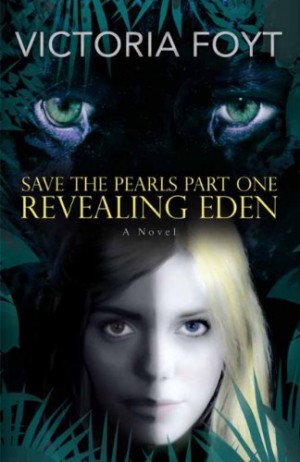
Whether in the American Revolution, Schindler’s List, or Star Wars, Americans have always had a deep and abiding love for tales of oppressed white people. In her new YA novel, Revealing Eden, Victoria Foyt takes that insight and runs with it as fast and as far as impressively insipid prose can take her. In the far future, solar radiation has become exponentially more dangerous, and those without the melanin to withstand it are second-class citizens. Our heroine, Eden, is white and, therefore, doomed to eugenic culling unless she can convince a black man to mate with her and give her dark-skinned babies. Soon she is embroiled with the fascinating Bramford, a black scientist who has had his DNA spliced with panther, eagle, and anaconda genes, turning him into an earthy, atavistic archetype. Luckily, in Foyt’s world, black people are in charge, so Bramford’s evolutionary descent has nothing, nothing, nothing to do with sexualized animalistic fantasies about black men. Shame on you for even thinking so.

Revealing Eden is unusually crass in its take on race, but its general methodology has a longstanding pedigree in sci-fi and fantasy. You need only think of that ham-fisted Star Trek episode in which the aliens with faces that are white on the right side are oppressed by aliens with faces that are white on the left side, or the ham-fisted Next Generation episode in which the crew finds a planet where women rule over men.

Or, for a more recent example, try the film In Time, a parable in which fungible time has replaced money as the currency of choice. Thus, the rich live forever on horded time and the poor have to beg, borrow, steal and run for every second. The movie is clearly intended to be a comment on our crappy economy and growing inequality — but it’s a comment shorn of any mention of the ways in which that inequality continues to be bound up with race. There is, as far as I can remember, only one black character in the film; a long-suffering wife whose (white) husband is an alcoholic. The unfair distribution of time serves as a metaphor for real-world injustice — but does the metaphor highlight those real-world injustices, or does it deny them? Is it possible that the sci-fi setting is just a way to do a story about economic oppression without the inconvenience of having to feature black leads?

Similar questions arise in the three most successful YA series of recent memory: Harry Potter, the Hunger Games and Twilight. All make extensive use of metaphor to discuss racial prejudice — or to avoid discussing racial prejudice, as the case may be. In Harry Potter, (bad) wizards are prejudiced against muggles; in the Hunger Games, the people of the Capitol are prejudiced against the people of the Districts; in Twilight, vampires and werewolves are prejudiced against each other.

All these series come down squarely against discrimination, which is nice as far as it goes. That isn’t very far, however. For example, wizards in Harry Potter really are superior to muggles; no one really denies that. The only point at issue is whether muggles should be killed outright (as Voldemart believes) or whether they should be kept in perpetual ignorance for their own benefit (as the “good guys” believe.) Rudyard Kipling might approve, I suppose, but, to put it kindly, it’s hard to see this as a particularly insightful take on contemporary race relations. And I will avoid discussing the lovable house elf servants, who adore their own enslavement — a fantasy underclass entirely composed of Gunga Dins.

Hunger Games and Twilight are arguably less clumsy, but not by much. Suzanne Collins avoids discussing race by the simple expedient of not discussing it. Her main character, Katniss is possibly biracial, but it’s so downplayed in the book that Hollywood had no problem casting a white actress in the part for the film. In Twilight, there are many Native American characters, and the books deal forthrightly with prejudice directed against those characters. But all that prejudice is because the Native Americans are werewolves; there’s barely a hint that Native Americans who are not werewolves might occasionally be discriminated against. And, of course, Meyer, like Foyt, cheerfully deploys the stereotype of the animalistic, emotional, virile lesser races. Just because discrimination is bad doesn’t mean you can’t have some fun with it, right?

In all of these cases, the problem is that oppression is seen as a (simplistic) structure, rather than as a history. For Foyt, Rowling, et. al, you condemn racism by saying, “Hey! Racism is bad!” For none of them is there a sense of historical inequalities as a living and inescapable presence. Victoria Foyt’s main character, Eden, reads Emily Dickinson, but not Langston Hughes; nobody in Harry Potter compares Voldemort to Hitler; nobody in the Hunger Games has heard of Che. Oppression in all of these series has a now, but no yesterday. Sci-fi and fantasy, apparently, means a world without a past.

It doesn’t have to be that way. As just one counterexample, consider Octavia Butler’s Dawn, the first book of her Xenogenesis trilogy. The novel is set after a nuclear apocalypse. Most of the world has been destroyed, and earth’s few survivors have been rescued by a tentacled alien race known as the Oankali. The rescue is not entirely philanthropic, though. The Oankali are genetic manipulators; they want human beings for their genetic material. Or, to put it another way, they want to mate with our women — and also our men.

The main character in Dawn is an African-American woman named Lilith. You might think that in a future where most of humanity is dead and aliens have inherited the earth, race wouldn’t matter. But, as Butler shows, that would be naïve. Race matters a lot. It inflects other humans’ reactions to Lilith when they are asked to follow her leadership. It inflects the aliens themselves, who assume that Lilith will want to mate with one man because he is black. And it inflects Lilith’s reactions as well, both in her loyalty to her species against an imperial invader, and in her eventual acceptance of difference and, ultimately, of interspecies integration.

Butler doesn’t forswear analogy. The Oankali are in some ways very much like human imperialists — the European invaders conquering the New World. Similarly, mating with the Oankali is comparable to interracial relationships. But the metaphors don’t erase the past; instead they complicate it The imperialists are also saviors. Interracial marriage is both a betrayal of the race and the promise of a new and beautiful future. A future in which, not incidentally, the children of a black woman save humanity.

Dawn demonstrates that metaphor is not, or at least should not be, amnesia. Foyt wants to say that white is black without making any effort to think about either white or black. As a result, her world — and to a lesser extent, the worlds of Rowling, and Collins and Meyer — have an air of rather nervous blandness. Butler, alone in this company seems to realize that even in a different world, we can’t escape what has already happened in this one.

Feel Good Muppets

A version of this review first ran on Splice Today.
_____________________

Jim Henson’s televised 70s Muppet Show was an erratic blend of bad puns, pratfalls and surreal, drugged-out humor. An awkward Kris Kirstofferson cracking up onscreen as he sings a love song to a pig; Gilda Radner stumbling through Gilbert and Sullivan tunes accompanied by a seven-foot tall carrot; a giant monster warbling “I’ve got you under my skin” to the civilian he’s just ingested — it was 2nd-rate vaudeville on large amounts of weed performed by shockingly inventive puppets. The Muppet Show never managed the sublime fuddy-duddiness of Peanuts or the anarchically perfect rhythm of Monty Python, or even the occasional brilliant creativity of Sesame Street, but at its best it had a joyously random, unpretentious low-fi charm. I no longer think it’s one of the best television shows of all time the way I did when I was younger, but I still love it.

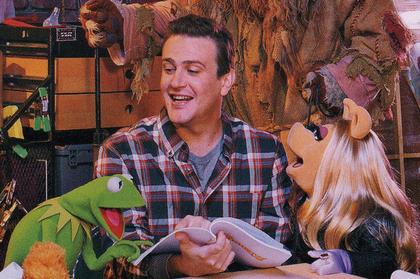
Which is why the recent film The Muppets made me want to vomit. The clunky sporadic brilliance of yore is gone; in its place is a big, slick, hollow juggernaut, slathered in nostalgia, sentimentality, and a hollow winking irony meant to substitute for humor or ideas. The film puts at the center of the narrative a boy named Walter, who was unaccountably born as a muppet. Out of place in the human world, he provides the pedestrian coming out narrative which has allowed liberal critics to fall all over themselves with enthusiasm. Plus, Walter talks all the time about how great the muppets are and how brilliant the muppet show was and OMG I love the muppets, muppets, muppets. Chris Orr at the Atlantic characterized this as a ” a tidal surge of joyful nostalgia,” but to me it just felt like I was watching a two-hour commercial for the two-hour commercial I was watching. Every gag — Fozzy’s stupid jokes, Gonzo’s “zaniness”, the Swedish chef’s funny accent — is refracted through its own smug self-satisfaction. Which I guess is supposed to distract us from the fact that, for example, Gonzo never actually does anything nearly as wacky as eating a rubber tire to the music of flight of the bumblebee, and Walter, our exciting new muppet, is visually boring as fuck, almost like he was designed by a committee of Disney executives rather than by Jim Henson.

As if Walter’s tedious coming-of-age weren’t sufficient, we also have to suffer through the by-the-numbers bildungsroman of his brother Gary (Jason Segal), who has to learn to commit to his girlfriend of 10 years (Amy Adams.) And of course Kermit and Miss Piggy also must declare their love for one another (as if there was ever any indication in the original show that Kermit liked, much less loved the pig). Even fucking Animal self-actualizes. Everyone learns life lessons and becomes closer together like a family and finds their real place in life, and there are whole scads of big musical dance numbers which are all slickly choreographed and filled with happy lyrics like “Everything is great everything is grand I got the whole wide world in the palm of my hand.” It’s funny, see, because it’s so overly cheerful, just like the original muppet show, and now we’re grown up and know better, but it’s still fun to pretend we think the world is all sweetness and light for the kiddies, right?

The only problem being that the original Muppet Show wasn’t saccharine at all. It was goofy and dumb. It wasn’t about people finding their true place in the world. It was about people falling into holes or transforming their hands into puppies or having random objects fall on them from the ceiling. It was empty-headed, often inventive, sometimes idiosyncratic fun. Period. And now Disney has taken it and transformed it into a paen to finding your own bliss which is utterly indistinguishable from every other wretchedly self-congratulatory paen to finding your own bliss that’s ever defaced a multiplex. Walter’s reverence is supposed to have given new life to his beloved Muppet idols, but instead it’s just buried them in the same old shit.