Utilitarian Review 11/26/10

On HU

Slightly short holiday week this time out.

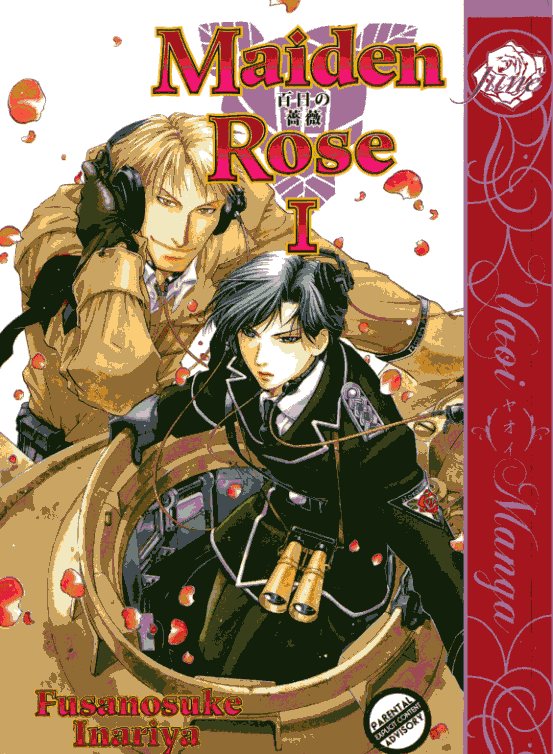
Kinukitty reviewed the semi-historical yaoi Maiden Rose.

For our Sequential Erudition series reprinting academic articles on comics, Ariel Kahn discussed the role of the gaze in young adult graphic novel.s

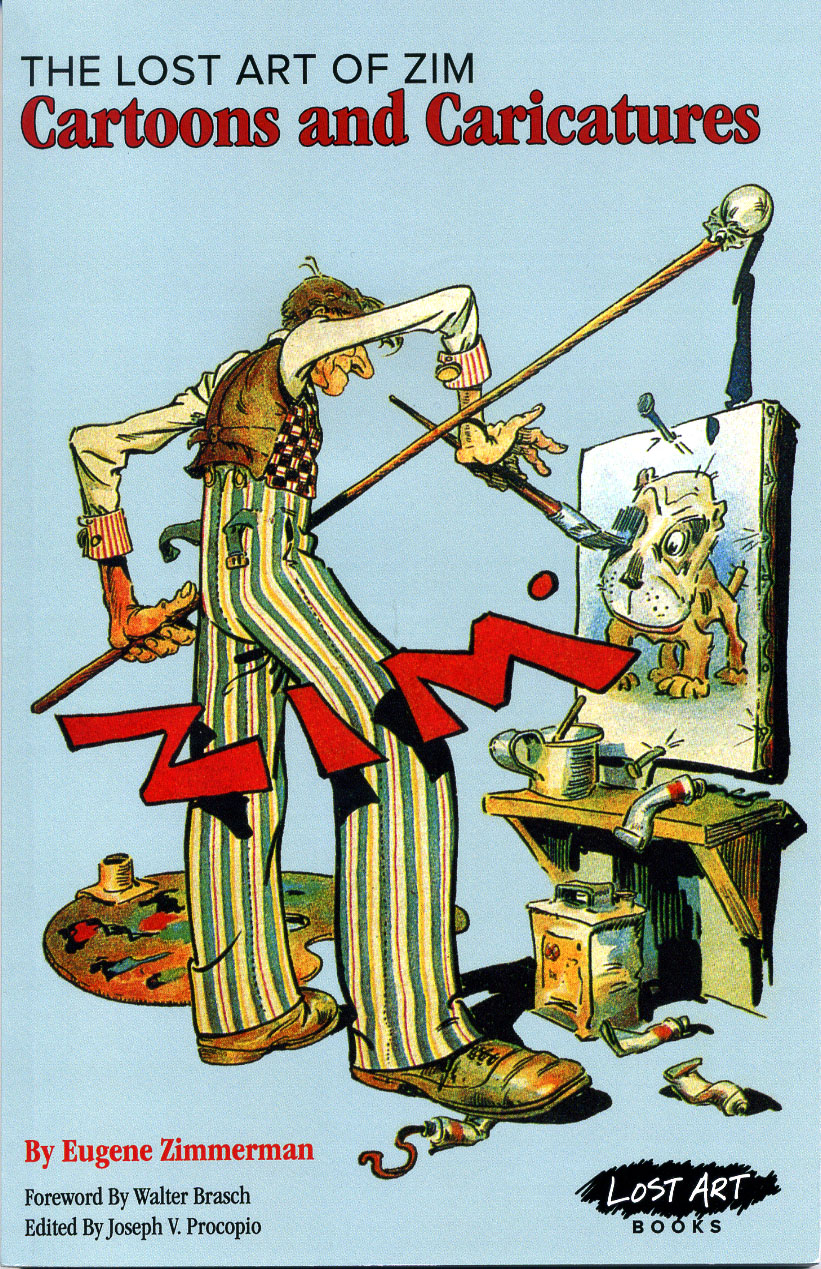
Sean Michael Robinson looked at some old books about the art of drawing.

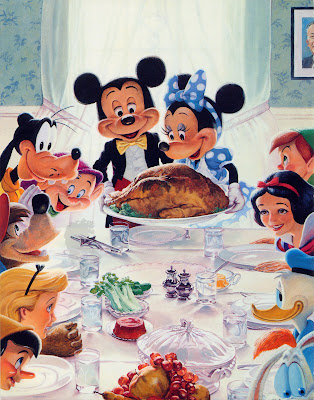
And for the holiday, Alex Buchet posted a gallery of Thanksgiving comics.

Utilitarians Everywhere

At Splice Today I have a short review of The Disappearance of Alice Creed.

Also at Splice, a short review of Ke$ha’s new album Cannibal, vagina dentata and all.

At Madeloud I review some semi-recent mash-ups.

Other Links

Sean Collins’ review of High Soft Lisp touches on some issues that came up in this blog’s discussion of Gilbert Hernandez.

And Charles Hatfield enters the lists on behalf of Joe Sacco against an army of trolls. I don’t really like Joe Sacco’s work much, but Charles is definitely fighting the good fight on this one.

Celebrate Imperialism!

It’s that time of year when Americans give thanks that the smallpox virus and small arms fire cleared a continent for Europeans and their livestock. In that healthy spirit of aggressive annexation, I am imposing my provincial holiday on our international contributors and closing shop for a few days. Happy turkey eating, if turkey is what you’re eating, and we’ll be back as usual on Sunday.

Books for Looking

I’ve recently begun teaching cartooning again. That event, and the approaching season of commerce gift giving have persuaded me to take a look at some interesting books that have a tangential relationship to the subject. There are plenty of books out there that directly address the processes and skills of cartooning, with greater or lesser results (I happen to think Scott McCloud’s Making Comics is the clear champion in this category) but for the purposes of this post I’ll be covering those books that might not have quite as direct a connection.

Continue reading

Gluey Tart: Maiden Rose, Volume 1

Fusanosuke Inariya, 2010, Digital Manga Publishing and Oakla

I’d heard very, very good things about this manga from people who were hoping someone would pick it up from licensing limbo. Now that June has come to the rescue, I decided I could not ignore all the buzz about this title, despite my misgivings. Grave misgivings. Because look at that cover. I am merely talking about my own squick factors here, but even a whiff of WW II fetishization raises a forest of red flags for me. I am also not a fan of ukes who appear to be under age. (Or semes either, but putting the too-young-looking one on the bottom seems to bother me more.)

Now, Taki, the uke of whom we speak, is younger than the seme, but not under age. It’s just that in the very fully realized sex scenes, he looks it. He’s even in a position of great power, a lord and a military commander. Not underage, not powerless. This is so clear that by the end of the book, I almost got over thinking he looked twelve whenever he was stripped (which was often). It is a testament to the power of the story-telling here that I was pretty much able to get over my pretty thoroughgoing distaste for this kind of visual.

And the book is about war. Old-fashioned world war, including lots of old-fashioned ideas about heroism and honor and noblesse oblige, all of which I think is not only horse shit, but dangerous nationalistic horse shit. I do not find war stories romantic. And I especially worry about the kind of sexual excitement some people get from fascism, often symbolized by Axis uniforms. Now, just like the uke isn’t actually under age in this book, the war isn’t exactly WW II, and the lovers (Klaus, a tall, strapping blond, and Taki, a diminutive Asian man) aren’t exactly German and Japanese. The particulars are technically different, but – look at the cover. It’s obvious what we’re looking at. I do not like to take things too seriously, especially yaoi manga, of all things, but I was highly skeptical that I was going to be able to enjoy a manga in this setting. (Apparently even Kinukitty has limits.)

But I was told no, it’s OK, really. It’s well done. I didn’t think that was likely, but I was interested in what this book would be, anyway, so I bought it. And pointedly ignored it for months, unable to quite deal with it.

I wound up bringing it with me to the park to read while my son flung himself alarmingly off large pieces of playground equipment. I will point out one thing right now – this is not the book you should bring with you to the playground. There is lots of graphic sex. Lots. Graphic. I was off in a corner by myself, but I kept looking furtively over my shoulder, terrified some other, more responsible parent would show up and see this extremely NSFW image after the jump:

Continue reading

Utilitarian Review 11/19/10

On HU

We started the week off with Richard Cook’s discussion of the story of St. Catherine from the Big Book of Martyrs.

Ng Suat Tong skewered Usamaru Furuya’s Genkaku Picasso.

Sean Michael Robinson discussed the child porn conviction of Steve Kutzner.

Vom Marlowe reviewed Allie Brosh’s webcomic Hyperbole and a Half.

And finally I discussed Manny Farber, termite art, white elephant art, and Galileo.

Utilitarians Everywhere

At Comixology I talk about Escher, time, space, and Dr. Manhattan.

Of course, you don’t really need to make a choice for one or the other. The title of the piece may indicate that there are a bunch of reptiles here, but much of the enjoyment of the image — and of Escher’s work in general — is the sense of moving pieces caught in a pleasurably regimented dance. Even if it’s not technically one reptile moving, the individuals are nonetheless interchangeable. You know that the reptile climbing the triangle is going to get to the top of the D & D die and that it’s going to blow smoke out of its nose when it gets there just as its predecessor did. The reptile blowing smoke will climb onto the little cup; the reptile on the cup will crawl back into the abstract pattern. Whether the image is showing a sequence as a comic would or merely implying it, the point is still that time and identity are flattened out across space.

At Splice Today I review Cool It!, a movie about the dangers of overreacting to climate change.

Cool It has more ambitions than merely setting the record straight on global warming, though. One of the talking heads that Cool It drops on the unsuspecting viewer notes with the slightly condescending chuckle of the large-brained that Gore’s film, An Inconvenient Truth, was a “great piece of propaganda.” No doubt it was. So is this. Cool It uses, in fact, many of the same hagiographic tactics as its more famous predecessor. We see Bjorn biking healthily through Denmark, chatting earnestly with impoverished children in third world nations, and puncturing bloviating politicians with his rapier wit. We get porn-movie close-ups of his book as voiceovers speak sternly of its controversial and brave counter-intuitiveness. The movie even trots out Lomborg’s Alzheimer-afflicted mother for a few scenes—because nothing adds depth to a wonk’s character like a little family tragedy.

Other Links

Suat pointed out to me this really interesting article in praise of abstraction at Comets Comets by Blaise Larmee.

VM wanted to let folks know that the anatomy book she reviewed a while back is now downloadable.

R. Fiore has a beautifully snide article up about Drew Friedman.

And this is from Wax Audio, who is a fucking genius.

Termites in the Globe

This essay first appeared in slightly edited form at Splice Today.
——————————–

Art is by most objective standards a useless endeavor. You can’t repair our nation’s crumbling infrastructure with a sonnet; you can’t beat back a terrorist-affiliated insurgency with a performance piece, even if it involves some combination of meat, elephant dung, and/or Lady Gaga. Go ahead and sing “We Are the World” till even starving Ethiopian children with giant bellies cover their ears and pray for death and/or earplugs, but the fact remains that the last best hope of man isn’t Bono finding what he’s looking for or Angelina Jolie adopting it but the loose change in Bill Gates’ underwear drawer. Relevant artists are the white elephants of our times — uselessly bloated, irritatingly stentorian, semi-sentient tschotskes. The only real difference between the two is that you can imagine situations in which someone might actually want to look at a white elephant.

Continue reading