Isaac Butler on Perceiving Race

Isaac Butler from a recent comments thread drops some science on perceptions of race:

Basically, our brains have evolved to do an enormous amount of automatic processing of and reacting to simuli and life experience. They do this through a few different processes, but they mainly involve creating cateogories, associations between these categories and what get are called “schema,” which are essentially stories our brain tells itself without our conscious knowledge.

The associations and stories we have often involve categories of people, which we call stereotyping (it doesn’t have a negative connotation in psych circles). A lot of stereotyping is harmless. How do you know without having to think about it that a large, bald, fat human that’s crying probably doesn’t need a diaper change but a tiny, bald, fat human does? How do you know that a black rectangle that rings is a phone and not a wallet? it’s all these kinds of processes.

Anyway, not all of our associations are harmless or value neutral, often they involve preferences (when they’re positive) or biases (when they’re negative) about people in certain groups. Simply put, we have a story about them in our heads that we do not realize we have.

This whole phenomenon, one where our decision making and POV is affected by prejudices ovcuring at the unconscious level, is called Implicit BIas. It’s not limited to race and it’s not limited to the United States. It is, in fact, part of the human condition. It also isn’t a moral failing. The majority of white people in this country consciously hold egalitarian values. This is why explicit measures of bias and prejudice basically have no predicative value as to what people will actually do.

Implicit measures, on the other hand, do tend to predict behavior in experimental settings. The most famous of these is the IAT, which you can actually take yourself at projectimplicit.net. The IAT tests categorical associations through reaction times.

Anyway, this is long-winded, but there’s decades now of scientific evidence as to the validity of implicit bias, its predicative power, etc. and so forth. There is also considerable evidence that believing oneself to be objective actually causes people to act with more rather than less bias. There is some evidence that being aware of implicit bias, coupled with context-specific interventions, can help safeguard our decision making processes from implicit bias’s effects.

This is why color-blindness is such a pernitious idea. It’s actually the opposite of what we need. It’s the delusion that we’re objective. And what the Right does is talk about color-blindness through one side of its mouth while stoking White racial anxiety with the other. So they take race off the table as a valid topic for discussion (“playing the race card”) while also talking about it in ways guaranteed to panic Whites. For an example of this, look at Fox’s coverage of the Zimmerman verdict.


George Zimmerman

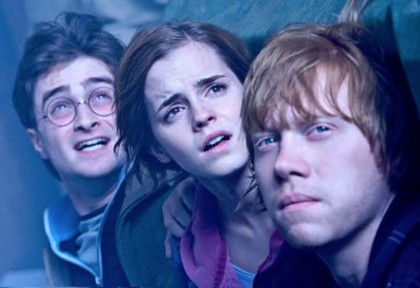
Quidditch By Dummies

This first appeared on Splice Today.
_______

I was supposed to go see the last Harry Potter movie with my utterly obsessed seven-year-old son. We got into the car to drive to the theater with our son gibbering on about Quidditch and Hogwarts and Voldemart, and then I pressed the power button on the Prius… and pfft. Nothing. The battery was dead.

Which is fairly typical of my entire experience with the Harry Potter franchise. Lots and lots of build-up followed by a big fat zilch. I don’t hate the Harry Potter books. I read the first four of them, and watched the first movie. My son’s obsession with them has moved rapidly from amusing to annoying to thoroughly oppressive, but still, it’s better than Thomas the Tank Engine or superheroes. The Potter books are at least marginally readable… especially since my son has learned to read himself and is going through them on his own.

Nevertheless, what bugs me about the series is that it should be better than just tolerable, and not just because the whole world is apeshit over it. The first book opens with a horrid family right out of Roald Dahl, and I quite like that lovely scene with the owls dropping drifts of letters addressed to our hero. The idea of a wizarding school seems pretty solid. And there are lots of excellent British children’s books series. If the How To Train Your Dragon books can be consistently top-notch, why not Harry Potter?

And the answer is: Quidditch. The notion of wizard-soccer on broomsticks is pretty clever, and I can certainly see the appeal for kids—who doesn’t want to fly? But the actual game is incredibly stupid. Most of Quidditch is devoted to goal scoring, but a huge bushel of points are awarded not for scoring goals, but for catching a special ball called the Snitch. Whoever catches the Snitch also ends the game—all of which means that, for most intents and purposes, the vast majority of the action taking place on (or above) the Quidditch field is pointless.

You can see why J.K. Rowling designed Quidditch as she did; the rules make the Seeker, who goes after the Snitch, by far the most important player on the field. Since Harry turns out to be a supremely gifted Seeker, all the matches end up being about Harry’s wonderfulness. This, observation of my son has informed me, has a huge appeal to the core under-nine audience. But for anyone else, Quidditch as repetitive occasion for transparent hagiography gets very old very quickly.

This is nit-picking to some extent. But it’s also emblematic. There are a lot of things like Quidditch in Harry Potter; places where Rowling failed to fit the pieces together right and the result is the irritating sound of audible grinding. A friend of mine pointed out that the thing that gets him is that Harry, when we first meet him, should be a volatile, unstable wreck. He was systematically emotionally abused by his foster parents, the Dursleys, throughout his childhood, and while nurture isn’t everything, it’s something. Kids treated that way have real problems; they don’t just shake it off in a few pages and become do-gooding everyboys with loads of inner resources.

The problem isn’t the scenario per se. As mentioned above, if the same story was told by Roald Dahl, you wouldn’t think about it for a second, any more than you ask questions about the actual logistics of building Mr. Wonka’s chocolate emporium. Instead, the difficulty is Rowling’s tonal control—or the lack thereof. Harry Potter comes out of the Lewis Carroll/E. Nesbit/Dahlian tradition of British nonsense, with its fantastical illogical goofiness. But Rowling also wants to create an epic battle between good and evil indebted to Lord of the Rings.

The result is a lurching hodgepodge; a magical world that isn’t internally or externally consistent, but is too concerned with it’s own inner-workings to ever really take flight into whimsy. The first book gets at some of the rush of wonder in classic fantasy… but as the kids learn more, magic is rapidly domesticated, turned into a series of recipes. You’re left with endless piles of prose explicating labyrinthine rules, most of which don’t even have the geeky satisfaction of making sense.

I know lots of folks say that the last movie is pretty good, and that the series in general becomes darker and more effective as it goes on. Maybe so, and maybe my car will work well enough to go see it. I’ve had enough exposure to the series, though, to feel fairly confident that wherever Harry Potter goes, he will go there with a pfft.
 

large_Final-Harry-Potter-Film-500x343

Superhero Anatomy

Mystique statue

They don’t make superhero figures like they used to. I’m looking at Marvel’s latest Mystique statuette. Only a mutant could maintain proportions so inhuman. The shapeshifting supervillain has taken the form of a softporn supermodel, Marvel’s answer to DC’s so-called “Bombshell” series. Artist Ant Lucia says he took his inspiration from vintage pin-up illustrations. That explains why Batgirl’s breasts bulge from her barely trussed batbra. Supergirl isn’t bashful about her gravity-defying miniskirt either.

Batgirl bombshell statueSupergirl statue

These are definitely not the action figures of my youth. I stopped playing with those in 6th grade, when they became a major social liability. One of my much more popular classmates stared at me with pity when I mentioned reading a comic book. I imagined his expression if I’d admitted that superhero dolls were posed on my bedroom bookshelves at that very moment. We were supposed to be talking about girls.

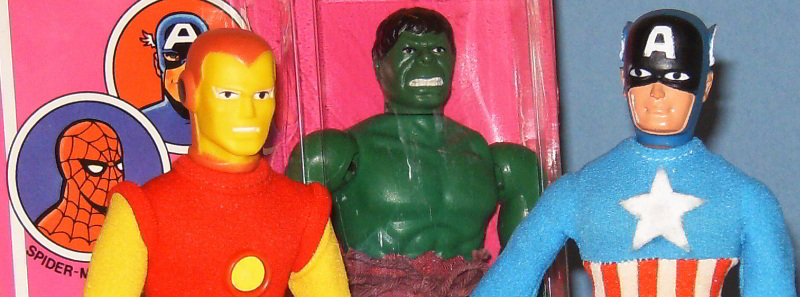
If I’ve done the math right, this is 1978. I’m twelve. On the cusp of puberty. Mego, which literally owned the superhero doll market through the 1970s, was struggling after blowing its chance to produce the Star Wars line. The company would be bankrupt by 1983, my senior year of high school. But in 1978, I was still a Mego boy.
 

Mego action figures

 
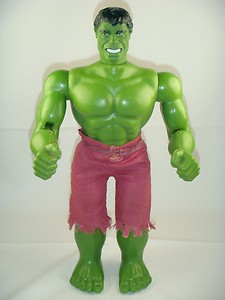
I apparently liked the color green: Hulk, Green Goblin, Lizard, Green Arrow. The orange-skinned Thing was in the mix too, but not much in the way of human flesh tones. DC Bombshells stand eleven inches high, so they would have dwarfed my little eight-inchers. My guys had interchangeable heads too. The bodies were identical. A single elastic band held limbs inside shoulder and hip joints. If a leg or arm broke off, the others did too. If the chest cracked, the elastic imploded the limbs into a center knot impossible for my preadolescent fingers to pry apart.

I liked their clothes the most. Cloth unitards with metal snaps up the back and removable plastic boots. I would undress them and recombine to invent new characters. Green Arrow in silver chainmail was “Invincible,” a sword-wielding superhero from some vaguely Medieval dimension. I didn’t play with girl clothes though. My doll collection included no female anatomy. Mego offered very few women, only Invisible Girl from the Marvel line-up (I considered myself too mature for DC). The males were sexless anyway. Not so much as a bulge or butt crack marring their identical plastic pelvises.

I also had to stop drawing superheroes, another former favorite childhood pastime. My understanding of anatomy had been questionable at best. My heroes (I only drew originals) defied da Vinci’s eight head height ratio. My imitation of Marvel footwear resulted in bulbous ankles and ballet-pointed toes. The pose was always the same: forward-facing, full-body portrait. Costumes changed but not my bodies.

My classmates preferred drawing female anatomy in the back of the science room. They argued vagina positioning, whether forward- or downward-facing. I did not offer an opinion. Someone performed shocked disgust when I was forced to admit to having never fondled a girl. My heroes had made only one investigative sortie into my older sister’s box of abandoned Barbies. They were nipple-less and closed-groined, and at just under a foot, too tall for my eight-inchers. The plastic bodies were ungiving anyway, and my interest only mild.

My daughter’s abandoned Spider-Man brags over a dozen points of articulation, including fingers, toes and torso. Like my Mego gang, her Barbie Batgirl has real clothes, but the others wear their costumes like skin. Her Mystique was naked but for her genitalia-disguising plastic fur, but there was no disguising those generous hips. She told me years later how much the doll disturbed her. Both her collection and the remains of mine migrated into a plastic bin that lived in my son’s closet for a few years and now in our attic. He hasn’t opened it in years. He’s in seventh grade now and would rather play Wii or read a book, a real book, not a comic book.

Little Billy Baston was eleven when he gained the powers of Shazam and turned into Captain Marvel. Mego made that doll too, but I didn’t care about DC characters. You couldn’t just say a magic word and be grown-up. It was a process, a series of choices and mishaps. The Thing got stuck with a new body, but he wasn’t happy about it. The Hulk didn’t ask to change either. The Lizard just wanted a new arm. Change happens whether you like it or not.

When my dad saw me boxing up my superheroes, he asked me why I’d suddenly declared myself too old for dolls. He’d seen me playing with them just a week before. When I told him, he nodded glumly. He looked disappointed, not in me but in the world.

I liked flying them around my bedroom, crashing them across the landscape of my bedspread. They were hard to pose, but if you were careful, if you balanced them just right, they could stand at the edge of a table or a corner of a bookshelf. Just stand there. Frozen. That tiny elastic cord pulling inside their chest. Always on the verge of imploding.
 

Hulk action figure

The End of Race

If you talk about white people, you’re not talking about race. If you talk about black people, you are. This is arguably the essence of racism; black people are an aberration or a disturbance; white people are natural. Therefore, to end racism, artists should treat black and white individuals exactly the same. If art doesn’t see color, then the art isn’t racist. QED.

This is the logic that Lamar one of the co-creators of the Pixies’ video “Bagboy,” used when he defended his decision to present a narrative in which a white kid gleefully and giddily trashes a house which, at the video’s conclusion, turns out to belong to a black woman who he has trussed up in her own bedroom.

We knew we were taking some risks when we made the video. When most people see a white kid (Nik’s little brother) and a black woman (my older sister) they can’t help but think “racist” and “misogynist”. This is pretty sad.

From the beginning, when we originally thought of the concept, it was never our intention to make it about a white kid terrorizing a helpless black family. I, myself, being black have gotten to the point where I don’t automatically see color in people. It’s the same for Nik. If the character’s races were switched you’d probably have the same amount of stuff to say about the video.

It’s 2013, at what point do we stop seeing everything as racist. At what point do we stop making things a bigger deal than they are.

The problem here, as Bert Stabler points out, is that claiming color-blindness doesn’t make the rest of the world color-blind. Declaring racism over doesn’t make it so, and there isn’t really any way to show a white kid terrorizing a back woman’s home without referencing the way that white people really have, in the recent past, conducted vicious campaigns of terror against black people for daring to move into middle class homes. The video doesn’t come off as color-blind; it comes off as thoughtless, or (as Bert suggests) as cynically courting controversy. Not seeing race now can’t erase a history of racism, especially when not seeing race seems to just result in you unthinkingly mimicking that history.

Danity Kane’s Ride For You does a much better job of suggesting that race doesn’t matter, though not exactly by ignoring race.

Towards the end of the video, the five female members of the interracial group pair up with various hot guys. Those pairings are integrated; there’s a black guy/white girl couple; a white guy/black girl couple, a back guy/black girl couple, and two white guy/white girl couples. This almost surely has to be a deliberate choice; Danity Kane is not a spontaneous punk rock kind of group,and everything else on the shoot, from the multiple costume changes to the round robin vocals, certainly seems focus-grouped within an inch of its life. Someone during the making of that video decided that they wanted to present a color blind world. But to do that, they had to admit (to themselves, and I think to the audience as well) that they could tell which of their singers (and which portion of their studly male window-dressing) were black, and which were white.

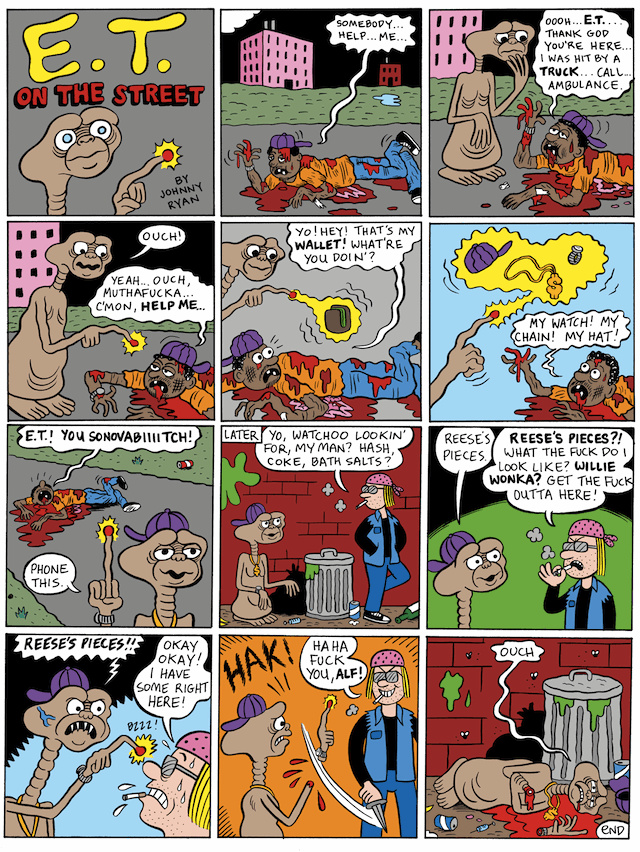
Johnny Ryan’s “E.T. on the Street” also is also quietly but deliberately conscious of race in the interest of avoiding stereotypes, though the success is more mixed.
 

a3173b135ccded00b232dd1fcfccdbaa

 
Laurel Lynn Leake dismisses this, arguing “That whole ET comic is just “what if ET was a bl- I mean, urban man! He would be a total greedy sociopathic asshole, amirite?!” And there’s certainly something to that argument. At the same time, though, you can see Ryan (usually thought of as eager to offend everyone) trying quite consciously to avoid offense. The black guy at the beginning of the comic isn’t a gangsta, and he hasn’t been shot — he’s been hit by a car, and E.T. robs him, not the other way around. Along the same lines, the violent thug at the end is white, not black. And, for that matter, E.T.’s race is unclear. Is he supposed to be black? Or is he supposed to be a tourist in a black neighborhood — ignoring the misery there, and then pretending (with that backwards baseball cap) to be one of the folks he’s just callously robbed? Is the joke that E.T. is a black man and is therefore an asshole? Or is the joke that he’s a white guy pretending to be black, and is therefore an asshole?

The strip is conscious enough of race to make that reading plausible, and, I think, even probable. But it’s not conscious enough to exactly make that reading the point, nor to do anything with it. The end could perhaps suggest something like Crane’s suggestion in the Blue Hotel that believing in stereotypical narratives can make those narratives close around you and destroy you. But E.T.’s motivations are too much of a cipher, and his fate too random, to really sustain that. If the first part of the strip seems to be willing to think about and talk about race, the second just shrugs, abandoning the theme of racial tourism for standard-issue tropes of ghetto violence, sanitized by making the perpetrator a white guy. It’s significantly more careful about racial issues than that Bagboy video. But since it doesn’t seem to want to follow through on them, you do end up feeling, as with the Lamar and Nik effort, that race is here evoked mostly for the sake of controversy.

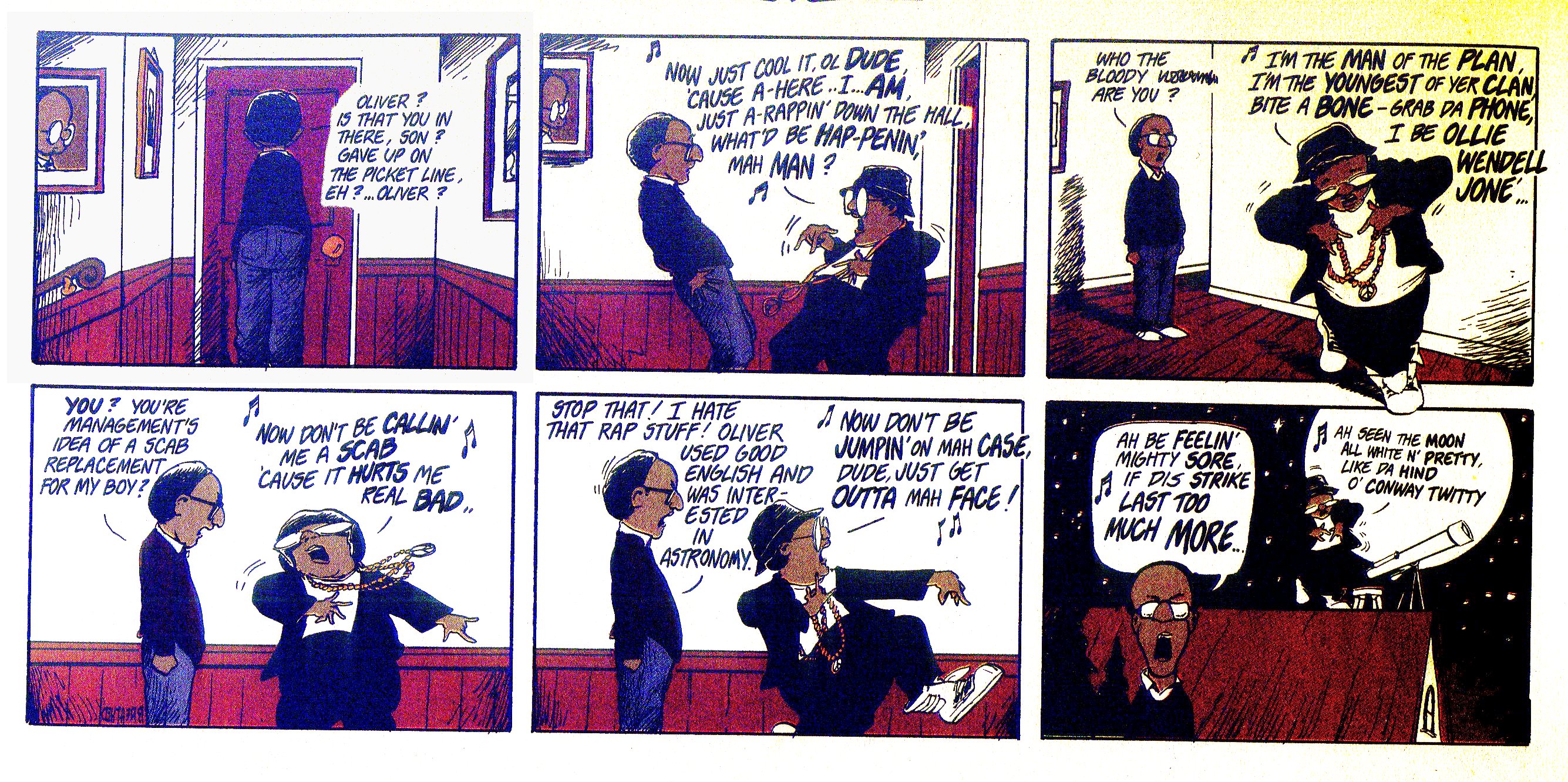
And then there’s this. (Apologies for the crappy scan.)

bloom county021

As with most of Berke Breathed’s Bloom County strips, this one is embedded in a lengthy and preposterous narrative. In this case, the Bloom County characters have all gone on strike to protest the shrinking space available for comics; management has hired scab replacements. Oliver Wendell Jones, the strip’s resident child-genius who also happens to be black (and whose picture you can see off to the side in the first panel), has been replaced by a ludicrous rap stereotype.

Part of the reason this strip works better than the other examples here is a function of time. Breathed isn’t working with a 3 minute video or with an isolated gag strip. Bloom County is a daily, and we know Oliver Wendell Jones like a friend. We know him so well, in fact, that he isn’t just a racial marker, as black people too often are in pop culture. Rather, Oliver is a particular person, who, like his dad says, speaks good English and loves astronomy and occasionally crashes the world’s computer networks. Breathed has put in the time to ensure that Jones is not a caricature, and as a result the reader can fully appreciate the travesty of having him replaced by one.

So in part the strip deals effectively with race because it worked to erase race. But that work, obviously, involved seeing race in the first place; making your black character a computer genius is a decision that has meaning. And the joke in this strip, too, requires seeing race, and acknowledging the way it turns individuals into the tropes we expect to see. Even Oliver’s dad, at the en, succumbs, and breaks out into rap, complete with bad grammar. In the meantime, his “son” is up on the roof, looking at the stars, and declaring

Ah seen the moon
All white n’ pretty
Like da hind
O’ Conway Twitty.

I don’t think it’s an accident that a strip about ridiculous totemic blackness ends with a ridiculous invocation of totemic whiteness. The round fat moon hoves into the panel, made visible by both telescope and verse, reminding us, perhaps, that if we must see blackness, the least we can do is remember to see whiteness as well.
 

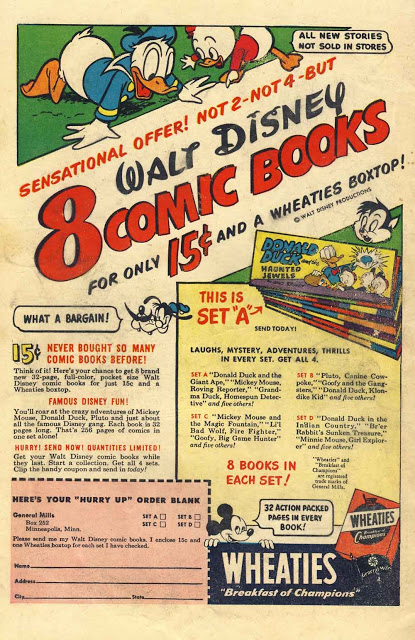
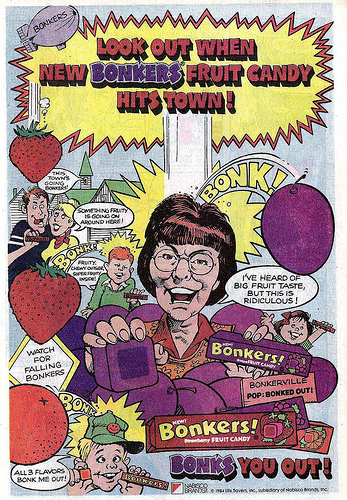
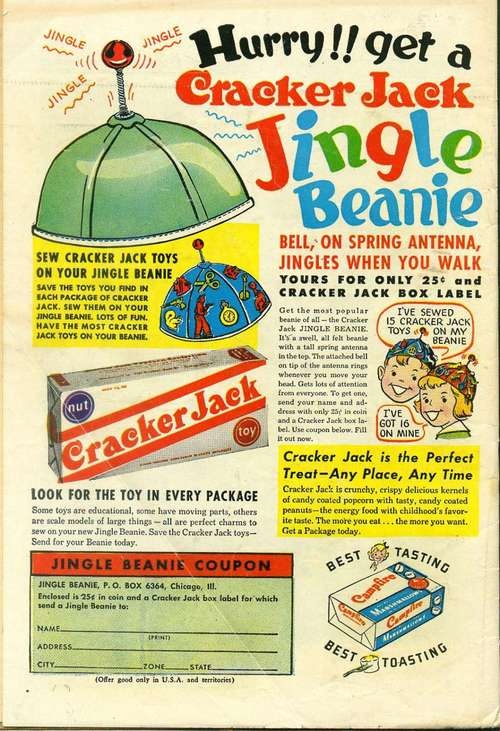
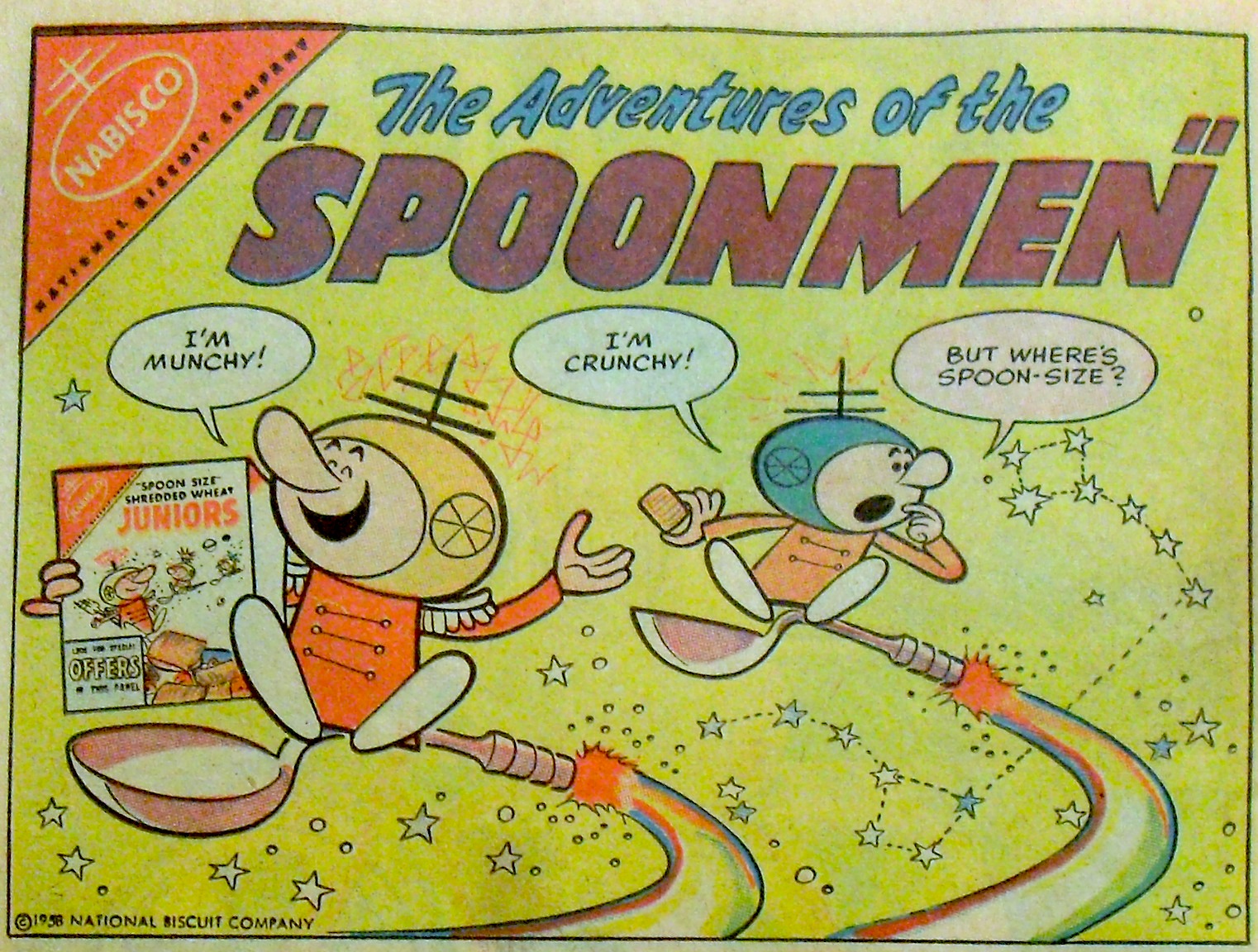
The Comic Book Diet

wheatiesCereal
.

bonkers
Candy
.

crackerjack
Cracker Jacks

.

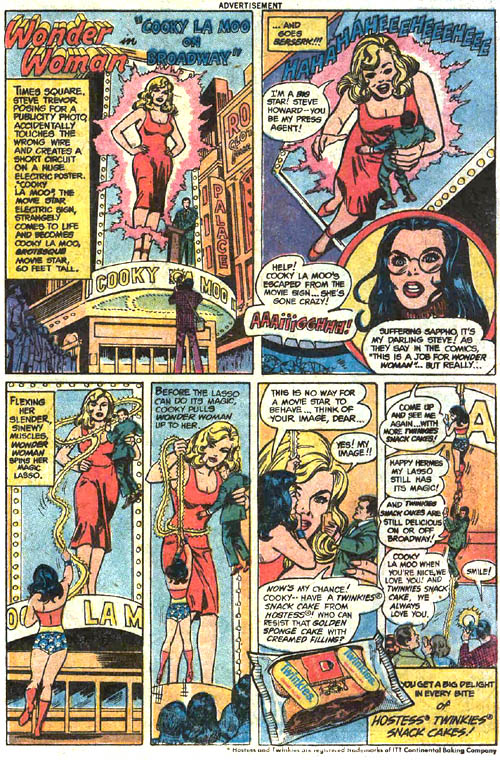
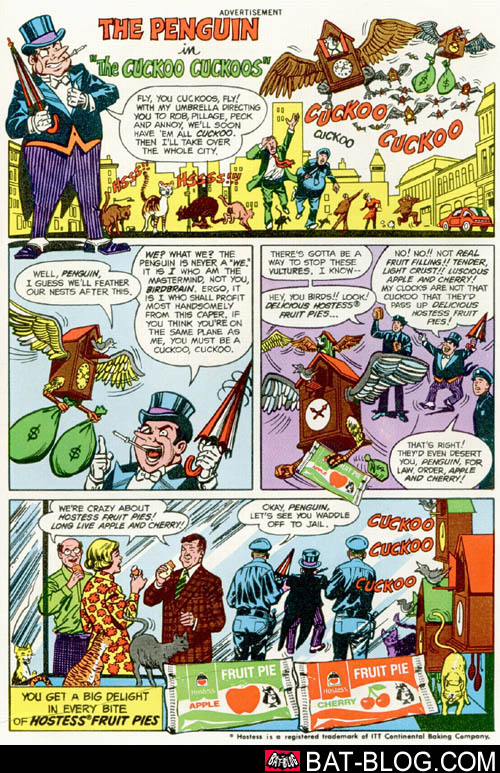
hostess

hostess2

Hostess Snacks (there are tons of these comics)

.

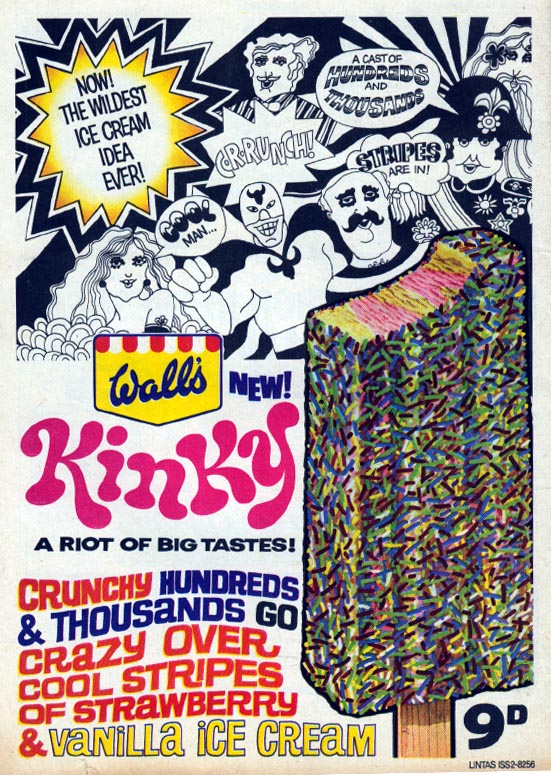
kinkylolly
Ice Cream

.

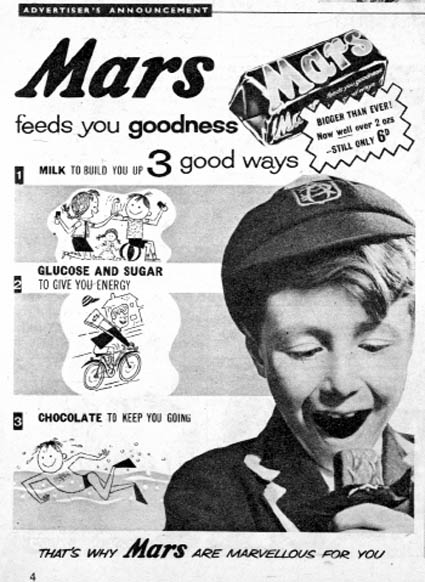
mars
Chocolate Bars

.

VLUU L100, M100  / Samsung L100, M100
More Cereal

.

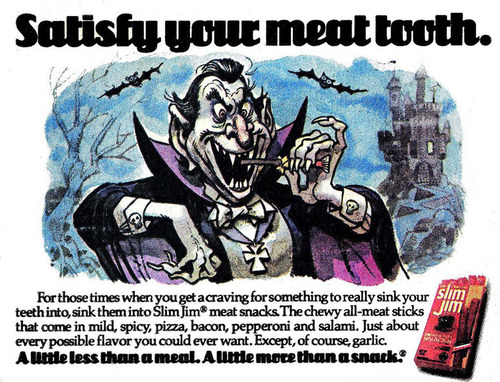
slimjim
Slim Jims (I hear they’re supposed to be good for you)

.

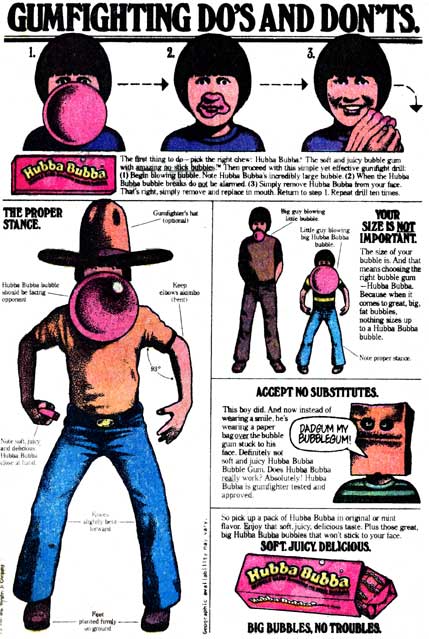
hubbabubba

Bubblegum

.

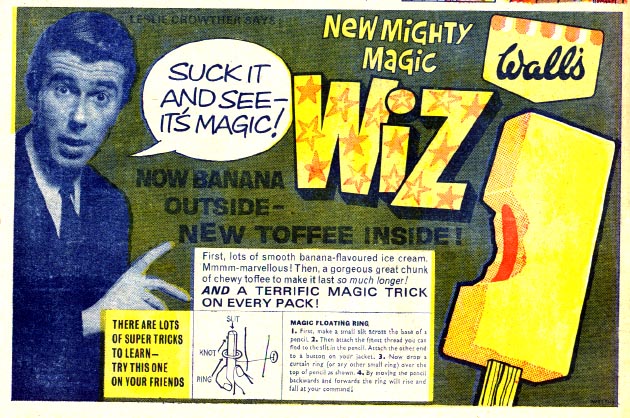
wiz
I’m not sure what this is, but it sounds disgusting…

.

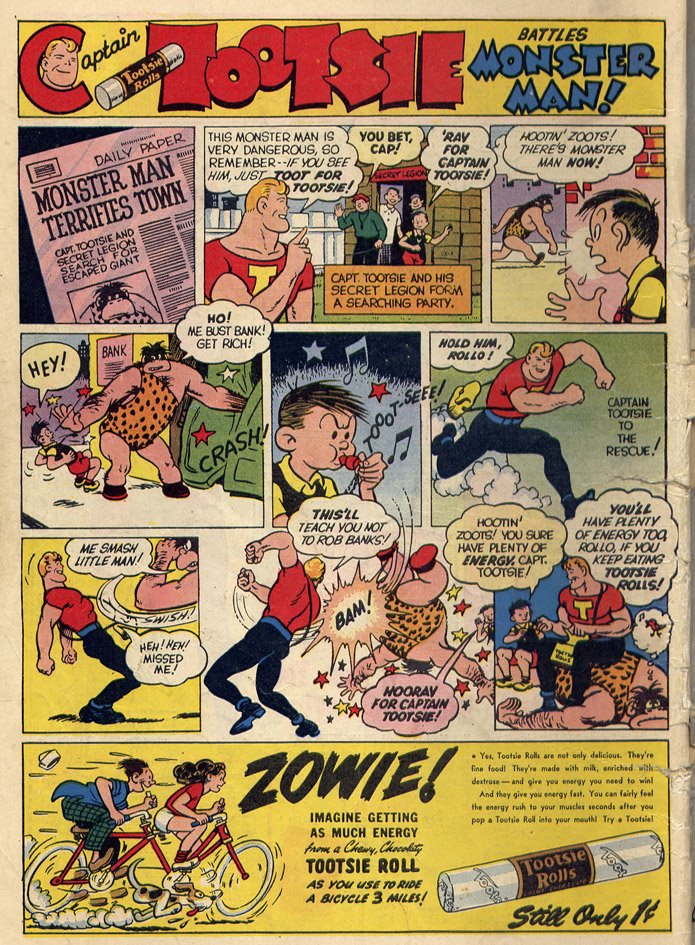
tootsie
Tootsie Rolls

.

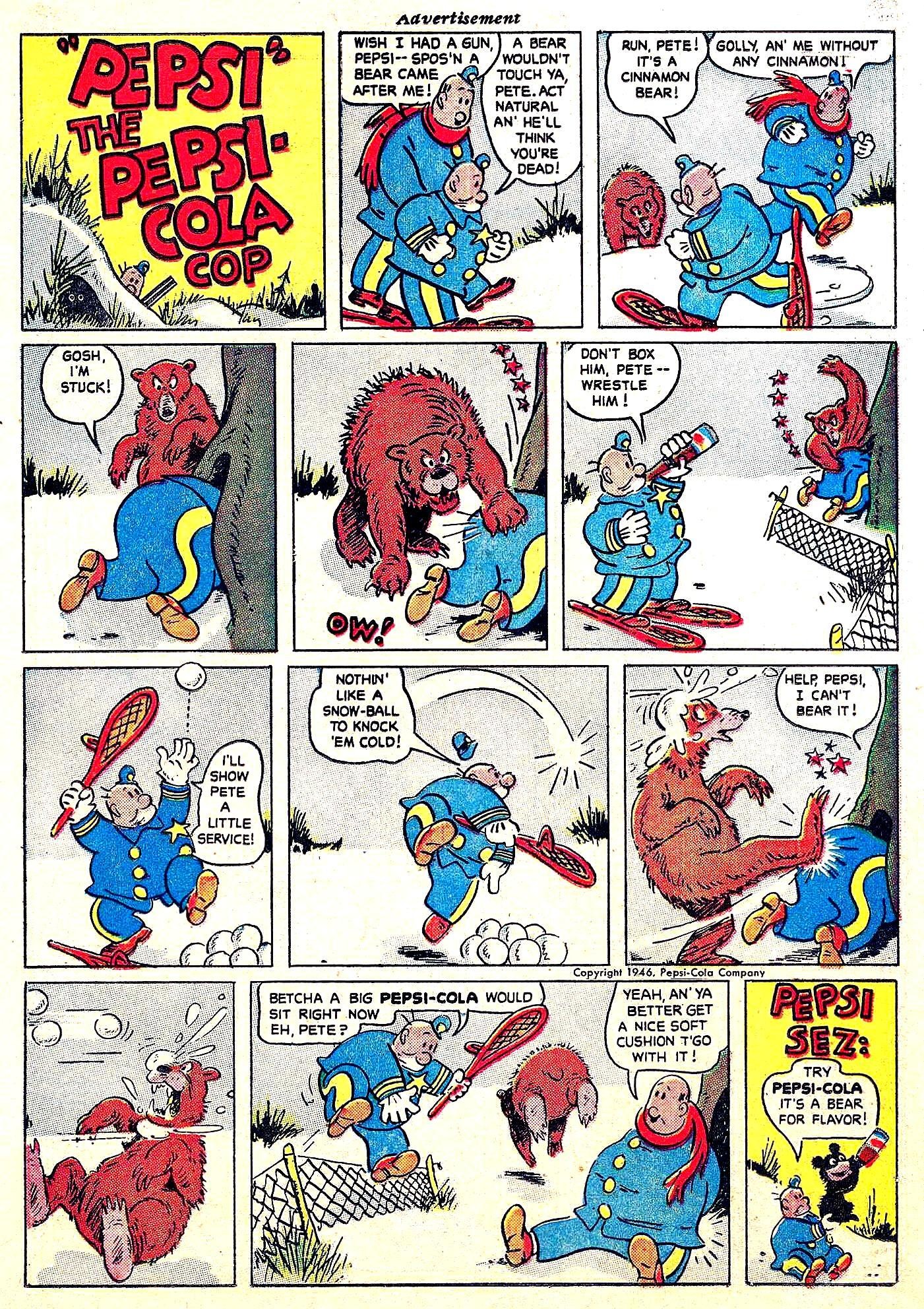
pepsi
And wash everything down with a cool, refreshing Pepsi

__________________________

Several of these were pulled from this blog, where there are a few more ads.
And Cracked.com writer Seanbaby has a website devoted to Hostess comics.

Can Comics Critics Be As Vapidly Ignorant as Political Pundits?: Live-Blogging the Presidential Address on Syria

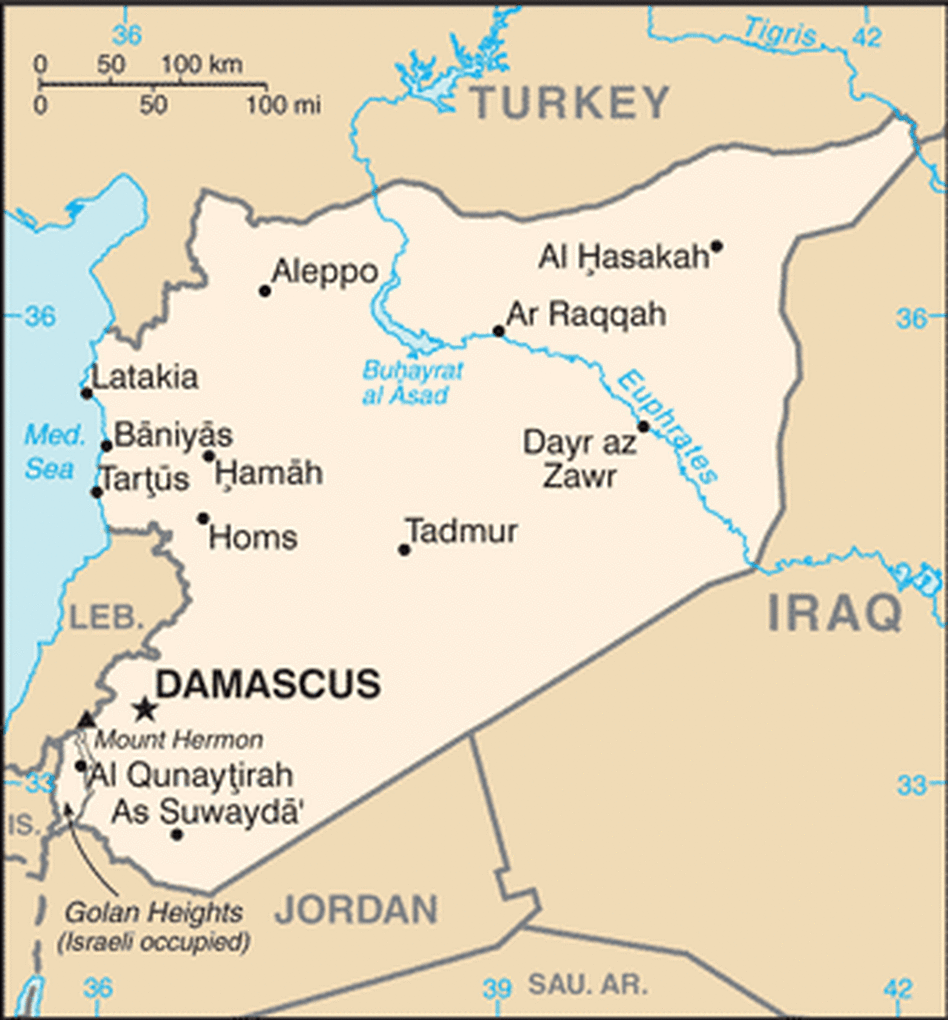
syria292way_custom-ade1b7712443d957fcdace3a8bc4e16e97b493fe-s6-c30

The live blogging is below in comments (scroll down!)

Below is my concluding response to the speech:

All right. Well, as I said, that was a naueseating and unbelievably disingenuous performance. I guess it’s foolish to think that a President planning the incredibly serious step of dropping bombs on a foreign nation would try to lay out all the facts rather than doing some television courtroom bullshit complete with pictures of dead children and lowered, whispery, “I am sincere” voice.

At a minimum, any serious speech should have acknowledged that we don’t know for sure that Assad used the chemical weapons, and pointed out specifically that there’s a ton of evidence that the rebels did in fact use such weapons a few months back. It would also acknowledge that the “moderate” resistance barely exists, and that al Qaeda and other radical groups have a really good chance of taking over if Assad falls. And it wouldn’t pretend that somehow Assad using chemical weapons means that Iran is going to make a nuclear bomb and kill us all.

Of course, without all of that, there’s basically nothing left. Which to me means we shouldn’t be dropping bombs on Syria. But obviously, the President thinks we should. Why? I still don’t know. He can’t possibly believe the nonsense he was peddling, can he? He can’t be that much of a fool. I know it’s supposed to be all about Israel, but I don’t see what Israel gains by dropping bombs on Assad for maybe using chemical weapons in the interest of maybe slightly helping al-Qaeda take over in Syria.

Maybe someone else can figure it out. I’m just baffled and depressed.

And here’s Richard Cook’s response:

In the spirit of a 15 minute speech, I’ll lay out my opposition to the war as briefly as possible.

Attacking Syria would not be legal, not even if Congress gave him authorization. As I mentioned above, international treaties regarding the use of chemical weapons do not empower any nation to unilaterally enforce them. The use of force – outside of defense – is ultimately governed by the Security Council. Of course, China and Russia would never allow the president to wage a war of choice on Syria, which is why he’s prepared to violate international law (again).

Attacking Syria would not be prudent. There is no guarantee that we would successfully destroy all of Assad’s chemical weapons. We would invite retaliation by Syria or Hezbollah. If the bombing topples the Syrian government, we have no guarantee that the so-called moderate rebels will be able to govern the country. We may very well be helping extremist groups allied with al-Qaeda.

It would not be moral to bomb Syria, especially for the reasons that the president gives. We are allegedly punishing Syria for using chemical weapons, but who are we punishing? Top regime leaders? Military leaders? Their wives and kids and anyone else who happens to be in the room when the bombs hit? What if Assad decides to continue using chemical weapons? Or, more likely what if he just goes back to killing kids with bullets and bombs? What have we accomplished, other than making ourselves feel righteous?

Thanks everyone for reading, and especially Richard for live-blogging with us here. Feel free to leave any thoughts in comments.

A Secret Room With A View

lucy_honeychurch


In his essay “Secrets and Narrative Sequence,” Frank Kermode relates how a critic accused Joseph Conrad of writing Chance twice as long as it needed to be.  “Conrad replied sarcastically that yes, given a certain method, it ‘might have been written out on a cigarette paper.’”

Books naturally contain more writing than the plot requires. Kermode expands:

“even in a detective story, which has the maximum degree of specialized “hermeneutic” organisation, one can always find significant concentrations of interpretable material that has nothing to do with clues and solutions and that can, if we choose, be read farther than simply discarded, though propriety recommends the latter course.”

Also,

“Good readers may conspire to ignore these properties, but they are relevant to my main theme, which is the conflict between narrative sequence (or whatever it is that creates the ‘illusion of narrative sequence’) and what I shall loosely, but with pregnant intention, call ‘secrets.’”

Kermode’s essay primarily concerns itself with Conrad’s Under Western Eyes, and “the kinds of narrative upon which we conventionally place a higher value… [where] there is much more material that is less manifestly under the control of authority, less easily subordinated to ‘clearness and effect’ more palpably the enemy of order, of interpretative consensus, of message.” A.K.A., more secrets. In this light, ‘high’ literature is less a category than a tendency to problematize, interrupt or discard genre conventions which neatly guide the narrative from trope to trope, and finally to the corresponding take-away (love triumphs over all, crime doesn’t pay, ride off into the sunset, never trust a woman, etc.) Some authors, like James Joyce in Ulysses, conscientiously use secrets to write “a book to keep the professors busy.” Other, more dedicatedly popular writers, (Kermode especially cites Conrad, James Joyce, and E.M. Forster,) are “keenly aware of other possibilities, are often anxious to help readers behave as they wish to; they ‘foreground’ sequence and message. This cannot be done without backgrounding something, and indeed it is not uncommon for large parts of a novel to go virtually unread…”

Like a detective story, or a thriller, love stories demand certain ‘backgrounding’ of insignificant and ‘foregrounding’ of significant material, but by slightly different rules. Engaged readers sift through romance novels for evidence: providential signs, compatibility, the gauge of true happiness. This evidence is all that prevents readers from going insane over misunderstanding upon misunderstanding, obstacle upon obstacle. In mystery novels, there is a pleasure in the ambiguity, and an expectation of a surprise ending. Not so with a romance novel, where readers are encouraged to stake out their preferred ending from the get-go. Every twist is chained to an anticipated conclusion. Failure to get the protagonists together is at best a tragedy, and at worst, an unsatisfactory failure on the part of the author, who could not figure out the ‘true ending’ the characters deserve.  (Endings rife with life-affirming melancholy sit somewhere in the middle, and I suppose have fewer fans, and are remembered less well.)

This makes for a stressful, if rewarding reading experience. When the ending is truly in question, all ‘secrets’ which contradict the lovers’ eventual union must be ignored or under-read—otherwise they are distressing. These secrets are not the villainies of the plot, (a sympathetic third leg to the love-triangle, well-meaning family intervention, yet another innocent misunderstanding,) as these elements promote sequence rather than distract from it. Secrets interrupt and cancel the flow toward eventual togetherness, and cast doubt on its necessity.  E.M. Forster’s A Room With A View is rife with them.

A Room With A View unambiguously champions the union of Lucy and George, two young people who meet as tourists in Florence and are troubled by the repressive strictures of Edwardian society.  The book triumphs in that their relationship is overtly odd, surprising yet recognizable, and quite beautiful; the ‘secrets’ of A Room With A View are not the most interesting part of the book, or what can be said about it. However, like thorns on a rose stem, its secrets cut into the romantic ending with suggestions of frustration, loss and violence. Even more intriguingly, when Forster returned to the characters in an ‘appendix’ epilogue he wrote fifty years later, he chiefly expands upon the existence of these darker elements.

Spoiler alert: this essay mostly concerns itself with the ending of a short and very wonderful book, which is worth reading. It is available all over Kindle and the internet for free, and in most used bookstores for about a dollar. If a book is still too much of a commitment, there is a fantastic and simple, (and again, short,) film adaptation by Merchant Ivory on NetFlix InstantWatch, even though it excises and alters the ‘secretive’ parts of the book, in accordance to what Forster ‘foregrounded.’ Knowing the ending doesn’t completely destroy the pleasure of reading the book. At the same time, I’m afraid that the following interpretation could spoil the goodness of the union of George and Lucy, something I desperately hoped for while reading A Room With A View, even though I had a good idea that it was going to happen anyhow.

A Room With A View is told from third person perspective, with limited access to the internal thoughts of the main characters.  Readers are privileged with the viewpoints of some characters more than others, most often seeing inside the head of Lucy Honeychurch, the conflicted female protagonist, and the Reverend Mr. Beebe. Beebe is Lucy’s local vicar, who she esteems greatly, and who observes Lucy’s ‘progress’ throughout the book. Lucy struggles between worlds—the world of propriety and English manners which she understands and values, and the world of raw feeling, passion and human generosity, which confounds and fascinates her.  She participates in the latter mutely, unconsciously, when she plays the piano. As Mr. Beebe famously observes, “”If Miss Honeychurch ever takes to live as she plays, it will be very exciting both for us and for her.” If Lucy is the site of the book’s conflict, and voices Forster’s own struggles, Mr. Beebe is well-meaning if sardonic witness, and Forster’s observation of his own self.  In Part Two, readers also get access into Cecil, Lucy’s fiancé, a dandyish dupe she eventually leaves. Readers barely glimpse into the workings of George, Lucy’s paramour, until the last few pages, or Charlotte, Lucy’s cousin, another central character.

Lucy creates most of the obstacles in getting together with George—she rationalizes, underplays and represses her feelings for him. A Room With A View is a strange love story where the heroine is not in touch with some great passion she finds impossible to resist—Lucy does a great job of resisting it, and making herself unhappy. Lucy is a brilliant portrait of a young woman caught in the crossfires of her responsibilities to herself and to others, and unsure of the motivations of her unconscious, an idea just formulated at the time of the book’s writing. When George’s father, Mr. Emerson, a philosophic middle class Englishman with poor manners and eccentric habits, declares to Lucy almost out of the blue,

“Now don’t be stupid over this. I don’t require you to fall in love with my boy, but I do think you might try and understand him. You are nearer his age, and if you let yourself go I am sure you are sensible. You might help me. He has known so few women, and you have the time… You are inclined to get muddled, if I may judge from last night. Let yourself go. Pull out from the depths those thoughts that you do not understand, and spread them out in the sunlight and know the meaning of them. By understanding George you may learn to understand yourself. It will be good for both of you.”

Of course there’s wisdom in Mr. Emerson’s observations, but his commentary is impertinent, and agressive even by today’s standards. “Don’t be stupid,” whether said gently or violently, is a rebuff, and Mr. Emerson is only responding to something he believes Lucy has started to say, when she hadn’t said anything at all. Mr. Emerson alludes to their interaction the previous night. If Lucy had been muddled the night before, she had also been observant and open-minded, quietly cheering on the well-meaning Emersons as they navigated a snafu with her cousin Charlotte, when they attempted to do an unasked favor. Mr. Emerson does not just ask for Lucy’s sympathy, which he has, or her understanding, which he solicits, but her allegiance.

A Room With A View is overtly a story about Lucy’s self-realization, dramatized through her admission of love for George.  Underneath this, A Room With A View is also a story about the conquest of a girl’s inner life. As set up by Mr. Beebe in the opening pages. “I differ from [Mr. Emerson] on almost every point of any importance, and so, I expect— I may say I hope— you will differ.” It is not as if one ‘father’ figure has monstrous views about Lucy’s future. Both claim to understand Lucy; both know her very little. Yet the reader accesses Mr. Beebe, the loser of the fight, and Cecil, who also loses Lucy, and Lucy—who arguably loses herself.

A Room With a View has a rather cryptic happy ending. Lucy never admits, “I love George” of her own accord. In the penultimate scene, she finally acquiesces to Mr. Emerson’s relentless insistence that she does, through anger and tears, and finally a humiliated but happy acceptance. Not only does Mr. Beebe witness and play an active role in this argument, he expresses his grief that Lucy will marry George, (as opposed to remaining unmarried forever, which was his expressed preference,) and then is described to have “walked out and left them.” Mr. Emerson then says mystically,

“Ah, dear, if I were George, and gave you one kiss, it would make you brave. You have to go cold into a battle that needs warmth, out into the muddle that you have made yourself; and your mother and all your friends will despise you, oh, my darling, and rightly, if it is ever right to despise. George still dark, all the tussle and the misery without a word from him. Am I justified?” Into his own eyes tears came. “Yes, for we fight for more than Love or Pleasure; there is Truth. Truth counts, Truth does count.”

Lucy replies, consenting, “You kiss me, you kiss me. I will try.” This section completes the strange permeability between George and his father, and the lack of distinction between the two. It is no small wonder that this scene was shortened, fragmented and censored in the film adaptation, to better express the victory of Eternal Love between two young people.

In the final chapter, George and Lucy elope and return to the Florentine pension where they met. The reader is not greeted with a passionate, an exhilarated, or an active Lucy, but a Lucy who is darning George’s sock. For the most part, the reader is locked out of her thoughts. George is repeatedly described as a child, or in danger of contracting rheumatism, like his aged father. Perhaps Mr. Emerson was not recruiting a love for the mother-less George, who knew so few women—perhaps he was recruiting a mother.

Nonetheless, the last chapter is a deeply felt end to a love story. They make each other happy, they kiss, they smile, and share a humble acceptance that they were brought together by powers other than their own. We get access to George’s mind for the first time, and he reflects “All the fighting that mattered had been done by others—by Italy, by his father, by his wife.” Forster is the first to admit that, “When it came to a point, it was she who remembered the past, she into whose soul the iron had entered…”

If the reader’s copy of A Room With A View is cruel enough to also contain the appendix, this idyll is followed by a curt and baffling epilogue, written by a wearied Forster fifty years later. In it we find that Lucy and George enjoy six years of great happiness, which is ruined by the first World War. Lucy never recovers her relationship with her family, damaged by her elopement with George, and then by George’s conscientious objection. Her brother, who the book describes with much sweetness, ends up selling the family home so lovingly documented in the first book. Freddy is characterized damningly as an “unsuccessful yet prolific doctor, [who] could do no other than sell.” The couple struggles, and WWII breaks out.

“George instantly enlisted. Being both intelligent and passionate, he could distinguish between a Germany that was not much worse than England and a Germany that was devilish. At the age of fifty he could recognize in Hitlerism an enemy of the heart as well as of the head and the arts. He discovered that he loved fighting and had been starved by its absence, and also discovered that away from his wife he did not remain chaste.”

Forster goes on—Lucy and George’s flat is bombed, Lucy is said to lose everything, her daughter’s house is bombed, George is injured but at least survives and makes corporal…they are homeless at the end of the war, and the author has no idea where they’ve been living for the last twelve or so years. All in all, one hell of an epilogue.

The fighting quote above is striking, as it resonates so well with the last chapter of the book. Lucy is described as a mother, a domestic, and at times a rebellious player of Beethoven. Beethoven was the thing that distinguished her at the beginning of the book, and according to Mr. Beebe, the only thing that foretold of something greater. Strangely, it is still the only thing that distinguishes her by the end.

Beethoven is echoed at the end of the appendix, in a surprisingly lengthy, tender description of Cecil, Lucy’s spurned fiancé. Forster writes, “Cecil Vyse must not be omitted from this prophetic retrospect. He moved out of the Emersons’ circle but was not altogether out of mine.” He finishes the appendix with an anecdote,

“A quiet little party was held on the outskirts of that city, and someone wanted a little Beethoven. The hostess demurred. Hun music might compromise us. But a young officer spoke up. ‘No, it’s all right,’ he said, ‘a chap who knows about those things from the inside told me Beethoven’s definitely Belgian.’

The chap in question must have been Cecil. The mixture of mischief and culture is unmistakable. Our hostess was reassured, the ban was lifted, and the Moonlight Sonata shimmered into the desert.”

It is the only piece of the appendix that resembles the tone of the book in its poetry and humor.

Cecil was never a real rival for Lucy’s affection. Their relationship is portrayed as nothing but a mistake from the start. Cecil’s unsuitability is most often illustrated through his derision of Lucy’s family and home, which are dear to her and lovingly described—yet she loses these irrevorcably by marrying George. Lucy reiterates George’s attack of Cecil’s character as her justification for ending the marriage—she describes him severely as “the sort who can’t know any one intimately.”

Cecil uncharacteristically receives Lucy’s criticisms with acceptance, kindness and grace. It mirrors a ‘truth’ Mr. Beebe believes of Cecil, but also a truth he believes of Lucy, and at points, a truth that Lucy believes of herself.

Forster’s triangle of intimacy with Mr. Beebe, Cecil and Lucy is doomed. Lucy merges with the Emersons. While Beebe’s aversion for marriage isn’t qualified, Forster betrays no conviction in Lucy’s realization within the marriage, and no vision for how Lucy can acceptance of love without exterior force.  Yet for Lucy to have chosen Beebe’s preference—to remain unmarried and travel abroad with two old spinsters, eventually to turn into her Jungian shadow of a cousin, Charlotte—seems far below her powers as well. (This essay’s negligence of the character of Charlotte is criminal. A great many of the book’s secrets lay in her.)  It’s as if Lucy is eaten alive by the romantic narrative, and Forster is caught between a lady and a tiger. He resists for awhile, but can’t write Lucy out of the dilemma, and so he abandons her. In Mr. Beebe’s words, “[George] is no longer interesting to me,” and Forster writes him in the epilogue as gifted, but selfish and without poetry. Characters only hold interest for Forster in their isolation—leaving, or being left.  Sometimes I wish for a  “Gone With the Wind” option, where Lucy is abandoned by George for her painful indecision, and in which, as a consequence, Lucy never stops being Lucy, muddle and all.