What Americans Know

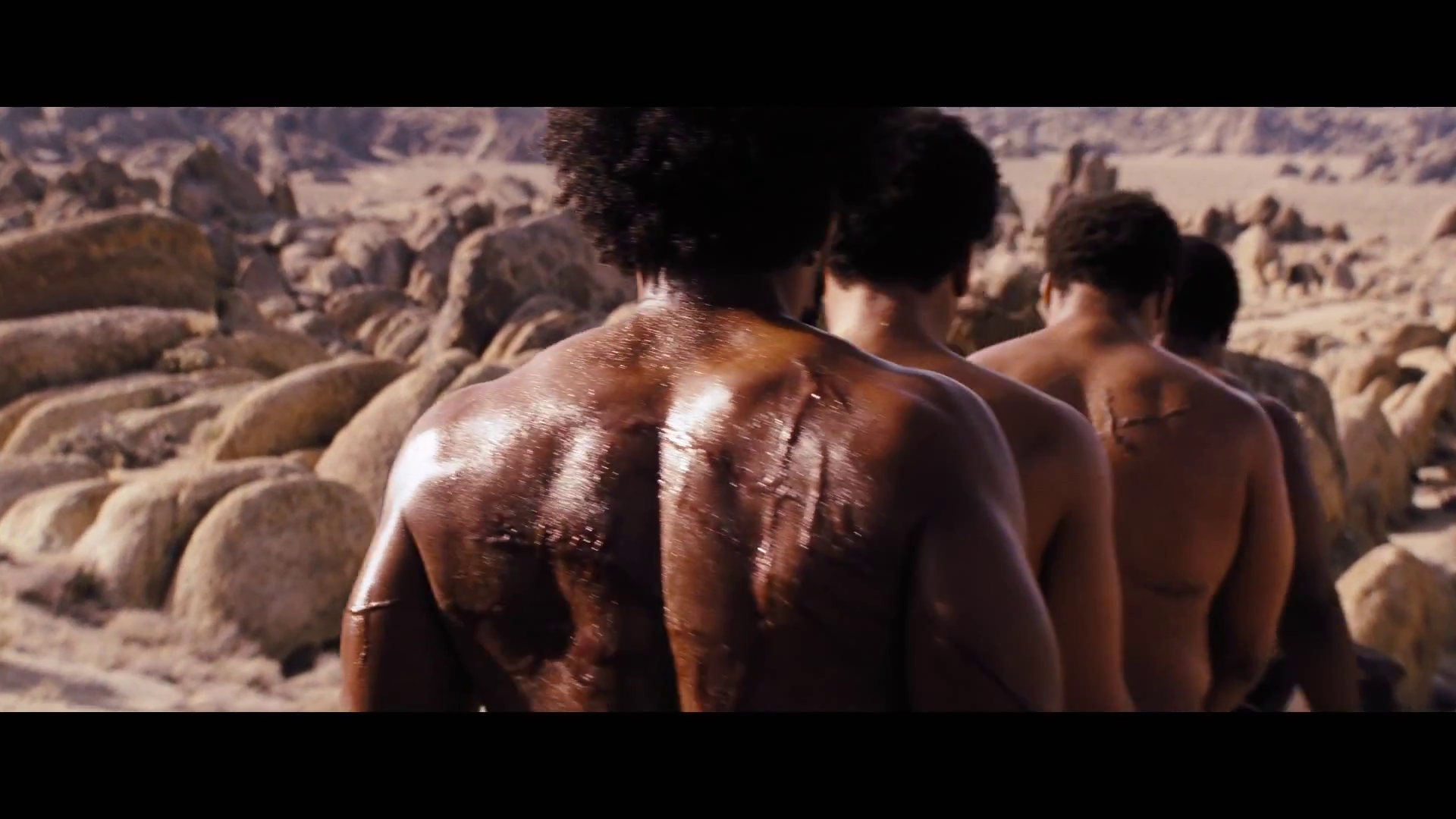
vlcsnap-2012-06-07-23h16m13s170

 
I finally saw Django Unchained, which I think is probably one of Tarantino’s weaker efforts — down there with the Kill Bill films. It’s certainly well made, and there are lots of interesting moments and ideas, but its handling of the Western genre strikes me as much less knowing, and much less thematized, than the handling of Holocaust films/war films in Inglourious Basterds. As Alyssa says, the handling of gender is pretty rote (certainly less intelligent than in Jackie Brown). And as I think I’ve seen a bunch of people say, the portrayal of Django as exceptional is really problematic, insofar as it flirts with endorsing the phrenological racist narrative that Calvin Candie (DiCaprio) propounds, in which most of the slaves are slaves because they’re not sufficiently bad ass to overthrow their masters. As subdee has mentioned in comments, the film does very much show the constant, horrific violence that propped up the slave system, so it’s possible to critique the idea of black submissiveness from within the film…but still. A little more focus on the pervasiveness of black resistance could have gone at least a little way to balance the Uncle Tom caricature of Stephen, no matter how ably played by Samuel Jackson. As it is, the film’s focus on hyperbolic violence makes it seem like only one man in ten thousand could fight back effectively — when the truth is, I think, that slavery was kept in place by violence of all levels, and so there was resistance at all levels. The film can’t really imagine, for instance, Frederick Douglass physical struggle with his overseer, in which no one died and no one was freed, but white people weren’t quite able to work their will either.

Still, despite its failings, as I said, there were definitely things about the film I liked. One was the shift in the relationship between the German Dr. Schulz (Christoph Waltz) and Django over the course of the film. In the first part of the movie, where Schulz frees Django from slavery and then trains him as a bounty hunter, Shculz is clearly the senior partner — the one who knows the ropes, and the one who better understands, and is more comfortable with, the violence of bounty hunting. Towards the end of the film, though, when the scene shifts to the Southern plantation where Django’s wife is held, it’s Django who leads the way — and Django who understands the reality of life. When Candie has a slave torn apart by dogs, for example, Schulz is horrified and almost blows their cover — but Dango has seen it before, and keeps his cool. As he tells Candie, Schulz “isn’t used to Americans.” Schulz may be white, but he doesn’t understand white violence the way Django does.

The sequence made me remember James Baldwin’s discussion of Lady Sings The blues in his great essay, The Devil Finds Work. The film is loosely based on Billie Holiday’s autobiography. In one scene, supposedly the inspiration for the song Strange Fruit, Holiday (as Baldwin describes it) is on tour in the south when she sees black mourners and a black body hanging from a tree. The Ku Klux Klan appears, and Holiday starts to shriek at them, endangering herself as her white band members attempt to hide her. The band and Billie then escape, but the trauma caused Holiday to take her first shot of heroin.

Baldwin then comments:

The incident is not in the book: for the very good reason, certainly that black people in this country are schooled in adversity long before white people are. Blacks perceive danger far more swiftly, and however odd this may sound, then attempt to protect their white comrade from his white brothes: they know their white comrade’s brothers far better than the comrade does. One fo the necessities of being black, and knowing it, is to accept the hard discipline of learning to avoid useless anger, and needless loss of life: every mother and his mother’s mother’s brother is needed.

Again, where Lady Sings the Blues fails, Django Unchained succeeds. Django’s experiences as a black man mean that he understands white violence in a way that even the bounty hunter does not.

I especially like the almost certainly intentional irony that it is the German who is horrified by Southern racism and Southern atrocities. (Waltz, of course, played a ruthless Nazi in Tarantino’s last film.) It would be possible, I suppose to see this as hypocritical…but Schulz is a sufficiently sympathetic character that I don’t think it quite reads that way. Or if it does, it points, perhaps, to the way that it’s always easier to see the mote in someone else’s eye — always easier to be shocked by someone else’s atrocities than by your own. And, though I doubt this is intentional, it can perhaps also be seen as suggesting a link between America’s treatment of its minorities and Germany’s treatment of its Jews. Hitler’s concentration camps and extermination policies were inspired in part by America’s treatment of the Indians — giving historical weight to Tarantino’s vision of decadent Americans teaching atrocity to innocent Europeans, like some sort of inverse, bloody Henry James novel.

That’s why, for all its flaws, I still like Django Unchained. America just doesn’t make that many films in which America is defined by slavery, and in which being American is defined by slavery. What Django knows about the US isn’t the only thing that is, or can be known about this country — but still, it’s worth keeping it in mind.
_____________
Our entire Django Unchained roundtable is here.
A Minaj for Everyone

A version of this essay first ran at The Chicago Reader.
__________________

minaj_magnum

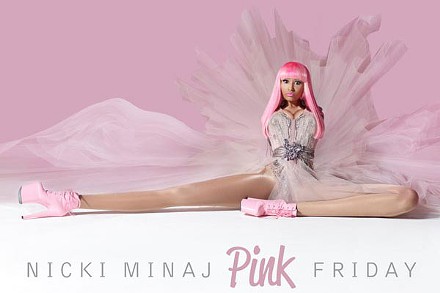
“I’m a bad bitch,” Nicki Minaj declares on “I’m the Best”, the opening track of her debut album Pink Friday.  It’s a claim she’s made before – and the only difference here is that she doesn’t seem to mean it.  Just a year and a half ago on “Itty Bitty Piggy” from her mix tape Beam Me Up Scotty she came across as a potty-mouthed cackling machine-gun, declaring her badness and her bitchiness in a deranged rhythmic repetitive sing-song that made you believe in both and really not want to meet her in a dark alley.   In comparison, “I’m the Best” sounds like — well, like a rapper looking to go pop by eschewing weirdness for rote R&B backing and rotely inspirational lyrics.  “I’m fighting for the girls who never thought they could win.”  That’s a long, sad trip away from the profane nuttiness of: “If you see a itty bitty piggy in the market/give that bitch a quarter and a car/tell her park it /I don’t fuck with pigs like a salaam alaikum/, I put em in a field, I’ll let Oscar Myer bake em.”

I wish “I’m the Best” was an aberration.  But alas Pink Fridayis filled nigh to bursting with blandness.  You know those swelling, earnest, I-have-overcome bullshit tracks that even decent rappers often put at the end of their CDs where you can conveniently skip over them?  Imagine you had a whole album full of that, and you’ve got a general idea of what Minaj has perpetrated.  The Rihanna collaboration “Fly” sounds like a song called “Fly”; the Natasha Bedingfield collaboration “Last Chance” sounds like a Natasha Bedingfield collaboration.  Just so you won’t blame the R&B songstresses, though, Minaj proves that she can suck all on her loneseome with dross like “Here I Am,” where  she actually says, in all earnestness, “I’m a woman, hear me roar.”   So what’s next — is she going to declare that Lil’ Wayne is the wind beneath her wings?

Quoting Helen Reddy with a straight face on a hip-hop album seems like a good indication that you have lost your way in a fairly spectacular manner.   If you were so inclined, you could see this as a desperate and misguided effort to reach a mainstream audience.   And it clearly is that.

But at the same time, the albums’ rudderlessness seems like part and parcel of Minaj’s  persona.   Switching from Barbie cuteness to rasta declamation to faux British accents to sped up tourettes, Minaj’s flow has always been about spastic incoherence. It’s no accident that perhaps her most acclaimed performance is deliberately and gloriously bipolar. In her verse on Kanye West’s “Monster,” she switches back and forth between a flirtatious little girl coo and a fierce, ranting growl, using the alternation to create an escalating momentum so massive it makes the other rappers on the track, from Jay-Z to Rick Ross, sound positively precious.

As “Monster” makes clear, Minaj has flirted throughout her career with the standard hip hop roles for women: sex kitten and ball breaker.  That flirtation, though, always tends to be oddly, and in some ways refreshingly, half-hearted.  Minaj may don preposterous ass-accentuating outfits in her “Massive Attack” video, or giant castrating claws in Ludacris’ “My Chick Is Bad,” but for the most part it’s remarkable how little she seems to care either about teasing cocks or cutting them off.   Instead, her focus is almost always on, as she invariably says, “bitches.”   One of  the decent tracks on Pink Friday, “Did It On’em,” is fairly typical, as she threatens her peers with explicit machismo.  “All these bitches is my sons…If I had a dick I would pull it out and piss on ‘em.”

The other side of wishing you had a dick to piss on ‘em is, of course, wishing you had a dick to do something else to them.  Minaj is famously semi-closeted. Her most explicit statements of lust on record have almost invariably involved, not men, but other women.  The exception that proves the rule is perhaps Christina Aguilera’s “Woohoo,” where two not-all-that-straight women serenade each other about the pleasures of cunnilingus (“Lick, lick, like a lolly.”) Or, on the other tongue, there’s Usher’s “Little Freak”, and Gucci Mane’s “Girls Kissing Girls,” in both of which Minaj hornily anticipates a (ahem) ménage, offering to hook her brothers up.

Pink Friday doesn’t have anything that hot and heavy — and no wonder.  Minaj may enjoy lasciviously contemplating your “kitty cat” and asking if she can “touch her,” but she’s careful to rhyme the whole thing with “Usher.” Lesbianism is only OK packaged for male consumption. Minaj wants girls . . . but it ain’t no fun if the homeys can’t have none.

In short, Minaj can’t be a sex bomb and a bad ass; she can’t be a castrator and one of the boys; she can’t be dyke and have a career.  She’s got no place to go — which isn’t always a bad thing.  Her see-sawing between identities is surely a large part of her appeal and her genius.  What other female rapper has claimed to be Monica Lewinsky, Barbie, and Freddie from Nightmare on Elm Street?  Minaj ‘s refusal to stay in the hip hop box labeled “women” has allowed her to be silly, unpredictable, and fierce in a way that few rappers of any gender have managed.

But sometimes freedom can be a trap too.  A debut is where you show the world who you are, and for Minaj that’s death.  You can see the problem most clearly, perhaps, on the album’s best track — “Roman’s Revenge” with Eminem.  Swizz Beatz drops the two rappers into a factory full of hammering synths, and Eminem proceeds to tear that shit apart, bouncing from S&M to pissed off Happy Meals to bondage water sports, his brain spewing tangled knots of filthy punchlines so fast that lesser mortals don’t even have time to be knocked on their ass.  “So I tied her arms and legs to the bed, set up the camera and pissed twice on her.  Look!  Two peas in a tripod.”

Like most rappers, Minaj doesn’t have Eminem’s skills, but she doesn’t get blown away either.  From her first stuttering transgender declaration, “I am not Jasmine, I am Aladdin!”  she spits insults and threats, references Eli Manning, and generally sounding lean, mean, and nuts.

The only thing is…well, Eminem is up in there getting a blow job and pissing on women, you know?  And in response Minaj…starts sneering at bitches again.  There’s a general consensus that she’s calling out Lil’ Kim in particular, and fair enough.  But can you imagine Minaj cutting off a guy’s bits and Slim Shady saying, “ayup”, and then going after some random third party?  Indeed, you have to wonder if he’s glancing sideways at Minaj when he snaps (ostensibly again to Kim), “look who’s back again, bitch/keep acting as if you have the same passion I have/yeah right, still hungry, my ass.”

The point isn’t that Minaj has to fight for the rights of women everywhere.  But it Is to suggest that, even at her most feral  there are places she won’t, or can’t, go.  “I feel like people always wanna define me and I don’t wanna be defined,” Minaj said in a Vibe Magazine interview. (in a Vibe Magazine interview).  Unfortunately, on Pink Friday, that fear of being defined seems to have made her unwilling to say anything of interest at all. At some point, if you’re not going to stand for something, you might as well sit down.

Best Online Comics Criticism 2012 – 4th Quarter Nominations

(A call for nominations and submissions.)

This is the final list of nominations for 2012. The judges are now deliberating on the nominations and we should have the list of articles with the highest number of votes by the end of January.

Reiteration: Readers should feel free to submit their nominations in the comments section of this article. Alternatively I can be reached at suattong at gmail dot com. Web editors should feel free to submit work from their own sites. I will screen these recommendations and select those which I feel are the best fit for the list. There will be no automatic inclusions based on these public submissions. Only articles published online for the first time between January 2012 and December 2012 will be considered.

Cartoon-Utopia-cover1

Jenna Brager on Madeleine L’Engle and Hope Larson’s A Wrinkle in Time.

Jacob Canfield – “Subversion, Satire, and Shut the Fuck Up: Deflection and Lazy Thinking in Comics Critcism”.

Brian Cremins – Captain Marvel, The Master, and the Feminine Embrace.

Michael Dirda – “A Duckburg Holiday”. I don’t think Michael Dirda does that many comics reviews so I’m including it here more as a formality. It’s probably more competent than great.

Elisabeth El Refaie – “Visual authentication strategies in autobiographical comics”.

Emma (of Get Me Some Action Comics) on Sex in The Walking Dead.

Glen David Gold – “The Lure of the Oeuthre: On Charles Portis and Flannery O’Connor”.

Nicholas Labarre on Paul Karasik and David Mazzucchelli’s City of Glass.

David Large – Palimpsests and Intertexts: The Unwritten.

Peter Tieryas Liu On Chris Hedges and Joe Sacco’s Days of Destuction, Days of Revolt.

Adrielle Mitchell – “Is Comics Scholarship Ekphrasis?”

Andrei Molotiu – “Abstract Comics and Systems Theory”

Rick Moody – “Fugue for Centrifuges: On Chris Ware’s Building Stories” (Nominated by a jury member)

Jason Thompson on The Heart of Thomas.

Gabriel Winslow-Yost on the works of Chris Ware.


The Comics Journal

Craig Fischer – “The Lives of Insects: On Photography and Comics”

Katie Haegele on Ron Regé, Jr.’s The Cartoon Utopia.

Nicole Rudick on Frank Santoro’s Pompeii

A selection of Building Stories Essays by Martha Kuhlman, Katherine Roeder, Daniel Worden, David Ball, Matt Godbey, Margaret Fink, Georgiana Banta, Joanna Davis-Mcelligatt, Shawn Gilmore, Peter Sattler, Paul Karasik, and Craig Fischer.

The individual essays are linked to here for the judges to peruse. Since this process is only selecting individual pieces of comics criticism, the roundtable as a whole is not eligible for consideration.


Also see:

First Quarter Nominations

Second Quarter Nominations

Third Quarter Nominations


A Theatre Within, Open To All

Edie Fake, “Memory Palaces,” at Thomas Robertello,
27 N Morgan St, Chicago, Illinois 60607
January 4 to March 28, 2013
Opening: January 4, 6-8 PM
 

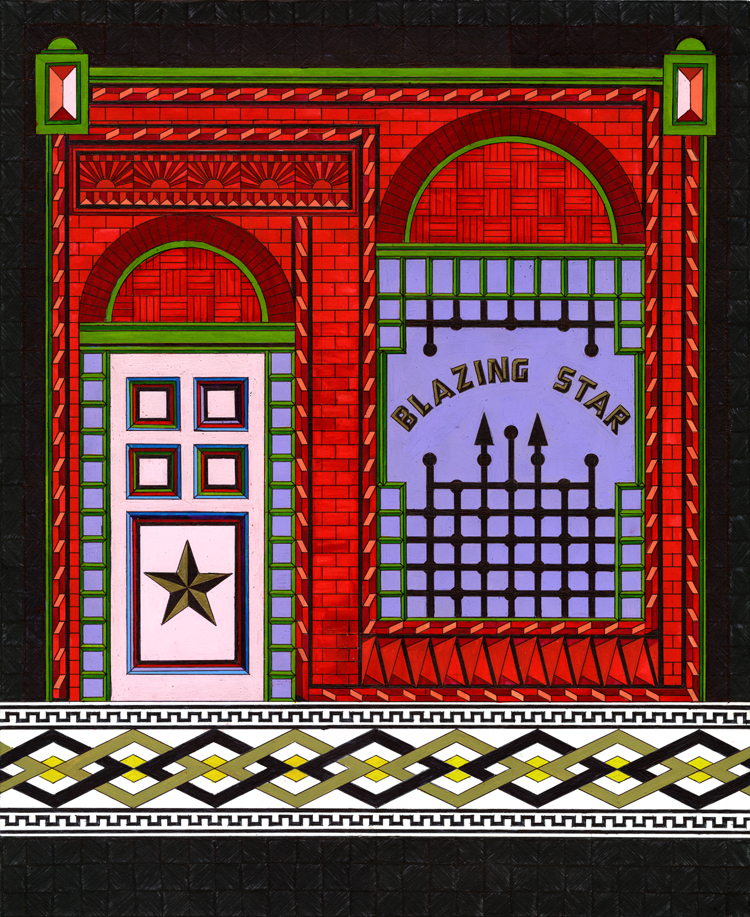
BlazingStarWEB

Blazing Star

 
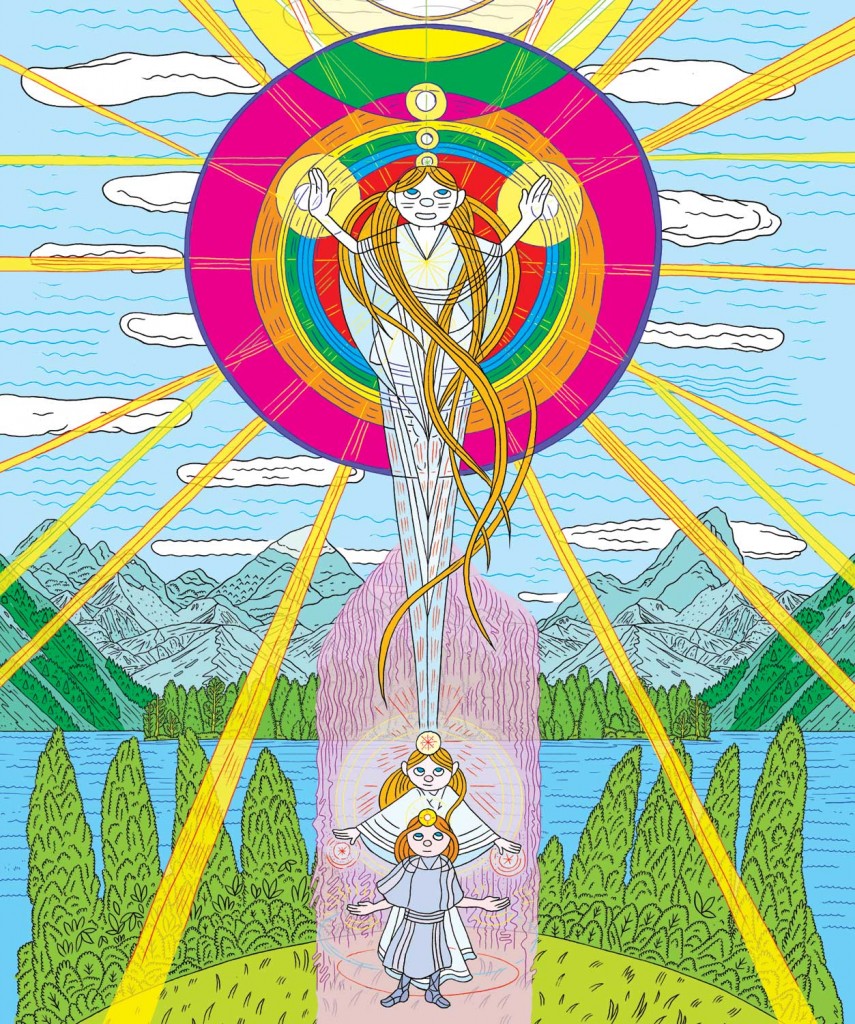
Dame Frances Yates, renowned scholar of English proto-science alchemy and mysticism, recounts the history of an architecture-based “art of memory” handed down from Simonides of Ceos to Greek and Roman orators, through Thomas Aquinas and Dominican monks, to Renaissance Italians Giulio Camillo and Giordano Bruno, to eventually influence the logical method of Descartes and the monadic metaphysics of Leibniz during the Enlightenment. Explicating Bruno, Yates says that, “(i)n ‘your primordial nature,’ the archetypal images exist in a confused chaos; the magic memory draws them out of chaos and restores their order, gives back to man his divine powers.” The utilization of spatial structures as tools to link mortal minds back to eternal ideals, and thereby strive for self-perfection, seems a relevant technique to consider in contemplating the icons of local queer historicity lovingly executed in gouache and ballpoint pen on paper by Edie Fake.
 

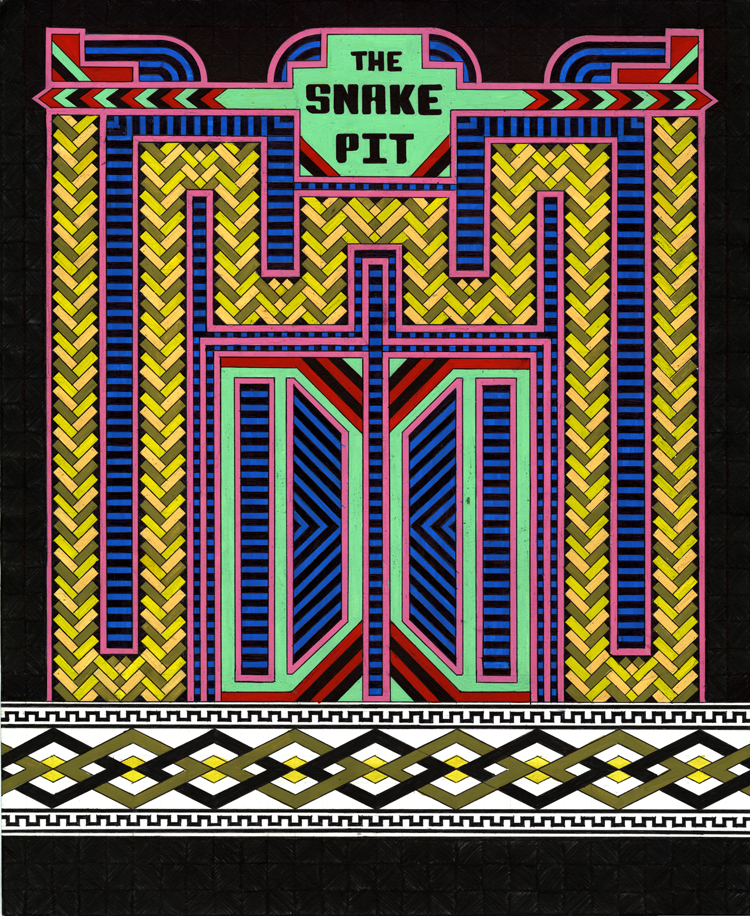
SnakePitWEB

The Snake Pit

 
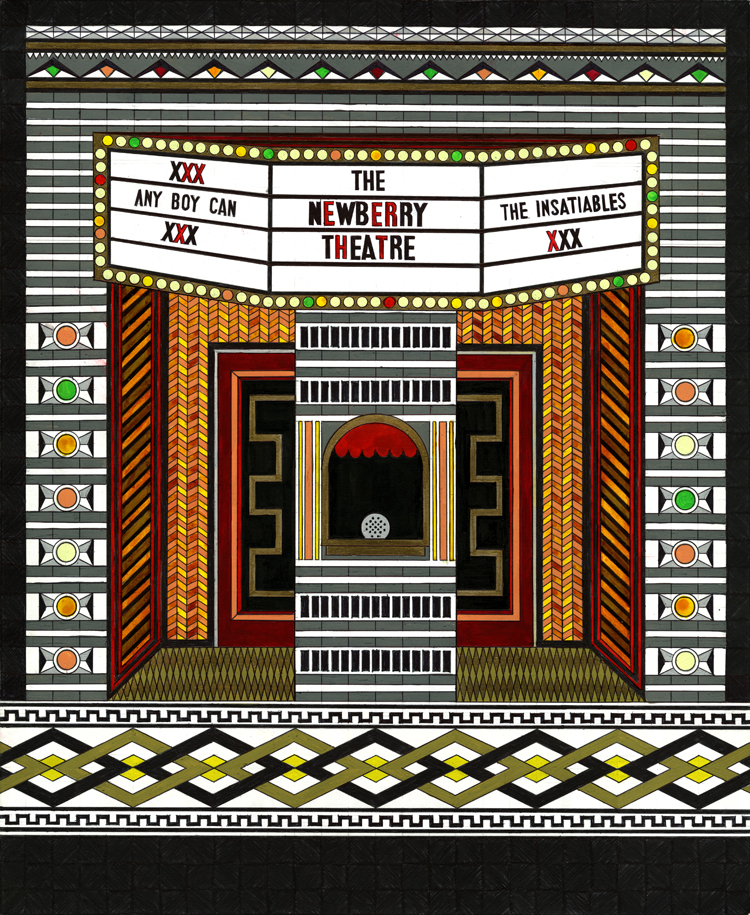
Now-vanished local gay bars and clubs (La Mere Vipere, The Snake Pit, Club LaRay), a theatre and an art space (Newberry Theatre, Nightgowns), an underground abortion clinic (JANE), and radical newspapers (Blazing Star, Killer Dyke), as well as some invented venues (Night Baths, Shapes), are rendered by Fake as stunning graphic facades, comprised of precise and vibrating patterns, that simultaneously call to mind mausoleums, temples, and rococo storefronts. He draws “gateways” as well, remembrances of departed artists and friends Mark Aguhar, Nick Djandji, Dara Greenwald, Flo McGarrell and Dylan Williams. “The buildings in my drawings are not about nostalgia for a lost time,” he says; “iinstead, they are about re-awakening the impulse to create physical space for queer voices, lives and politics.” Fake sees the series, when hung on a wall together, as a “cohesive neighborhood” that includes, through aspirational memory, the individuals and spaces necessary for a self-sustaining queer community.
 

NewberryTheatreWEB

Newberry Theater

 
Despite their communitarian aspirations, Fake’s facades, in their stylistic idiosyncracy, belong to a history of “psychedelic” visionary architecture, from Giovanni Piranesi to A.G. Rizzoli, Archigram, and Bodys Isek Kingelez, a course that opposes, disregards, or seeks to overturn or subvert the efficiency, vastness, frugality, and brutal rationality of industrial-age utopian structures, both literal and figurative. In evoking this former (and older) lineage, in which the approach to space consists not of a harmonizing of uses but of attempts at earthly perfection, Edie Fake carries the torch for a revolutionary dream more fantastic than engineered, an aesthetic gospel of a promised land remembered in stolen moments of prophetic togetherness by a people who live in exile in their own city, in every city.
 

ShapesWEB

Shapes


GatewayDaraWEB

Gateway Dara

 
This post first appeared on Gaper’s Block.

2012 Utilitarian Year in Review

Numbers

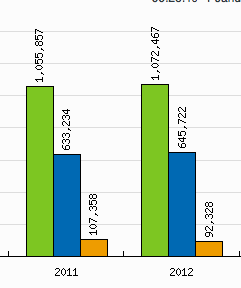
I was pretty sure that 2011 was going to be HU’s biggest year ever. As readers may remember, Sean Michael Robinson and Joy DeLyria had a massive internet viral hit with a post about the Wire as a Victorian novel, and it just seemed unlikely that we’d ever reach that level of popularity again.

It’s true that we haven’t had a post that big. But nonetheless, the blog grew on average this year — and that average growth was enough to put us over the 630K odd unique hits from 2011. Not by a ton (as you can see from the graph below) — but still, it was a pleasant surprise.

Picture 1

News, or Olds

On the technical end, the big change this year was that we managed to move our archive over from the old blogspot address, so that all five years of our archives are now in one place (which is here — where you are at the moment.)

In other news, that post by Sean Michael Robinson and Joy DeLyria which I mentioned turned into a book on the Victorian edition of the Wire.

Also, James Romberger’s collaboration with Wallace Stevens was named one of the notable comics of 2012.

And finally, all my blogging on the Marston/Peter Wonder Woman has turned into a book project; it should be forthcoming from Rutgers UP goodness knows when (the ms is finished, but academic publishing takes a bit.)

Comings and Goings

We had a number of folks leave us over the course of this year, including Erica Friedman, Caroline Small, and Nadim Damluji. We were very sorry to see all of them go…and hope we’ll see them back again for guest posts at least occasionally during the new year.

There have also been a number of new additions to the HU roster.

Michael Arthur has started a monthly column on comics and furries.

Jacob Canfield is also writing monthly on more or less whatever he wants.

Kailyn Kent is writing monthly on comics and art.

Subdee i is writing monthly on manga and web comics and other things.

Jog with a monthly column on first run Bollywood cinema.

And Isaac Butler and Jones, One of the Jones Boys have joined as contributing writers, posting occasionally, i.e., whenever I can nag them into it.

So with the numbers out of the way, here’s a quick review of some of the highlights of the past year, in roughly chronological order.

James Romberger with brief takes on numerous comics throughout the year.

Domingos Isabelinho on Carl Barks.

Me on sound effects in Tiny Titans.

Tom Gill on Tsuge’s Incident at Nishibeta Village.

Andrei Molotiu on the fascination of Frank Miller’s Holy Terror.

Katherine Wirick on Rorschach as victim of abuse (tying in to a series of posts in which everybody sneers at Before Watchmen.)

Sean Michael Robinson with a massive Gerhard interview.

Ng Suat Tong on Flash Gordon, Umberto Eco, and sadomasochism.

Monika Bartyzel on Xander Harris, passive-aggressive sexist ass.

Nate Atkinson on having Moebius in his living room.

A knock-down drag out Locas roundtable.

Michael Arthur on the mysterious joys of kpop.

Robert Stanley Martin on the eras of Crumb.

Me on Stanley Hauerwas and America’s worship of war.

Alex Buchet on the Avengers film.

A roundtable celebration of the last Marston/Peter Wonder Woman comic.

A series of posts from Phillip Troutman’s comics criticism class.

Ng Suat Tong on comics adaptations of Lovecraft.

Erica Friedman on Sukeban Deka, girl gangs, and giant snakes.

Marguerite Van Cook on comics and the postmodern sublime.

Isaac Butler on Election vs. the Wire in a brutal cage match of gritty despair.

Subdee on Homestuck as metatext of doom.

Kailyn Kent on comics and the age of mechanical reproduction.

Matthias Wivel on Degas as comics.

Darryl Ayo on reading and rereading comics.

Jaime Green on how Clybourne Park is lying to you.

James Romberger on Marie Severin.

Ryan Holmberg on abstract comics.

Derik Badman on comics poetry.

Our massive fifth anniversary roundtable of hate.

Kristian Williams on Mad Max, Watchmen, and the Girl with the Dragon Tattoo.

Russ Maheras on the greatest Lee/Ditko Spider-Man story.

Richard Cook on the hackery of Cloud Atlas.

Jacob Canfield on Johnny Ryan and Benjamin Marra.

Kailyn Kent on Chris Ware’s Building Stories.

Vom Marlowe on a web comic about knitting.

Robert Stanley Martin on the Superman case and best legal outcomes for comics creators.

Sarah Horrocks on science-fiction and horror comics.

Me on Junji Ito’s Tomie comics and the terror of the female.

Kinukitty on the Wilson sisters and Heart.

A bunch of posts on Bart Beaty’s recent book Comics vs. Art.

Matthew Brady on Emily Carroll.

So, again, it’s been a lovely year. Coming up we’ve got a small Twilight roundtable, a massive series on Marvel history, announcements of our annual Best Online Comics Criticism results…and we’ve been tossing around the idea of a Philip K. Dick roundtable or a Spielberg roundtable, maybe. If you’ve got something you’d like us to cover, please let us know — or, you know, if you have a favorite HU post I missed, feel free to mention it in comments. In the meantime, thanks to all our contributors, commenters, and readers for making 2012 so successful. We’re looking forward to 2013.

“The Infernal Ride”

In his 1996 study Manhood in America: A Cultural History, Michael Kimmel describes the invention of the cowboy, a “mythic creation” with origins in the novels of James Fenimore Cooper; this creature of the nineteenth century imagination, as Kimmel points out, “doesn’t really exist, except in the pages of the western, the literary genre heralded by the publication of Owen Wister’s novel The Virginian in 1902” (Kimmel 149—150).  Kimmel describes the hero of the western as a character who is “fierce and brave,” a man “willing to venture into unknown territory” in order to

tame it for women, children, and emasculated civilized men.  As soon as the environment has been subdued, he must move on, unconstrained by the demands of civilized life, unhampered by clinging women and whining children and uncaring bosses and managers.  (149)

In The Virginian, and in the other novels, magazine serials, films, comic books, and television shows it inspired, this hero, of course, as Kimmel points out—a being who is “free in a free country, embodying republican virtue and autonomy”—“is white” (Kimmel 151).  Quentin Tarantino’s new film Django Unchained, however, asks us to imagine a different sort of Western hero, one whose history returns us to the origins of African-American cinema.

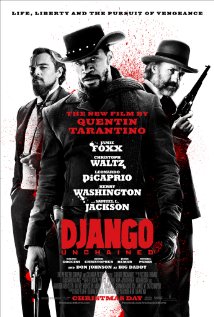
Django poster
Image from IMDB

Like Inglourious Basterds (2009), Tarantino’s new film is a vision of an alternate history.  Jamie Foxx’s title character joins forces with Christoph Waltz’s German bounty hunter Dr. King Schultz on a series of adventures which culminate in the attempted rescue of Django’s wife Hildy (Kerry Washington).  Unlike the characters Kimmel describes, Django is not running to the territory to escape the clutches of civilization.  His journey is an inversion of the hero’s trajectory in the traditional western.  At every step of the narrative, Django embraces civilization and demands the dignity which has been denied to him and his wife.

The fantasy of an escape into the wilderness, as Kimmel describes, was the invention of a writer from “an aristocratic Philadelphia family”; Owen Wister created a genre which “represented the apotheosis of masculinist fantasy, a revolt not against women but against feminization.  The vast prairie is the domain of male liberation from workplace humiliation, cultural feminization, and domestic emasculation” (Kimmel 150).  In Tarantino’s film, however, Django’s journey returns him to civilization, the violent, decadent world of Calvin Candie’s Mississippi plantation.  It is not a feminized space which seeks to emasculate Django, but one of Candie’s henchmen, Billy Crash (Walton Goggins), in a hellish scene which alludes to the infamous torture sequence from Tarantino’s first film Reservoir Dogs (1992).  This time the torture scene, stripped of the bloody glamour and outrageousness of Michael Madsen’s performance and the Dylanesque humor of “Stuck in the Middle with You,” is brutal and ferocious, a reminder to the audience of the horrific consequences of the plantation system for both the slavers and those who have been enslaved.

What animates the blood and the violence of this world?  Greed drives Leonardo DiCaprio’s Calvin Candie and his loyal servant Stephen (Samuel L. Jackson).  In a sly reference to Greed, Eric Von Stroheim’s 1924 silent adaptation of Frank Norris’s 1899 naturalist novel McTeague, Tarantino’s Dr. King Schultz masquerades as a dentist, his wagon crowned with an enormous molar dancing on the end of a spring.  In the logic of the film, greed is not a simple desire for wealth and property but is a form of anxiety caused by a perceived loss of control: Calvin fears he is not as wise as his father; Stephen is afraid of the new world Django represents.  Both Calvin and Stephen are terrified of the freedom which Jim Croce celebrates in “I Got a Name” (written by Norman Gimbel and Charles Fox), the 1973 hit which provides the soundtrack as Schultz and Django ride out the winter and collect the bounties which will enable them to return to Mississippi to rescue Hildy: “And I’m gonna go there free/Like the fool I am and I’ll always be/I’ve got a dream/I’ve got a dream/They can change their minds but they can’t change me.”

Django is not searching for freedom from the feminized spaces Kimmel describes.  Instead, Django’s journey is one of return, of reclamation.  He is a western hero who abandons the John Ford-like expanses of the territory, which, as figured by Tarantino, are a series of illusions: over the course of the film, sometimes within the same sequence, Django journeys from what appears to be the deserts of the southwest; to the Rocky Mountains; to the live oak trees and bayous of Louisiana; to the mud-clotted streets of a Jack London-like frontier town (with Tom Wopat, Luke Duke from The Dukes of Hazzard, as the Marshall); to the hills of Topanga Canyon, the backdrop of most of the westerns filmed for American television in the 1950s and 1960s.

In Tarantino’s imagined southern landscape, Mississippi is just miles away from the golden hills just outside Los Angeles, and those hills are filled with extras from the Australian outback.  As Candie and Stephen employ every means of violence and torture at their disposal to protect Candyland, Django comes to understand that the stability of place is an illusion; what is real is the world which has been denied to him, the vision of his wife Hildy which repeatedly haunts him until he finds her again in Mississippi.

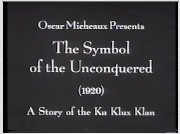
There is a long history of African-American westerns, dating back to the late teens and early 1920s.  Like Django Unchained, these early films reverse the trajectory of Wister’s original myth, but movies like Oscar Micheaux’s 1920 The Symbol of the Unconquered should not be called revisionist westerns.  Instead, both films, like their heroes, make demands on the genre itself: if the western is a form which celebrates freedom, Tarantino and Micheaux suggest, what better hero than an African-American fighting the evil embodied by the Ku Klux Klan?  Pioneer African-American filmmaker Micheaux’s silent masterpiece, which was restored in the 1990s, can now be seen on YouTube with Max Roach’s masterful score (for more on the restoration of the film, see Jane M. Gaines’ Fire and Desire: Mixed-Race Movies in the Silent Era, page 331, and Pearl Bowser and Louise Spence’s Writing Himself into History: Oscar Micheaux, His Silent Films, and His Audiences).

1920-Symbol-of-the-Unconquered
Image from The Museum of African American Cinema

While Hugh Van Allen (Walker Thompson) is the hero of The Symbol of the Unconquered, Eve Mason, the heroine portrayed by the luminous Iris Hall, is the focus of most of Micheaux’s attention.  Having inherited a plot of land from her grandfather, “an old negro prospector,” she “leaves Selma, Alabama, for the Northwest” in order to “locate the land.”  When she arrives, she falls in love with Van Allen, a black homesteader whose property borders her grandfather’s land.  The subtitle of the restored version of the film, “A Story of the Ku Klux Klan,” indicates the dangers Eve will face as The Knights of the Black Cross threaten Van Allen.  When the film’s villain, Jefferson Driscoll (Lawrence Chenault), discovers that Van Allen’s property possesses tremendous oil reserves, he enlists Old Bill Stanton to drive the black homesteader away.

Warned of the impending danger, Eve promises, “I’ll ride to Oristown and bring back help.”  A title card then asks us to imagine “The infernal ride” as Eve returns in what appears to be a rodeo costume.  In her fringed buckskin jacket and white hat, she mounts a horse and rides in daylight, as Micheaux cuts to images of the hooded knights, riding in darkness, their torches blazing, their faces eerie and obscure.  In the fragments of the film which are left to us, it is impossible to tell if they are pursuing her, or if they are gathering to torch Van Allen’s tent; the climax of the film in which, as the title card tells us, these midnight riders are “annihilated” is also missing, but the resolution of the story remains intact.  Eve and Van Allen, now an oil baron, fall in love and, in the movie’s final scene, embrace.

The most powerful image of Micheaux’s film is not this final embrace but the shot of Eve Mason on her horse, riding furiously to Oristown to raise the alarm.  Like Django’s journey, hers is a return, and her presence is a demand, not for control but for justice.  While the white cowboy’s privilege lies in his ability to choose between a quiet life in civilization or an escape to the territory, Django and Eve exist in a world in which this choice has been denied to them.  They must reclaim the ability to make this choice, and when they do so, both choose in favor of the domestic spaces which inspired them to take this “infernal ride” in the first place.  Perhaps, then, we can read both Django Unchained and The Symbol of the Unconquered not as westerns but as comedies in the Shakespearean sense, in which the forces of evil are contained, and a world of chaos is redeemed as our heroes—and heroines—marry their beloveds and, like dime-novel cowboys, ride off into the sunset.

References

Django Unchained.  Dir. Quentin Tarantino.  Perf. Jamie Foxx, Christoph Waltz, Leonardo DiCaprio, Kerry Washington.  The Weinstein Company, 2012.  Film.

Gaines, Jane M.  Fire and Desire: Mixed-Race Movies in the Silent Era.  Chicago: University of Chicago Press, 2001.  Print.

Kimmel, Michael.  Manhood in America: A Cultural History.  New York: The Free Press, 1996.  Print.

The Symbol of the Unconquered.  Dir. Oscar Micheaux.  Perf. Iris Hall, Walker Thompson, Lawrence Chenault, Mattie Wilkes, E.G. Tatum.  1920.  Film.


I Am Bart Beaty! — Slight Return

5a

 
A couple weeks back I noted that in his Comics vs. Art book, Bart Beaty hadn’t cited a number of essays of mine that were relevant to his arguments. I suggested that such was often the fate of bloggers. Beaty responded in comments by confirming that he did not in fact read blogs. (The exchange was somewhat more heated than that, so click through to the links if you find that sort of thing entertaining.)

Anyway, I was poking around the internets, and much to my surprise discovered that this essay of mine, which Beaty does not mention, though it parallels a number of his thoughts on Charles Schulz and Charlie Brown — is actually cited in the Oxford Handbook of Children’s Literature by Charles Hatfield in his essay about Peanuts. (The book was published in 2011.)

My essay was originally published in 2005 in TCJ, so it’s maybe a bit tangential to my point about blogging often not being on the radar for academics. And, of course, the fact that someone else read my piece and Beaty didn’t doesn’t mean that Beaty committed some sort of sin against scholarship — no one can read and cite everything. Still, it was funny to find the mention so soon after I’d talked about the essay not being mentioned.

On the other end; Corey Creekmur, my editor on the Wonder Woman book I’m working on, recently read my ms and mentioned a couple of books that I should probably read and cite as relevant to portions of my discussion. One of the books he said I needed to look at? Bart Beaty’s volume Fredric Wertham and the Critique of Mass Culture. (Which I’ve just started, and which, in its initial pages, discusses the significance of the fact that academics in mass culture studies often don’t cite Fredric Wertham.)