The Singing Inks: Some Lovely YouTube Inking Videos

I love art.  While I don’t get to play as often as I’d like, I thoroughly enjoy the hell out of it when I can.

One of the joys of committing art is playing with ink and paper.

And if I can’t play with the paper and ink myself, I often like to watch how others do so.  Watching other active artists work is a wonderful learning tool–and it brings me great joy. Of course in the past, one needed to personally know an artist in order to watch their process, but these days it can be possible to see it on YouTube in videos or on DeviantArt in tutorials.

Today I wanted to share some of my favorite videos.

First is Nyek! Video Blog #64

Pencils by Whilce Portacio and Inks by Ed Tadeo.

I find this very restful to watch, actually. I’m always fascinated by which portions of an image an artist chooses to begin working on. Then, which portion they choose to highlight with their tools, and what parts they come back to.

I’ve watched this video several times, and while I don’t always follow the capes, I do have considerable affection for many of them, so this is a satisfying piece for me. There is often a difference between a working artist on deadline (using Photoshop to black things in, for example) and a teacher showing an exhibition piece. Both very valuable. Just different.

The second video is an illustrator, Francis Vallejo, who has made a longer how to video:


This video is a short series of demonstrations–it’s not a working piece (as in the first video), it’s a demonstration piece. He does several versions-one with pencil, then with nibs, then with brush work, and another with gray washes. It’s useful and interesting.

And while the one below is actually speed painting, not inking, I wanted to share it anyway:


No, I have no idea what the words say. I think the artist’s name is hatsune miku, but that is an educated guess (Update by Noah: Hatsune Miku is the character being drawn, apparently).  What I wanted to talk about is the approach–it’s interesting and the results are lovely. I’ve never seen an artist begin with a silhouette and then move to the darker to lighter shapes–different and fun. So many ways to reach the end point of a figure drawn and beautiful.

This other next one is also not ink. It’s Liang Yue demoing Corel Painter 9, but I couldn’t resist, because holy shit.


That one speaks for itself.

This last one is Ayano Yamane inking her work and then doing watercolors. It’s ever so slightly naughty, so children cover your eyes, and adults, scoot closer. But seriously, Ayano’s inks are absolutely gorgeous. Her pencils, of course, are top notch, but it takes a great deal of control to do this sort of inking because (if you’ve never done watercolors or wet ink a la Dr Martens inks) you need to know that you can’t actually erase on that paper or Bad Things Will Happen (you’ll get all sorts of hideous splotches) and you can’t exactly correct skipping nibs or spatters. It requires a very steady hand, and unlike cape comics, yaoi comics (like shojo comics) require quite a thin line. It’s beautiful, yes, and my favorite kind of ink, but it takes practice and skill.

Ayano Yamane:

 
I hope you’ve enjoyed these.  One of my favorite things about living in the future is getting a chance to watch the creation and sharing of amazing art.

Grappling With Genre

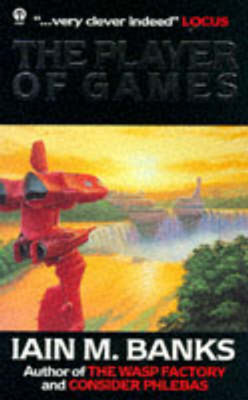
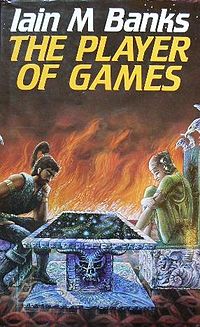
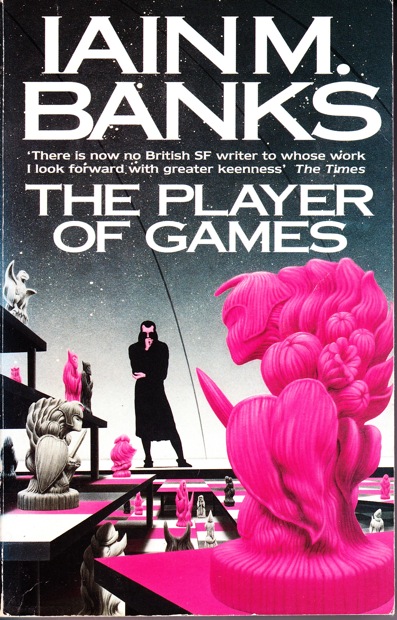
One of my favorite books by one of my favorite authors is The Player of Games by Iain M Banks. It is a Culture book, the vast anarcho-communist utopian space opera setting that Banks has designed from the ground up to be both self-consciously rational and pure wish-fulfillment for those of us who like their escapism with a hefty dollop of moral superiority. The Culture has no money and is made up of an aggregate of alien races and artificial intelligences, include self-aware spaceships with jokey names.


The Player of Games is about a man whose job is to play games (I told you the Culture was a utopia), who is recruited by the Culture’s dirty tricks espionage group Special Circumstances to help them engage with something they’ve never run into before: an empire that is built around a very large, very complex game. The victor of a population-wide tournament becomes the new emperor.


I do not mention this book to praise it, but rather to use it as an example as I discuss the complexity of the abstract concept that we call genre. If genre was a coworker, he’d be that guy at the end of the hall that is absolutely essential to ongoing operations but is also annoyingly pedantic about minor, almost trivial items.

Genre is used in a variety of different ways: as a marketing tool, as a critical tool, as a tool for readers to identify what they want to read next and as a stick that some people use to beat up on other people for their reading tastes. Genre also provides a veritable catalog of generic elements that creators can use when constructing their works.

The Player of Games is a science fiction novel. (If you want to get pedantic and insist that SF stands for speculative fiction, it fits under that rubric as well.) There are genre elements galore: spaceships, aliens, worldbuilding – the author even admits that he stole the primary setting for the first half of the novel from Larry Niven’s Ringworld. On paper, this has all the trappings of a generic novel; after all, the more genre elements that a work contains, the more generic a work becomes.


And if you were marketing The Player of Games, the smart money would be to lean very heavily on the “spaceships and aliens” angle. It’s a book that rewards an educated and opinionated reader, though, so perhaps the marketing could even be tweaked by indicating that it contains “spaceships and aliens, but smarter.” This reveals one of the main weaknessness of the genre concept – it reduces complexity to its lowest common denominator in an effort to attract as many readers as possible. In theory, every iterative step away from the core generic descriptors risks the alienation of readers who are only (dis)interested in the generic elements.

As a consumer, I rely very heavily on genre to help me make intelligent choices. For example: I do not enjoy the adrenal rush that comes from people jumping out from behind things, which happens to be a core element of the horror genre. As a result, I tend to steer away from the horror genre as a general rule, which has probably resulted in me missing out on work that is probably pretty good, despite the inclusion of jumpy-outy bits. And yes, there are plenty of other, non-horror movies that contain jumpy-outy bits – is Alien a horror film or a science fiction film? Why can’t it be both? Oh yeah, because marketing demands that it be given a straightforward handle that can be given to potential consumers.

I also happen to enjoy spaceships and aliens and I recognize that there is a vast gulf of difference between The Player of Games and Star Wars, despite the fact that both can technically be shelved under that particular heading. Because my tastes are broad, a listing of genre elements offers a good starting point. But when tastes are prescriptive (as in my blanket disregard of the horror genre, above), there is a very good chance that marketing by genre is not actually helping bring in customers.

Genre can also be challenging in a critical context. When I read a review that includes some variation of “this novel transcends genre conventions” I immediately read that as “the novel contains generic elements but doesn’t use them generically.” For example: The Player of Games contains spaceships, but those spaceships are self-aware and have names like GCU Of Course I Still Love You, Superlifter Kiss My Ass, GSV Unfortunate Conflict of Evidence and so forth. This is an obvious stab at the inherent conceit in most space operas that ships must have big, imperious names.

Banks also points out [1] that having names that are self-consciously jovial tends to disarm potential opponents because they are less likely to take the ships seriously. The worldbuilding that comes from such a simple inversion of the genre convention really adds to the glamor constructed by the novel, but it may or may not be what the standard genre fan was looking for when he picked up a book about spaceships (and aliens). But it is absolutely the kind of thing that a critic would hold aloft when praising a book for moving past the generic elements that it’s built on.

On the flip side, some critics are known for using genre as a kind of yardstick – separating genres into categories, most often of the “good vs bad” variety. Just as there are any number of essays written by any number of good critics imploring readers to look beyond genre conventions and try something new, there are any number of critics who look down their nose at genres they consider to be somehow less important. This critical shaming doesn’t just stop with critics, though. Margaret Atwood is well known for claiming that she doesn’t write science fiction, even though she clearly does.

Some people revel in this, repurposing labels for their own use: Nobrow and Lowbrow are the two most obvious examples. But for most, genre is a ghetto – a well-populated ghetto, to be sure, but still a ghetto. Part of that has to do with the mainstream culture’s attitude towards genre works and part of that has to do with the consumers of the genre, which is another topic entirely.

Banks, on the other hand, doesn’t shirk from claiming that he writes science fiction. In fact, it’s very obvious that he enjoys spaceships and aliens and is quite happy to continue to be paid to write them, thank you very much. And I’m happy to enjoy what he does with them because the results are interesting and original and not at all what is expected.


Unfortunately, most authors do not have the sheer creative energy that Banks brings to the table. Most use generic elements as a sort of construction set, building weird stories that tend to violate the “could this story be told in an ordinary setting?” rule as a matter of course. And that’s one of those places that genre falls down, in my opinion. Someone writes a good story that introduces a nifty concept and someone else comes along and uses that same concept without doing anything original or interesting with it. The result comes across as, well, generic.

I fully expect an entire cottage industry of Harry Potter and Scott Pilgrim clones to come along in the next generation of creators, the same way that the mid-70s were dominated by Tolkien clones and Black Sabbath knock-offs. In this way, successful creators could be said to become a genre unto themselves, regardless of what parent genre they were marketed under[2].

Given my druthers, I’d prefer that we did away with genre altogether. It’s a useful tool, to be sure, but it’s also a tool that is leaned on far too much, far too often. Unfortunately, it’s not a very versatile tool and, when all you have is a hammer, everything tends to look like a nail. I get that without genre, all of the books would just be in one big section marked “fiction” and that some kind of sorting mechanism is necessary to find what you really want to read (or really don’t want to read, as the case may be).

However, genre doesn’t really do a good job when it is applied to marketing. By virtue of how the two are used in conjunction, the most generic books tend to float to the top. The truly interesting books take a little time to find their niche and fall out of the marketing by genre idea because they don’t exactly fit into the standard genre boxes. Ironically, looking for exceptions to the rules of genre tends to lead to exceptional works.

In the end, genre is a tricky thing that works perfectly at separating works by element, except when it doesn’t. The Player of Games is a great example of this. It contains spaceships and aliens but is in no way the poster child for either generic element and searching for it under those terms would be a fool’s errand. Critics might look down upon it because it is absolutely science fiction (and happy to be so) and they would prove themselves foolish if they did because it is the kind of book that critics hold up to indicate that science fiction and literature are not mutually exclusive. Which is as it should be.


[1] A Few Notes on the Culture by Iain M Banks.

[2] See also: Stephen King

Tyrannosaurus Stalin

Dystopias are always also utopias, just as hell always also implies a heaven. A blighted future is a warning, but it’s also a hope that the wrong-doers (if they do not repent) will finally, finally get theirs. Orwell’s 1984 broods luxuriously on the triumph of totalitarianism over all those who do not see as clearly as he. Suzanne Collins’ The Hunger Games revels in the voyeuristic exploitation bloodshed enabled by scolding us all for our voyeuristic exploitation jones. Disaster porn is — adamently, enthusiastically — porn, a sadistic/masochistic wallow in the end times. Grim visions are what we want to see; the rain of fire that scourges injustice — or, sometimes, that just scourges. Because scourging is fun.

Alun Llewellyn’s 1934 sci-fi dystopia, The Strange Invaders presents a particularly complex apocalypse — and, ergo, a particularly complex set of apocalyptic desires. The story is set in a far future earth, where a combination of nuclear holocaust and oncoming ice age have knocked humanity back to the middle ages. The action is centered in a factory town of the former Soviet Union, now a holy city, inhabited by a people called the Rus. The Rus worship a Trinity — Marx, Lenin, Stalin — who they only vaguely understand. Church Fathers rule over a military class of Swords, who keep the peasants in line scraping out a subsistence existence.

This already-quite-grim-thank-you world is plunged into chaos as nomadic Tartars begin fleeing to the Rus’ holy city from the South, seeking shelter. They claim to be pursued by giant, man-eating lizards. The Church Fathers at first don’t believe it (Marx said nothing about giant man-eating lizards!) and so order the Swords and the peasants to massacre the Tartars before they eat too much of the food supply. Soon after the deed is done, though,the saurians show up and set about killing just about everyone they can get their talons on. Finally, in a War-of-the-Worldsish stroke of luck, winter comes in and for some reason the in-all-other-ways evolutionarily perfect lizards are unable to sense the temperature drop soon enough, and go dormant, allowing the few remaining humans to slaughter them. This isn’t exactly a happy ending, though; humans are now trapped between the lizards to the south and advancing glaciers to the north, and while there may be a respite for our particular band of the Rus, humanity’s long-term outlook seems awfully dicey as the book closes.
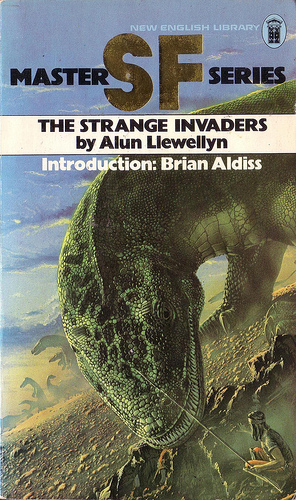


In his book Colonialism and the Emergence of Science Fiction, John Rieder reads The Strange Invaders along a number of allegorical lines. First, he notes that it maps and reverses the traditional lines of imperialism; instead of a vigorous northern European invasion of the decadent Southern periphery, Llewellyn presents a vital South launching an attack on the decadent, etiolated north.

I don’t necessarily disagree with Rieder’s take here…but I think it’s important to take into account the fact that this is not just any north we’re talking about here, but Russia in particular. Obviously, the Cold War was not underway in 1934 — but Llewellyn (according to Brian W. Aldiss’ preface) had actually visited the Soviet Union, and appears to have had a better sense of its problems than many of his contemporaries. In any case, there’s no doubt that the northern weakness here is a particularized Russian weakness. The blind obedience to authority, the inflexibility, and the cruelty of the Rus is linked specifically by Llewellyn to Communism.

It was a tale often told, a moral often preached. They had sinned; all mankind had sinned. Marx from whom the world had received the blessing of the Faith had remade the world in a plan of Five years…. The faith had been wronged and the Destruction was the vengeance enacted. Therefore must the faith be honoured strictly by those that survived, and they must to that end give obedience unquestioning, surrender thought and spirit and body to their rulers who were guardians of that faith.

Rieder of course appreciates the satirical fillip (now perhaps rendered into almost a commonplace of anti-communism) of turning the resolutely materialist Marx into a deity. But he never quite links the Russian context to the discussion of peripheries. If one does so, the novel becomes a parable not so much of reversing center and margin, but rather of wars on the margins — of Russia, perhaps, being devoured by its own atavistic, subservient Orientalist weakness.

From this perspective, then, the saurians and the Russ are not in opposition, but are on a continuum. And in fact, there is a fair bit of textual support for the idea that the giant lizards are not the death of the Rus, but their perfection. The ideal of the Rus is unthinking obedience; direction without will. Adun, the protagonist, is caught between his human desires and his society’s demand that he become merely the tool of the Fathers — a kind of machine, like those left in the factory/church and worshiped. “The Fathers and the men they kept to uphold them were not to be questioned,” Adun thinks to himself. “Mind and body they commanded, as the Faith directed. He was nothing. He dared do nothing.” (18)

If Adun has to convince himself to become an object, the giant lizards have no such problems. As Rieder notes, the creatures “hover on the uncanny border between the organic and the mechanical.” In one of the most striking passages of the novel (which Rieder quotes), the creatures are envisioned as a depersonalized collective; a single coherent unity of force.

The plain, where it came down from the river, was alive with inter-weaving movement. They played together in the sun as though its brightness made them glad, running over and under one another, swiftly and in silence, but with an almost fierce alacrity, eager and unhesitating, unceasing. The eye was not quick enough to catch the motion of their rapid, supple bodies that seemed not to move with the effort of muscles but to quiver and leap with an alert life instinct in every part of them. They were brilliant. As he looked, Karasoin saw the play of colour that ran over those great darting bodies, a changing, flashing iridescence like a jewelled mist. Their bodies were green, enamelled in scales like studs of polished jade. But as they writhed and sprang in their playing, points of bronze and gilt winked along their flanks and their throats and bellies as they leaped showed golden and orange, splashed with scarlet. Now and then one would suddenly pause and stand as if turned to a shape of gleaming metal, and then they could see plainly its long, narrow head and slender tail and the smoothly shining body borne on crouching legs that ended in hands like a man’s with long clawed fingers; five.

This is the awesome fulfillment of Ronald Reagan’s “ant heap of totalitarianism.” Stalinism is here embodied not by the proletariat, but by those even below them, the lizards forged into a remorseless, infinitely flexible machine-state. The blind watchmaker forges the revolution, and thus Marxism for Llewellyn will literally, and beautifully, eat itself.

Again, though, just because the lizards are the ultimate totalitarians doesn’t mean that the humans are somehow battling totalitarianism. In 1984, Big Brother is schematically opposed to the human emotions of love, friendship, warmth, and sex. Llewellyn’s vision is less pat. Adun’s love, not to mention his sexual desire, does in fact inspire his resistance to the regime of the Fathers. But that resistance isn’t exactly idyllic. On the contrary, Adun’s passion for the hardly-characterized Erya is almost inseparable from his own pride and desire for power. At one point he threatens (and it is not an idle threat) to kill her if she chooses the captain of the Swords, Karasoin — a murder-lust echoed by his participation in the genocidal slaughter of the Tartars within the city walls. Eventually, Adun does win Erya…by murdering Karasoin after the Sword almost rapes her. Thus, the alternative to mechanized, unfeeling destruction is not love or peace, but rather the cthonic, feeling bloodshed of jealousy, rage, and rape-revenge.

Llewellyn is willing to suggest other possibilities. Erya, for example, has a vision of independence and freedom — though that’s eventually crushed by the ongoing crisis which requires her to get a man for protection or else. Karasoin, before he actually rapes Erya, is ashamed and decides not to attack her — just in time for Adun to hack him apart. And at the book’s end, Adun’s brother Ivan speaks haltingly of the need for men to stop killing each other…and then, of course, he dies of his wounds.

The novel’s flirtations with peace, then, are all cynically inflected; they are raised to be shot down in a frisson of pathos and irony. Both the lizards and the rape-revenge narrative, on the other hand, have a visceral, awful appeal. The beautiful, terrible new force which will inherit the earth; the beautiful, terrible old force that has held the earth: they rush upon each other, soundless or howling, and from their writhing, bloody struggle there rises genre pleasures, old and new — violence, lust, apocalypse, the cleansed earth and the pleasure of watching its filthy cleansing. The Strange Invaders is a bitter reversal of imperialism, a prayer for a more perfectly genocidal imperialism, and — to the extent that its vision is enacted on and powered by Orientalist tropes — arguably an act of imperialism itself.

The final twist of the novel is, perhaps, that, despite its prescient and honorable anti-Stalinism, its apocalyptic vision is ultimately not apocalyptic enough. The saurians, in all their awesome power, and the humans, for all their ugly narrow-mindedness, can neither compare with the power, the ugliness, or the narrow-mindedness of what can’t really compare with the atrocities Stalin was perpetrating while Llewellyn was writing his book. The gigantic force of the state, wielded by a jealous, paranoid madman, was able to generate a holocaust in the Ukraine, and throughout Russia, that makes Llewellyn’s bleak vision — shot through with beauty and with joy at the bleakness — seem positively naive. That’s not Llewellyn’s fault exactly, though. History, indifferent alike to justice and desire, will always be grimmer than dystopia.



“Passers-by no longer pay attention to the corpses of starved peasants
on a street in Kharkiv, 1933.”

 

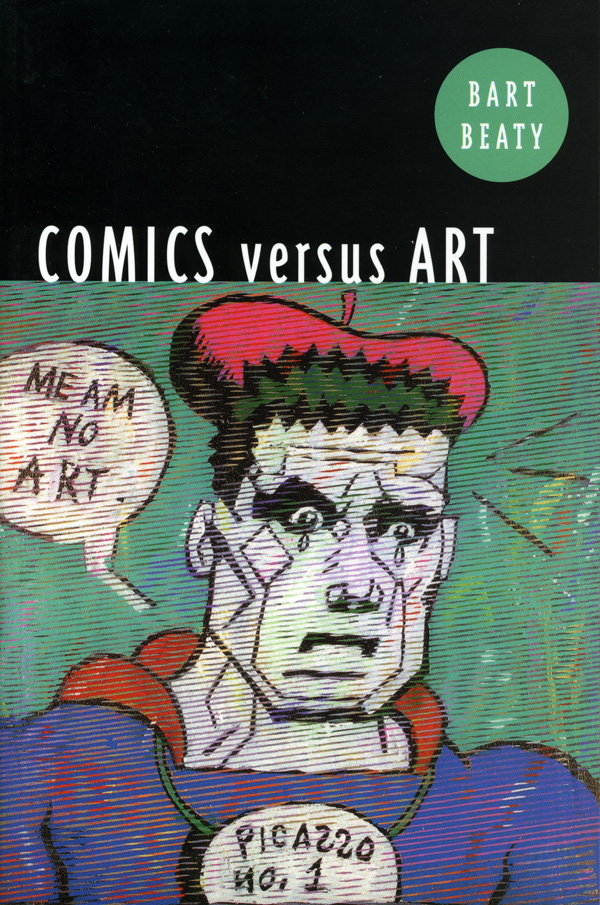
It’s Comics Versus Art, (at least according to comics)

Comics Versus Art

by Bart Beaty

University of Toronto Press, Scholarly Publishing Division, 2012

Its tempting to split up a review of Beaty’s book, Comics Versus Art, into a series of examinations of its individual chapters. Many of Beaty’s arguments are so relevant to the discussion of comics and wider culture that they deserve their own posts. More devilishly, its equally seductive to make a laundry list of his most controversial claims, just to see if they could nudge the Lichtenstein conversation out of its current emotional stalemate.

Either approach would be easier to write than an evaluation of the whole: Comics Versus Art is an ambitious but uneven chronicling of the diverse historical frictions between the two fields, including but not limited to pop-art appropriation, comic’s belittlement as nostalgic/primitive ephemera, and cartoonists’ ready cooperation with ‘art world’ prejudices.  Beaty is a firebrand and much-needed documentarian, and his book is an invaluable contribution to this discussion. Through an interweaving of many rewarding tangents, he often succeeds at elucidating, even correcting, accounts of art-comics friction through a fair examination of each case’s larger context, even if some of his dramatic conclusions are shakily reached or unearned. Comics Versus Art is far from a manifesto of why comics should or should not be art. Without being vehement or trite, the book is quite damning in its examination of the petty status games that occur at the border between these worlds.

Comics Versus Art is comprised of nine different “case-studies.” The first chapter is especially worth summarizing, as it examines several different definitions of comics, and how these definitions, particularly Scott McCloud’s, have exempted comics from art history. While most definitions of comics have been essentialist, (focusing on recurring characters, thought balloons, or moral narrativising as central components, depending on the theory,) McCloud’s formalist definition is open enough to abduct and rename other phenomenon as “comics,” while it rejects several examples widely accepted as comics, (Dennis the Menace, for example.) While McCloud’s proponents are happy to re-envision Trajan’s Column as a comic, (and couldn’t care less about Dennis the Menace, perhaps,) the rest of the art world remains indifferent; as a freak, isolated case of comics, the column’s new branding doesn’t have nearly the historical interest as it’s status as imperial propaganda. More importantly, ‘comics,’ ‘children’s books,’ and ‘artists’ books’ are only distinguished by their audiences. At this point, Beaty introduces an institutional definition of comics, borrowed from Arthur C. Danto, George Dickie and Howard Becker’s theories of an “artworld.” Loosely, comics are whatever the human members of the comics world (including but not limited to producers, critics and consumers,) deem to be called comics. This theory fails even more spectacularly in establishing borders with children’s and artist’s books, but that’s somewhat the point, and at least it’s honest about it: Becker writes that “‘art worlds typically have intimate and extensive relations with the worlds from which they try to distinguish themselves.’” Problematically, this theory has no way of pinpointing why or what about comics makes them a social nexus, (perhaps, by the centrality of recurring characters in comics, people really do gather around commercial franchises rather than their formal attributes.) Beaty does good work here in positing a parallel comicsworld, but the definition is tautological and directionless, and doesn’t quite address where this would overlap with an artworld anyhow. Moreover, Beaty doesn’t develop the comicsworld theory beyond this point, and only occasionally reintroduces it in further chapters. He also doesn’t cover any of the historical evolutions in the definition of ‘art,’ contextualize how Danto and co.’s definition interact with these, or how it can be expanded past a truism. This unbalance plagues most of the book, where Beaty uses a limited range of analytical approaches to draw his conclusions, and doesn’t apply these tools strictly enough to spawn ideas past his original biases.

Beaty misses the opportunity to develop the institutional theory with the next chapter, which details the gendered power dynamic underlying the Lichtenstein appropriation debate. This study could have benefited from a closer look at the sub-worlds at play: much of the art-world initially rejected pop-art for its association with low-brow cultural forms, and only gradually began to recognize Lichtenstein’s work as worthwhile. This in turn would have clarified Chapter 6, where Beaty erroneously concludes that Gary Panter’s featuring in Blab! and Juxtapoz magazines, and creation of a vinyl art toy, signals his acceptance by the art world at large. Panter’s luke-warm reviews by Artforum, one of which is included in the book, are slightly better than the New York Time’s treatment of another comics luminary decades earlier, Bernard Krigstein, who is instead framed by the book as an artworld failure.

Despite this, Beaty’s arguments have an commonsensical ring of truth, which he occasionally goes out of his way to justify. On Lichtenstein, Beaty frames the case study with discussion of Nietzschean ressentiment, defined as “a tendency to attribute one’s personal failures to external forces.” This is a little overkill, where simply using the word ‘resentment’ could have done the trick, as Nietzche’s philosophies are not mentioned elsewhere in the book. However, Beaty is on the right track:

When, for example, Clive Phillpot offhandedly dismisses the possibility that works of comics might be classified as artist’s books, the division between forms is presented as a self-evident commonplace barely requiring elaboration or argumentation. By contrast, the pent-up aggressive feelings towards the world of fine arts that characterizes many cartoonist’s ressentiment can become an all-consuming passion that threatens to poison their work with an easily diagnosed bitterness.

It is a breath of fresh air to have the emotional dynamic of the Lichtenstein debate not only included in its context, but considered the heart of the conflict itself.  In this case, he also studies how, evidenced by critics of the time, comics and kitsch were increasingly cast as feminine, while pop-art’s appropriations ‘masculinized’ camp that had been enjoyed in earnest. “Pop art, therefore, was a threat because it absconded with the one element that comic book fans assumed would never be in question: the red-blooded American masculinity that informed war and romance comics alike with their rigid adherence to patriarchal gender norms.” It is gender critique, not institutional theory, that becomes the lifeblood of Comics Versus Art, and provides a continuing thread through the other case studies, something that will fly in the face of readers not prepared to understand how certain behaviors and attitudes are routinely cast as ‘masculine’ and ‘feminine’ throughout history. Beaty writes,

The validation of the comics form, which is an essential aspect of fannish epistemology, can take many paths. One of these paths would be the outright rejection of the conservative basis of much of modernist art history, with its conflation of masculinity, artistry, and genius, and the adoption and promotion of new aesthetic standards that would recognize the importance and vitality of feminized mass cultural forms. Another, far less revolutionary, route would be a capitulation to the dictates of modernist art history and the nomination of a select few cultural workers to the position of Artist or Author. In the wake of pop art, it was this latter approach that was most commonly, and effectively, utilized by comics fandom, as they worked to export the idea of the comics artist beyond the limitations of the comics world.

Beaty extends this to comics content, where the industry tends to reward subject matter that reinforces gender tropes, either those of hyper-masculine heroism, or the imagination of the isolated, tragic genius, what critic Nina Baym calls “a romanticization of the straight, white male subject as the object of societal scorn.”  The most successful cartoonists play into the art-world’s existing stereotyping of cartoonists, and behaving like primitive, ( R. Crumb,) or pathetic, (Chris Ware,) versions of the Romanticized genius. Ware is treated as a synecdoche for the current status of contemporary comics, where his savvy use of draftsmanship, nostalgia, self deprecation, and an attitude that is “willfully ironic about the relationship between comics and art in a way that serves to mockingly reinforce, rather than challenge, existing power inequities,” make him the kind of artist that “if Chris Ware did not exist, the art world would have had to invent him.”

Comics emerges less as a victim of art than of its own, unintentional self-sabotaging, and its refusal to grow and celebrate itself on its own terms. Mainstream and alternative comics’ insecurities over their belittlement (better, feminization,) by both Romantic/conservative and contemporary art frameworks cause them to miserably ape ‘high art’ conventions, establishing canons and idolizing masculinized genius-creators.  Even when the artist doesn’t paint himself according to the genius archetype, (Charles Schultz’s optimism and transparent mercantilism, for instance,)  he can usually be reconstructed to fit it– while those outside the comics world tend to recognize Peanuts as a sweet, nostalgic, family franchise, fan-critics instead emphasize a tragic and masculinized reading. One great example lies in comparing Fantagraphic’s conneuseurist The Complete Peanuts, with their unsettling, somber jackets,  to the fabulously popular Peanuts paperbacks from decades before, such as Happiness is a Warm Puppy.

While not revolutionary, Comics Versus Art’s greatest service is to document these dynamics, attitudes and interactions between comics and art, so that they can be read against each other, and found in one place. It’s greatest crimes are its most obvious omissions–like the development and role of comics museums, conventions and festivals, and the erasure of the Terry Zwigoff’s Crumb, (now included in the Criterion Collection,) in the biography of the artist. Most unforgivably, Beaty omits the history of ‘deskilling’ in the art world, how deskilling inspired the institutional theory Beaty employs, and how it is an unmissable component of the artworld and the comicsworlds’ mutual dismissals of each other. Compared to that, his zany, unsupported claim that McCloud has distanced the comics and art worlds, rather than bring them closer together, is amusing, and his haphazard braiding of information, where certain lines are suddenly dropped, only to be weaved back in, only mildly frustrating. Comics Versus Art was a gargantuan project for one scholar to undertake, its faults are expected along those lines, and the book is self-consciously a testament to the fact that there are too few critics working on such a crucial, cultural  history.  In any case, Comics Versus Art is a great groundwork for future discussion, and a fiery read.

Small Fish, Big Pond

For Black Friday, I thought I’d reprint this piece about comics sales from back in 2009 — it first ran on Comixology.

________

Comics are a relatively small part of the media landscape. But how small? Or how large? How does the sale of a popular comic book compare to the sales of, say, a popular book or DVD? I wasn’t sure…so I thought I’d use this column to try and see if I could figure it out.

Caveat and a half: Pretty much all of this stuff starts as guestimates made with inadequate data. By the time a non-expert like me starts talking about it…well, it’s not pretty. I think the following is useful to give some sense of the scale of the comics business compared to other entertainment industries, but any individual number should be taken with a grain of salt roughly the size of New Jersey.

Comics Sales

Marc-Oliver Frisch’s occasional column at the Beat seems like the easiest place to go for information about mainstream comics sales., at least through the direct market According to Frisch, in July of this year, the biggest seller was Marvel’s Reborn #1, which sold about 193,000 units. DC’s Blackest Night was second with sales of around 177,000 units. According to Frisch, these are fairly huge numbers, partially pumped up with variant edition covers and first issue excitement. A less hyped comic in the middle of its run – Action Comics #879 – had sales in July of 38, 324 units. Vertigo and Wildstorm titles are also in the area of 11,000 to 8000 units a month, apparently. Tiny Titans, a book for kids that’s near and dear to my heart, only sold 8, 576 units – but, again, this is through the direct market only, and I assume most of Tiny Titans sales are actually through bookstores (that’s where I get my copies., anyway.)

As far as smaller press numbers, Kim Thompson, co-owner of Fantagraphics wrote me that sales are “really all over the map. A Peanuts will sell 15,000-20,000, other classics and well-known cartoonists in the 4,000-7,000 range, then all the way down to 2,000 and less for more obscure, or unsuccessful, stuff… And of course some long-time continuing books have sold a lot more than that, Ghost World at 150,000+, Palestine at 60,000+, etc.”

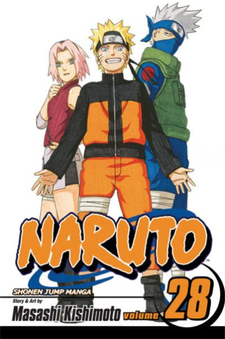
Brian Hibbs does his best to figure out the Bookscan numbers at the end of each year, and says for comics sales through bookstores there’s about 8.3 million units sold per year, for somewhere around $100 million in sales for the top 350 books. Watchmen was the highest seller, with over 300,000 copies sold. (Though I saw a NYT article that put Watchmen graphic novel sales at 1 million…perhaps counting Direct Market and online sales as well?) Naruto v. 28 was next with over 100,000 sold. All volumes of Naruto together sold around 971,000 copies, for a total of $7.7 million.

For some other numbers to throw into the mix: Brigid Alverson, who blogs over at mangablog wrote me in an email that “first printings [for manga] seem to be in the 10,000 range for smaller publishers; Yen does 25,000 for titles like Haruhi.” The folks at the Anime News Network say total sales of graphic novels in 2008 were $395 million. Manga sales accounted for $175 million of that, which is the largest single chunk (the rest being divided among super-heroes, humor, adult, etc.) They also point out the huge success of Naruto, which is so overwhelming that it’s comparable to other media products that are not comics. Like for example:

DVD Sales

Sales figures for DVDs seem a whole lot easier to obtain…as in, I googled for about 5 seconds and got actual complete information organized in a handy chart. It’s almost as if our culture cares more about DVDs. Or as if the companies aren’t embarrassed to release the information. Or something.

Anyway…the biggest seller the week ending September 6 was State of Play, which sold 344,745 units. And again I say, that’s in a week. So that means that a successful DVD sells, very unscientifically, more than 6 times as much as a successful floppy comic in a given month.

Watchmen the movie, a bit further down the list, is an obvious point of comparison for comics. It sold 56, 814 units in the week; still higher than any comic has done in a long time, probably, but not necessarily by many orders of magnitude. Of course, this is 7 weeks into the DVD release, and overall it’s sold more than 2 million units in that time. (Again, as best I can figure Watchmen the graphic novel seems to have sold between 300,000 to 1 million units in all of 2008.)

Total DVD sales for 2008 were $14.5 billion. That’s about 36 times greater than graphic novel sales for the year, if my numbers are right.

Music

CD sales are in free fall due to the recession and that wonderful, magical whatsit we call the Internet. People still buy an awful lot of albums, though. According to the ever-erudite Ben Sisario at the NYT, the biggest seller in 2008 was Lil Wayne’s Tha Carter, which sold 2.87 million copies. Again, Watchmen, the biggest comic hit, seems to have sold less than half that, and possibly less than a quarter of that. Total music album sales (including CD, download, and LP) were 428 million. Meanwhile, over a billion songs were downloaded. The same article says that concert ticket sales clocked in at $4.2 billion in 2008.

Books

Sales of books in June were $942.6 million according to the Association of American Publishers. 2008 book sales for the year were 24 billion. I presume graphic novels are included as a part of that; if that’s correct, they’re about 1.6% of the total sales for the year…which is quite a bit smaller than I would have guessed.

Also to my surprise, big-event books appear to actually outsell big-event CDs and DVDs. Harry Potter and the Deathly Hallows sold more than 8 million copies on its first day on sale in the U.S., which makes Lil’ Wayne’s 2.8 million albums over a year look pretty puny. And, of course, 8 million copies is just about the total bookstore sales for all graphic novels in all of 2008, according to Brian Hibbs’ figures. Obviously, Harry Potter is exceptional…but Dan Brown’s most recent book was also selling in the hundreds of thousands on its first couple of days. Breaking Dawn, the last Twilight book, sold 1.3 million copies on the first day.

Nothing You Didn’t Know

There’s no really startling revelations here of course. Despite big comic book derived movies and the growth of graphic novels and manga, most people in the U.S. would rather watch a movie or listen to a CD or even read a book than pick up a comic. Perhaps with the recent shake-ups at Marvel and DC that will change, and comics will start selling on a scale with other entertainment options. But, if the figures here are even close to correct, there’s a long way to go before that happens.
 

Morality and Other People


Is this man an autonomous moral actor?

 
A few days back I had an entertaining discussion with Mori Theil on Twitter about morality, individuals, and the public. Mori’s basic argument, as I understand it (and hopefully he’ll correct me if I’m wrong), is that ethics and morality are based in individual autonomy. Here’s a bit of his twitter discussion:

Moral decisions arise from principles. Other people should not be your morality; that is slapdash. w/others, you’re not dealing with morality at all, just feelings and goodwill – politics. If, say, I should have to justify my morality to you, that is a tool of societal control.

In what was perhaps his clearest statement of principle, he said, “…morality is the application of ideals to reality. You seem to say that we should twist our morality around to serve reality. That’s backwards.

Like I said, I enjoyed this conversation — and part of the reason I enjoyed it is that Mori so clearly and forthrightly states the basic Enlightenment presuppositions and beliefs about moral experience. For Mori, morality involves an almost Cartesian process. You do not listen to others; you do not learn from others. Instead, you turn inward, discovering there pure ideals beyond the reach of a corrupting and confusing society. Once you have found them, you apply those ideals to reality. Morality, then, is an essentially imperial endeavor. Ethics conquers the world. If the world conquers ethics — or even, it sounds like, if the world affects ethics — then you are doing it wrong.

Obviously, Mori’s vision of morality resonates to some extent. Our touchstones for moral worth, I think, are often people who go against social consensus or social norms; who do the right thing despite pressure to do the wrong. So, for example, Galileo’s commitment to truth despite the opposition of the Church is seen as a quintessential moral moment. Conscientious objectors refusing to fight during the Vietnam War despite the coercion of the state might be another example. Or, to cite one of my personal heroes, Khruschev’s decision to expose Stalin’s crimes despite massive opposition within the Soviet bureaucracy, and indeed arguably despite his own Communist ideological commitments, seems like one of the bravest and most moral acts of a world leader in the last 100 years — certainly braver than anything I can think of any American president doing in my lifetime.

The question is, though: are these examples of moral ideals imposed upon the world? Were these people autonomous moral actors? If they weren’t, does that make them less moral?

I would say that the answers in each case I give above are pretty complicated. Galileo, of course, actually renounced his findings; he caved to social pressure. Conscientious objectors, on the other hand, are not in many cases autonomous actors. They certainly are placing themselves against the broader society — but many of them do so because of their communal commitments to peace churches. They certainly have ideals, but those ideals are not autonomous or generated outside of a social context. And as for Khruschev — his indictment of Stalin was done in the name of ideals, certainly — but those ideals were specifically Communist, and therefore by definition communal and social. From the accounts I’ve read, he was most angry at Stalin for his failures of courage and leadership during World War II — for failures to Russia specifically, in other words, rather than for failures to live up to a particular abstract vision.

Mori might say that each of these instances is, in fact, a poor example — that none of them are adequate examples of true morality. None, he might argue, show a moral actor as sufficiently autonomous; none are sufficiently pure. To which I guess my response would be that I can’t think of any moral situations which are not complicated like this. Martin Luther King drew his ideals from his church and his community. So did Gandhi. Matilde de la Sierra‘s activism against torture is based in her own personal experience of torture — but it’s sustained by her relationship with her husband and her work with other activists, not by some isolated commitment.

Moral actions are never autonomous — which makes sense, I think, because morality is mostly about how you treat other creatures. If you’re stranded on a desert island all alone, without even any animals in sight, morality is going to be largely beside the point. Rather than an ideal we impose on the world, morality, then, is an experience that the presence of others imposes on us. Morality doesn’t occur despite society; it occurs only because of society. Which means that, if our moral selves are our truest selves, then in a real sense our truest selves are other people.

That may seem counter-intuitive but, for me, at least, it fits my moral experience much better than Mori’s account does. Morality for me isn’t formulating abstract principles and then following them. Instead, it’s, say, volunteering when my son’s school needs volunteers, or giving a friend a ride when he needs a ride, or even (as happened last week) taking down inappropriate scanlated images when a colleague tells me I should.

At one point Mori asked “do you think the Internet should perch like an angel of conscience on your shoulder?” My response is — sure, why not? The internet is just other people — and, like most folks, I’ve relied on other people to teach me to be a good person since my parents first started telling me to say “please”. Morality isn’t something I was born with. Rather, it’s a gift, granted by those I love, or respect, or live with. And the gift is, precisely, to teach me to love, to respect, and to live. If we are ethical, or human, it’s by each other’s grace — and if we’re unworthy of it, that’s all the more reason to be thankful when it is granted.
__________
Update: Mori replies here. I understand where he’s coming from much more clearly now, I think. Just quickly I’d say that when I talk about morality coming from communities, I don’t necessarily mean states or the law (I’m not ruling those out, but I wouldn’t see those as the only or best sources in every circumstance.)

I’d also just point out quickly that it wasn’t just society which saw slavery as acceptable for hundreds and hundreds of years (at least) — it was individuals who saw it that way too. Nor was the change against slavery a matter of lone individuals standing up against society; abolitionism was a movement and a community (composed of individuals, of course.)

Confessions of a Yuppie

Before I met my girlfriend, my definition of “cooking” was warming prepared meals in the microwave. If I was feeling fancy, I might warm them up in the toaster oven. Most of the time I was too lazy to even bother with that, so I ordered lots of pizzas and or went out to restaurants. I had never cracked open a cook book, or bought fresh vegetables (unless pestered to by my mother), or spent more than 15 minutes preparing a meal. I used to be an embarrassing stereotype, the single guy who lived on junk food.

Very early in our relationship, my girlfriend insisted that we cook meals together. And by “cook,” I mean actually creating meals from raw ingredients. I found myself washing, and cutting, and boiling, and mixing, and doing all sorts of things that took forever. Or at least it felt like forever. Instead of warming up a meal for 5 minutes in the microwave, I was spending anywhere from half-an-hour to an hour performing manual labor. I didn’t go to college for this! I was making good money and was more than happy to take her out to a restaurant, but she wanted to cook together, so I sucked it up and we cooked together.

My shopping habits also changed. Prior to our relationship, I had purchased all my groceries at the nearest Giant. And I was mostly buying frozen dinners, canned dinners, boxed dinners, and cold cuts. Certainly not a healthy diet, but it was cheap and quick to prepare. After we started dating, my girlfriend convinced me to shop at Whole Foods. I had never set foot in a Whole Foods during the first three decades of my life. My mental picture of a Whole Foods shopper was an effete yuppie who agonized over buying the right kind of smelly cheese. And now I was one of THEM, buying fresh veggies, organic this and organic that, and definitely spending more money on groceries.

It turned out to be money well spent. I was spending more on groceries but saving money overall because I ordered less take-out and ate at restaurants less often. I lost weight and generally felt healthier. And my mother stopped sending me those annoying emails about the risks of heart disease.

But the best part about cooking with my girlfriend was cooking with my girlfriend. Prior to our relationship, I had always viewed cooking as an unpleasant chore, akin to vacuuming or cleaning the toilet. But cooking with my girlfriend wasn’t a chore. It was something that we did together. It was fun just to spend time with her, chopping vegetables together, listening to her music playlist, and talking about nothing in particular. And the most rewarding part was when we sat down and ate a delicious meal that we created together. It’s all very sappy and bourgeois, but to hell with it. I like cooking real meals, I like the taste of organic milk, and I like debating over the right kind of smelly cheese.