The Dark Knight Rises: Nightmares of a Ruling Class in Crisis

As for his appearance in The Dark Knight Rises, Bane is a force for evil and the destruction of the status quo,” Dixon said. “He’s far more akin to an Occupy Wall Street type if you’re looking to cast him politically. And if there ever was a Bruce Wayne running for the White House it would have to be Romney.”
–Bane creator, Chuck Dixon
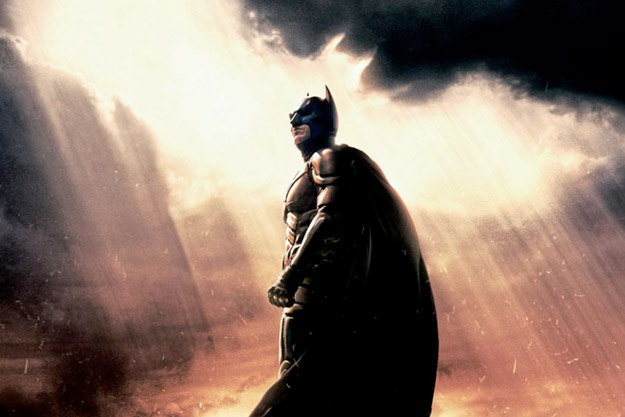
Echoes of the Arab Spring, European and Asian strike waves, the Occupy phenomenon and a host of new popular upsurges haunt the psyches of a global ruling class attempting to navigate the ever unfolding crises which continue to spiral outward. It is in this light that the newly released Dark Knight Rises, third in the Dark Knight series, is a stunning, if terrifying reflection of the deepest anxieties of a ruling class with few options, fewer ideas, and no shortage of increasingly threatening social contradictions menacing its psyche.

The plot itself is predictable-but with notable twists. The film’s villain Bane, long incarcerated in a prison pit he describes as,”hell,” has nurtured a revenge desire against Gotham City. His rage, however, is not only driven by personal experience-he has adopted an ideological conception of Gotham as representative of the causes of a myriad of injustices embodied by his life of incarceration and brutality. The mission of Bane’s large insurgent force? Destroy Gotham with a nuclear weapon.

Early on in the film, a small crew of armed men, led by the anti-hero Bane, bursts onto the Nasdaq trading floor, randomly firing weapons, and taking the entirety of the trading floor hostage. While they attempt to tap into the trading circuits on the floor itself, Bane stands over a trembling trader. The trader, in a vain attempt to dissuade Bane and his crew, tells him,”There’s no money to steal here!” to which Bane hisses,”Then what are you people doing here?”

Noteworthy also is the recurrence of Bane’s populist themes during the pursuit of his goal. Recruiting from orphaned and homeless youth, Bane has trained a small army in the sewers of Gotham City. Midway through the film, Bane lures thousands of police officers into the sewers, detonating explosives and trapping them underneath, unleashing his insurgency on the city.

Soon after, we see Bane at the steps of a prison in the heart of the city, the site where, we are told, the forces of organized crime have been held on lengthy sentences under the,”Dent Act.” To establish the Dent Act, Gotham’s incorruptible Police Commissioner Gordon knowingly allowed Batman to be framed and publicly scapegoated. In a nod towards former NYC Mayor Rudy Giuliani’s,”tough on crime,” policies, the Dent Act is heralded as bringing an era of unprecedented social peace and stability in Gotham City, and thus justifying the dishonesty behind Batman’s downfall. The foundational myth of Gotham’s “peace” is not just a lie, we come to see, but a total inversion of the truth.

Standing on the steps of the prison, Bane appeals to the citizens of the city. Encouraging them to rise up against those who have robbed them, oppressed them, and imprisoned them, his men blow open the doors of the prison and he urges Gotham’s citizens to set the prisoners free. We next see hundreds of armed prisoners, still in their orange jumpsuits, surging through the open doors of the prison into the streets of the city.

As official order is derailed, and at Bane’s urging, we see the poor and impoverished ransacking luxury hotels, pulling the wealthy from their homes and cars. We see police officers and the wealthy dragged before barbaric people’s tribunals where guilt is already determined-the only ruling to be made is whether the sentenced to death by execution or sentenced to exile (a trial by ordeal) across a partially frozen bay surrounding the now isolated island of a city.

Bane and his actions represent the deep seated anxieties of a ruling class in crisis. Unable to resolve the global economic crisis themselves, they nonetheless reject popular movements -the attacks on Wall Street, the striving from the excluded, imprisoned, and forgotten for power. All of these are seen not as possible forces for freedom and the resolution of the crisis, but instead as demagogic, Machiavellian, and terroristic threats only capable of producing destruction and barbarism. Bane is not a product of the actions of masses-by the film’s authors, the initiatives of the masses are a manipulated, controllable product of the actions of Bane’s armed vanguard.

Although Bane espouses notions of democratic urges against wealth, decadence, and the oppression this crumbling system doles out, he is clearly painted as sadistic, brutal, and opportunistic. He has no genuine interest in human freedom. In the end, he himself is only a pawn of an entirely misanthropic leadership whose sole goal-even if it means their own destruction-is the destruction of everything Gotham is-including the very masses Bane pretends to appeal to and whose power he momentarily unleashes. In the trembling subconscious narratives of official society, the possibilities of the unleashing of that social force are reduced solely to acts of barbarism against their former oppressors, but are incapable of offering a vision towards freedom.

The police, by and large, play a contradictory role throughout the film. We are introduced to Police Commissioner Gordon as he prepares to acknowledge his prior role in allowing the film’s hero, Batman, to have wrongly been defamed in order that he may pass his”Dent Act.” Throughout the film, the police as a force are easily led into traps and rendered useless. They attack civillian populations they are charged to assist, and are utterly unable to resolve the social contradictions which Bane manipulates to tear Gotham apart. Even in their redemption — leading a,”return to order,” rebellion against Bane and his mobilization of the marginalized, — they are only useful as auxilliaries. Even then, they are so inept that as the film closes and order is returned. the city’s one honest officer, Batman’s unacknowledged,”Robin,” throws his badge into the river in disgust.

Who is Batman in this context? The dream of a technocratic solution to a problem of social contradictions. Bruce Wayne, though orphaned, is a child of privilege. A billionare, who in his forties is still waited on hand and foot by his caretaker butler, Bruce Wayne’s finances are bouyed by his ownership and investment in military technologies developments. Alongside his superhero role, Bruce Wayne funds philanthropic and,”sustainable energy,” projects in vain attempts to mitigate his own unresolved anger (and his rage shines as a stand-in for the repressed social conflicts his very wealth is rooted in.) Bane, his nemesis, draws his recruits from the same orphanages that the failing Wayne Foundation ceases to fund as its finances become imperiled. Throughout the film we find Bruce Wayne, a man whose body has been so traumatized from his vigilante acts of years past that he must walk with a cane, is redeemed physically, returned to superhuman prowess by technological adaptions to his human form. When he is incarcerated and almost killed by Bane, he escapes and makes his way back to Gotham just in time to participate in the,”law and order,” rebellion led by Gotham’s resurgent police force. In the midst of it, he seeks out the head of his technological development firm-knowing Batman alone is useless without his expensive military toys.

The flipside? Although Bruce Wayne has developed a revolutionary source of, “sustainable,” nuclear energy, he has hidden it from the outside world for distrust of the existing social structure’s ability to manage it. It is this very technology which Bane steals and transforms into the nuclear device which threatens Gotham’s annilhation. The ruling class’ implicit understanding of the limits and failures of their dreams of a technocratic solution to the crises of ecology, economy, and culture, are vivid, however, in the moments when Bane’s insurgency takes control of Batman’s arsenal of weapons and toys, employing them against the former ruling order in Gotham City.

The ruling classes’ terror is vividly painted; the possibilities of liberation are more confused. For example, though the filmmaker appears unable to understand her potential as representing a liberating social force, Anne Hathaway’s Catwoman takes the stage as a working class hero. As a gifted street fighter and cat burglar, she finds herself unknowingly in a bargain with Bane’s agents. Her goal is a piece of software which can erase the electronic history of a person permanently — their credit, their debts, their arrests, all electronic record of their ever existing — giving them a blank slate.

In exchange for the promise of this program (and she assumes, a new freedom), she pulls a heist on Bruce Wayne himself. Obtaining employment in the Wayne property as a servant, she breaks into Bruce Wayne’s private grounds. Beyond her assigned recognizance role on Wayne himself, she takes a valuable pearl necklace for her own keeping. When caught, she justifies herself to Wayne by saying she only takes from those who have more than they could ever use for themselves. She then leaves Wayne with a warning that his class will soon face their own reckoning.

Throughout the film, we see two mutually existing conflicting conceptions of the world. At times, Catwoman engages in acts of solidarity with poor and oppressed people; at other times, she acts solely in her own self interest. She even sells out Bruce Wayne despite her developing sympathies for him. It’s only at the moment of total social upheaval that she casts off all self interest, using her considerable talents and skills, risking her own life when she could easily guarantee her own safety, to assist the civilian population of Gotham City in escaping the nuclear threat about to engulf them.

Between the lines of Dark Knight Returns grim, dystopian reflection of a bankrupt official society we also see nods towards its own failures and brutalities. Hints of Katrina can be seen as police open fire on civilians attempting to cross bridges to flee Bane’s bomb, we hear Commisioner Gordon refer to Gotham as a,”failed state,” and see agents of the U.S. Security apparatus acknowledging Bane as a less than ideal but negotiable,”warlord,” over Gotham.

In The Dark Knight Rises, philanthropy, technology, and institutions all fail to mitigate intolerable social crises. In this context, Batman represents the sad clamoring of the ruling class for a hero that even they don’t truly believe in.
Gluey Tart: Better Living Through Celebrity News

If you read celebrity blogs (and fully 23.7% of Kinukitty’s brain is occupied thus; dlisted is one of my favorite things in the world, right up there with Twix, Fresca, and peace, love and understanding), you might have recently become aware of Stephen Ira Beatty. I think the Daily Mail started it, and it spread to the National Enquirer, and so on, and so on. Stephen has popped up in this context before, but this video seems to have spread further than anything else.

This could be a coincidence, or it could also be totally wrong; I did some half-assed research but did not employ science or anything. Assuming it’s not wrong and there is a reason (because, really, why not?), I can’t help thinking it’s because Stephen Ira Beatty is tremendously appealing. Also thoughtful, intelligent, educated, and well spoken – and sure, all those things are fine, but really, the adorability helps. And, in my mind, it’s exciting that habitual readers of the Daily Mail, the National Enquirer, TMZ, etc. are watching a video of a trans man chatting about being trans.


He got all the publicity because he’s the son of Warren Beatty and Annette Benning, of course, not because people want to better understand transsexuals or because he has interesting things to say, and that does suck. What also sucks is the circus sideshow tone of some of these posts – child of famous attractive heterosexual people is transsexual! Can you believe it?!!? All noted. (Here’s Stephen’s take on that.) But still – that’s an awful lot of people who probably never think about this stuff taking a moment to acknowledge it and, possibly, having a wow, that guy is pretty cool moment.

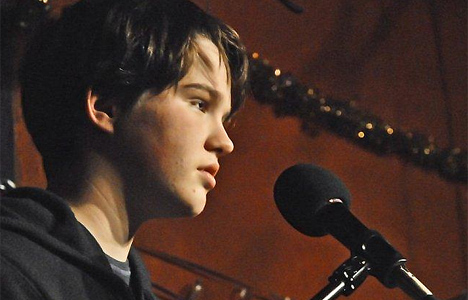
Said video, which made the rounds in mid-July, is of Stephen chatting about being transgendered and stuff. He started transitioning at age 14, and he’s 20 now, which I find mind-bogglingly splendid, and also really very encouraging. His parents are rich, and apparently at least somewhat open minded, which obviously put him in a better position to address his gender dysphoria than most people are in. (For instance, if you follow Dispatches from Tanganyika (which is damned hard to spell), you’ll read about how Billy Martin – formerly Poppy Z Brite – has had to sell off possessions to pay for his testosterone, and he still had to stop taking it for a time.) That doesn’t make Stephen any less impressive; it’s just worth nothing. Looking back at my own 14-year-old experience, which was muddled and unpleasant and thoroughly lacking in resources for fixing anything, I can only say damn, Stephen, you kick ass.

And Stephen’s blog, Super-Mattachine, is charming and interesting and well written. His most recent post is a review of queer porn movie Speakeasy (available here, along with a lot of other great stuff, including the marvelously titled “The Genderfellator.”) There’s some interesting introspection and discussion of the movie (Speakeasy, I mean; there’s a trailer here if you’d like to take a dip), including an acknowledgment of the cerebral nature of the review, which he clarifies by saying “A++, would fap again.”

The name of the blog, by the way, refers to the Mattachine Society, a pre-Stonewall gay rights group (founded in 1950) and its newsletter, The Mattachine Review. According to group founder Henry Hay, via Jonathan Katz, Gay American History (Crowell Publishers, 1974), via Wikipedia, the name references a French medieval and renaissance masque group called the Société Mattachine. These societies (again according to Wikipedia) were “lifelong secret fraternities of unmarried townsmen who never performed in public unmasked, dedicated to going out into the countryside and conducting dances and rituals during the Feast of Fools, at the Vernal Equinox. Sometimes these dance rituals, or masques, were peasant protests against oppression – with the maskers, in the people’s name, receiving the brunt of a given lord’s vicious retaliation. So,” Hay said, “we took the name Mattachine because we felt that we 1950s Gays were also a masked people, unknown and anonymous, who might become engaged in morale building and helping ourselves and others, through struggle, to move toward total redress and change.” Which is interesting, dontcha think? Also interesting (and also from Wikipedia), the Mattachine Society’s goals were “to unify homosexuals isolated from their own kind; educate homosexuals and heterosexuals toward an ethical homosexual culture paralleling the cultures of the Negro, Mexican and Jewish peoples; lead the more socially conscious homosexual to provide leadership to the whole mass of social variants; and assist gays who are victimized daily as a result of oppression.”

I had heard of Stephen before I saw the afore-mentioned video on dlisted, etc., but I didn’t start Googling him frantically. And, not to get all earnest and shit, I appreciate having another opportunity to find out more about him. He dislikes the celebrity media, which has outed and hounded him, so I suspect he might not find my enthusiasm in this particular case worth the candle. He would have a point there, obviously. He seems like a tolerant guy, though, so maybe he’d see a silver lining here, too.

(Also, I don’t know about you, but I’m pretty upset about Kristen Stewart cheating on Rob Pattison – why, Kristen, why? Apparently she can’t act – I don’t know because I only saw her in the first Twilight movie, and I thought she banged “glum teenager with not ideal decision-making skills” dead on – as it were. I don’t care about that, though. I just like to look at pictures of her in Us and shiver at the pointy perfection of her nose.)

(And by the way, am I the only one who thinks the Orbit tower at the London Olympics site looks like it was built by Phineas and Ferb? That’s not an insult, by the way.)

The Detective and the Closet

“What did this Regan fellow have that bored into him so?”

The butler looked at me levelly and yet with a queer lack of expression. “Youth, sir,” he said. “And the soldier’s eye.”

“Like yours,” I said.

“If I may say so, sir, not unlike yours.”
The Big Sleep, Raymond Chandler

As I’m sure I’m not the first one to point out, The Big Sleep is obsessed with queer themes, both explicit and implicit. One of the novel’s central mysteries is, precisely, homosexuality. The relationship between a purveyor of dirty books named Geiger and his male lover is at the root of a number of the murderous confusions and complications in the early part of the narrative.

The novel treats its avowedly gay men with a casual disdain; the decadently portly Geiger is a recognizable stereotype, while his more masculine lover is dismissed with a sneer by Philip Marlowe, who comments that fags can’t hit hard, no matter what they look like. But the homophobia is belied by — or perhaps meant to excuse — the way in which intense bonds between putatively heterosexual men form the emotional core of the novel. As the quotation above indicates, the novel is in large part driven by the love-at-first-sight simpatico between Marlowe and his client, General Sternwood. That sympatico is echoed in Sternwood’s similar passion for his missing son-in-law, Rusty Regan, whom he ultimately asks Marlowe to find.

Moreoever, Regan and Marlowe are doubled not only because of their place in General Sternwood’s affections, but because of their imperviousness to heterosexual escapades. Regan, who married the General’s daughter Vivian Sternwood, was also, we learn at the novel’s conclusion, propositioned by the general’s other daughter, Caroline. When Regan refused her, she killed him. Later chronologically (though earlier in the novel), Caroline shows up in Marlowe’s room, naked, and attempts to seduce him. He kicks her out, she calls him an unrepeatable name which is probably “faggot” — and later she tries to kill him.

Marlowe and Regan are “soldiers”, then, because they (a) are beloved of the General and (b) do not lust after his corrupting daughter. The appellation “faggot” is carefully erased and thereby emphasized; it is Marlowe’s unmentionable sin which is also his unmentionable distinction. By the same token, Vivian Regan’s unnaturalness is reflected in the fact that she cares about her sister more than her husband; and so tries to cover up the latter’s murder to protect the former. The whole plot, then, is powered by same-sex investments and love. In comparison, most of the heterosexual attachments in the novel — such as those between Victoria and Rusty — seem decidedly half-assed. Marlowe’s main romantic interest is barely a flicker in the novel; she appears late, wearing a platinum wig to cover her short-cropped butch cut, which prompts Marlowe to give her the campy appellation Silver-Wig. The supposed love interest, then, is effectively a false front covering gender deviance covering a nonentity. It’s as if Chandler is afraid that if he spent too much time on her, folks might start to realize that she isn’t a “she” at all.

It would be fairly easy to do an Eve Sedgwick inspired reading and draw the lines between Chandler’s romanticization of homoerotic bonds between men and his homophobia and misogyny. For Sedgwick, it would certainly be no surprise that a book which writes with such repressed approval of soldiers eying each other should figure evil as a giggling vindictive ultra-femme madwoman. The clean passion of men for men is always threatened by these atrociously pleasurable stirrings of femininity.

It’s also interesting to note, though, that there may be a link between the novel’s queerness and and its reputation. The Big Sleep is often thought of as one of the very best examples of detective fiction; it’s virtually attained high art status, in a lot of ways. That status is, I’d argue, not despite the use of homosexuality, but because of it.

In his 2011 book Art and Homosexuality, Christopher Reed argues that the avant garde has long used markers of homosexuality as signs of daring individualism. Sexual deviance can show that an artist is an original, unhindered by convention or bourgeois provincialism. Moreover, the mechanism of the closet can provide a powerful appearance of mastery and genius. The artist, through the deployment of homosexual codes and references, shows himself (or herself) to be “in the know”, and that knowledge is the mark of queer genius — an unusual and unconventional wisdom.

All of this, I think, can be related to the critical success of The Big Sleep. Chandler’s bleak, decadent vision is in large part a bleak decadence of deviant sexuality — the filthy books sold by the gay man; the old General pining for his young acquaintance while rotting among the orchids; Vivian’s tragic love for her unnatural sister. The awareness of and manipulation of homosexuality makes the novel daring, adult, and knowing — an avant garde provocation rather than (or in addition to) a simple genre fable.

Moreover, the novel’s projection of genius is accomplished in large part through a manipulation of tropes associated with gayness. Chandler’s stylistic hallmarks — the careful vivid descriptions, the quick turnabout wit — could almost be lifted from Oscar Wilde, as could the obsession with ugly, hidden truths. The Big Sleep and The Picture of Dorian Gray are different mainly in that Chandler nods more explicitly to the obvious homosexual themes. In both cases, though, there is the impression of dazzling surface facility and deep unsettling knowledge — a sense of idiosyncratic and/or perverse brilliance propelled by the mechanics of the closet.

Detective fiction is built around the knower — and what that knower knows, The Big Sleep suggests, is deviance. “Me, I was part of the nastiness now,” Marlowe thinks, before ruminating feelingly on the idea of General Sternwood lying in bed. To see into the closet is to be one who knows one; to understand is to understand. Chandler’s novel is iconic in part because it believes so fervently in this bedrock algorithm of genre noir, and because its queer lack of expression conceals so transparently its depths of love and loathing.

Adventures in online manga reading: eManga

I’m taking a brief break from compulsively consuming British mysteries on TV (have recently blown through all of Agatha Christie’s Marple, Agatha Christie’s Miss Marple, Vera, and most of Blue Murder) for a bit of comic reading.  I used to buy a lot of manga. Because I’m a librarian, I feel duty bound to acquire things as legally as possible.  The recent death of many manga publishers killed off a big chunk of my reading habits.  When Borders closed, I stopped being able to wander around and check out new titles.

As much as Amazon enjoys bathing books and delivering them to my door for my pleasure, I’m afraid I suck at finding new-to-me manga on their site.  Non-fiction, sure.  Random food items and socks?  Yes.  But manga?  No.

The only major manga publishers that I could think of were Viz and DMP.  I knew Viz was probably still mostly focusing on mainstream stuff (they published Bleach, I think, although if I’m wrong I’m sure a thousand fiery fans will correct me…) and I’m pretty sure if I slouched over to Barnes and Noble, I could peer moodily at the shelves to see if anything of theirs would appeal.  But DMP now, DMP I’d heard had bought most everybody else’s back catalog and also done…some kind of odd deal with scanlation groups or something.  Not that I know any scanlators.  Or even people who know people who know scanlators.  Ahem.

Anyway, I have often enjoyed DMP books.  Barnes and Noble never really carried them, which is another reason I shopped at Borders.  So I decided to do a bit of Googling to see if what I’d heard was true and that I could lawfully buy my manporn online.

And lo!

It is true!

For at least some titles, anyway.  Which is why I immediately thought: I must tell the whole world about this!  Readers of HU must know immediately!

But first, I had to test it out.  For science!  The things I do for this blog, seriously.  My heart is deep and wide.

So I trotted over to DMP’s site, Digital Manga Publishing books.  Although let’s be honest.  DMP/Akadot have a bunch of related sites, and I’m not that great at keeping them straight.  But this one seems to have all of DMP’s various imprints together, both regular titles (many of them with waaaaay more camel toe than I care for, thanks) and yaoi-themed.

I surfed around the different new releases and all the Vampire Hunter D stuff (it’s always bored me, sorry).  I kept noticing a little green plus sign that says eManga.

So I wandered over there.  It’s another DMP-run site and it has lots and lots of titles.  A couple hundred at least.  Some old manga that I’d enjoyed in the past and some new stuff I hadn’t read before.  I poked around until I found a title that looked promising.  (Blue Sheep Reverie Vol. 1 by Makoto Tateno, in case anyone cares.)


photo of desktop image of emanga Blue Sheep

This is the basic screen.  Yeah, pretty straightforward.  On the regular monitor, it was nearly readable, but on my laptop (a fancy 17″ by the way, not a small netbook) it was hopeless. I’m ridiculously nearsighted, even with my glasses.

I tried zooming, and that works OK, but it made it hard to read the whole page, because you have to move down and up and then forward, blah blah blah.  Easy in book form, harder in electronic.

They’ve got a neat feature that takes care of that, though.  It’s in the upper right corner where it says 1 page.  You can also read 2 pages (yeah right, with my eyes?  please) or panel.  When I picked panel, I discovered it grays out most of the page, and moves the clear, brighter (and larger, if you zoom) panel in the center.  When you click ‘next’ it moves to the next panel and ‘prev’ moves back.  It’s smart about the right-to-left and panel top to bottom, too.  Very cool!

But this wouldn’t be HU if I didn’t complain bitterly about something, so I thought I’d say that while I enjoyed the preview, I was irritated to discover that one of the titles I’d seen on the DMP site with the eManga link and then tried to buy is not actually readable/purchasable on eManga.  It’s there, yes, but you can’t buy it.  Color me cranky.

If it’s coming soon, say so.  If I can only purchase it in paper, tell me that.

Some of the titles available on eManga are from Harlequin.  At first I thought it must just a similar name, but the colors are the same and it’s got that weird diamond thing going on.  Startling.  But whatever.  I wouldn’t care except the copy-editing on the covers is off.  The Amalfi Braide for the Amalfi Bride.  In what appears to be Arial font.  Yes, OK, it’s gotta be actual Harlequin because I recognized some of the authors from their romance titles.  Do a better copy-editing job and get some nicer covers.

The other (small, honest!) complaint I have is that the books list ‘points’ beside them.  At first I thought this was an ill-advised savings/coupon thing–you know, like buy so many books worth so many points and get a free read?  No, turns out not.  You buy “points” and then you spend “points” to read various titles.   There’s probably good reasons for it (cut down on credit card fees, maybe) but it was odd to see it that way.

But overall, I’m glad to see this site.  DMP is a company with a history old enough that I’d buy from them.  They have a way to preview titles, and they’ve got a decent track record of actually continually to put out titles until a series is finished (bitter, who me?).  I noticed that a couple authors I’ve enjoyed have a series there.  I’ll definitely be getting some manga and enjoying them.  I hope it’s a successful venture and that they’re able to make more titles available soon.

Video Art and Venus Girdle

Bert Stabler pointed out this Dara Birnbaum video to me…because, of course, it’s about Wonder Woman.


Dara Birnbaum – Technology/Transformation… by merzboy

 
So my first reaction to this was fairly intense visceral dislike. The goal seems to be to deconstruct icon and narrative to reveal a subtext of explosive violence, gender dynamics, image making and, most of all, manipulability. The stuttering spin and spin again as Diana Prince turns into Wonder Woman and then turns and turns into Wonder Woman, or runs over the same segment of forest and then reruns over it, makes us see both the narrative and the heroine as constructed and artificial. Like much appropriation art, it’s using camp to destabilize the normal and the normative, so that, for example, when Wonder Woman breaks out of her mirror prison, the rhythm comes not as climax, but as anti-climax — culminating in her stale banter with the inevitable man she saves.

The problem is, this camp undermining of Wonder Woman is significantly less camp than the source material. The intimations of dominance and power from manipulating the tape, for example, or from the connection of WW’s transformation with explosions, are far more muted, and far less sexualized, than the compulsive bondage games in Marston/Peter. The replicated Wonder Womans in the mirrors are less daring, less loopy, and again less sexualized than Marston/Peter’s precocious dabblings in pomo themes of replication and artificiality. The disco double-entendres at the end, rhyming “under” and “wonder”, again seem positively tame compared to Marston’s spiraling fantasies of women dressed as deer eating each other, or giant vulva-flowers consuming men and women alike. Christopher Reed in his book “Art and Homosexuality” argues that the avant-garde always lags behind pulp sources in its use of homosexual and controversial content, and this seems like a painful case in point. Marston and Peter created an incredibly sexually daring, homoerotic, and feminist comic book, and some three decades later the art world comes along and preens itself on “discovering,” in much less confrontational form, all the themes that were there to begin with.

So, like I said, that was my initial reaction. On second thought, though, I probably don’t need to be that harsh. In the first place, the Wonder Woman television show was not the Wonder Woman comic by a long shot. With that in mind, Birnbaum can be seen in part as re-excavating the invention and the sexual charge that the TV writers largely removed. In particular, Birnbaum has rightly figured out that the only part of Wonder Woman the TV show that is really worth keeping is the transformation scene. That explosive (orgasmic?) moment spills out of its original context, as if Marston and Peter’s original erotic vision has shattered the dull genre narrative built to contain it.

Beyond that, it’s probably worth noting that Birnbaum isn’t really part of the avant-garde, at least as Reed discusses it. Feminist art and pop art were both still very much outside the institutional art world in 1978. From that perspective, Birnbaum might be seen not as (or not just as) appropriating Wonder Woman and television, but as identifying with them. Diana Prince’s explosive, exciting transformation into Wonder Woman is also Birnbaum’s accession to the wonderful, gleeful joys of control. Wonder Woman stutters back and forth and spins around and around and runs over the same ground not to subvert her, but because the power over those images, and the power of those images, is just so darned fun. Birnbaum’s video, then, might not be so different, in concept or execution, from those Yourtube compilations of every Lynda Carter transformation ever:


In other words, I like it more as a fan video than I do as avant-garde art — which isn’t necessarily a dis, since part of what it’s doing (especially in retrospect) is anticipating, or forecasting, or helping to bring about the (ongoing) collapse of the walls between fandom and art. I still wouldn’t say it’s great, and it’s still very simple-minded, ideologically reticent, and formally underwhelming compared to Marston/Peter. But I can see its historical importance and appreciate its energy. It’s certainly one of the most inventive uses of the character since Marston died — which may be damning with faint praise, but is praise nonetheless.

Bam! Pow! Superheroes vs. Ideological Critique!

Editor’s Note by Noah: Ben originally wrote this on a thread at the Comics-Scholars listserv in response to what he called “the banal, tendentious, flat-footed, and largely comics-ignorant commentary of Manohla Dargis and AO Scott. I asked to reprint Ben’s piece here, and he kindly agreed. With his permission, I’ve edited his piece slightly so it can stand alone without confusing references to a conversation we’re unable to reprint in full. I’ve included ellipses to show where I’ve made deletions.)
_____________________

…as someone who can enjoy some superhero comics and films, and who can even find things to admire and teach in the work of superhero comic-book creators from the 1930s to the present, I have a mixed reaction to the (very common) ideological critiques of this material – that is, critiques that focus on the supposed racism, nationalism, and sexism of the genre.

Depending on the degree of intellectual subtlety and rhetorical talent of the critic, I can find such responses stimulating, informative, educational, and provocative; but I can also find them reductive, repetitive, self-righteous, and (occasionally) no less ideologically dubious than the material purportedly being “critiqued”. Most often, though, I just find ideology critique boring.

To be clear: I am entirely persuaded that the superhero genre as a whole is vulnerable to critiques in term of racism, nationalism, and sexism.

So is the genre of the Western. So is the Crime/Noir genre (in fact, I would say the problem of misogyny is far more fundamental to the crime genre as a whole than it is to the superhero genre; and I like a lot of crime/noir stuff, too). So is the SF genre. (Any Robert Heinlein readers out there?) So is the Romance genre. And on, and on, and on.

My point is NOT that “all these genres can be politically problematic, so why pick on superheroes.” (Although an honest, aesthetically searching discussion of why different genres at different times get cut all sorts of critical and ideological slack, while other get dismissed on such grounds – well, that might be worth reading.)

My point is rather that ideological critique can only take us so far. It tends to proceed as if works of art (or acts of representation, if you prefer) are best judged in terms of their political content and efficacy. In other words, the (generally unspoken) assumption of such criticism is that politics should serve as the primary evaluative yardstick by which the “success” or “failure” of a work of art (or act of representation) can be measured.

I happen to disagree, strongly, with this assumption (although that does not mean that I do not have an interest in and cannot learn from or do not sometimes practice ideology critique!).

One serious problem with the “superhero movies are racist, nationalist, sexist” arguments (and I use the term advisedly) of Dargis and Scott is that it insults those members of the audience who consider themselves to be anti-racist, anti-nationalist, and anti-sexist. I would number myself in that crowd.

And do I really need to add that there are in fact quite a lot of women, people-of-colour, and non-Americans, who enjoy superhero fantasies? How are they supposed to respond to the “arguments” of Dargis and Scott? “Oh my, you are so right! What a fool I have been for enjoying the propagandist “entertainments” of my oppressors! Would you please supply me with a list of approved movies and books so that I may become as enlightened as a New York Times journalist – for surely there is no one wiser or kinder on God’s green Earth!”

I suppose one could make some argument about false consciousness in order to “explain” the phenomenon of, say, a woman-of-colour who just enjoyed the heck out of, say, The Avengers. But personally I find such arguments deeply patronizing, and self-evidently inadequate.

A more productive line of reasoning (to my mind) would be to ask what it is about superhero fantasies that attracts so many people (across lines of race, gender, and generation), DESPITE the ideologically troubling aspects of many of those fantasies.

Isn’t it possible – just possible – that there is something genuinely emotionally compelling and even aesthetically powerful about the best examples of this genre? (Just as there is about the best examples of the Western, the Crime genre, the Romance genre, and so on?) Isn’t it possible – just possible – that sometimes people are responding to those compelling and aesthetically powerful aspects of these narratives (and not just, say, giving in to their inner fascist)?

It might also be worth pointing out that it is possible to be aware of the ideologically poisonous aspects of an art work (or act of representation) such as, say, Shakespeare’s The Merchant of Venice or (to take a more recent and perhaps even more disturbing example), The Birth of A Nation, while also considering those artworks important enough to be worth teaching, and even defending in terms other than the political.

And BTW, I don’t find a movie like The Avengers to be anywhere near as troubling as D W Griffith’s racist version of history, or even Shakespeare’s The Merchant. I’m not arguing for some sort of equivalence between these texts – I’m arguing that ideology critique is, at best, an opening move, in critical terms. To my mind, you have to have more things to say about a movie or book than “it’s racist/sexist/homophobic” if you are really engaging with it as a professional critic. Of course, you don’t HAVE to engage with any text critically if you don’t feel like it or think it’s worth it. But if you aren’t engaging in that way, don’t pretend that you are.

Scott and Dargis, I submit, fail this basic test of critical engagement when it comes to the superhero genre… Scott and Dargis just come off as art-movie-snobs, and their attitude is all too lazily familiar. But hey, we already knew that the NYTimes doesn’t have much of a clue about pop culture. This is the same NYTimes that just criticized Comic Con for being too serious, after all. (And they say superhero movies are stupid and incoherent!)

For those of you who might be interested, I’ve found Jonathan Dollimore’s book, SEX, LITERATURE & CENSORSHIP to be very smart and useful when it comes to parsing out the vexed relationship between aesthetics and politics – and in moving beyond the more knee-jerk tendencies of ideology critique. Dollimore’s work is definitely somewhere in the back of my mind as I write all this, and it seems appropriate to give him a nod.
 

Nick Black’s Super-Awesome Urine-Recycling Alien

Artist Nick Black had an awesome kinetic sculpture up at Happy Dog gallery here in Chicago. It’s a giant floating bulbous faced alien with a raygun peeing pink pee into a giant vat. The pee is constantly recycled, so there is never an end to the urinating.

Katie Fizdale took some pictures and kindly shared them with me.


And click here to see the recycling urine in action.

I think this piece fits in nicely with our recent discussion of modernism and post-modernism and comics and fine art. It’s using underground comics references pretty obviously, I think (the alien could be a Johnny Ryan drawing.) At the same time, it’s turning a mechanistic system which might well be modernist and turning it into a representation of itself; parodic/pastiche divorced from utilitarian function and turned into a sign of itself as pornographic pulp. There’s still the nostalgia from the comics, maybe, but the 3-D giant action figureness of it kind of deliberately cheapens the nostalgia…or inflates it, depending on your viewpoint. (The piece was priced, very much tongue in cheek, at over $5 million.)