Your City’s a Sucker: Chronic City, Complicity, and Internet Fiction, Part 2

In part one I discussed how the existence of the internet complicates and modifies many of the ideas laid out in David Foster Wallace’s “E Unibas Pluram and in particular how our transition from a nation where human labor is engaged in making objects to one in which it is engaged in making images is a key societal change that a recent crop of novelists are trying to address. Today, I’ll talk at length about Jonathan Lethem’s recent novel Chronic City as an example of this.
____________________
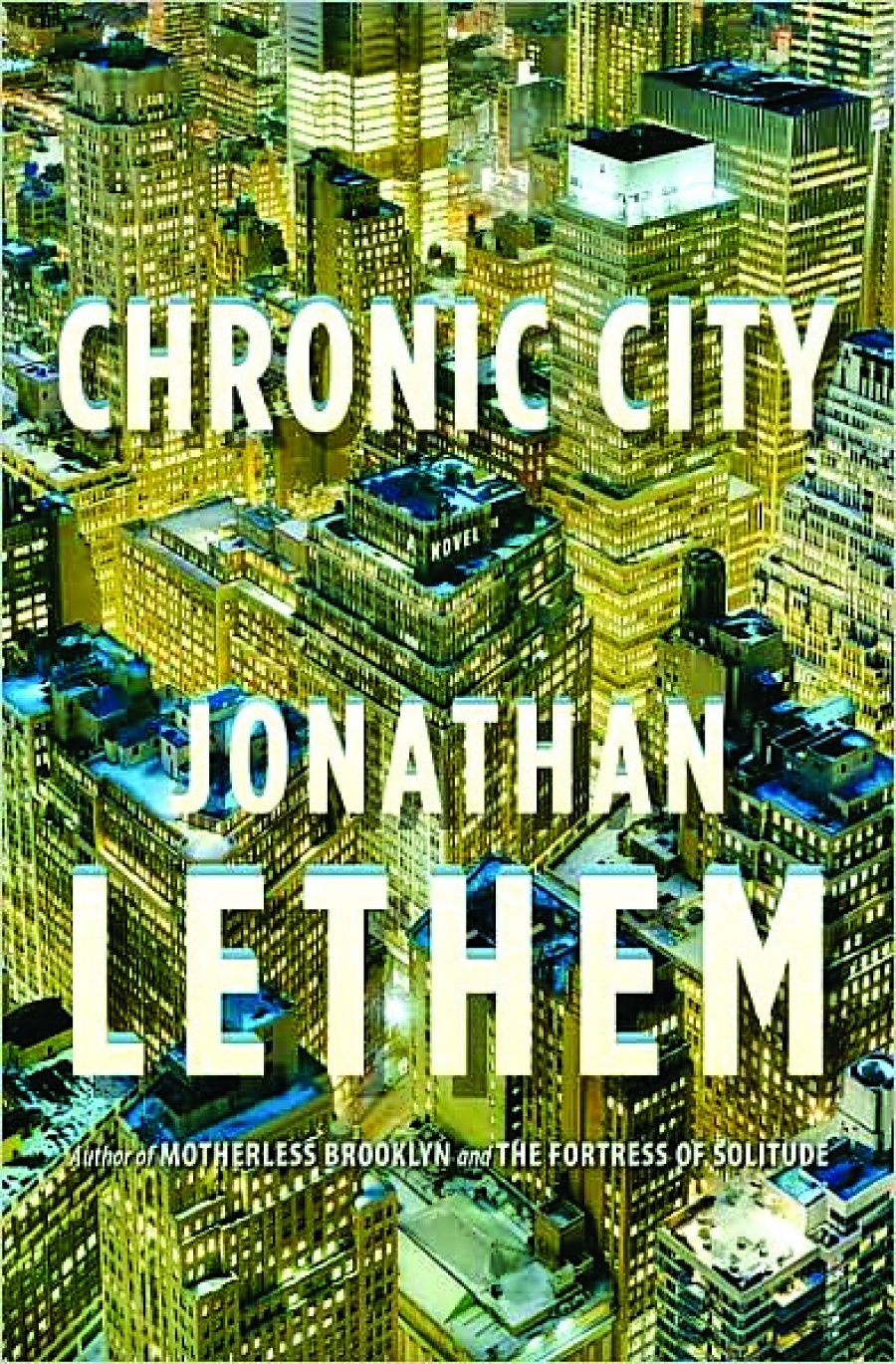
It’s hard to summarize or even introduce the plot of Chronic City, as its gradual unfolding and the realizations that come with it is an important part of the experience of a first reading, but as Hooded Utilitarian is a pro-spoiler kind of place, let’s give it a shot.  Chronic City concerns the (mis)adventures of a washed-up former child star named Chase Insteadman who enjoys a mid-thirties second celebrity due to his engagement to a doomed astronaut named Janice Turnbull. Janice is stranded in a space station behind a line of Chinese mines, a series of letters she writes to Chase her only communication with the Earth (or the reader). Chase meets and befriends a washed-up cultural critic named Perkus Tooth, who is one of contemporary literature’s great eccentric side-kicks. Perkus, who made his reputation posting hand-scrawled broadsides on the walls of buildings all over New York, now lives in a rent-controlled Upper East Side apartment where he does lots of drugs, eats cheeseburgers and muses about the hidden connections between various pop culture ephemera.

Perkus and Chase’s crew is rounded out by two other friends: Richard Abneg and Oona Lazlow.  Abneg, a former tenant-rights radical, now works for New York’s billionaire mayor undoing rent stabilization laws. Oona, Perkus’s former protégé with whom Chase begins an affair, ghost-writes celebrity autobiographies.  Together, they discover and begin chasing after quasi-mystical objects called chaldrons, odd sparkling urn-like containers that they’ve only glimpsed images of on Ebay.

The novel moves with the episodic rhythms of a difficult friendship.  There are bursts of and gestures towards an overriding narrative involving a conspiracy that remains thoroughly in the background until the final few chapters. In its place, are many many conversations about pop cultural artifacts, soirees amongst the elites of Manhattan and ongoing searches for capital-t Truth.

Wallace talks about us being one big audience, but Chronic City is after something a little bit different. Through Chase’s eyes, what we see is an age where we are spectators and consumers, yes, but we’re also performers. We’re also the ones making the very culture we’re the audience for. Via YouTube, Facebook, Blogs, Tumblrs, Twitter, Pinterest, through Vimeo and Etsy and Soundcloud and countless other outlets, we are audience and performer at the same time. We can no longer claim—as Wallace does— that a culture is being imposed on us, one that’s simultaneously delightful and infantilizing and isolating.  We are both halves of the equation now.  Whatever happens, we are complicit in it.

Complicity is the big wrinkle that Chronic City brings to this issue. And it turns out that once you start looking for it, the word complicit appears all over the book[1].  The word first surfaces on page 13 when Chase is trying to explain his newfound friend Perkus to the reader, when, after a litany of different cultural subjects Perkus would rant about, Chase sums it up thusly:


In short, some human freedom had been leveraged from view at the level of consciousness itself.  Liberty had been narrowed, winnowed, amnesiacked.  Perkus Tooth used the word without explaining—by it he meant something like the Mafia itself would do, a whack, a rubout.  Everything that mattered most was a victim in this perceptual murder plot.  Further: always to blame was everyone: when rounding up the suspects, begin with yourself.  Complicity, including his own, was Perkus Tooth’s only doubtless conviction. (emphasis mine)


The tone here is not moralistic. Chronic City is not saying—and never says— that we are evil for our participation. If anything, it views this participation that we all do (including Perkus, including Jonathan Lethem, including me, including you) as a fact. The book may be trying to make us see this participation, but it’s not scolding us for it. Instead of judging us as Perkus does, Lethem tries to make us aware of the ways that we all make our bargains, have our scripts and have to pay a price for being in and enjoying this society we’ve made.

And we do enjoy it. Let’s not bullshit each other. Like Richard Abneg screaming that he wants to fuck a Chaldron the first time he sees one, there’s something very ecstatic about all of this.  It’s not without joy. But it’s not without its price either, particularly for us artistically-inclined folk.  The internet has both devalued creativity and enabled it.  There’s more writing—and reading—going on than at any point in human history, and much of it is for free. Facebook is able to have a small staff because its users make its content for them.

That content is worth pausing to consider. I find it striking, for example, that the first major internet meme most people I know encountered involved baby talk gibberish scrawled on pictures of kittens, and much of the writing we generate is poisoned with reflexive bad-faith and a kind of unquashable rage. And there’s a constant feedback loop of participation, anger and trollery begetting anger and trollery like the two warring factions in The Butter Battle Book.

I’m complicit right now, come to think of it. I am writing this post for free on the internet. Generating more content, some of it fueled with internet skepticism, a skepticism that is immediately defanged because you have to get onto the internet to read it in the first place. Indeed, I don’t watch DFW’s six hours of television a day, but I spent a great deal more time than that staring into my computer screen, interacting with people online, passing along memes and hashtags, doing a lot of things that feel like work but aren’t, participating in this culture I also try to critique.  What choice do I, do any of us, have?

Chronic City is examining this world built on complicity, built on active—if often unwitting—participation in the very systems that we are angry at and want to overthrow. And it examines that world through the very specific—and very odd—eyes and words of narrator and protagonist Chase Insteadman.

Chase is a retired act-or.  He no longer acts.  That’s the key aspect of his character. Within the book there are only a handful of moments when Chase consciously commits some kind of action in pursuit of an objective (or, in other words, acts the way we expect a protagonist to act). Instead of being an actor, Chase is imbued with a kind of monstrous self-awareness. He might be blind to the realities of his life, but he knows he’s blind. One of the great pleasures of the book is reading Chase talking about himself, which he does with some regularity.  Pay particular attention to the way he phrases the following on 63 and 64:


The only role I ever played to anyone’s complete satisfaction was Warren, on Martyr & Pesty… The show itself was avowedly “dumb” and we all (writers and actors, network, critics, audience) flogged ourselves those days for our complicity in its runaway success, but I, the exception was unaccountably “soulful.”… I no longer act, that is unless you’d call my every waking moment a kind of performance.


Or this on 66-67:

I’m outstanding only in my essential politeness.  Exhausting, this compulsion to oblige any detected social need. I don’t mean only to myself; it’s frequently obvious that my charm exhausts and bewilders others, even as they depend upon it to mortar crevices in the social façade…. But if beneath charm lies exhaustion, beneath exhaustion lies a certain rage. I detect a wrongness everywhere. Within and Without, to quote a lyric. It would be misleading to say I’m screaming inside, for if I was I’d soon enough find a way to scream aloud.  Rather, the politeness infests a layer between me and myself, the name of the wrongness going not only unexpressed but unknown. Intuited only. Forbidden perhaps.


It is a very curious thing for a protagonist to be someone who doesn’t act. Doubly curious when that person is also the narrator. We are used to our protagonists wanting things and then taking certain actions to get them. But other than sex with Oona, we know very little about what Chase wants. Chase has little inner life, and is open about this. To drive the point home, Insteadman’s apartment is basically empty, devoid of any belongings worth describing. Instead, what he wants to describe to the reader is the view outside of his window, a view being slowly eclipsed by a high rise going up in front of it.

Chase’s mix of self-awareness and blindness, politeness and rage results from his transformation prior to the book’s beginning from a subject into an object. He understands that his existence is predicated on being used by other people. His life is lived as an extra man at a series of high-society functions; his politeness, sit-com childhood and newfound fame as the fiancée of a doomed astronaut get him invited to various soirees where he sings for his supper by discussing his love of his lost Janice Trumbull, whom he cannot even remember anymore.

Via Chase, Chronic City shows how we are losing pieces of our subjectivity in all our constant performing for other people; we are instead becoming—and treating others as—objects. As our culture moves from making things to making images of things—a subject Chronic City turns to overtly in the second half of the book—we in turn objectify ourselves. Chase talks about this frequently. As he goes to a fancy dinner with the richest couple in New York, he remarks that his “presence for an evening, or at least the duration of an elegant dinner, had been auctioned off as a premium, at a benefit for one of Maud Woodrow’s charities. I couldn’t anymore recall which.”  Six pages later, he says that his face is a mask. Chase has turned himself into an object to be sold by one person to another and he can’t even remember for what cause he’s doing it. Is it any wonder that, in the midst of the dinner, he comes down with a crippling flu?

I also don’t think that it’s a coincidence or authorial oversight that both Chase and Richard Abneg treat the women in their lives as objects. We know Oona has large incisors, heavy glasses, a black bob haircut, that she’s very skinny and that she has peach sized, impertinent breasts.  We don’t know who her parents are or where she comes from. We don’t know what she desires. Chase says he loves her, but his love largely boils down to trying to investigate her, to solve the problem of who she is against her own will[2].  Abneg, meanwhile, gazes upon the sleeping form of his lover Georgina Hawkmanaji and intones to his friends, “Such an amazing shape. How can anyone ever sit in a meeting, or make a plan, or add up a column of fucking numbers, when there’s a shape like that somewhere out there, a shape like that with your name on it, coming to get you?” The Hawkman, as she is called in the book, is a shape rather than a person.

The novel situates these people, these shapes, these performers in a very particular environment, for the Manhattan of Chronic City (and I hate to spoil this, but the book is undiscussable without this knowledge) is not our New York. It’s an alternate one, a kind of Earth-2, one where instead of 9/11 a great, never-ending fog descended on lower Manhattan, one where film directors Morrison Groom and Florian Ib have directed movies starring The Gnuppets and Marlon Brando or where people listen to groundbreaking post-punk band Cthonic Youth.

There’s a heavy emphasis within the novel on spaces-within-spaces.  Chase meets Richard at a party that takes place in a Brownstone within an Apartment building. A restaurant might hide a secret room. Perkus’s apartment, like a TARDIS is “a container bigger on the inside than the outside.” An installation artist named Laird Noteless’s signature artworks involve huge chasms dug into cities.

Children’s stories often begin with a kind of familiar cadence.  Once there was the Land Of _______ and in the Land there was a forest, and in the forest there was a house and in the house there was a room and in the room there was a cabinet and in the cabinet there was a drawer and in the drawer there was a box and in the box there was a….

What’s delightful about this for children (and adults) is that you are waiting to get to this end of the chain, because at the end of the chain is what really matters. It’s the magic ring. Or the truth. But on the internet, when you follow the series of boxes within boxes, you always hit another link in the chain, another rabbit hole to go down. You are always going deeper and deeper into new boxes and the truth, if it exists, becomes destabilized.  After all, in a world in which editing a Wikipedia article can change Marlon Brando from dead to alive, who knows what’s real and what’s fake?  Chronic City takes this idea and spins a world of it.  Its central trio of men—the brain, the body and the raging erection of Perkus Tooth, Charse Insteadman and Richard Abneg—seem to be on a search for truth. But the truths they eventually discover—I’ll leave them unarticulated here— might not even be true, and might not be actionable even if they are.

This all comes to a head once chaldrons show up and Perkus, Chase and Richard begin a series of mad scrambles to get their hands on one. Their first attempt leads to one of the book’s great setpieces, a mad Ebay-and-borrowed-credit-card pursuit fueled by high grade marijuana and the improvised guitar stylings of Sandy Bull (who, it turns out, actually exists).  It takes quite awhile for the trio to figure out why they even want a chaldron so badly in the first place.  It’s a perfect locus of desire… but a desire for what?:

“For something so warm… it casts a sort of … brusque… watery…. Shadow… over so much else… that I took for granted…”

“Despite sounding like a retarded Wallace Stevens I actually get you,” said Richard.  “That thing’s the ultimate bullshit detector–“

“Sure, and what it detects is that your city’s a sucker[3], Abneg.” Perkus spoke with a startling insistence, but his tone wasn’t needling. “Your city’s a fake, a bad dream.” This was somehow the case, the chaldron interrogated Manhattan, made it seem an enactment. An object, the chaldrone testified to zones, realms, elsewhere. Likely we’d lost the auction because one couldn’t’ be imported here, to this debauched and insupportable city. The winners had been rescuing the chaldron, ferrying it back to the better place.


And so we return back to Perkus’s essential truth: that somehow a fast one has been pulled on the world by the world, leaching everything real out of the universe and, to coin a verb, ersatzing it. Perkus responds to this perceived conspiracy in two seemingly contradictory ways.  He both attempts to reject the world that he views as corrupt and looks for vibrational evidence for his one truth in pop cultural ephemera.  In this, Marlon Brando serves as Perkus’ Space-Coyote-Spirit-Guide, a human signpost revealing hidden truths. Or rather, the same truth, over and over again.

Whether or not the secret Perkus has uncovered is, in fact, true is an open question within the novel. Chronic City is suffused with contradictory moments, ambiguous clues, impossible moments. The reality of the novel—like the reality of Wikipedia— is too unstable to permit anything like an objective truth.  As a result, the book avoids the kind of modernist and romantic clichés about outsider artists. All of Perkus’s ideas could just be a bulwark against his sense of failure, a way for him to sabotage any chance at a recognition he claims to not want but also craves[4].

The tone of the novel, as mentioned before, eschews judgment for a satirical, wise-cracking humor that covers over—and eventually gives way to—despair. For when you are trapped in a world where all is image, and those images may not even have real-world referents anymore, when the closest to freedom you can come is to realize you are a puppet, where hidden conspiracies are ever-present yet might simply be nothing more than the tacit acceptance and perpetuation of the world as it is, it’s hard not to despair.

Chronic City isn’t the only recent work to take this state of affairs as subject matter. Jennifer Egan’s Look At Me, the recent film Shame, Haruki Murakami’s Kafka on the Shore, Dan Chaon’s Await Your Reply, even Dash Shaw’s recent Bodyworld are all suffused with information-age anxieties about identity, reality, and image. Obviously, these themes are not new—they’re present in work as diverse as Ralph Ellison’s Invisible Man and much of Philip K. Dick as well as the Image-Fictioneers that Wallace celebrates— but in this new crop of information age literature we see these themes and anxieties jumbled and replayed in new ways.  If previously we were concerned with loneliness, now we’re concerned with a kind of alienating hyper-sociality. If before we wanted to penetrate surfaces to get at the realities underneath, now we’re worried there might not be any reality to get to. If before we were victims of a system imposed upon us, now we are creators and perpetuators of that very system.

Of course, maybe it’s always been thus. Perhaps it’s just more visible now. After all, Perkus can’t point to the time when we got amnesiacked. It exists outside of consciousness, fueled by the endless money of the inescapable Manhattan, a world rendered so insular in the book that the reader is likely to wonder along with Chase if the rest of the world even exists.  Of course, it does and it doesn’t. As Fozzy says in this clip, uttering the essential truth of his Gnuppet brethren, I do understand that I am not a real bear. But I know what I am… I’m a real puppet.


[1] Not for nothing, as well, are two of the four main characters sell-outs. Abneg has sold out his political beliefs and Oona has sold out her talents. Yet, and it’s a testament to the book’s charms, they remain loveable to us.

[2] There’s another essay to be written about how Oona is in many ways a response to all of the Manic Pixie Dream Girl/ Mysterious Woman Shaman clichés of early 21st century literature and film, particularly in her refusal to indulge or take care of Chase at his most immature and vulnerable moments. That’s for someone else to write.

[3] It’s not really germane, but this is one of the book’s many references to LCD Soundsystem, which joins a whole host of things that Lethem references with pithy one-liners.

[4] Perkus, we learn, turned down a book deal once because the book was going to be marketed as rock criticism and he hates rock critics.
Nonentity In the Holy Land

This first appeared at Splice Today.
________________

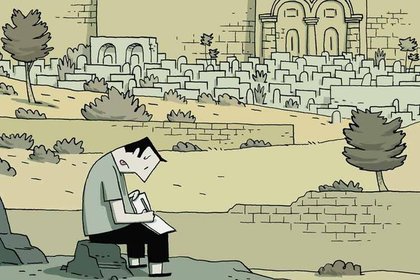
In one sequence from Guy Delisle’s autobiographical Jerusalem, the artist attends an exhibition of his own work at Nablus University in the Palestinian West Bank near Jerusalem.  In the opening panel of the sequence, we see a long shot of the gallery. Mostly (literally) faceless people stand around chatting while in the distance the artwork hangs on the wall.  The pictures are so far away you can’t make out any of the drawings; just tiny blank squares.

It’s an image breathtaking in the aggressive blandness of its narcissism.   There’s no effort to pretend that we’re looking at anything interesting; no suggestion that there’s a worthwhile story. We’re here solely because Delisle was here, and he was here because it’s an exhibit of his own work.  And just to emphasize the banality, Delisle has us explicitly looking at images of his own images which he hasn’t even bothered to draw.  It’s as if the effort of creating  a picture worth viewing would distract from a celebration of his own gloriously quotidian essence.  He’s made himself tiny so that he can block out everything else.

That one panel may not exactly be typical, but it is emblematic.  Jerusalem is in the well-established autobio comics tradition of low-key slice of life nothingness.  It chronicles the year French-speaking Canadian Delisle spent in Jerusalem with his family while his girlfriend worked with Doctors Without Borders.  Maybe if said girlfriend had written it, it would have had something to say, but, as it is, Delisle is basically a tourist, and he’s got little to tell us that we didn’t know coming in.  The Israelis treat the Palestinians badly — check.  Jerusalem is a giant mess — yep.  Caring for small children in a foreign city where you don’t know the lay of the land is exasperating — not something I’d necessarily thought through before, but not exactly earth shattering either.

Early on in the book, there’s a whole page explaining that Israel considers Jerusalem its capital but the international community places its embassies in Tel Aviv, and that there are similar disagreements over borders and territorial claims.  It’s not rocket science — I’m no expert on the Middle East and I’ve basically heard it all before.  But Delisle has himself sitting there acting like he’s being presented with some sort of complex multi-layered revelation.  “So we’re in Israel, right?”  “But Jerusalem is the capital of Israel, right?”  And then he finishes up by declaring: “I don’t really get it, but I tell myself I’ve got a whole year to figure it out….”  Either he’s stupid or he thinks his readers are.

If this were a book or a documentary titled Jerusalem, the creator’s lack of even rudimentary knowledge or insight would generally be a bug.  But  it’s autobio comics, so the less intelligence and insight on display the better.  How else to explain the studious ugliness of the color scheme?  Though there are dashes of other colors here and there, for the most part Delisle has chosen drab browns and washed out grays; combined with his blobby, undistinguished character drawing, you end up feeling like you’re staring into a mud puddle.

The blah art and the blah thinking are of a piece.  Both are in the service of an aw-shucks (hopefully) faux naivete.  Delisle is a humble seeker, drawing without flash, seeing without knowledge, letting us know the truth without the distracting accretion of talent or insight.  It’s just one man’s impressions of Jerusalem.  We learn that it’s awfully hard to find a good playground in East Jerusalem; that traffic is awful; that ultra-Orthodox Jews are intolerant and unpleasant; that the Palestinians in Delisle’s comics class hadn’t read Tintin or much else.  Doesn’t that tell us something, after all, about Jerusalem, about Israel, about the Middle East — about, humanity?

And sure, I suppose it tells us something.  Mostly it tells us that the most banal of insights can be justified by dumping a ton of human misery somewhere in their general vicinity.  Also, and relatedly, it tells us that tourists suck, and that autobio comics suck, and that, if you put them together, they suck doubly.
 

Voices From the Archive: Dirk Deppey on Lost Girls As Reactionary Art

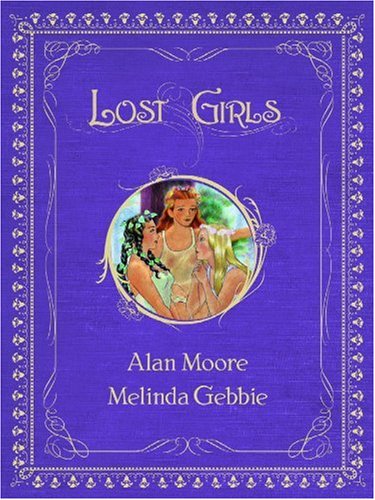
Dirk and various Utilitarians had a long discussion about the manga YKK. By the by, Dirk wrote this brief discussions of Alan Moore and Melinda Gebbie’s Lost Girls.

Indeed, Lost Girls itself strikes me as a reactionary work of art. Moore clearly approached its pornographic goals from an almost Calvinist left-wing-Anarchist perspective that viewed the enormity of sex through an inflexible set of rules and dogma that would have made any bondage disciplinarian proud. He further piled all of the sexual imagination’s strawman-style villainies upon the characters who Don’t Share Our Values — the bit about soldiers secretly wanting to fuck each other wasn’t exactly what I’d call a nuanced observation. Lost Girls seemed less like an exploration of Dionysus than a series of checklists ticking off the Various Correct Ways To Think About Sex, intent on bringing order to chaos with a determination that Cotton Mathers could only dream of maintaining. Modern porn and its appeal to our baser instincts — this is the future that Moore fears, and he damn well means to roll it back. You could practically feel his anus clench as he plotted Lost Girls out.

Unfortunately, your average Buttman video is almost certainly a far more accurate vision of the libido — certainly the male libido — than is Lost Girls. Sex isn’t a series of wholesome, socially liberating poses; it’s the monkey part of our brain in its purest essence, with all the good and bad that this entails, which is precisely why we have so many taboos surrounding it. Lost Girls had no sense of surrender to the Animal Inside Us, a necessary component of good erotica/porn, as well as an essential part of the explanation for why men and women alike so often do things in the pursuit of sensuality that strike others as utterly insane.

Lost Girls had all the eroticism of a Presbyterian sermon on the joys of the marriage act. Nevermind the catalog of kinks and positions that Moore assembled; the story’s biggest flaw is that his sense of imagination never left the missionary position. Lost Girls is a retreat into rigid dogma, which makes it reactionary regardless of the fact that said dogma is left-leaning in nature.

(Adding insult to injury, Lost Girls is also a virtual catalog of unquestioned assumptions once you stepped outside of Moore’s need to present sex correctly. I especially loved the way that Dorothy fulfilled every hick-farmgirl stereotype available to Moore at the time. Kinda dumb? Check! Jacked off a horse? Check! Fucked her dad? Check! I’m surprised that she didn’t come right out and state that her mom was also her dad’s cousin before marching off to lynch her some neegruhs while she was at it. I’d call Lost Girls any number of things, but “progressive” is the last term I’d use.)


The Master and John Malkovich

Being John Malkovich is an almost certainly intentional, not to mention deliberately parodic, riff on film theory. As I am not the first to point out, the movie gleefully presents the viewer with mirror images, women who want the phallus, explicit sadistic fantasies of control, identification with the gaze, identification through the gaze, and a chimpanzee with a traumatic backstory —all couched in an absurdist narrative. At one point we even get a tour through John Malkovich’s subconscious which begins (of course) with a primal scene as young John watches his parents do that thing that Freudian parents do.

It’s pretty clear that writer Charlie Kaufmann and director Spike Jonze are both referencing and undermining Laura Mulvey’s gaze theory. On the one hand, Craig Schwartz, the protagonist, is the protoypical sadistic viewer — he is a puppeteer by profession, and he explains at some length how he loves to get inside other people, to enter their skin and feel what they feel. This speech is made by Craig to Maxine, a woman with whom he is sexually obsessed — and soon thereafter he makes a puppet of her to play with, so the fetishistic content is not exactly subtle. Craig wants to enter others as a way of fucking others; empathy and identification are for him a means of sadistic control.

At the same time, the film messes with Mulvey’s formulation, in which the male viewer is supposed to be the subject of the gaze and a female character is supposed to be the object. For instance, the person Craig inhabits and controls is not a woman, but a man, John Malkovich. In the movie’s main absurdist conceit, Craig finds a secret, moist tunnel in his office which literally leads into Malkovich’s consciousness. This not only feminizes Malkovich (the tunnel is literally referred to as Malkovich’s “cunt” at one point) but it also feminizes Craig. In the first place, he’s engaged in male-male sex too; Maxine calls him a “fag.” And furthermore, towards the end of the film he essentially experiences a full-body castration, giving up his own life and self in order to inhabit and become Malkovich.

The film also critiques/parodies Mulvey by handing the male gaze over to a woman. Craig’s wife, Lottie, also uses the tunnel into Malkovich’s head — and she finds the experience both exciting and sexually stimulating. Indeed, after entering Malkovich while he’s taking a shower, desire and identification flip, and she decides she wants to be a man. Later, she goes into Malkovich again, and rides along as he receives a sexually charged phone call from Max…with whom both Lottie and in consequence Malkovich instantly fall in lust. The sadistic male gaze, therefore, becomes a sadistic female gaze, giving women access to the phallus and (not coincidentally) to objectification of other women.

The point is further driven home (if that’s the right metaphor) by the fact that Max reciprocates Lottie’s affections — but only when Lottie is in Malkovich. Malkovich is the phallus himself, but he cannot have the phallus — just as is supposed to be the case for women in Lacan. Actual women, on the other hand, can hold the phallus and wield it for their own pleasure — the only caveat being that to hold the phallus they have to hold the phallus. Masculinity and mastery, contradictorily, seem to inhere, not in men, but in women. Even paternity becomes a female prerogative — Max becomes pregnant when Lottie is in Malkovich, not when Craig is. Lesbians, it seems, are better men than men are.

The film, then, in some ways seems to deliberately mock masculinity — or at least, Mulvey’s formulation of masculinity. In other ways, though, its position is less clear. In particular, it seems significant that Malkovich’s castration is in many ways actually a kind of apotheosis. Malkovich is, after all, famous for being other people. The film, then, becomes an extended allegory of his talent; Malkovich is everyone, and everyone is Malkovich. The very funny scene in which Malkovich goes through the passageway into his own head and ends up in a restaurant where he is literally all the people in the room, whether women, dwarfs, waiters or patrons, definitely ridicules his persona. But it also elevates that persona into existential dilemma. Similarly, Malkovich’s vituoso performance as Craig inhabiting John Malkovich becomes the ultimate version of disappearing into a role. No costume, no props, and yet he is magically (and convincingly) doing a quadruple-layered acting feat, playing John Cusack playing Craig playing John Malkovich playing John Malkovich. This is in part about Lacanian misrecognition, where even your self is someone other than your self. But it’s also about method acting. To not be who you are may be a traumatic crisis of selfhood, but it’s also, as an actor, the mark of mastery. The more castrated Malkovich is, the more his phallus grows.

The same is true of Craig. Early on we see Craig performing a puppet show of Abelard and Heloise. Abelard was, famously, castrated. In the puppet show, however, his incapacity is supplemented, or superseded, by Heloise’s insistent sexuality — the puppet humps the wall between her cell and Abelard’s. The blatant display, performed by Craig on a street corner, is so convincing it prompts an irate father to hit him in the face. Craig is castrated like Abelard…but like Malkovich, his belittlement becomes the sign of his mastery. And that mastery is routed through the inhabitation of female desire.

Which raises the question…is the lesbian relationship in the film a rebuke to male fantasies of possession? Or is it an embodiment of them? At one point, Craig enters Malkovich when Maxine thinks Lottie is inside; as a result he weirdly gets to have lesbian sex — a not at all uncommon male fantasy. At the film’s conclusion, Craig is presented as trapped in the consciousness of Lottie and Maxine’s child, staring out impotently forever at the two women he can never have. Again, though, the masochism is perhaps just a little too convenient. Are we really supposed to believe he is not getting off on this fantasy of being inside a woman — and, more, inside the sexual relationship of two women? Who is pulling whose strings, exactly?

In one of his puppet plays, Craig’s doll (made in his own image) looks up deliberately, as if seeing the man who controls him. Being John Malkovich, too, with its absurdist, self-referential plot constantly reminds the viewer of its status as fiction — and of its status as tour-de-force. Writer Charlie Kaufman’s script is as auteurish as Malkovich’s performance, and in the same way. When Malkovich and Kaufman erase and feminize themselves, it is only so that they can be all-the-more controllingly present, all-the-more wielders of the phallus. Masochistic lesbophilia seems, from this perspective not so much an upending of patriarchy as it is a means of creating a more all-encompassing phallic order. Perhaps that’s why there is, running through the film, an air of smug, over-determined self-congratulation. Despite its cleverness, and its deliberate eschewal of traditional storytelling, it still comes across as surprisingly conventional Hollywood narrative cinema, less problematic for Mulvey’s theories than any B-movie slasher.
______________
 
As a brief addendum, I just saw Eternal Sunshine of the Spotless Mind, which painfully confirms my sense that Kaufman’s absurdist trickery conceals all-too-typical masculine self-pity and predictable Hollywood idiocy. The film’s heroine/love object Clementine claims several times that she’s not just a cipher for male desire and dreams, but again alas the fact that she’s a self conscious magic pixie dream girl doesn’t make her less of a magic pixie dream girl — quite the contrary, in fact. Maybe if there were some vague effort to balance the amount of time we had in our drab hero Joel’s head with the amount of time in bouncy, unpredictable Clementine’s I’d believe that the film saw her as her own person. But virtually all her screen time occurs either when she’s with Joel or when she’s not even herself, but is instead (and significantly) a mental projection inside his head. And, of course, we’ve got not one, but two romances in which Hollywood-hot younger actresses turn down attractive men their own age in order to aggressively seduce significantly older, character-actor-homely men. The PKD meditation on memory and self looks a lot like a feint to distract from the puerile, self-serving wish-fulfillment.

Is there any similar quirky, high-concept, mainstream American film that is told primarily from the point of view of a woman? There may well be. Chalie Kaufman sure isn’t going to write it, though.


Comics at Book Expo America 2012

The comics industry, the publishing industry, and the convention industry are all on the cusp of a great change due to shifting priorities, new formats, and new audiences. Can the three use work together to confront these challenges? Based on my attendance at Book Expo America, the country’s leading publishing exhibition, I would say that the answer is “no.”

At the June 6 convention, organizers seemed more concerned with extracting as much money from vendors as possible via exorbitant exhibition fees than in providing a sensible layout. Comic companies, though smartly grouped together for the most part, were located nowhere near the Children’s Pavilion. And yet, the majority of the librarians I’ve encountered outside of larger cities still continue to view graphic novels as a format for children and reserve them for children’s libraries. In bookstores, graphic novels often provide a buffer between the rapidly growing Young Adult section and Science Fiction. Though some comics creators may bristle at the suggestion, wouldn’t it have been best to place comic companies near the Children’s Pavilion—the very place librarians and book buyers would expect them to be? Placing them against the back wall and far from high traffic areas gave the signal that comic companies are not a priority. Why should those comic companies want to spend large sums of money to return? Poor service combined with high fees may hurt BEA in the long run as vendors begin to reconsider the necessity of the event.

Comic companies on the whole—perhaps too familiar with comic conventions–did not seem to fully recognize their status as miniscule fish in a massive pond. Displays were mostly limited to a selection of wares. The lack of a “hard sell” was completely evident. In every instance, I had to approach representatives and speak to them first about products—or even say “Hello.” While this is not an issue in a comic convention full of rabid fans, it very much is one in a convention full of disinterested buyers. One cannot afford to be aloof. However, once approached, many reps were friendly and knowledgeable.

Here’s a brief assessment of the comics booths I visited.

Fantagraphics: This company possessed the best location (strangely nestled in a section full of academic publishers) and the most stylish booth—complete with seating! It also had an extensive set of galleys to peruse and provided free sample books to those who had questions. Eric Reynolds even took the time to help a lapsed reader like me sort through the intricate history of Love and Rockets, which was greatly appreciated! I was highly impressed.

Image: I was also pleased with Image. The booth, though in a lackluster location, was well stocked with a wide array of free comics and had friendly creators behind the booth signing wares. Jennifer De Guzman even took the time with me to help pick out a selection of comics for a coworker’s young son.

BOOM!: Free wares were not available, which I feel was a tremendous mistake. Instead, I was offered a checklist of recent and upcoming graphic novels. While this is very useful to a fan, what would a buyer want with a list of books he is not familiar with? What librarian would take the time to stand and read several comics at a booth?

Marvel: Marvel did not have a separate booth and was inadequately represented by Disney. I was shocked by how poorly staffed and stocked the booth was given the wealth of the company, the bulk of content available, and the amount of exhibition space purchased. I picked up a pamphlet advertising a “Marvel book, magazine, and app program for young readers”—no backlist, no Masterworks, and no material geared toward adults or teens available. The impression was given that Marvel merely produced products for young children featuring traditional icons. The lack of a diversity of titles was disappointing.

DC: DC had no booth available on the exhibition floor; instead it made due with two autograph sessions—one by Scott Snyder, author of Batman Vol. 1: The Court of Owls and another by Peter Tomasi, author of Batman & Robin Vol. 1: Born to Kill. While pushing well-known creators is a wise move at an event now dominated by celebrities, the lack of a booth was a huge misstep. And given that both authors signed books featuring Batman, there was a drastic lack of diversity.

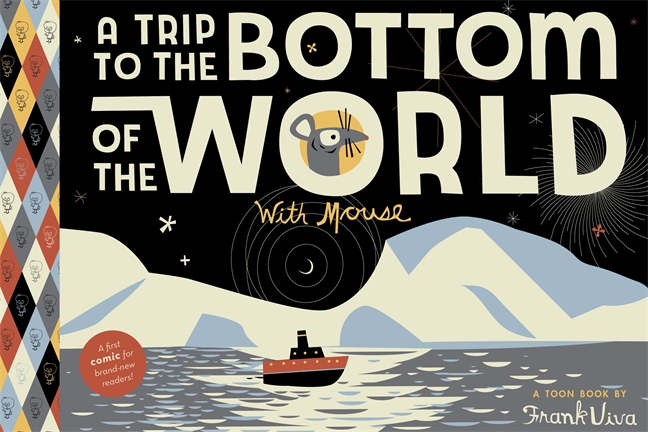
However, comics and graphic novels were not limited to the exhibition floor. I attended Heidi MacDonald’s fabulous panel showcasing monumental works of 2012. Prior to the panel, a small survey sheet was provided to members of the audience, presumably to obtain basic information regarding audience demographics. I am very curious to know who attended the fairly populated event and hope that MacDonald releases that information at a later date. Though light on mass market, heroic fare, MacDonald and her peers seemed to know their audience and cater to it, providing a list   featuring critical darlings and charming children’s books for an educated urban audience. Two popular examples include Alison Bechdel’s Are You My Mother?: A Comic Drama and A Trip to the Bottom of the World with Mouse by Frank Viva. (The list was about quality, not commerce. Still, had I been a book buyer I might have preferred a collection of mainstream books that would sell extremely well to a suburban audience. There is no point in stocking one’s shelves with only Nabokov when customers want Fifty Shades of Gray. Give ‘em the thwip! There’s no shame in a little bit of spandex.

Perhaps even more interesting than the books on display were the rumors swirling about the show floor. Will next year’s exhibition be open to the general public? Will smaller vendors displeased with poor foot traffic avoid next year’s show? I could easily see BEA falling prey to the crass commercialism that consumed SDCC and E3. Though it would mean more money for Reed Exhibitions, it would not necessarily make for a more enjoyable show. Still, a four-day show featuring a renovated floor plan, with Thursday and Friday reserved for those in the industry and the weekend open to the general public, would serve the needs of all via a sizable audience and a variety of exhibitors.
 

Who Watches the Watchers of Before Watchmen?


Who's the smartest man in the world now?

So: Thursday 7 June 2012, a day which will live in infamy.

I’m not going to go into why Before Watchmen is an all-round immoral “product”, why the *cough* artists involved are sell-outs and scabs, and why those who buy it are endorsing and enabling exploitation. Others have made that case better than I could — I particularly agree with most of what Noah says here.

And, yes, I do agree with that, in spite of my — admittedly rather dopey, it even says as much in the title — earlier post here, where I detailed in tedious detailly detail just how extensively Alan Moore’s own career has relied on the exploitation of other people’s characters, often in ways that the original creators would find abhorrent. My point there wasn’t exactly a tu quoque — i.e. that if it’s okay for Moore to do it, then it’s okay for Dan Didio and his homies to do it too. My point was that — money aside, and that’s a big thing to put aside — Moore has harmed the interests of (e.g.) Lewis Carroll just as much as Didio et al. are harming the interests of Moore. It doesn’t hurt Lewis Carroll — again, money aside — any less just because he’s dead.

This is because I hold the philosophical view (prima facie very counter-intuitive) that the dead have interests just as much as the living, and that we can harm them or benefit them in similar ways that we can harm or benefit the living. Weird, right? But that doesn’t mean that it’s wrong for Moore to fuck over Carroll, or that it’s okay for Didio to fuck over Moore, because ceteris ain’t paribus here. There’s a benefit to society from letting creators mess with the creations of others, but there’s also a benefit from postponing such messing in favour of some length of copyright. So even though Moore has done Carroll wrong, what he’s done is nevertheless morally okay because that harm is outweighed by a greater good. And contrariwise for what DC is doing now.

Which more or less chimes with what Noah’s said.

But to the extent that my post may have contributed to anyone’s impression, in even the slightest way (I have no illusions about the extent of my online persuasive powers), that Before Watchmen is morally acceptable, then mea honest and sincere culpa.

Now, all that said, I want to move on to a much more discomfiting thought. At least, it discomfited me. And this is directed at all of us who have taken the moral high ground on this “package” and exciting new “development” of the “property”, so other people like Noah, Tom Spurgeon, Dan Nadel, Sean T. Collins, Abhay Khosla, Chris Mautner, J. Caleb Mozzocco, Tucker Stone, et al.. You know who we are.

Um, we know who you are?

Eh, whatever. Anyway, here’s the thought: how much of our moral disdain is due to the fact that we have 99.9% certainty that Before Watchmen is going, as Socrates might have put it, to suck dead dogs’ balls?

Let’s look into our hearts here: hasn’t DC made it incredibly easy forus conscientious objectors to conscientiously object because, come on. J. Michael Straczynski and Darwyn Cooke? Shit, DC, why don’t you make it really tempting for us and chuck in Brian Michael Bendis and Jim fucking Lee? Of all the *cough* artists involved, Brian Azzarello and Jae Lee are the only ones I’d personally piss on if they were on fire; many of the rest of them I’d only piss on if they weren’t on fire.

Not Dan Didio, though. He seems like the kind of guy who’d be into that.

Let’s imagine an alternate universe where the “talent” involved was actually talented. Let’s imagine that, instead of Andy Kubert and JMS, the line-up consisted of Chris Ware, Jim Woodring, Lewis Trondheim and Junko Mizuno. Or Anders Nilsen, James Stokoe, Los Bros, Jason, and Naoki Urasawa. Or a young-alt-star-all-star line-up, drawing six hundred pages of nothing but hardcore yaoi fucking, Dr Manhattan as top and Rorschach as bottom: Johnny Negron! Lisa Hanawalt! Michael de Forge!

Or whoever floats your boat. The particular names don’t matter, what matters is that we imagine a line-up of artists who are actually, you know, good and who would almost certainly produce something that’s actually, you know, good.

In the real world, with the line-up we’ve in reality got, there’s essentially zero chance that Before Watchmen will be as good as Watchmen. Hell, there’s essentially zero chance that Before Watchmen will be as good as The First American.

But imagine — just imagine — that it was probably going to be good. Maybe even great. How loud would our denunciations be then? How many of us would still boycott?

Yeah, lots of us would would still denunciate, lots of us would still cott the boys. But, let’s be painfully honest, lots of us would be slinking off to the LCS to buy it, put it in a brown paper bag please or if you don’t have a brown paper bag could you please hide it in the covers of Pee Soup um I’m buying that for my friend

Uh his name’s Dan.

In other words: while we’re all basking in the warmth of our moral outrage — and I’m there basking too, man, that one place in the sand where there’s just one set of footsteps and it looks like I just nicked off to do my own thing? that’s where I stopped to carry you I LOVE YOU GAIZ!!! — while we’re all there basking, let’s also take a reality check. The reason it’s so easy for us to think DC management are arseholes for publishing Before Watchmen, the reason it’s so easy to think the *cough* artists are arseholes for making it, and the reason it’s so easy to think the readers are arseholes for buying it — that’s not because we are not, ourselves, also arseholes.

We’re just arseholes who, this time, got lucky.

Boringly sensible post-script: Yeah, yeah, some of us would still resist, just as there are some people who find meat delicious but still turn and remain vegetarian. And there are also some people who genuinely do like the artists involved in the real Before Watchmen and are still loudly denouncing it, with David Brothers leading the charge. Good for them.

Second post-script: Come to think of it, an alt-comix tijuana bible/doujinshi sounds like a good idea. Internet, make this happen! Paging Ryan Sands

Image attribution: Ah, Google. Seek “Watchmen yaoi” and it shall be given. Art by Pond; I hope s/he doesn’t mind the borrowing. I just wanted to build on his/her legacies and enhance them and make them even stronger in their own right.

Do You Have a Right to Piracy?

Over the last week, a couple of twitterers I follow expressed the opinion that fans don’t have a right to the art they want. Alyssa Rosenberg said “You don’t have a right to HBO.” i.e., that you can’t just steal content because HBO won’t stream it on the internet. And Dan Kanemitsu, in reference to people creating unlicensed manga translations for the Kindle, said that “Having material available quickly & cheaply is not a right.”.

I understand where Alyssa and Dan are coming from, but I think the language of rights here is misleading. In this context, I think it’s worth remembering why we have copyright in the first place. According to the Constitution, copyright is established “To promote the Progress of Science and useful Arts, by securing for limited Times to Authors and Inventors the exclusive Right to their respective Writings and Discoveries.”

In other words, the purpose of copyright is not to protect creators. It’s to encourage artistic creation.

One of the main ways it encourages artistic creation, of course, is by giving creators exclusive rights to their creations, so they are encouraged to create them. But it also gives society rights by limiting the extent of creator control. In other words, public domain and fair use and access to art are not just a gift; they’re central to how copyright is supposed to work.

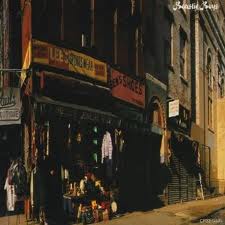
Or let’s put this another way. Think about the Beastie Boys’ “Paul’s Boutique”. The Dust Brothers jacked a lot of samples for that album, most of which they didn’t clear. Did they have the right to do that? Weren’t they just being entitled jerks, thinking they could just walk off with other people’s beats?

Of course, you could argue that having access to HBO or manga isn’t like having access to beats. After all, who’s going to make art out of HBO or manga?

The answer is that lots of people might. A video artist might want to use HBO clips in her piece; a writer might want to read a manga translation to inspire fan fiction. For that matter, reviewers or academics might want to write critical pieces about them. If critical writing is creative (and it is) then how philosophically are such writings different from Paul’s Boutique?

The issue here isn’t that all people have the right to steal any art they want. Rather, the point is, again, that the language of “rights” is a poor way to think about society’s investment in the availability of art.

I think it might be more useful to think of copyright in terms of competing interests. Society has an interest in protecting individual creator monopolies in copyright. It also has an interest in allowing other people access to those creations.

We try to balance those interests in various ways. Currently, we do it by having really restrictive copyright laws foisted on us by our corporate overlords…and rampant and easy piracy made available by the internets. This is not an ideal system in any sense and for many reasons. But would it really be improved if consumers all at once and instantly accepted that they had no right to art, and ceased their infernal piracy? If by “would it be improved?” you mean “would it encourage more creativity?” — then, no, I don’t think that the end of piracy, mash-ups, fan fiction, and more restricted access to art would give us a better, or for that matter a more moral, creative landscape.

I want artists to get compensated for their work. But I wish we could find a way to do that which recognized that society has an interest in making art available to everybody — not least because that “everybody” includes creators.