Voices from the Archives: Miriam Libicki on Lost Girls

Cartoonist Miriam Libicki wrote for HU for a while…but this comment was from before she’d come on board. She’s commenting here on my review of Alan Moore and Melinda Gebbie’s Lost Girls. I’ve left punctuation as is.

wow. i was reluctant to read another review of yours, cause so often they just make me feel lousy. but you were so spot on on the points of lost girls which disappointed me, some of which i hadn’t realized myself.

i went in expecting to like it, as moore is responsible for one of my most reliable sexual fantasies (invisible man ravishing his way through the girls’ school? hot. & i never thought of it before, but it could be seen as a perfect mixture of a common hetero male fantasy (lots of sex with lots of interchangeable nubile young chix) & a common hetero female fantasy (sex with a faceless/invisible partner, so that it is all about your body & sensations)), but i was vaguely annoyed &… bored through lost girls, a lot more often then i was turned on.

i knew some of what i didn’t like was the interchangeability of all the parts, & the fact that the characters were so secondary to their sex scenes. i didn’t put my finger on the “women’s porn is about relationships” (to totally overgeneralize), but i think it’s true.

i don’t read romance novels, cause the ones i was exposed to were badly written & had gender roles that were distasteful to me. i am occasionally & guiltily a big sucker for chick-flicks of the romantic comedy type, & i’ve really enjoyed some slash fic.

much of slash fic is about relationships. even if it’s gonzo fucking, the fact that you’re supposed to know who the characters are & how they interact in canon, makes it emotional. & my favourite slash author happens to be a sexually frustrated lesbian, whose stories are all about straight guys longing with great longing for their straight best friends.

so i think you’re also right, & i hadn’t considered before, that unrequited longing is a big turn on (for women, or at least women who are me). that’s why i started off really liking alice, when she seemed like an elderly dyke who could only look at young women & verbally seduce herself. when she started having sex with everything, she became a lot more boring.

the lecturing got me down, too, but it wasn’t as frustrating as why i was so often bored by the sex stuff (yes, it was pretty male-y in the way that penetrative sex was the only sex worth having… i actually dig girl-on-girl, but, you know, more of the dykes to watch out for variety). now i feel like i understand it all better.

so after all that tmi, thanks!


Nothing Special

The monk Tao-hsin was walking in the forest with the sage Fa-yung, who lived alone in the temple on Mount Niu-t’ou, and was so holy that the birds used to bring him offerings of flowers. As the two men were walking, the roar of a wild animal sounded nearby, making Tao-hsin jump frightfully. Fa-yung said, “I see it is still with you!” (attachment to the Earthly illusion). Later on, the two were sitting on two stones next to the temple when Fa-yung went inside to fetch the tea. While he was gone, Tao-hsin wrote the Chinese character for Buddha on the rock where Fa-yung had been sitting. When Fa-yung returned to sit down again, he saw the sacred Name written there and hesitated to sit. “I see,” said Tao-hsin, “it is still with you!” And thus Fa-yung became fully awakened…and the birds brought flowers no more.

__________________

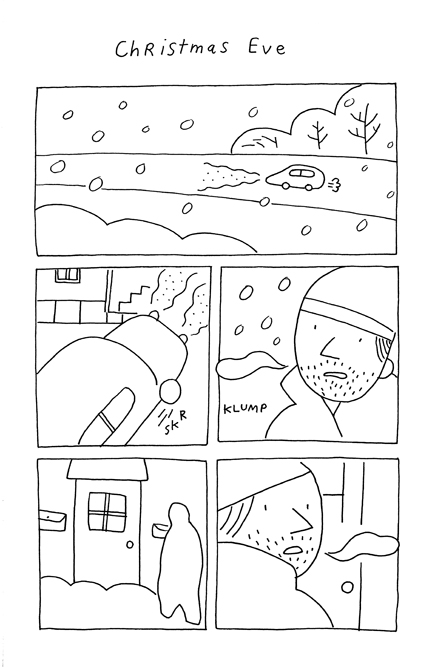
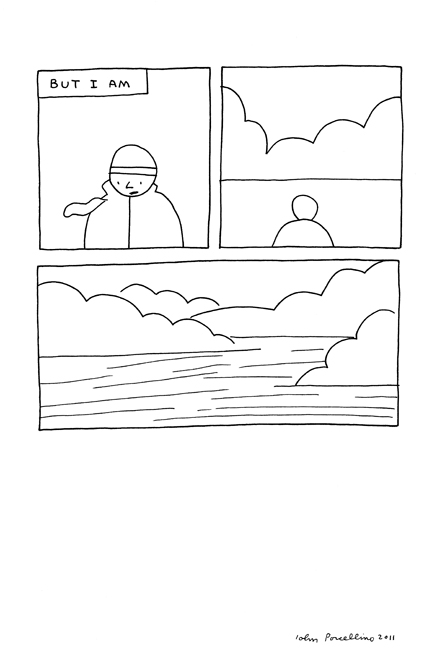
The thing I first noticed about John Porcellino’s short comic, “Christmas Eve” is the breathing.

Because of the simplicity of his style — unvaried line weights, the lack of shading — the bulbous breath hanging in the air is as solid as everything else around it. It could be a distended snow flake, or some sort of alien critter curiously contemplating the (no more or less weighty) human nose. In that third panel, it even has an oddly solid sound effect appended to it — the “klump” is probably supposed to be a car door closing, but it could just as easily be the sound of the tadpole-like-breath bumping up against the panel border. Snow, air, beard-stubble, panel gutter — flesh or vapor, diegetic or un, everything exists in the same flat, empty whiteness, teetering on that thin line between something and nothing.

“Christmas Eve” wanders or drifts back and forth across that line repeatedly. The shapeless blob of breath seems, in that bottom left panel, to actually become the human figure, or the human figure becomes it. Breath out, and breath is gone; breath in and breath is you, breath out and the breath is gone. The self is lost, and found, and lost…or possibly found and lost and found. Drawing is breathing is creation, as long as what’s created is almost indistinguishable from nothing being created, or from nothing being erased.

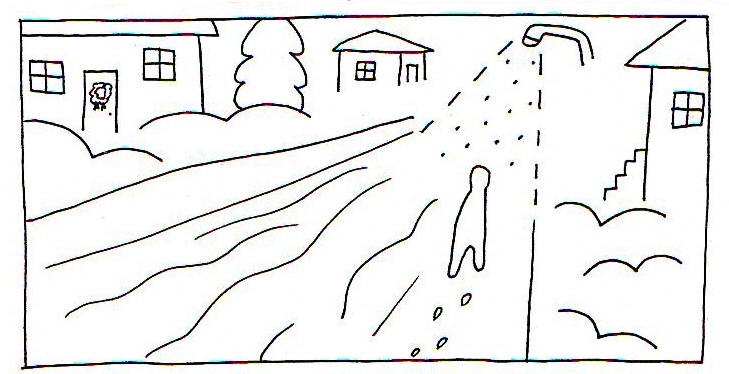
Domingos Isabelinho highlighted this drawing in an earlier post, and it’s still my favorite in the comic; I love the way the lampost just ends, as if Porcellino got tired of drawing it…and the way the snow looks like its embodied light, falling in grainy dots only a little smaller than the footprints below. I think the wavery lines in the middle are supposed to be drifts of snow…but they also read as the lamplight, so what you see and how you see it, perception and perceived, merge into one.

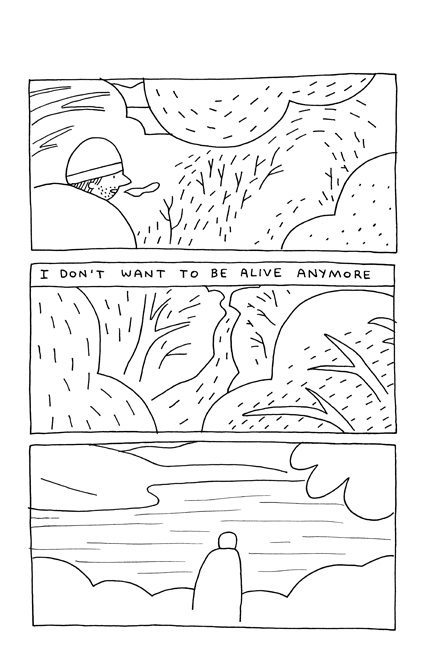
On the penultimate page of the six page story, Porcellino writes the first words of the story: “I don’t want to be alive anymore”. At first I took this as a melodramatic suicide wish, which was irritating…and also seemed to clash with the comics gentle, almost devotional quiet. Thinking about it, though, it seems like it’s less a wish for death than a statement about his relationship to life. Wanting floats off like breath — or maybe the self is the breath that leaves wanting behind. In either case, what goes is desire and what’s left is the self as a kind of gift, that returns after being let go.

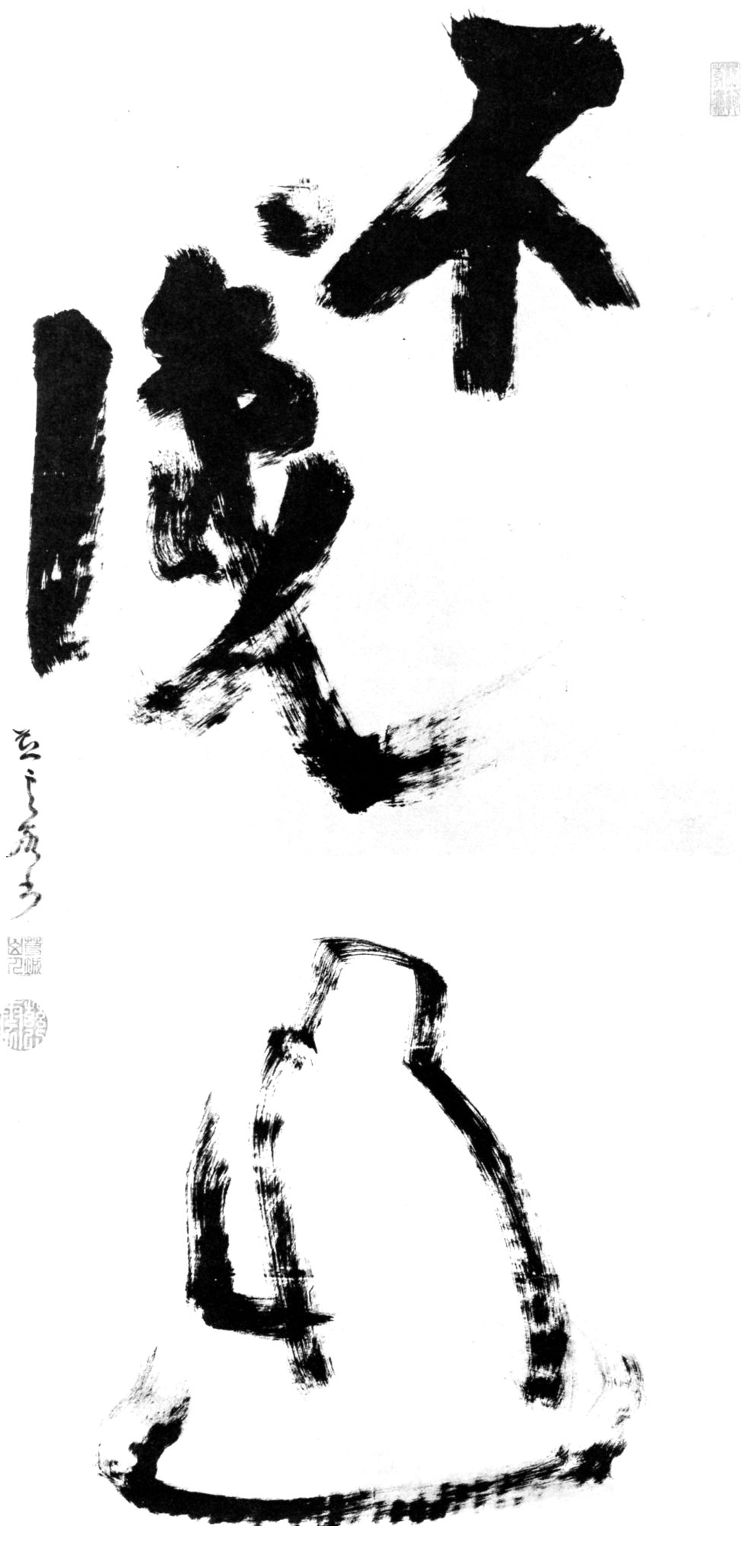
Porcellino seems, with probable intent, to be teetering on the verge of Zen. His wavery outline figures even recall Zen calligraphy, like this drawing by Buddhist priest Jiun Onko.

I’m not sure the comparison necessarily redounds to Porcellino’s credit, unfortunately. Onko’s brush strokes provide a dramatic, intense sense of creation as process which Porcellino’s figures can’t approach, for one thing. And, perhaps more importantly, the single image, summoning something out of nothing, with that one calligraphic statement (which means “Not Know”) seems to resonate much more powerfully, and simultaneously more subtly, than Porcellino’s short but still somehow too long narrative. Really, everything Porcellino had to say is on that first page, or in that image with the lamp. When he gets to the end, and we’re seeing man-looking-at-clouds we start to verge on treacly transcendence and Hollywood clichés. The moment’s too big and too small at the same time, the impetus for narrative closure and meaning overwhelming the earlier pages’ careful not-knowing.

On the other hand, though…there is something very Zen about art that fails in being Zen. Onko’s drawing is almost too good. I think it’s arguably one of the greatest comics ever, actually, but the very greatness perhaps makes it less Zen-like — it’s so holy that the birds flock around it.

Porcellino, on the other hand, flirts with greatness, but ends instead with comfortable banality. It is just a typical story about taking a walk on Christmas Eve, after all. The breath is just breath, the light is just light. There’s nothing special, and the blank space at the bottom of the last page is just there because Porcellino didn’t have enough story to fill it.

______________


The Snow Man
Wallace Stevens

One must have a mind of winter
To regard the frost and the boughs
Of the pine-trees crusted with snow;

And have been cold a long time
To behold the junipers shagged with ice,
The spruces rough in the distant glitter

Of the January sun; and not to think
Of any misery in the sound of the wind,
In the sound of a few leaves,

Which is the sound of the land
Full of the same wind
That is blowing in the same bare place

For the listener, who listens in the snow,
And, nothing himself, beholds
Nothing that is not there and the nothing that is.


On Second Thought, I Really Don’t Like Wonder Woman, Part 2

The entire Marston/Peter Wonder Woman roundtable index is here.
________________

In Part 1, I laid out some problems with Marston’s notions of the “good guys,” the women in power, i.e., Wonder Woman and the Amazons. In Part 2, I first look at a more fully realized female ruler in a mythical realm, then move on to consider some women of fantasy who resist the dominant power.

Wonder Woman and the Queen Regent
Since we’re talking fantasies, I prefer my castrating terrorism to be much more directly and, you could say, honestly horrific. Don’t pretend that the Amazonians aren’t another instance of a power fantasy with subjugation of the individual will being the goal — that it’s not just as frightening an idea as any other fascistic dream — simply because it’s gynocentric.

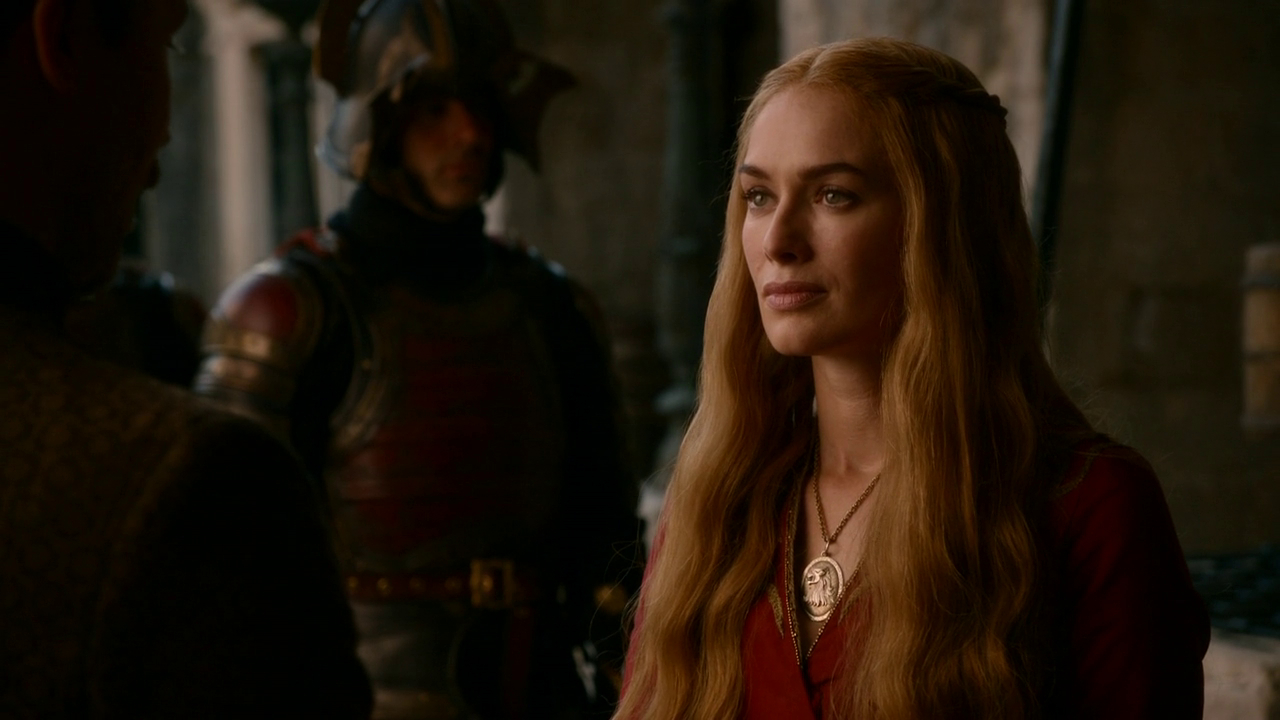
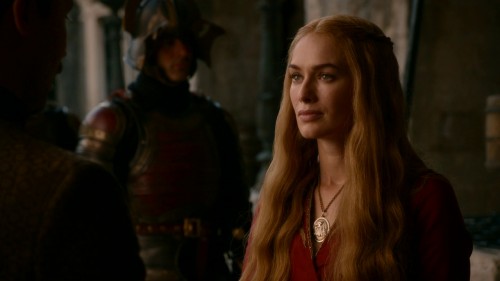
As a corrective to Marston’s gendered (I’d say sexist) approach, consider Queen Cersei Lannister from George R. R. Martin’s A Song of Ice and Fire and its TV adaptation, Game of Thrones. As she constantly reminds us, this is a patriarchal society, so she was born with a certain chromosomal disadvantage. Her twin brother Jaime assumes the propriety of the patriarchal rules, whereas femininity requires her to study them for loopholes. Like her mythological namesake, she turns men into pigs – albeit, not through witchcraft, but by her own sexual allure and ability to manipulate the rules of the dynastic game. Camille Paglia could’ve been thinking of Cersei when she wrote: “Man has traditionally ruled the social sphere; feminism tells him to move over and share his power. But woman rules the sexual and emotional sphere, and there she has no rival.” [p. 31, Paglia] As the best femme fatale in recent memory, she uses what the gods gave her to manipulate those (men and women) around her into achieving her will (she removed her husband, King Robert, for one). She’s as sexualized, duplicitous and dangerous as her predecessors in film noir, but with a different emphasis.

Martin takes a lot of care in establishing the difference between the way patriarchy imagines itself and the way it actually operates. One’s rule is established in the last instance by convincing enough people to believe in it. Those who really serve the ideology as it presents itself – the patriarchal image as a code of honor, honesty, self-sacrifice and all the “manly” virtues – tend to get their heads handed to them, like Ned Stark. But ideology requires for its continuance that we still act as if we believe in it. Cersei would have no power if the system collapsed, so she has to play a role that’s coded as feminine. To paraphrase her dwarfish younger brother, Tyrion, it’s better to be a rich cripple than a poor one. At an even greater genetic disadvantage than his sister, he, too, must be deceitful in order to make the system work for him. Thus, contrary to film noir, deceit isn’t really a feminine trait (any more than it’s a matter of dwarfishness), but a requirement of anyone who’s coded as other in a system that grants one power. Power is androgynous; any gender encoding is ultimately arbitrary even though it still has a practical effect on access. In Season 2 (Episode 1), when Littlefinger attempts to assert power over Cersei with knowledge that her son, King Joffrey, isn’t the “rightful” heir to the throne (being borne of an illicit affair between Cersei and her twin), the Queen Regent provides the lesson that, however she might’ve come by her influential position, “power is power.” As with knowledge, masculinity shouldn’t be confused with power itself.

Wonder Woman and the Final Girl
In keeping with the broadly stated alignment of masochism/submission/feminine and sadism/domination/masculine that’s the basis for gaze theory (the camera being a sadistic male voyeur that dominates the female spectacle), Wonder Woman is more the former than the latter. Although Wonder Woman regularly uses dominating tactics (the lasso, fisticuffs) they’re always reactive (the villain strikes first). Like Billy Jack, she wants to love, not fight, but she’ll kick your ass if you force her. There’s no question why the Saturnic girls hate Paradise Island so much; it’s clearly better than their home. [p. 4] We have nothing to fear from the Amazonian matriarchy, because it’s as submissive as we’re supposed to be. They only use psychic domination on caricatural villains. This is your basic superhero moral gobbledygook, only encoded as feminist. Azzarello got something right in his interpretation: if this were a rape/revenge movie, the Amazonians wouldn’t be the avenging party. My sympathies lie with Eviless. [p. 9]

Marston might be promoting a submissive morality, but there’s not much of a masochistic aesthetic to along with it. Wonder Woman is the dominating will. When she’s bound, it’s always wrong. The reader is to identify with her regaining control, making others submit. Similarly, Wonder Woman does a lot of hitting, but is rarely hit herself. (I count only once: Giganta nails her with a club. [p. 44]) Therefore, this is a relatively painless masochism. And that’s basically Marston’s ideological sleight-of-hand, selling submission as a pleasurable form of domination. A boy doesn’t have to fear the loss of control (“castration anxiety”), because he’s identifying with the powerful heroine who’s supposed to be in control while she pays lip service to surrendering one’s self. Princess Diana is little more than a superpowered Phyllis Schlafly redirected at masculinity.

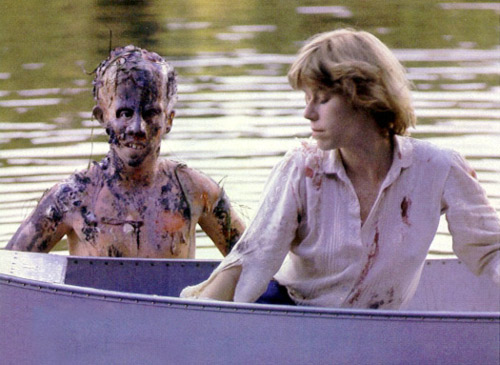
Rather than roll over for power (give up the “phallus”), I’d rather see boys (and girls) identifying with Carol Clover’s “Final Girl” in slasher films, the last remaining character to face off against the monster (e.g., Halloween’s Jamie Lee Curtis):

If the act of horror spectatorship is registered as a “feminine” experience — that the shock effects induce bodily sensations in the viewer answering the fear and pain of the screen victim — the charge of masochism is underlined. [Not that the male viewer doesn’t also take on a “sadistic” identification with the killer, she adds.] It is only to suggest that in the Final Girl sequence his empathy with what the films define as the female posture is fully engaged, and further, because this sequence is inevitably the central one in any given film, that the viewing experience hinges on the emotional assumption of the feminine posture. [p. 105, Clover]

Clover refuses to call identification with the Final Girl feminist, because of the many reductive psychoanalytic assumptions that have been a hallmark of feminist film theory: she is “a male surrogate in things oedipal, a homoerotic stand-in, the audience incorporate; to the extent she ‘means’ girl at all, it is only for purposes of signifying phallic lack, and even that meaning is nullified in the final scenes [where she picks up a ‘phallic tool’ and inserts it into the killer].” [p. 98] This essay is long enough already, so I’ll resist the urge to debate the issue of just how masculine the Final Girl is or whether she’s a good feminist role model. Clover sees androgyny as a problem, whereas I agree with Gramstad that it’s the goal. But irrespective of which position one might take, the Final Girl is certainly heroic: with great resolve and ingenuity, she resists the urge to give into a nearly unstoppable malevolent force that often is in obedience to a “loving” maternal authority (the dead mother’s voice). Against matriarchal or patriarchal domination, my heroes fight for self-determination.

Wonder Woman and the Femme Fatale
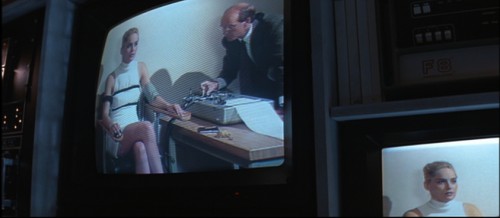
The femme fatale […] tells the truth about sexual relations. It, in fact, is about male fear of Woman, not male hatred of Woman. The femme fatale shows in her supernatural kind of power that Woman is ultimately unknowable, not only to man, but to herself. Most feminists today, obsessed with success and the career world don’t want to think that Woman has any special connection to nature by virtue of her reproductive apparatus. I myself feel that when the femme fatale is thrown out of the canon of modern popular culture, we lose an enormous amount of the voltage between the sexes that made some of the great films so powerful in the studio era. The origins of the femme fatale are going all the way back, really, to pre-history, the goddess cults of antiquity. We have myths like that of Medusa [and] the succubus […]. There are just so many examples of these images world wide that I have to ask how could they possibly be coming from false social indoctrination? Surely these vampire motifs are being generated automatically in culture after culture around the world by the basic facts of male-female anatomy. That is, that every time a man has sex with a woman he is approaching, again, his site of origins. Therefore, there is always subconsciously a fear that as he puts his essence (as a sexual being), his erect member, into the body of a woman … why, she might take it and he might never get it back again. Or he might, by some weird, nightmarish process, begin to shrink down to a baby again and be re-absorbed into the feminine matrix. [Camille Paglia, approximately 1:40:00 into her audio commentary for the Basic Instinct dvd]

Safe to say, that’s not the majority opinion on the femme fatale among feminists. Nor do too many claim Paul Verhoeven and Joe Eszterhas’s Basic Instinct as their favorite movie – at least, Paglia’s the only one I could find. Nevertheless, I think she’s right (and she was the premier counter-intuitive intellectual culture-muncher until Slavoj Žižek cock-blocked her). The standard line of thought agrees that the femme fatale is the dangerous representation of sexual feminine mystique, but objects that it exists as spectacle for, and to be put into its narrative place by, the sadistic gaze: the willfully transgressing female, exerting her independence (frequently depicted as criminal), is brought under control by the dominating male power whereby feminine chaos is restored to patriarchal order. Likewise, in Wonder Woman #28, Cheetah, Eviless and the other femme fatales, who dare assert their freedom, have to be captured, punished and possibly reprogrammed by the dominant order (matriarchy or the mother’s voice in place of the patriarchy). Generally dismissive of the objectifying male gaze [1], Paglia chooses to focus on the fact that where there’s fear of female power, there is an acknowledgement of that power. As she expresses in “No Law in the Arena” (a personal manifesto), the code of Amazonism is that this power should be used in resisting the suppression of woman’s free will. [p. 40, Paglia] No wonder her admiration for Sharon Stone’s Catherine. The character heads her own little Amazonian secret society, but would not be welcome on Paradise Island.

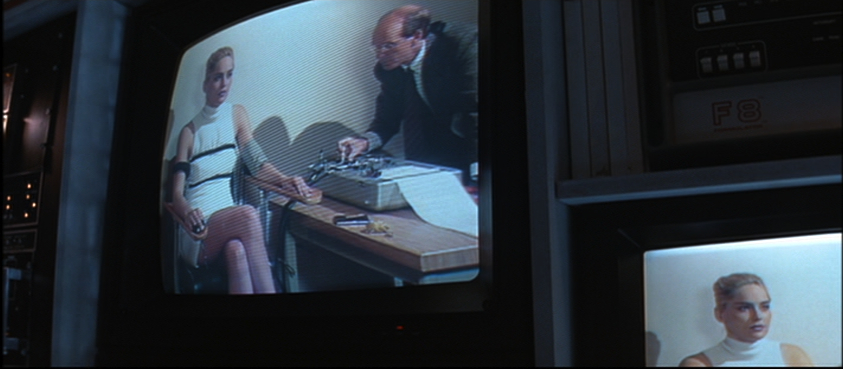
Catherine is Barbara Creed’s monstrous-feminine (the abject representation of the pre-Oedipal mother)[2] in the role of the serial killer. She is more symbolic of her gender than her androgynous brethren are theirs (e.g., Jason, Norman). Her vortical vagina is the locus of her power, devouring all proximal sexual energy to be re-directed as she desires. Just the sight of it turns the lawful masculine order into a sweaty mess. Verhoeven seems to have filmed her with gaze theory in mind. She controls when and where the masochistic hero, Nick (Michael Douglas), sees her naked. And if she’s being spied on voyeuristically, she directly returns the gaze with a cold, calculating stare. Nor does a panoptical vantage point save the voyeur from her gaze. Loving the penis, her weapon of choice isn’t the castrating blade, but a true fetishistic analog, the ice pick. And what’s the first thing to be penetrated in close up? The male eye.

Basic Instinct is one of the purest expressions of the masochistic aesthetic’s double bind in film noir:

If the male spectator identifies with the masochistic male character, he is aligned with a position usually assigned to the female. If he rejects identification with this position, one alternative is to identify with the position of power: the female who inflicts pain. In either case, the male spectator assumes a position associated with the female. In the former, he identified with the culturally assigned feminine characteristics exhibited by the male within the masochistic scenario; in the latter, he identifies with the powerful female who represents the mother of pre-Oedipal life and the primary identification. [Gaylyn Studlar, quoted in Williams, p. 131]

Catherine is the cool figure one wants to identify with and fantasize about. By telling the story from Nick’s perspective as the investigating police detective, she is kept mysterious and the viewer is forced to identify with his pathetic, failing attempts at trying to maintain some semblance of machismo control. One wants to be punished by her for his feeble-minded conformity. Her sadistic control is a fantasy of resistance against both social and cinematic domination. In this way, Basic Instinct is in the long line of crime films that use the criminal as a symbol for freedom (e.g., Scarface, Bonnie and Clyde). Catherine does the binding and escapes punishment. Any attempt to contain her, by either the patriarchy’s representative or one of her Amazonian sisters, results in that person’s death and/or psychological obliteration.

I submit that the flaunting of so many characteristics commonly associated with patriarchal cinema makes Basic Instinct feminist, while the androgynous, or trans-gender, identification (sadistically with Catherine, masochistically with Nick) serves as a critique of the more reductive versions of gaze theory. As a celebration of Catherine, the film provides a counter-narrative to Wonder Woman, where Villainy Inc. is given its due as the proper (anti-)heroes of the story. If you can’t resist the lasso, as Catherine does the polygraph, then make it serve the resistance.

Conclusion

I went into the Marston’s last issue figuring I’d be bored, and came out with a newfound appreciation of just how ideologically noxious a well-intentioned, goofy superhero book could be. He evidently lived in a world of inverted qualia. The book remains a real chore to get through, but it’s always fascinating to me when a liberal finds totalitarianism a utopian expression of his or her core values, feminist or otherwise. Maybe Wonder Woman will inspire some little girl to shatter dictatorship’s glass ceiling when she grows up. That would be real progress.


Footnotes:

[1] “[S]exual objectification is characteristically human and indistinguishable from the art impulse.” [p. 62, Paglia] To which, I say, “amen, sister.”

[2] Creed has an entire book devoted to the subject, The Monstrous-Feminine: Film, Feminism, Psychoanalysis, but I’ve only read her analysis of Ridley Scott’s Alien in “Horror and the Monstrous-Feminine: An Imaginary Abjection.” Like the general consensus on the femme fatale, this representation would seem to only serve the patriarchy:

This, I would argue is also the central ideological project of the popular horror film – purification of the abject through a [quoting Julia Kristeva] “descent into the foundations of the symbolic construct.” [p. 46, Creed]

Although, I could see a pro-feminist interpretation of Lars von Trier’s Antichrist using this approach pretty much writing itself.


References:

Alder, Ken, “A Social History of Untruth: Lie Detection and Trust in Twentieth-Century America” (2002), a .pdf download from author’s website.

Clover, Carol J., “Her Body, Himself: Gender in the Slasher Film” (1987/1996) in The Dread of Difference: Gender and the Horror Film, Barry Keith Grant (Ed.): p. 66-113.

Cox, John, “The Evolution of Surveillance: Security Comes with a Cost” (2009) on the author’s website.

Creed, Barbara, “Horror and the Monstrous-Feminine: An Imaginary Abjection” (1986/1996) in The Dread of Difference: Gender and the Horror Film, Barry Keith Grant (Ed.): p. 35-65.

Gramstad, Thomas, “The Female Hero: A Randian-Feminist Synthesis” (1999) on POP Culture: Premises of Post-Objectivism.

Jones, Gerard, Men of Tomorrow: Geeks, Gangsters and the Birth of the Comic Book (2004)

Mulvey, Laura, “Visual Pleasure and Narrative Cinema” (1975/1986) in Narrative, Apparatus, Ideology, Philip Rosen (Ed.): p. 198-209.

Paglia, Camille, “No Law in the Arena” (1994)  in Vamps & Tramps: p. 17-94.

Solanas, Valerie, S.C.U.M. Manifesto (1968) on UbuWeb.

Williams, Tony, “Phantom Lady, Cornell Woolrich, and the Masochistic Aesthetic” (1988/2003) in Film Noir Reader (7th Edition), Alain Silver & James Ursini (Eds.): p. 129-143.

Wood, Robin, “Fascism/Cinema” (1998) in Sexual Politics & Narrative Film: Hollywood and Beyond: p. 13-28.

What Can Cigarettes Teach Us About Comics?

About a year ago, the U.S. Food and Drug Administration unveiled a series of nine large cigarette package labels that add vivid images to existing text-only warnings about the dangers of smoking. These new “enhanced warning labels” include pictures of corpses, a diseased mouth, lungs, and throat, and infants threatened by second-hand smoke followed by phrases such as “Cigarettes cause cancer” or “Smoking can kill you” and an 800 number for help.

The labeling system, part of the Family Smoking Preventing and Tobacco Control Act of 2009, was to go into effect this September until a group of tobacco companies sued to block the requirement. While one federal judge ruled earlier this year that the warnings violated the free speech of the cigarette makers and granted a preliminary injunction, an appeals court in a related case disagreed, making it likely that the issue will end up before the U.S. Supreme Court.

I was listening to a report about the ongoing case on NPR two weeks ago and I was particularly struck by the kind of language that the judges, federal officials, anti-smoking advocates, and constitutional experts used to describe the images and their impact on consumers.

“It’s going beyond I think what is necessary,” says David Hudson, a scholar at the First Amendment Center in Nashville, Tenn. “It’s just so in your face, so graphic, these images — it’s just simply too much.”

[…]

“The picture of somebody that is dying from tobacco can be an accurate representation of the health effects of smoking, even if it evokes an emotional reaction,” [Matt Myers, from the Campaign for Tobacco Free Kids] says. (NPR)

How do we go about weighing what is accurate and emotional when it comes to the information that these images convey? And how do we decode a sight that can’t be put into words because it’s just simply too much? I can’t help but think that the Supreme Court should call Charles Hatfield to testify about these very questions, but until then…it might be useful to consider how comics studies might benefit from a discussion about cigarette warning labels.

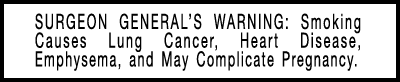
For one thing, the issue allows us to think more carefully about how assumed notions of perceived and received images operate in practice. The news reports about the labels consistently highlight public officials, corporations, and advocacy groups in the act of measuring qualitative differences between this:

 
And this:


Confronted with the new labels, these sound bites and legal opinions appear to revolve around concerns over visibility, accuracy, and provocation: how we see the images, how we interpret them,and how they make us feel.


On Visibility: Thomas Glynn with the American Cancer Society refers to the old labels as “invisible” and according to CNN, “people have become immune and don’t really ‘see’ them any more.” Other FDA officials express the hope that more visible warnings might counter the tobacco’s industry’s well-funded efforts to downplay the harmful effects of cigarette addiction through colorful ads of their own. The concerns on both sides of the issue bring to mind a number of strategies that comic book writers and artists deploy to maintain the attention of readers and to convey subtle nuances of meaning. But as the public becomes exposed to the cigarette warnings, couldn’t even the novelty of the increasingly graphic portrayals reach a new tolerance threshold?

On Accuracy:In deciding matters of constitutional freedom, the district court judge that blocked the labels was less concerned with matters of perception and sustained attention, and more troubled by the way the images appeared to cross the line between “information” and “advocacy.” Judge Richard Leon wrote that, “the Government fails to convey any factual information supported by evidence about the actual health consequences of smoking through its use of these graphic images.” The image of a body on an autopsy table, meant to represent the 443,000 deaths caused by tobacco, left too much room for interpretation, claimed the judge. (NPR) One wonders if a similar logic could be applied to the verb cause in the text-only label that declares: “Smoking causes lung cancer, heart disease…” Could we scrutinize the different variables and contingencies that inform the FDA’s word choice here, or do words discourage us from making the kind of assumptions that images do?

On Provocation: The tobacco companies defend their legal right to sell cigarettes by arguing that the government labels actually go beyond advocacy to shame. While the word emphysema objectively informs, the image of a lung, brown and marbled with the disease, repulses in ways that project negatively upon the consumer. Consider the statement from cigarette maker R.J. Reynolds:

“The anti-smoking message is not intended to provide information that smokers and potential smokers can consider rationally in weighing the risks and perceived benefits from smoking. Rather, it plainly conveys — through graphic images and designs intended to elicit loathing, disgust, and repulsion — the government’s viewpoint that the risks associated with smoking cigarettes outweigh the pleasure that smokers derive from them and, therefore, that no one should use these lawful products.” (CNN)

Interestingly enough, the appeals court panel that rejected this view also commented on the impact of the graphics, “finding that the fact that the specific images might trigger disgust does not make the requirement unconstitutional” (Huffington Post). I can’t help but think of the “severed head exchange” between EC Comics publisher Bill Gaines and Senator Kefauver in the 1954 Senate Hearings on Juvenile Delinquency when I read about judicial decisions that distinguish between perceived levels of disgust.

Ultimately, each group brings a different set of investments to the debate over the cigarette labels in ways that reveal fascinating insight into how words and images are privileged. Ironically, the fact that the new labels contain both pictures and text is often overlooked; each warning is dependent on the other, as well as the packaging, to convey the risks and pleasures of the product inside. (It is also worth noting that not all the new labels are photographs, at least one is a comic art illustration of a premature infant.) How does the interplay of visual and verbal elements in comics help us to think through the debate over enhanced cigarette warning labels?
___________
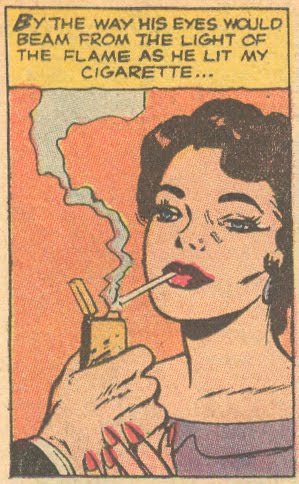
Cross posted at “Pencil Page Page.” Comics image above via “Sequential Crush.”

Moby vs. Hill

This first appeared on Comixology.
_________________

Narrative entertainment for guys tends to come in two broad categories.

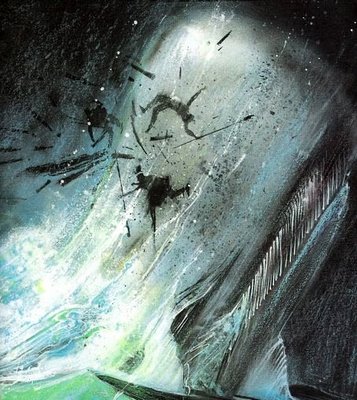
First, you’ve got the type of story epitomized by Moby Dick. Manly men doing manly things, almost entirely with each other. Guys lolling about under the covers together and comparing tattoos, or holding hands under the open sky as they wade through whale blubber. These are sweaty, hairy, deep-throated narratives; narratives red in tooth and claw; narratives of man vs. man, man vs. nature, and man vs. his own body odor; narratives where, in short, every chromosome that matters ends in Y.

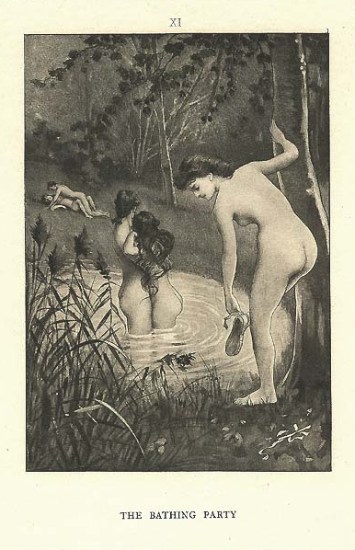
Second, you’ve got stories like Fanny Hill. In these tales, male characters are present, but secondary. What really matters is some vivacious, voluptuous, double X, into whose mysterious consciousness and orifices the reader and writer together raptly penetrate. Bloody conflict is replaced by fluid congress, silk sheets, perfume, lidded glances, and flesh in various degrees of drapery. The thrill is in knowing women from the inside out; in replacing, possessing, and becoming the object of desire.

I am excessively pleased with these categories, mostly because it allows me to label a wide array of cultural products as either Dick or Fanny. (The Old Man and the Sea — Dick! Breaking the Waves — Fanny! Go on, try it…it’s fun for the whole family!)

Where was I, anyway? Oh, right. In addition to the obvious adolescent satisfactions (Escape from New York — Dick!), I think the hermeneutic is also useful because it allows one to sidestep some of the more tired cultural arguments. For instance, the Dick/Fanny breakdown has little to do with quality or caché. Dick is epitomized equally by Herman Melville and James Bond (the latter of whom sleeps with women only as a strategy to get him closer to the villain, his real object of interest). Fanny, too, has high-brow permutations like Pedro Almodóvar or D.H. Lawrence, and lowbrow ones like Russ Meyer or Bella Loves Jenna.

By the same token, Dick/Fanny does not equate to sexist/feminist. Since Dick and Fanny are categories of male fiction, they both do tend to be sexist for the most part…though there are some exceptions (I think Jack Hill’s Pit Stop is an example of non-sexist Dick; his Swinging Cheerleaders is an example of non-sexist Fanny; you can see a fuller explanation here.) In any case, the point here is that Dick and Fanny don’t have a particular qualitative or moral value attached; one isn’t necessarily better or worse than the other.

Now that we’ve got that all, er, straight, let’s pick up our Dick and shift over our Fanny, and take a look at comics, since that’s supposed to be what we’re all here for.

American comics are, by and large, written primarily by men, for men. This is true of the mainstream super-hero books; it’s true of the classic underground titles, and it’s true to a somewhat lesser extent of the present-day alternative comics scene as well. (I’m going to ignore newspaper comic strips, which, at the moment, don’t really seem to be written for — or indeed, by — anyone.) So, since they mostly fit in our broad category of male narratives, which American comics can we classify as Fanny and which can we classify as Dick?

There are definitely some Fanny comics out there. Pretty much the entirety of porn qualifies, from Lost Girls to Housewives at Play. A fair bit of Crumb’s stuff is Fanny, as I’m sure he’d be pleased to hear. The Los Bros Hernandez books and Dan Clowes’ Ghost World are also obsessed with female bodies and/or psychology in a way that strongly suggests Fanny. There’s Catwoman, I guess. And then there’s….uh…maybe Chris Ware’s Building Stories? And also, um….

Not a heck of a lot, really. American comics are, as it turns out, not only overwhelmingly male-oriented, but also veritably awash in Dick. All those mainstream super-hero titles with muscle-bound good guy/bad guy pairs obsessing about each other; all those angst-ridden autobio drones whining about their isolated alienation from women, ….it’s all Dick, Dick, Dick all the time. Sure, there’s the occasional willing alterna-chic or preposterously attired superheroine to lend some T&A…but why are they so rarely the fetishized focus of the action? Kick-ass female-lead eye-candy has been a schlock staple in television and movies for the last decade. What’s comics’ problem?

Again, this isn’t necessarily to say that more Fanny would make comics objectively better. There are lots of good Dick cultural products, and bad Fanny can be quite, quite bad. But it does make you wonder. Lots of folks have pointed out that American comics don’t really reach out to women or girls or children — and they don’t, and they’re probably not going to, ever. But even if you accept that the core audience for American comics was, is, and most likely always will be increasingly paunchy guys, it still seems like the offerings are fairly limited.

Minx was doomed from the start, but surely, surely, if your main audience is men, you could produce an R-rated line devoted explicitly to sexploitation-style sleaze and get some of your regulars to buy it? You could even bring back some of the classic genres of 70s cinema; nurse comics, cheerleader comics, women-in-prison comics, rape-revenge comics. Call me a dreamer, but I know in my heart that my fellow comic readers would like Fanny just as much as Dick if they were only given the chance to try it.
 

__________

Illustration credits: Bill Sienkiewicz’s illustration from the Classics Illustrated Moby Dick; Paul Avril, Illustration for a 1908 edition of Fanny Hill

Voices From the Archive: Robert Boyd on TCJ and the Mainstream

Robert Boyd an editor of The Comics Journal, wrote in HU comments about why TCJ was so anti-superhero while he was there.

I was at TCJ in the early 90s and I guess I represented the POV that you speak of as well as anyone. I loathed mainstream comics. I made serious efforts to read the ones people said were good, like Animal Man, and found them terrible. For the most part, I still hate mainstream superhero comics. Gary can answer why he thought about them they way he did, but I think a lot of it was political–they were assembly line product produced by uncaring corporations. But my main complaint was that they weren’t interesting to me. (Obviously I could go deeper than this, but my interest level isn’t all that high…)

But here’s one thing that you have to remember–just how freaking dominant superhero comics were–in sales, of course, but also in visibility. Going to a comic convention was painful–and the certainly was nothing like SPX or TCAF back then. Wizard celebrated the worst artistic values imaginable and was he single largest comics publication (it outsold the comics it covered!) there was a general feeling in the office that they had their media, their conventions, their movies, their stores, etc. TCJ would be for “us”–and it felt like it was the only thing for us.

As someone interested in non-superhero comics, I feel like there is an infrastructure that I can tap into to enhance my enjoyment of these books. I can easily read reviews of just about any comic I want to. I can go to the Brooklyn Comix & Graphics Festival., etc. but in the early 90s, TCJ was my life raft. (one that amazingly helped pay my salary.)

I think this context is important.

And here’s a second lengthy comment.

If a reader didn’t like the editorial position of the Journal, I can understand. After all, magazines can’t be all things to all people. But the accusation of forming a clique seems silly. Let’s say the Comics Journal did cover superhero comics in the early 90s in a more inclusive way. Could you then say that it was ignoring newspaper strips. And if it included newspaper strips, couldn’t it be blames for not covering Japanese and European and Latin American comics more closely? And if it covered them, how can you excuse it for not covering other art forms–instead of just catering to the comics clique. In short, a magazine has to have some kind of focus. Non-mainstream comics was our focus.

Instead of clique, consider the words “constituency” or “market segment.” Magazines have an idea of their ideal reader, and this ideal reader evolves over time. Under editors Greg Baisden, Helena Harvilicz and Frank Young, that ideal reader was someone who had little interest in (and even antipathy for) superheroes. It was someone who liked the comics that were bubbling up from below, from the Xerox machines of the nation (which is why I started my column “Minimalism”). It was a reader who was looking for a new history of comics that was a counter to the then prevailing superhero-centric notion of comics history = “Golden Age” to “Silver Age” to “Bronze Age”. We weren’t totally consistent, and the hostility expressed towards Superhero comics was over-the-top, but since hardly anyone was paying attention to the kinds of comics we LOVED, we felt justified in making them our near-exclusive focus. If in doing so, we were shutting out the super-hero fans, so what–99% of the comics industry was devoted to catering to their tastes already. They had loudly and repeatedly proclaimed they didn’t need the Journal–or alternative comics.

Indeed, the basic feeling of the entire American industry at the time–the shops, the conventions, the distributors, the fan magazines, and most of the fans themselves–was a desire to see us (the people who read and produced and wrote about alternative comics) just go away. Larry Reid had a word for the comics stores that supported us–”The Fantagraphics 50.” Our existence as a publisher and the existence of the comics we liked was utterly precarious and dependent on the Direct Markets stores that for the most part loathed anything remotely alternative(there was no bookstore distribution at that time, really).

There are two ways to deal with that kind of environment. One is the MLK integrationist approach, and the other is the Malcolm X separatist approach. For a relatively few years (the time I was there before Spurge joined up), we went the Malcolm X route. It may have been a mistake, but our feeling was that we didn’t want to join a club full of people who hated our guts.

And in our clumsy way, we published a magazine for people who felt utterly alienated from the mainstream-superhero world. I can’t speak for everyone involved in the Journal at the time, but I think it was a necessary move. We had to build up this alternative art history of comics and stake a claim for all the cartoonists working outside the ridiculous conventions of the mainstream. It lead us into a somewhat extreme position (temporarily, I’d argue), but it helped give space for a lot of non-mainstream talents to develop and receive attention.

The original post by Robert Stanley Martin is here. Robert Boyd’s website is here.
 

Ancient Zen Battle

I wrote this when I was in college about 20 years ago. It’s probably a little earnest by my current standards, but what the hey; we were all young once.
________________________

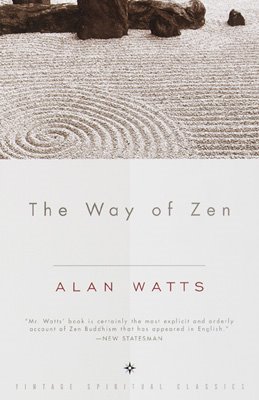
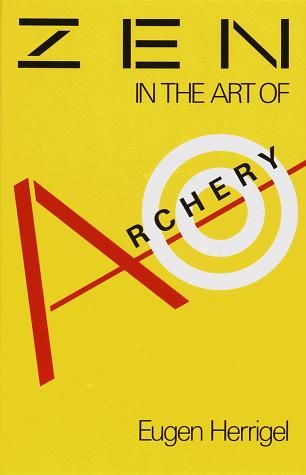
In The Way of Zen,  Alan Watts points out that, in Japan, training in the arts “follows the same essential principles as training in Zen.” In this context, he specifically mentions Eugen Herrigel’s Zen in the Art of Archery  as “the best account of this training thus far available in a Western language.” (195)  Herrigel’s narrative does, in fact, illustrate, in many ways, the Zen philosophies, or, perhaps more correctly, the Zen experience which Watts discusses.  At the same time, however, the ideas which Herrigel derives from his studies differ noticeably, at several crucial points, from those which Watts cites as most characteristic of Zen.  A comparison of the two accounts, then, can both provide insight into Zen Buddhism and illuminate the differing methodologies which Herrigel and Watts employ.

The most basic tenet of Zen, both Watts and Herrigel indicate, is that one should be unselfconscious; should have the ability to cease thinking.  Watts explains that “the mind cannot act without giving up the impossible attempt to control itself beyond a certain point.  It must let go of itself….” (139)  Thus, as Herrigel puts it, one must become “purposeless on purpose.” (33)  Herrigel’s training is, in large part, a technique for overcoming this basic contradiction.  When Herrigel is practicing drawing his bow, his master exhorts him to “Concentrate entirely on your breathing,” so as to perform each action effortlessly, without thought. (21-22)  As Watts points out, “breathing [is]…the process in which control and spontaneity…find their most obvious identity,” and so the concentration on breath is a means of destroying the illusion that it is necessary to think and plan in order to act.(197-8)

The purpose of Zen training, then, is to release the students own mental control over him or herself.  This is often done, Watts suggests, through intensifying the student’s efforts at self-regimentation until the ultimate futility of this rigidity becomes so manifest that it spontaneously drops away.  As the master demands that the student cease controlling himself, the student intensifies his efforts to cease intensifying his efforts, until, as Watts writes, he becomes “totally baffled by everything,” gives up utterly the effort to understand the world around him, and thus begins to act without thought.(166)  This is precisely the process which Herrigel describes.  “Weeks went by,” he writes, “without my advancing a step.  At the same time I discovered that this did not disturb me in the least….I lived from one day to the next….” (52)

For both Watts and Herrigel, the final results of the achievement of self-liberation are, at the least, profound, and, at most, decidedly mystical.  “When every last identification of the Self with some object or concept has ceased,” writes Watts, one enters “the state of consciousness which is called divine, the knowledge of Brahman….represented as the discovery that this world which seemed to be Many is in truth One….” (38)  Herrigel, too,  writes that when he finally shot without thinking, he discovered that “‘Bow, arrow, goal, and ego, all melt into one another, so that I can no longer separate them.  And even the need to separate has gone.'” (61)  Zen, therefore, is both a kind of psychological technique and a religion, both a means of promoting mental health and a way of discovering what Herrigel, especially, refers to as a deeper Truth.

Thus, Herrigel’s description of the experience of his training seems to follow and to demonstrate Watts’ outline of the essential precepts of Zen thought and teaching.  However, there are several difficulties in reconciling the two accounts, partially centering around the fact that, for Watts, Zen’s emphasis on spontaneity and its essentially anti-institutional character makes any effort to teach Zen problematic. (169)  The central point of Zen, Watts contends, “is that in fact we are already in nirvana  — so that to seek nirvana  is the folly of looking for what one has never lost.” (61)  This means, of course, that the attempt to “learn” Zen is, at base, misguided, and that, therefore, Herrigel’s quest is itself a refutation of the object that he seeks.

Supposedly, therefore, when Herrigel “awakens” he should recognize the futility of his search — and this recognition should be apparent throughout his book, since he wrote it, after all, following the completion of his training.  This is not, however, the case.  Instead, Herrigel repeatedly refers to his studies as purposeful, progressing clearly through stages.  “…the breathing,” he writes, “had not of course been practiced for its own sake,”  while the Master himself remarks after his class has successfully drawn their bows that “‘All that you have learned hitherto…was only a preparation for loosing the shot.'” (20-27)  Towards the end of the training the Master even explicitly suggests that his students are headed for a specific destination, commenting that “‘He who has a hundred miles to walk should reckon ninety as half the journey…'” (54)  Watts, on the other hand, insists that “Zen…is a traveling without point….To travel is to be alive, but to get somewhere is to be dead….”(197)

Related to Watts’ emphasis on the futility of searching for Zen is his insistence on the manner in which Taoism, and later Zen, “made Buddhism a possible way of life for human  beings….” (29)  Watts points out that since everyone is already in a state of awakening, Zen has “no need to…drag in religion or spirituality as something over and above life itself.” (152)  To separate the Zen experience from normal everyday life, to create a special “spiritual” realm, is, in fact, diametrically opposed to the very basis of Zen, which recognizes that “‘all duality is falsely imagined.'” (38)  Thus, just as to search for Zen is to conceal that for which one searches, to confine Zen to one portion of one’s life, to suggest that Zen inhabits a realm to the side of the world in which one eats and sleeps, is to eliminate that which one attempts to confine.  This is why when the holy man Fa-yung achieved awakening, the birds no longer brought him flowers, for upon being awakened, he cast off his holiness, and became simply human. (Watts 89-90)

For Herrigel, however, the art of archery, and Zen itself, is a mystical experience, distinctly separate from, and distinctly beautiful in comparison to, the incidents of “normal” life.  Before he began his undertaking of archery, he writes, he “had realized…that there is and can be no other way to mysticism than the way of personal experience and suffering.” (14)  Each of the Zen arts, he insists, “presuppose a spiritual attitude…an attitude which, in its most exalted form, is characteristic of Buddhism and determines the nature of the priestly type of man.” (6)  The study of archery, in fact, separates Herrigel from the rest of the world, for his Master informs him that “when you meet your friends and acquaintances again in your own country:things will no longer harmonize as before.  You will…measure with other measures.” (65) [1]  Similarly, when the Master “gave a few shots with [Herrigel’s] bow, it was as if the bow let itself be drawn…more willingly.” (59-60)

For Herrigel, then, Zen is, seemingly, primarily a religious experience, while Watts is more interested in understanding the philosophical and psychological implications of Zen thought.  Where Herrigel, for instance,  discusses the deep feeling of gratitude which the pupil feels for his teacher, Watts investigates the manner in which Zen uses the master as authority figure in order to create a “formidable archetype” from which the student must free himself. (Herrigel 46, Watts 163)  Thus Herrigel is more concerned with the emotive quality of the relationship, while Watts concentrates on the purpose of the master-pupil contact, and on its effectiveness in provoking “awakening”.

Watts, in other words, is far more objective, and in many ways, therefore, a good deal more convincing in his description of Zen than is Herrigel.  It is difficult to take Herrigel too seriously when he makes such statements as “[The student] must dare to leap into the Origin, so as to live by the Truth and in the Truth….” if only because any mention of “Truth” immediately provokes a large swell of skepticism, at least in the Western student. (81)  Watts, on the other hand, takes care to set forth his own limitations, and to point out the difficulties of discussing a subject which is so vividly linked to experience. (xii)  As a result, one almost automatically begins to judge Herrigel’s work by the standards which Watts constructs.

Yet Zen is, as Watts himself points out, a philosophy which is vehemently opposed to the use of the “critical perspective.” (xiii)  If the central tenet of Zen is an opposition to overthinking, then evaluating that tradition itself is, obviously, self-contradictory.  Watts’ argument that “basic reality, remains spontaneous and ungrasped whether one tries to grasp it or not” is intellectually satisfying, and in itself, powerfully liberating.  But it is difficult, on the basis of such largely theoretical statements, to deny the validity of Herrigel’s first-hand experience, especially given Zen’s emphasis on action over thought.  Ultimately, perhaps, Watts says all that can be said about the Zen tradition, while Herrigel tries, in a manner which may be misguided (though that too, is somewhat difficult to judge) to illuminate portions of that experience which might better be left undiscussed, since verbalizing them seems, at least for Herrigel, to lead to a kind of generalized and unconvincing mysticism.  Nonetheless, to refute the role of Zen in archery because of the limitations of Herrigel’s narrative would be a disservice to Herrigel, to Zen itself, and to Watts, whose brilliant discussion of Zen nonetheless takes pains to remind his readers of the limitations of words in describing and explaining a system which is, at heart, more an experience than a philosophy.


[1]Besides contradicting Watts, this statement is also particularly confusing, since, after all, it seems relatively obvious that, with or without Zen, after spending five or six years in Japan, Herrigel would virtually have to expect that his relationships with his friends and acquaintances would be somewhat changed.