
One of my all time favorite Peanuts panels is from the late 70s. Sally has corralled Snoopy first into helping her scare away bullies at the playground (“Speak softly and carry a beagle,”) and then into terrorizing innocents at the playground (“Speak loudly and carry a beagle.”) In this strip, Sally is stomping off to force some kid out of the sandbox. She thinks Snoopy is right behind her, ready to bark ferociously and run the kid off. But Snoopy, unbeknownst to Sally, suddenly perks up his ears and stares off frame. “My old flame!” he declares, and disappears. Sally’s left to the tender mercies of her unterrorized peers (“How can you speak softly and cary a beagle without a beagle!”) As for Snoopy and his flame…your guess is as good as mine. Was Snoopy just wandering off into one of his own fantasy scenarios? Did he really see a girl beagle from his youth? It’s a mystery. Schulz never followed up on the storyline. Snoopy disappeared from the panel, from the strip, and from the story.
Mezzo and Pirus’ King of the Flies (Part 1: Hallorave)
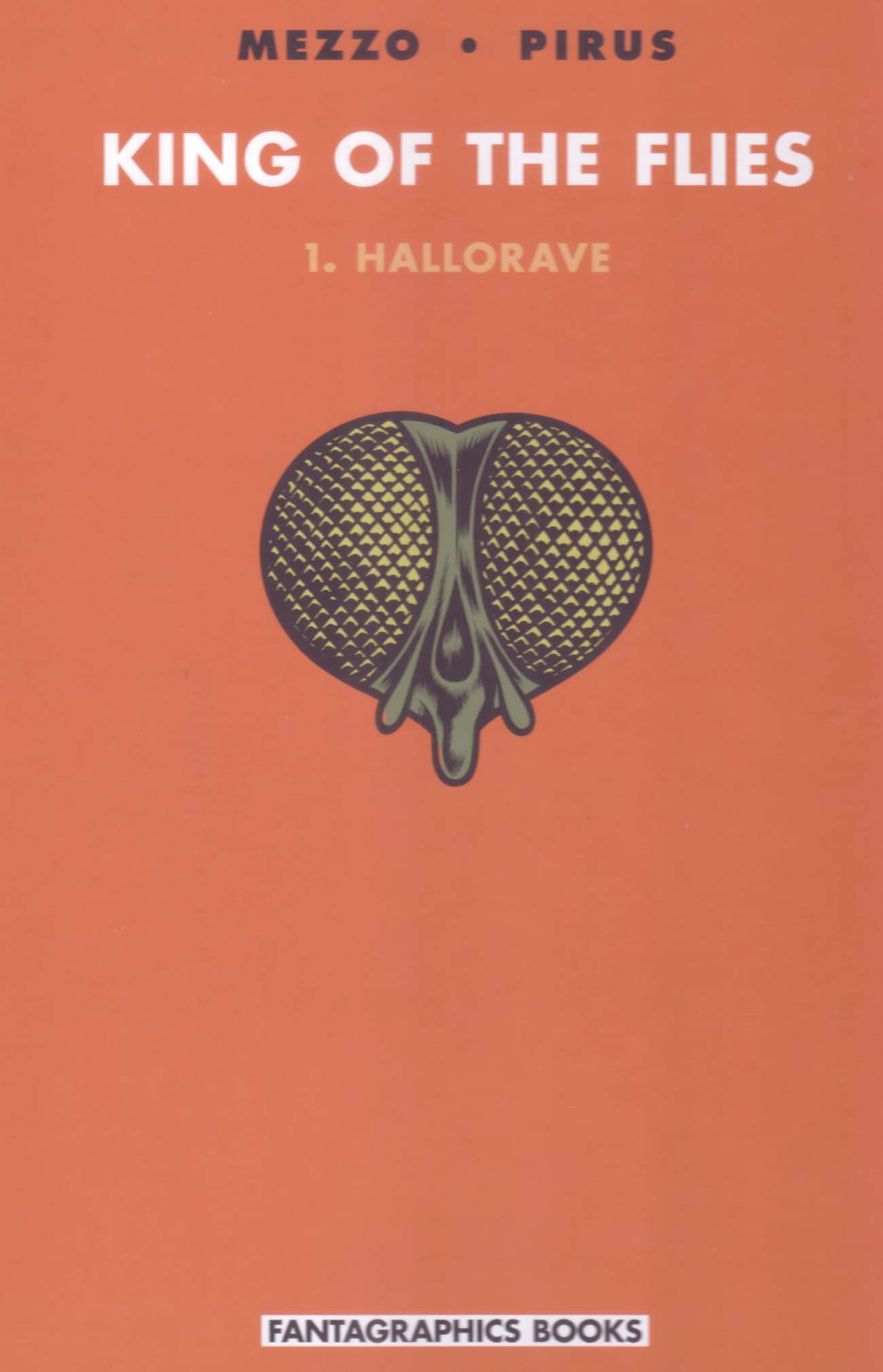
The King of the Flies. A dispossessed punk with a papier-mâché fly head for a costume; infesting a town shrouded in permanent twilight where the only places of worship are cathedral-like malls.
Can’t Fail. Can’t Die. Balding. Can Dance a Little. (The Pointless Inevitability of Hero Fiction)
Hi, everyone, I’m Jason Michelitch, a semi-regular contributor over at Comics Alliance and a longtime-reader/sometime-commenter here at Hooded Utilitarian. Noah kindly invited me to write this guest post for HU, which I’m going to kick off by admitting openly how many times I’ve watched the movie Face/Off, inviting the scorn and dismissal of you fine, educated people. Let’s boogie!
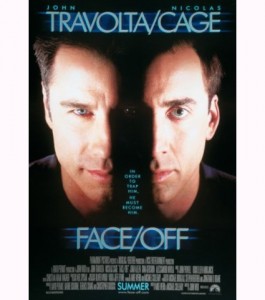
I was watching Face/Off the other day, for maybe the baker’s dozenth time since catching it first run in the theater in ’97, and in the middle of the film, I began to wonder, “Why am I watching this?” I mean, the broad answer was obvious: I love Face/Off. I would watch it anytime. I would watch it right now. But why?
Superheroes in Speedos
[Mildly NSFW]
I spent part of my New Years weekend at my brother’s house, digging through his big box o’ comics and trying to determine which ones were mine. As it turns out, my adolescent self bought every X-Men comic ever published. And I mean all of them, even the Gambit series (and I don’t even like Gambit!). Fortunately, my embarrassment was somewhat diminished when I realized that my brother had even worst taste (lots of early Image Comics). The great find of that evening was the Marvel Swimsuit Special from 1992. Neither of us admits to buying it (I accused him, he accused me, so things go) and I don’t remember ever reading it.

Cover by Marc Silvestri
Toth, Internalized
by James Romberger
Since I am precisely the type of brutally obsessive yet overly sensitive observer that qualifies me to write for The Hooded Utilitarian, I am unable to ignore a few references I have seen online to my “fannish adoration” of the work of genius cartoonist Alex Toth. Answering them also gives me the opportunity to address some critical shortfalls that I have seen in the literature about Toth.
I do feel that Toth’s work is head and shoulders above that of most artists who have worked in the medium thus far. I and many other artists find Toth to be a great teacher. It is instructive to figure out how and why his odd approach works so well. Artists may not see his art in the same way as someone who is not an artist, but there are also many, many non-artists who appreciate the depth of Toth’s skills—and some who do not.
A critique that is often leveled at Toth should be dispensed with. Unfortunately, in order to appreciate his work, one must overlook the quality of the writing in most of the stories he drew. That can be said for every four-color comic book artist that worked with writers. But some seem to blame the artist for this. Even though Toth had higher artistic standards than his contemporaries, he was not any more responsible than they were for the texts they worked with. If not for bad scripts, there would be no Toth comic book art and in fact, there would be no comics at all.
Lies Real Enough to Love
In Andrei Tarkovsky’s 1972 film Solaris the first glimpse we catch of the titular planet is in a film of a film of a film. The pudgily somnolent hero, Kris Kelvin (Donatas Banionis), bores us by being stolidly bored himself as he watches the film of the testimony of Henri Burton (Vladislav Dvorzhetsky), a space pilot who way back when saw a giant space baby in the fog above the ocean of Solaris — a giant space baby that was not, we repeat not, cribbed from 2001, damn it, we swear. Young Burton in the film stutters and drones his way through a foggy mire of drab description while an older, balder Burton fusses and twitches, occasionally skipping ahead as if to taunt us with our inability to do the same (or, in the era of DVDs, to goad us into doing so.) Eventually the young Burton in the film cues another film, on which is no baby, but just more foggy mire. Young Burton stutters, old Burton twitches, Kelvin somnolents, and the film ends, and the film ends, and the film trudges wearily on.

Utilitarian Review 1/8/11
On HU
Erica Friedman talked about her love of manga audio drama CDs.
Robert Boyd tried to figure out why Jaime Hernandez’s original art sells for the prices it sells at.
The mysterious internet troll Cough Syrup talked about Jason Overby and the Cocaine Modem.
Caroline Small and I discussed Gilbert Hernandez’s Human Diastrophism.
I looked at one panel from Ariel Schrag’s Likewise.
Vom Marlowe wished there weren’t so many zombies.
I talked about philosophy and film.
Next week: James Romberger looks at the personal reasons he is so drawn to the work of Alex Toth and Jack Kirby; Ng Suat Tong looks at Mezzo and Pirius’ King of the Flies; I look at the films in Solaris; Kinukitty on yaoi and more.
Utilitarians Everywhere
At Splice Today I the Lovers and the tyranny of best of lists.
Not that I’ve anything against Kanye; I still haven’t heard that album, but “Monster” is a great song. More power to him and Nicki. It’s churlish to sneer at late capitalism when you’re mired up to your neck in late capitalism. The Internet that lets me instantly download albums by Sarah Vaughn or Esoteric is the Internet that makes it possible for everyone on earth to simultaneously speak Robyn’s name at the end of the year. For that matter, I love Robyn, just like I’m supposed to. If the world’s at your fingertips, then you shouldn’t be upset if you can’t detach your fingertips from the world.
At the Chicago Reader I have a brief blurb about an MCA exhibit focused on Chicago comics artists.
At Madeloud I review a new album by French black metal group Murmuure.
Other Links
The big news around these parts is the big new blog at tcj.com. The Panelists include Jared Gardner, Isaac Cates, Derik Badman, Charles Hatfield, Craig Fischer and Alex Boney. They’ve had a great first week, so go over there and check them out if you haven’t already.
Tom Spurgeon has a fascinating interview with Dirk Deppey over at the Comics Reporter.
Michelle Smith and Melinda Beasi have a fun column about visual duds.