Kids Vs. School

This first ran on Splice Today.
_________

I send my son to a private Waldorf school. This makes me one of the bad parents Allison Benedikt singled out in a controversial post at Slate recently, in which she excoriated (and/or trolled, as Mary McCarthy said) parents of private school kids. According to Benedikt, “[I]f every single parent sent every single child to public school, public schools would improve.” Therefore, folks like me are morally evil for sending our kids to a private school and beggaring our neighbors. Benedikt thinks that my kid would probably get a worse education at a public school. However, she tells me:

You want the best for your child, but your child doesn’t need it. If you can afford private school (even if affording means scrimping and saving, or taking out loans), chances are that your spawn will be perfectly fine at a crappy public school. She will have support at home (that’s you!) and all the advantages that go along with being a person whose family can pay for and cares about superior education—the exact kind of family that can help your crappy public school become less crappy. She may not learn as much or be as challenged, but take a deep breath and live with that.

The worst that will happen to my child, Benedikt insists, is that he won’t know poetry or the dates of the Civil War. He’ll just have fun drinking before football games rather than having fun learning about komodo dragons or drawing.

And maybe all of that’s true. Maybe I’m hurting the public schools by not sending my son there, and maybe it’s all for nothing, since he’d be just as happy filling in test bubbles as he is knitting. But I couldn’t help thinking of Benedikt’s proscriptions when I read Emily Yoffe’s most recent advice column. Yoffe’s interlocutor is a member of a religious minority living in the Deep South. The community, and therefore the public school, is deeply Christian, and the separation of Church and State appears to be honored entirely in the breach. There are school-sponsored Bible studies; the choir concert includes little but Christmas songs. And — the one that really matters — the woman’s middle-school aged daughter is frequently told by peers that she is going to hell.

Yoffe’s response was long on sympathy and short on actual practical advice.

Being in middle school is for many kids a kind of torture at best, and being told you’re going to hell must only add to the fun. But unless your daughter finds her treatment intolerable, you have to help give her some tools to deal with this: “Thanks for thinking about my soul. But my family is happy to be Jewish/Muslim/Hindu.

Which rather begs the question — what if her daughter does in fact find the treatment intolerable? What do you do then?

Benedikt would probably say that the mother should confront the school, and insist that they stop with the Bible studies and that they prevent the harassment. This is, in fact, Benedikt’s central argument; active parents, she feels, need to direct their energy, not towards building up some happy Waldorf community, but rather towards improving their local public schools. They should be, as Kim Brooks wrote at Salon, “super-parents who, through tireless volunteering and organizing and advocacy, turned our neighborhood school around.” By this reasoning, the questioner here needs to march up to the overly evangelical administration and start doing some transforming.

Brooks, who sends her kids to private school, admitted, with much guilt, that super-parenting wasn’t something she could face. For her part, Yost is savvy enough to realize that, for the non-Christian mother, super-parenting could make matters worse, not better. “[B]ringing a complaint,” she acknowledges, “might not do much except make school more unpleasant for your kids.” And, indeed, schools are often quite bad at dealing with bullying, especially when the bullying is directed at folks who are seen as outsiders by the adults as well as the children. Among the kids profiled in the film “Bully,” for example, is one girl named Kelby, who is a lesbian. For a while she stays in school because she wants to try to change people’s attitudes towards gay people. Eventually, though, her parents, who are afraid for her safety and her mental health, pull her out. By Benedikt’s reasoning, that makes them bad people. After all, if your kid isn’t in public school, you’re part of the problem.

I’m sure Benedikt does not intend to morally condemn the parents of bullied queer youth for trying to prevent their children from killing themselves. And, of course, the young girl whose peers keep telling her she’s going to hell may well not be in as dangerous a situation as Kelby. And my son almost certainly wouldn’t be in as bad a situation as either if he went to our local public school here in Chicago.

Still, the point is that if you place your moral duty to society over your moral duty to the person in front of you, you can end up with some fairly monstrous conclusions. Benedikt had an okay time in public school. So did I, despite some unpleasant brushes with bullying. For that matter, I have friends who did better in public school than in private. But still, some kids who go to public school don’t have okay experiences. And if that kid is your kid, are you really supposed to tell them that they need to stay in school for the good of the school system as a whole? Do they just have to take it until it becomes “intolerable” — at which point we can give them no advice and no options?

It’s true, and tragic, that many people don’t have options. But in some cases, at least, the problem is as much a lack of knowledge as a lack of funds. I wish Yoffe had told that family that there are a lot of affordable distance-learning options these days. They might not have wanted to pull their daughter out of school, and she might not have wanted to go. But just knowing that there’s an escape hatch if things do become impossible can sometimes make the day-to-day grind a lot more bearable.

Public schools need more money and more resources. But I don’t see how we get them those resources if we don’t care about kids. If what happens in school doesn’t matter, if learning doesn’t matter, if we’ve convinced ourselves that kids are going to be all right no matter what, then where’s the incentive to improve things? And if we’ve decided that the child must stay in that building for the good of society, then what difference is there, finally, between school and prison?

 

Schuyler

Schuyler Avenue in Kingston, PA, my public elementary school
 

Utilitarian Review 5/10/14


ProductImageHandler

News

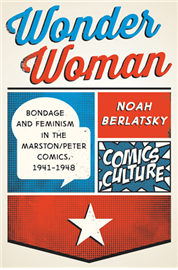
Rutgers put up a prepub page for my book! You can see the cover and everything (or just look up above there)!

Check it out!

On HU

Featured Archive Post: Robert Stanley Martin on Brassai’s photography.

I wrote about why I like Piss Christ.

A brief thread on overrated and underratd photography, strongly suggesting that nobody cares about photography much.

Kailyn Kent on wine labels for male insecurity.

Chris Gavaler argues the world is ready for superheroines kicking butt on the big screen.

Me on Ms. Marvel, female superheroes, and aggression (or the lack thereof.)

Adrielle Mitchell on Luke Pearson’s Everything We Miss, time, space, and loss.

Erotic artist Michael Manning on Beardsley and the gay utopia.
 
Utilitarians Everywhere

At the Atlantic I wrote about why I still like Star Wars. (It’s the dirty robots.)

At Salon:

you say rockist, I say poptimist, let’s call the whole thing off

— I wrote about The Bechdel Test and shaming women’s genre works.

At Splice Today I wrote about:

— how having the U.S. pay attention to Nigeria isn’t necessarily in the best interest of Nigeria.

Myra Greene’s book My White Friends and the invisibility of whiteness.

At the Center for Digital Ethics I wrote about the Ethics of Ride Sharing, of all things.
 
Other Links

Michael Carson on taking the war out of war literature.

Zeynep Tufecki on Nigeria and the politics of attention.

Ta-Nehisi Coates on how racism was deployed against Bill Clinton (and Lincoln, for that matter).

Kathleen Geier on conservative family trees and the cult of victimhood.

Nobody watches Game of Thrones.

Tracy Q. Loxley on underreporting sexual harassment.

If Aggression Is the New Pink, Does That Mean We All Have to Hit Things?

Yesterday, Chris Gavaler wrote about female superheroes, arguing that they’ve been around for a while, that people of all genders love them, and that it’s about time we got to see a film dedicated to watching female superheroes hit things. Chris cited a study by Kaysee Baker and Arthur Raney that showed that, in superhero cartoons, women and men behaved just about the same — they hit things, they saved people, and so forth. Baker and Raney found this a little disturbing; they were worried that heroes of either gender had to be more masculine and aggressive to be heroic. To which Chris responds, well, who says that aggression has to be masculine? “Because if aggression is now gender-neutral, how can being aggressive also be “more masculine”?”

Chris has a point — and that point is a neat summation of empowerment feminism, which is the feminist perspective which says that women should be able to do everything men do, especially if that “everything men do” includes holding and wielding power. The lean in movement is empowerment feminism, and so (as Chris shows) is the enthusiasm for female superhero movies and the desire to see Hawkgirl bash in some baddie with her mace. America is really into power (we’re a superpower, after all) and so it’s not a surprise that empowerment feminism is generally speaking the most popular manifestation of feminism.

It’s so popular, in fact, that it can be easy to forget that it doesn’t necessarily appeal to everyone all the time. But here, at least, is one dissenting voice.

[Wonder Woman’s] creator had…seen straight into my heart and understood the secret fears of violence hidden there. No longer did I have to pretend to like the “Pow!” and “Crunch!” style of Captain Marvel or the Green Hornet. No longer did I have nightmares after reading ghoulish comics filled with torture and mayhem, comics made all the more horrifying by their real-life setting in World War II…. Here was a heroic person who might conquer with force, but only a force that was tempered by love and justice.

That’s Gloria Steinem, describing her relief at discovering the original Marston/Peter Wonder Woman comics, in which, as she intimates, there weren’t a ton of fisticuffs and violence. Instead, Wonder Woman tied the bad guys up with her rope of love — and was tied up by them. Loving submission and bondage games, yes; bashing people’s heads in with maces, not so much.

Chris rightly points out that there isn’t anything essentially masculine about violence; there are plenty of women throughout history who have enjoyed hurting other folks. And yet, at the same time, you don’t just get out from under millenia of culture by having Scarlet Johansson kick somebody. Violence and aggression and war have traditionally been encoded male. Lots of feminists, from Steinem to Virginia Woolf to William Marston, have pointed out that masculinity is wrapped up in an ethos of force and violence — that being a man means, in many respects, being violent. And while one reaction to that can be, with empowerment feminism, to point out that women can be violent too, another approach is to say that the non-violence which has traditionally been associated with women is not an aberration or a failing, but a resource. Women do not have to be embarrassed or ashamed that they don’t like Captain Marvel hitting people; rather, they can point out that hitting people is possibly not such a great way to solve problems, and that equating goodness manliness and heroism with hitting people is, perhaps, a failure of imagination which can, under the right circumstances, get people needlessly killed.

Along those lines, one of the things that I most enjoy about the new Ms. Marvel series by G. Willow Wilson and Adrian Alphona is how uninterested it is in uber-violence. Three issues in, and our teen protagonist, Kamala Khan, has encountered exactly zero supervillains. After she gains her shape-shifting powers, the first thing she does is to turn her hand giant (embiggen!) and fish a damsel in distress out of a lake. The damsell in question fell in the lake after her boyfriend knocked her in — not in the process of a sexual assault, as you’d think if you’d read too many superhero comics, but simply out of stupidity and drunken horsing around. This is a world in which heroes exist and heroism matters, but it’s not a world in which that heroism is necessarily linked to violence.

In issue #3, Kamala does have her first fight. She sees her friend/sweetie-in-waiting Bruno getting held up at the convenience store where she works, and (after trying to call for help and discovering her cell phone is out of batteries) she transforms into Ms. Marvel and starts swinging with her giant embiggened fist.

Sort of. The robber is Bruno’s brother, and he’d already given up on the theft before Kamala barged in. She easily defeats him, crushing him in with that fist (“you’re squeezing really hard!”)…but not before she does far more property damage than he ever could have managed by himself. And then, after she lets him go (he’s promised to apologize and never come back) he accidentally shoots her. The last image of the comic is of Ms. Marvel sitting on the ground, her giant hand extended out in front of her, looking shocked and confused, an iconic hero reduced to a confused adolescent girl, as the guy she was saving freaks out and the “villain” sits off to the side looking at the gun in his hand in horror.
 
3768836-ms.+marvel+(2014-)+003-021

My suspicion is that Ms. Marvel is going to discover that her rubbery hide is effectively bullet proof, and hopefully all will end more or less well. But it’s rather nice to have a superhero story where violence ends up being, not a solution, but a complication.

Ms. Marvel, in other words, critiques super-hero violence — and the reason it’s able to do that is absolutely in part because the series is not just a superhero story, but a girl YA coming of age story. The narrative is interested in Kamala having adventures, definitely, but it’s also interested in her figuring out who she is, which means (among other things) working out her relationship with her (shape shifting, sometimes adult Caucasian va-va-voom superhero, sometimes adolescent Muslim girl) body and discovering that her annoying good geeky friend is in love with her. Lee and Ditko couldn’t figure out how to make Spider-Man a man except through violence and trauma and more violence. G. Willow Wilson, though, is drawing on a narrative tradition quite different from boys’ adventure, which means that for her, growing up doesn’t need to mean watching your dad die and beating up his killer.

Ms. Marvel has been exceedingly popular (it keeps selling out at my local comics store) — but, given the low sales of even really popular comics, it seems unlikely that it will be turned into a superhero movie any time soon. Still,it’s worth noting, perhaps, that other superhero stories about women on the big screen — the Hunger Games, say, or Twilight (where Bella gets to be a superhero by the end) are significantly more ambivalent about violence, its effects, and its efficacy than the standard Marvel/DC superhero/supervillain thump-fests tend to be. Maybe that’s because they’re working to appeal to women (and for that matter men) like Gloria Steinem, for whom narratives of violence are alienating rather than empowering.

Photography, Overrated/Underrated

We haven’t done one of these in a bit, but I’ve had so many people tell me that they’re wrong and/or evil that I felt we should revive them. So…since Michael A. Johnson posted about war photography this week, I thought we could bounce off of that. What photographers do you think are overrated, or underrated if such a thing is possible?

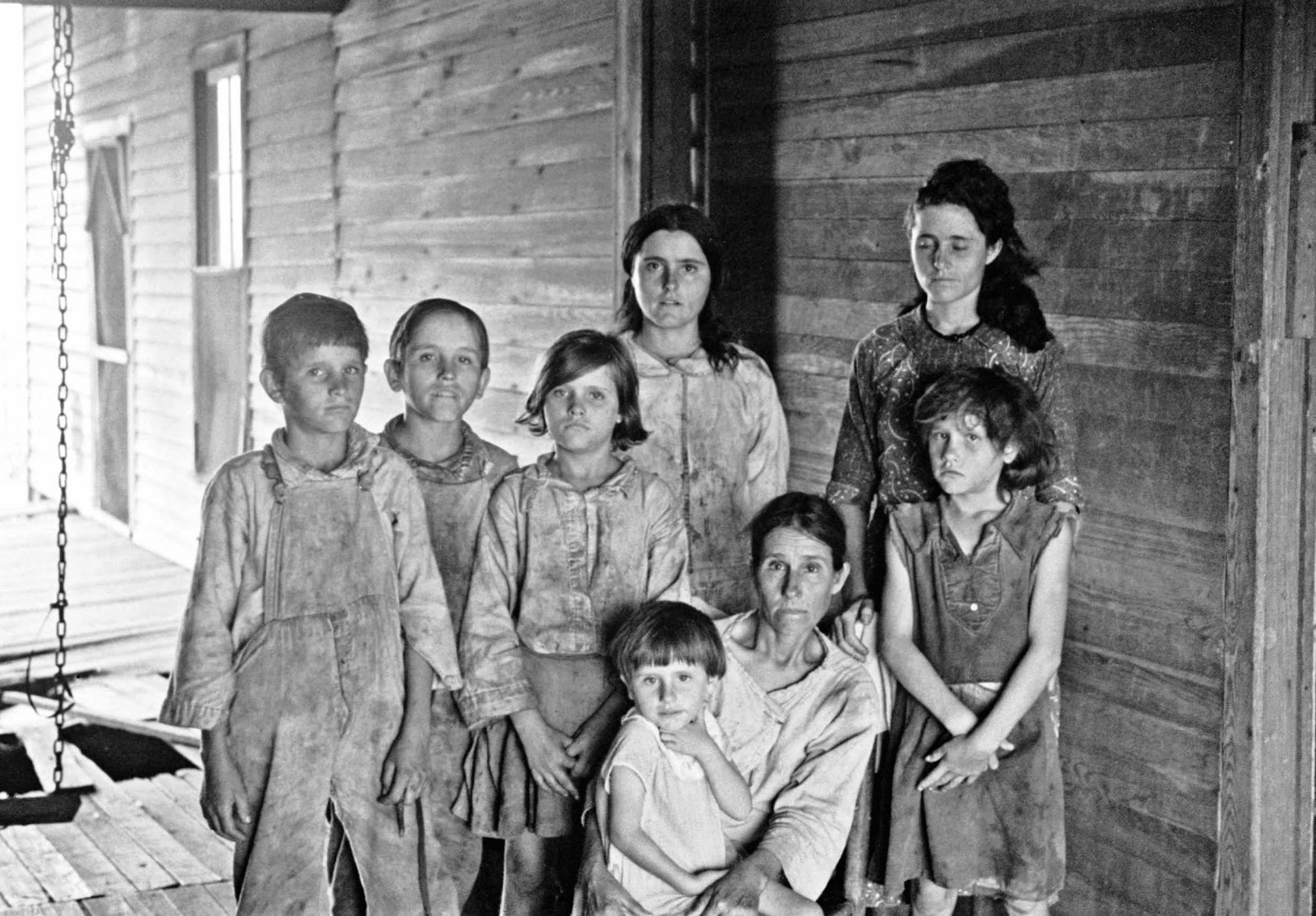
I guess I’d go for Walker Evans as someone who is understandably but still inexcusably lionized for his poverty porn. Underrated…I don’t know if Andres Serrano quite fits since he’s obviously very successful, but as I said yesterday I feel like he’s broadly loathed by both right-wingers and high-art skeptics (including comics folks) who don’t seem to have actually looked at or thought about his work much.

Bert Stabler’s written about why all art photography is overrated, and Thomas O’Shea responded here with a defense of the genre, if you’re looking for more photography discussion.
 

Walker+Evans+-+Frank+Tengle+family,+Hale+County,+Alabama.+Sharecroppers,+1936

Utilitarian Review 5/3/14

On HU

Featured Archive Post: Andrea Tang on Iron Man 3, Olympus Has Fallen, and the new yellow peril.

Paul Nudd with Love-Chutney drawings for the Gay Utopia.

Alexander Hamilton was an authoritarian thug.

Ng Suat Tong with a lengthy consideration of Nijigahara Holograph.

Chris Gavaler on Phillip Pullman and Spring-heeled Jack.

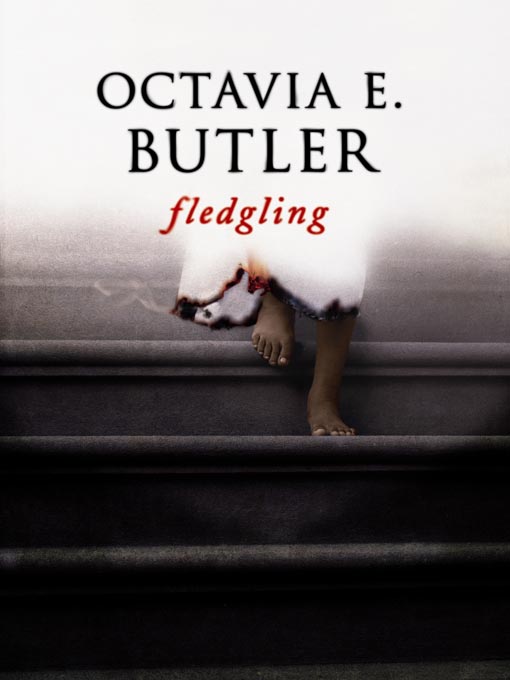
I talk about Octavia Butler’s Fledglin, Lacan, and amnesia.

Michael A. Johnson talks about the ethical implications of covering war via photograph and comic (from PPP.)

Sean Michael Robinson on Rhinestone Cowboys, Deacon Blues, and small dreams.
 
Utilitarians Everywhere

At Salon I

Lised the 10 most overrated albums of the 1990s.

—wrote about how there are basically no women in the original Star Wars.

At the Dissolve I reviewed the documentary Documented about Jose Antonio Vargas’ experience as an undocumented immigrant.

At Splice Today I wrote about

— Esme Patterson asking Elvis Costello what the hell is wrong with him.

— how Batman, Sarah Palin and everybody else loves torture.
 
Other Links

Amazon is deleting the wish lists of sex workers because Amazon is run by arbitrary puritanical assholes.

Relatedly, Spike on trying to publish porn comics.

Also relatedly, the DOJ is closing porn star’s bank accounts because our government is run by arbitrary puritanical assholes.

Dana Schwartz on gender in Star Wars.

Isaac Butler on why your Star Wars books still count.

Mary McCarthy on jeans drama.
 

6071-18163

Snark Is Thicker Than Urine

This first ran at Comixology.
________
Comics has something of a chip on its shoulder about visual art — a kind of forthright working-nerd philistinism. The snooty, pasty theory-spouting degenerate sticks a flag in a cow turd and gets the grant and the girl while the hard-working illustrator who’s got pen technique like Durer gets a condescending pat on the head and relegation to a cultural backwater. Not only does the emperor have no clothes, but he is actually getting paid to paint his ugly genitals purple.

One of the more infamous art frauds of the last twenty years or so is Andres Serrano’s “Piss Christ.” Like most people, probably, I heard about “Piss Christ” before I saw it. From news accounts, I thought it was a plastic crucifix stuck in a jar of the artist’s urine. Jesse Helms hated it, and I had to admit that it seemed like he might have a point. It was easy to assume that Serrano was a trouble-making, glory-seeking hack, whose work was defensible only on the most extreme free-speech grounds. He seemed like a charlatan, substituting a gimmick, pretension, and contempt for genius.

I did actually see the piece in person many years later —a definite moment of “doh!” “Piss Christ” isn’t actually a plastic crucifix in urine, but a photograph of a plastic crucifix in urine. And the photograph is beautiful — the blurry cross shines with yellows, oranges and reds as mysterious bubbling currents swirl around it. Looking at the image without any background information, there’s no question that it is religious; an evocation of the mystery of Christ, who seems to be falling through space, cast aside and yet radiant. If you didn’t have the title, you wouldn’t even know the liquid was urine.
 

Piss_Christ_by_Serrano_Andres_(1987)

 
But, of course, viewers do have the title, as well as the background information, all of which rather changes things. Placing Christ in a jar of your own urine is an act of deliberate sacrilege. Serrano is pissing on God; humiliating him and mocking his humiliation. If you’re a Christian, it’s literally Satanic; Serrano might as well just affix the crown of thorns himself while sneeringly declaring “Hail, King of the Jews!”

The thing is that, as the crown of thorns itself suggests, mocking Christ is itself scriptural. The Passion is about degradation and defilement. Christ is mocked, brutalized, humiliated — and then redeemed. The sacred can’t exist without the profane; you need the leaking bodily fluids and the rotting husk if you are to have the transubstantiation. Christ must be reduced to the lowest of the low, to an abject thing, to a place where the body is everything, before the body can become nothing at all. If urine squicks you out, it’s worth remembering that Christ embraced the lepers. And as for Jesse Helms…given his stance on AIDS, he would have been much less likely to hug a leper than to piss on one.

Not to be too hard on Helms who is, after all, not the only sinner in the room. If Christianity urges its followers to sympathize with the tortured, it is also quite aware that most people are a good bit more comfortable identifying with the torturer. “Piss Christ” may be sneering at Christ, but it is also, and certainly, sneering at those who profess to follow him. Helms accused Serrano of “taunting the American people,” which is about right. He was, specifically, taunting them for being crassly commercial, spiritual hypocrites — for being sinners. And as long as there are sinners, Christ will be defiled.

Nobody wants to be called a Christ-killer, and it’s little wonder that Serrano’s work has…er… pissed people off. An outraged Helms declared that Serrano “is not an artist. He is a jerk.” While I appreciate the charming forthrightness, I think the sentiment is maybe a little limiting. Why can’t you be an artist and a jerk?

Indeed, there are a lot of artists who make their living by being jerks. They’re called political cartoonists. Like Serrano, they use a combination of words, images and instantly recognizable symbols to make moral points, and like Serrano, they do it in a way designed to irritate as many people as possible. From “Piss Christ” to the Danish Mohammad cartoons just isn’t that big a step (as I am not the first to note: for instance, the ever-helpful Wikipedia even provides a link from the first to the second.)

“Piss Christ” is different in some ways from most editorial cartoons, of course. For one thing, the way it juxtaposes image and text is a lot more thoughtful than you’re likely to see sitting above the op-eds. Most editorial cartoons are visual one-liners with notes — that’s the Democratic Party; this is the Republican party; they don’t like each other! Ha ha. Serrano, on the other hand, uses words to change the way you see the image, and to alter what it’s saying to you. The distance between religious and sacrilegious turns around the title — and it’s not just one turn either. As in any good editorial cartoon, the message is definitely “fuck you,” but who is being fucked with and why is both ambivalent and mysterious. Even the aesthetics of the piece are translated back into a legible text; “Piss Christ” is actually about its own beauty, and about the way that beauty is ironicized by, or transcends, the title.

The point here isn’t “Editorial cartoons should be more like ‘Piss Christ!” For one thing, Jesse Helms is safely dead, and I don’t particularly want him rising from his grave to wreak vengeance. But it does seem to me that dismissing large swaths of the visual arts tradition as irrelevant fakery is an unfortunate and impoverishing road to take. If comics creators are interested in the interaction between words and images, then Andres Serrano surely has something to say to them.

Vampire in the Mirror

In Lacan’s mirror stage, an infant looks in the mirror and sees itself as a coherent, capable whole. That joyful instant of recognition is actually a misrecognition; the infant is not in fact that whole yet; it’s a vision of what will be. Or of what the infant imagines will be; Lacan’s point is that the image is false; the vision of coherence is not really a coherence to come; it’s a fantasy. Moreover, the future imagined coherence creates a past imagined incoherence. Part of the misrecognition of the mirror stage is the illusion of a stage, the dream of chronology. The future adult self is created simultaneously with the past child self; identity comes into being at the same moment as a past non-identity comes into being. The self as a chronology is an invention; the past, like the future, is a fiction.

The child, therefore, is precisely a fiction; it is a character in a novel, with a made up background to go with the made up narrative. It shouldn’t be surprising, therefore, that a number of novels that are especially interested in reader identification or mirroring deliberately thematize the mirror stage (or at least an imagined version thereof.) For example, Robert Ludlum’s Bourne Identity semi-famously opens with the main character getting a crack on the skull and forgetting himself. The reader, therefore, enters the novel just as the character does — bereft of a past as of a future, seeking to piece together a coherent self which extends backwards as well as forwards in time. Similarly, in Rick Riordan’s fantasy quest novel The Lost Hero, the main character, Jason, wakes up on a bus with no memory of how he got there. More, those around him (his girlfriend and his best friend) do remember him, because the gods have altered their memories. His past is (within the book) actually false; his story is (again, within the story) actually invented. Entering the book is entering a meta-fiction; to read is to falsely identify with a character whose identity is false. The fiction is really fiction, so your identity (as hero) is all the more thorough in being true to its falseness. You are lost, and are therefore the hero.

Octavia Butler’s novel Fledgling works in a similar way. The novel opens in media self — the first person narration does not know who it is; identity comes into being all at once, without a past or a chronology.

Again, the effect of this move is to put you in the same place as the character — you are linked to the protagonist through joint ignorance. Neither of you knows yourself. In the Bourne Identity and Lost Hero, this is used as an excuse to provide you with a default, standard-issue protagonist self — you become a deadly assassin (with a heart of gold) or the son of a God. In both cases, the fantasy fiction self is white, male, and heterosexual; the image sets you up as the iconic cultural mainstream.

Butler does something rather different. As you read, you discover that the fictional self you are building in the mirror is a black female child who also happens to be a vampire. Though it takes a while to figure it out, the first thing “you” do in the book is kill and eat a friend (to help you heal your wounds); shortly thereafter, you find an adult male, sleep with him, and suck his blood. In this instance, then, the child looks in the mirror and discovers that it is a black female monster, cannibal, murderer, and pedophile. The imagined self is an other; the created past is a nightmare — at least if you’re the supposed male heterosexual white male reader of the Bourne Identity.

That’s really the most interesting part of Fledgling; following the opening revelations, the book is mostly devoted to filling in details about cool vampires, a task which is ultimately as mundane as Ludlum’s genre spy story or Riordan’s video-game-esque fantasy battle set-pieces. The implications, though, are interesting. The imagined self, is, after all, not the self; that thing in the mirror is a thing, some simulacrum wearing your form (which didn’t exist before it wore it.) Who you are is a fiction, which could be a dream of empowerment, but could also be a dream of alienation and monstrosity. And Butler neatly points out that which is which is not necessarily all that obvious. For a black queer woman reader, couldn’t Jason Bourne, the violent white mass-murderer with a gun, be the monster, while the subversive super-powered vampire is the vision of coherent empowerment? One person’s joyful empowerment fantasy can be another person’s nightmare of self-alienation — especially since the one person and another person are just fictions; somebody else you devour to climb into your story, which had already always started without you.
 

fledgling