Utilitarian Review 4/26/14

On HU

Featured Archive Post: Kailyn Kent on the high art(?) of splash pages.

Chris Gavaler on cosplayers for Congress.

Chris Gavaler provides the minutes from the Last Supper.

Osvaldo Oyola on Brian Wood’s crappy all-women X-Men comic.

Patrick Carland on Zen Pencils and hating on the haters.

Orion Martin on Jodorowsky’s Incal, Prophet, and the problem of keeping science-fiction strange.

Qiana Whitted looks at how what’s in print affects comics studies (for PPP.)

On Katherine Gilles Seidel‘s novel Again and romancing the critics of romance.
 
Utilitarians Everywhere

At Salon I have

— a list of the 20 most underrated albums ever. Plus 10 more.

— a piece about how there is no canon of romance novels.

—a piece about the Other Woman as displaced rom com.

At the Atlantic I wrote about sci-fi and the imagined colonization of white people.

At Splice Today I wrote about the new Justice League United and DC’s pitiful efforts at diversity.

And at the Chicago Reader a short review of a Batman gallery art show.
 
Other Links

An interview with visual artist Curtis Gannon.

Wendy at Super Librarian argues (contra my article) that there is a romance canon, and she provides a list.

Janelle Asselin on how she has gotten rape threats for pointing out that a crappy DC comics cover was crappy.

And a message to guys about sexism in comics.

Uninsured people really want health insurance.
 

gorey-war-of-the-worlds-1

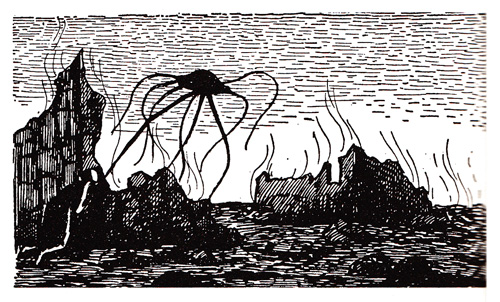
Edward Gorey illustration for the War of the Worlds


Romance as Criticism, Criticism as Romance

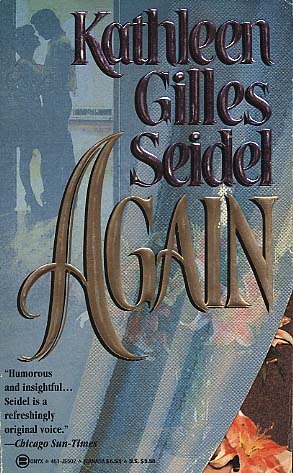
1537545Many romances are meta, but surely few can be as meta on their meta as Kathleen Gilles Seidel’s iteratively titled Again. The novel’s heroine, Jenny Cotton, is the chief writer on a soap opera, My Lady’s Chamber, which is set in the Regency period. The novel, then, is both a historical and a contemporary, with the two constantly commenting on each other, as Jenny distributes the characteristics of her unsatisfying maybe-soon ex Brian and her possibly potential suitor Alec to various period figments of her imagination. Jenny has been with Brian since they both were children, but she only discovers that he’s a selfish git incapable of generosity or caring when Alec, playing the evil duke Lydgate (where’d that name come from?) picks up on one of Brian’s characteristic mannerisms. So Jenny reads Brian by reading Alec, or more accurately, Jenny reads Jenny by reading Alec reading Jenny reading Brian — which is to say, Jenny figures out that she has modeled Lydgate on Brian when Alec playing Lydgate picks up on Brian’s mannerisms to portray the character. Past, present, self and other, and, most emphatically, reader and read are shuffled about as in a shell game; the heart (whose heart? everyone’s heart?) is revealed simultaneously through reading and being read — the protagonist as text, reader, and critic.

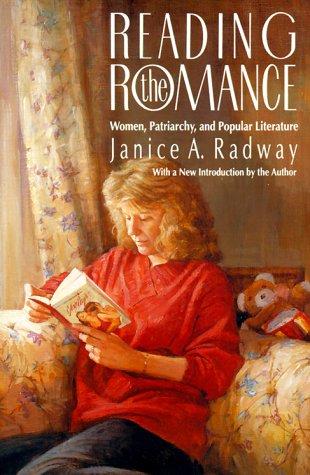
Not just any critic, either. Like Jennifer Crusie’s Welcome to Temptation, Seidel seems to deliberately reference and engage with the major early feminist critic of romance, Janice Radway (and probably also with Tania Modleski, whose work drew explicit parallels between romance and soap opera.) Radway argued, following Nancy Chodorow, that the romance genre was a fantasy of reconcilement with the mother. Romances, she said, presented brutal men who were eventually melted by love into unexpectedly maternal softies, providing women with the consolatory dream of a caring patriarchy of love and empowerment, and so enabling them to tolerate their inadequate marriages and lives.

Radway’s thesis is quite unpopular with many current romance readers, if my experience mentioning her name on social media is any guide, and Seidel is undoubtedly being arch when she provides an almost parodically perfect Radway narrative of man-as-mother-substitute. Jenny’s own mother died when she was a year old, and as a result she feels that she never learned how to be a woman, and never had anyone to take care of her. For his part, Alec is an obsessive care-taker; in just about his first meeting with Jenny, he discovers she’s having a miscarriage and bustles her off to the hospital, literally sweeping her off her feet to carry her at one point. She needs a mother; he’s a mother. The Radway formula, illustrated.
reading-the-romanceExcept it doesn’t quite work that way. While Jenny wants a mother, she rather hates being taken care of. For his part, Alec over the course of the novel runs through his emotional reserves; he falls in love with Jenny, but the strain of constantly trying to take care of everyone (as he once took care of his terminally ill sister) eventually renders him inert. The storyline resolves not through Jenny discovering a mother in Alec, but rather through her realization that she, herself is her mother. She always thought that her mother would have been good at the “girly stuff” — dressing up, being frilly and elegant and glamorous. But after breaking up with Brian the jerk, Jenny realizes that her mother (whose chief love was driving around from pool hall to pool hall with Jenny’s pool shark dad) was just as much of a tomboy as her daughter. Jenny doesn’t need a guy to be a mother because she was always already her mother herself. Instead, it’s the mothering guy who needs to be taken care of. Or as Alec puts it (after some coaching from Jenny, feeding him his lines as is her wont) “I need you to explain to me how I need you.”

In Radway’s formulation, romance is a trans-gendered pleasure — a fantasy of women loving the women within men. Seidel’s reworking doesn’t so much put every gender back in its place as it infinitely iterates (“Again”) the cross-gender swapping. Jenny, the tomboy, becomes the caring man as mother; Alec, caring man as mother, becomes the woman swept away and cared for. “Someone else was making everything absolutely perfect,” he thinks at the end. “There was something to be said for a woman with imagination.” The “woman” there is supposed to refer to Jenny — but given the fact that imagination for Radway is figured specifically as the transgendering of the love object, it must also refer to Alec, who, transgendered himself, is the one experiencing the characteristically Radwayian romance of motherly protection from a strong patriarchal figure (she is, after all, his boss.)

This scrambling of gendered positions is in part a critique of Radway’s critique of romance. Romance, Seidel says, is not (or doesn’t have to be) about fooling oneself into thinking that the patriarchy is your mother; it can be about insisting that women can take care of themselves, both personally and professionally. But if that’s critique, it also seems like conversation — and, perhaps, assurance. Psychoanalysis is always, after all (as that prime fetishist Freud demonstrates) self-psychoanalysis, which means that Radway’s supposed excavation of the romance readers psyche might perhaps better be read as a projection of Radway’s own particular neuroses.

And that is in fact how Seidel reads it. In a footnote to her discussion of Radway in the collection Dangerous Men & Adventurous Women, from 1992 (just two years before Again) Seidel says this:

Janice Radway, in her 1987 introduction to the British edition of Reading the Romance…acknowledges the “residual elitism which assumes that feminist intellectuals alone know what is best for all women.” In a graceful, moving statement, she suggests that such scholars should offer romance readers and writers “our support rather than our criticism or direction.” She follows this generous-hearted position with the most discouraging words I encountered in all the reading I did for this essay as she dismisses the possibility: “Our segregation by class, occupation, and race [race?] works against us.” We are still Other to her; she does not believe either party can speak to the other. I find this inexpressibly sad.

Seidel, then, reads in Radway a tragic fissure, a split between women and women — which is precisely the tragic fissure that Radway reads into romance readers and writers like Seidel. It is not romance readers, but Radway, who is bifurcated; it is not romance readers, but Radway who needs to be reconciled with the mother — or, in Seidel’s version, to realize that she is already reconciled with the mother, and that the romance is already hers.

Again, then, can be read, not as (or not just as) a refutation of Radway, but as a love letter to her. And part of what that love letter says is that Radways’ book is itself a love letter — that “Reading the Romance” can itself be read as a romance.

That romance isn’t utterly untroubled. Seidel has a lot of fun in the novel with a rival soap opera, Aspen!! written by the (significantly) male writer Paul Tomlin, a man who “didn’t know anything about soaps”, and who seems to have contempt for the form and for the audience. The satire of those who hope to save romance and romance readers for better, higher things certainly implicate Radway, tweaking her condescension and her separation of herself from her subject — the way she wants to write in romance without actually writing romance.

But the very act of criticizing the critic puts one, inevitably, in the position of critic. The original name of Aspen!! was Aspen Starring Alec Cameron; the Othering Othered is also the loved one — albeit a loved one who needs to be taught to love. And that teaching is criticism, too. “I suppose we’re to conclude from that that my best chance of being an acceptable human being is to be married to you?” Alec says, after Jenny has explained their relationship to him through a critical reading of the ongoing plot of In My Lady’s Chamber. Criticism speaks romance and romance speaks criticism. And when the genres are so nested in each other, how can you tell who is outside or who is inside, or who is saving whom?

10 More Most Underrated Albums Ever

At Salon I have a list of most underrated albums,, but it was cut for space. So here’s what got left off.
 
Jeri Southern, “You Better Go Now” 1956

 
Forget icons recognizable by a single name like Billie, Sarah, or Ella; Jeri Southern is little known compared to relatively obscure torch singers like June Christy, Julie London, Peggy Lee and Anita O’Day. But Miles Davis was a fan, and you can hear why on this album. Southern’s voice is pure, bright, and sensual, perfect for the flirtatious vulnerability of songs like “You Better Go Now” and “Remind Me”, or for the tortured lost love pie-in-the-sky hopes of “Something I Dreamed Last Night.” Southern doesn’t waste any tracks on uptempo; the pace throughout is slow, giving her careful phrasing and restrained emotion room to take on weight and depth. “Give me time/I’ll give you love/Give me time/I’ll give you rapture, dear,” she sings, and it’s a promise she keeps.
 
Bill Harris, “Bill Harris and Friends”, 1957

 
Jazz trombonist Bill Harris was a longtime sideman for Woody Herman, but as far as I know this record, featuring Ben Webster on tenor sax, is his only outing as a leader. It’s a true gem, though. Harris’ broken, hesitant squonk gives “It Might As Well Be Spring” a plaintively delicate vulnerability, and Webster’s huge tone and vibrating reed are sensuous as ever on “Crazy Rhythm.” It’s the juxtaposition of the two on “I Surrender Dear” that’s truly transcendent though; smooth and broken, hesitant and suave, one of the greatest forgotten “good old good ones,” as Dick Buckley used to say.
 
Chuck Berry, “St. Louis to Liverpool”, 1964

 
This was released in 1964, after Berry had spent 20 months in prison. It’s a conscious effort to engage with the wave of bands that had been inspired by his music, from the use of overdubbed vocals on “Little Marie” to name-dropping the Beatles on “Go Bobby Soxer.” “St. Louis to Liverpool” also tends to make all those bands look a little puerile, Certainly, the Beach Boys weren’t singing about child custody struggles, and John Lennon wasn’t writing lyrics to match “It’s a bobby soxer beat
/And you can rock it any way you wish/Work out, bobby soxer,/you can
Wiggle like a whimsical fish.” Nor did the Stones ever have a guitar solo as hot or cool as Berry’s in “Promised Land,” which manages to evoke both tough electric blues and blazing Nashville picking (Berry was a country music fan of long standing.) And that doesn’t even get to the still-funny-after-100-listens “No Particular Place to Go,” and the fierce instrumental “Liverpool Drive”. Berry is usually thought of as a singles artist; partially as a result, “St. Louis to Liverpool” is rarely considered in the pantheon of the top rock albums. It should be though.
 
Doors, “The Soft Parade” 1969

 
As rock, the Door’s were always strained, pompous and lumbering. This is the one album where they turned that to their advantage. Inevitably, fans hated it — Rolling Stone said the band was “in the final stages of musical constipation.” (http://www.rollingstone.com/music/albumreviews/the-soft-parade-19690823). That comparison seems particularly inapt; the Doors here are anything but tight. Instead, the album lurches from track to track, strings and brass spurting seemingly at random, blues riffs flailing, Morrison staggering from odd, vaguely offensive tribute to Otis Redding to hippie enthusiasm to portentous declamation (“You cannot petititon the Lord with prayer!”) to outright doggerel (“The monk. Bought. Lunch!”) The result is something like the Shaggs meet Shatner; a miracle of trashy incoherence. “The Soft Parade” is both humiliating self-parody and the only time Jim Morrison ever made good on his claims to genius.
 
Sadistic Mika Band, “Hot Menu”, 1975

 
Sadistic Mika Band was an influential Japanese band, but this particular album doesn’t seem to have been much heralded over here. Nonetheless, it’s my favorite of theirs — a quintessential 70s fizz of lounge fuzak. If Steely Dan composed a blaxploitation soundtrack, it might have turned out something like this.
 
Sonny & Linda Sharrock, “Paradise” 1975

 
Guitarist Sonny Sharrock played with Miles Davis, but he’s still relatively unknown, perhaps because he refused to fit neatly into the “jazz” label. Certainly, his second album with his then wife Linda is uncategorizable. There are repetitive spiky “On the Corner” style funk riffs, cheesy keyboard grooves, dissonant free jazz interpolations, blues licks, and through it all Linda’s Yoko-Ono-goes-to-church garbled combination of moans, shrieks, and speaking in tongues. All the nuttiness is held together by an undeniable strain of soul. Many folks have draped themselves in the mantle of Mingus, but “Paradise” may be one of his truest children, not least because it sounds so completely unlike him, or anything else.
 
Marty Stuart, “Busy Bee Café”, 1982

 
Stuart had some success on country radio later in the 1980s and 1990s, but this, his second album, was mostly ignored at the time and since. You can see how folks overlooked it; it’s a gloriously relaxed affair, with Stuart’s lightning bluegrass picking sliding into one easy groove after another. The album is a tribute to Stuart’s influences and friends, and so Johnny Cash shows up on a number of tracks, just to remind you that he wasn’t as aesthetically lost during the 80s as Rick Rubin would like you to believe, while the wonderful Doc Watson trades vocals on the twin guitar “Blue Railroad Train”. “Boogie for Clarence” is a virtuoso tribute to the bluegrass guitarist. “Busy Bee Café” is a quiet masterpiece, filled with love.
 
Womack and Womack, “Love Wars” 1983

 
Womack and Womack make moderate soul for middle-aged folks who want to bob their heads rather than shake it on the dance floor. The lack of urgency probably explains their relative obscurity — and it’s also why “Love Wars” is such a great album. The tracks sway and insinuate, as Cecil and (especially) Linda’s vocals dripping with longing, knowledge, and vulnerability. It’s a similar psychic space to Van Morrison’s “Astral Weeks,” and I’m not always sure which album I like better.
 
Doughnuts, “Age of the Circle” 1995

 
The Doughnuts were apparently marketed as a straight edge band, but those thick, brutal guitars, the grinding tempos, and even the strained, half-shrieked vocals seem less akin to punk than to the death metal scene in their native Sweden. Similarly, the lyrics aren’t about hardcore snottiness and political engagement; they’re about filth and impurity and despair —songs like “Who’s Bleeding?” are a riot grrrl take on metal’s traditional body loathing. Maybe the Doughnuts are unknown because of the punk/metal genre confusion, or maybe the U.S. just wasn’t ready for an all-female Swedish band that sounded like it pulverized multiple grunge acts before breakfast. Either way, “Age of the Circle” is a lost classic.
 
Michio Kurihara, “Sunset Notes” 2007

 
Best known for his work with Japanese collective Ghost, Kurihara’s solo album has a lot of that band’s psychedelic fire. It’s also a showcase for his range as a guitarist, though; not just the high volume Hendrix lilt of “A Boat of Courage,” but the gentle acoustic backing of “The Wind’s Twelve Quarters” or the crunchy guitar pop-hook worthy riff in “Pendulum On A G-String” and the oddball high-volume March of “Do Deep-Sea Fish Dream of Electric Moles?” One of the most sublime records of the 2000s that didn’t show up on anyone’s best-of lists.

Utilitarian Review 4/19/14

On HU

Featured Archive Post: Junji Ito’s Tomie stories as misogynist fever dream.

Kailyn Kent on how True Detective is like Twin Peaks with more misogyny.

Edie Fake‘s amazing illustration for the gay utopia.

Ng Suat Tong on Peter Bagge’s Margaret Sanger biography and dancing around eugenics.

Michael Arthur explains that Osamu Tezuka thinks furry is sexy. Deal with it.

Christa Blackmon on the Walking Dead and human rights.

Julian Chambliss for PPP on the slimming down of Amanda Waller.

Ng Suat Tong on the zombie apocalypse and the dangers of empathy.

 
Utilitarians Everywhere

At Salon I did a list of cross-genre collaborations.

At the Atlantic I wrote about

Showgirls and leveraging sex worker stigma.

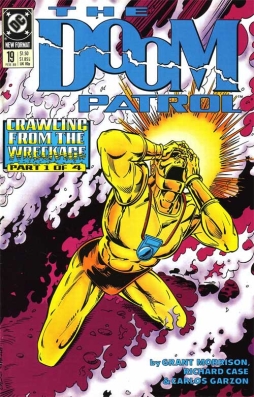
— the Doom Patrol and superheroes on the margins

— how Charles Murray is a worse philosopher than Sojourner Truth.

At the Dissolve I reviewed Visions of Mary Frank, a documentary about the sculptor.

At Splice Today I made the case for Johnny Cash in the 80s.

 
Other Links

Bob Temuka on superheroes and death.

Elias Leight on the new minimalist R&B.

Elias Leight again, this time on Merle Haggard and pop stardom.

Sydette Harry on who you hate when you hate on the Internet.

Aamer Rahman on Game of Thrones and the barbaric other.
 

patrol-19

Utilitarian Review 4/12/14

On HU

Featured Archive Post: Jog on Bollywood sci-fi.

Bert Stabler on Christianity, the gay utopia, and why V for Vendetta is no good.

Me on R. Fiore, Walt Kelly, and why our idols can’t be racist. (a response to R. Fiore’s piece at TCJ.)

Kailyn Kent on chianti in Robocop.

Chris Gavaler on allegorical drones in Captain America: Winter Soldier.

Brian Cremins on Walt Kelly and imagining the South in Connecticut. (a response to R. Fiore’s piece at TCJ.)

Frank Bramlett for PPP asks, how do questions get answered in comics?

Sean Michael Robinson on trying, and failing, to create a graphic novel.
 
Utilitarians Everywhere

At the Atlantic I wrote about why we need to stop comparing the NSA to 1984.

At Salon I had a list of Michael Jackson covers.Libertarians for free speech, except the free speech to tell the Mozilla CEO to get lost.

Squarepusher collaborating with Japanese robots.
 
Other Links

A survey on sexual harassment in comics.

Tracy Q. Loxley on contraception and the the ACA.

Jonathan Bernstein on how Rand Paul’s campaign is like Jesse Jackson’s.
 

poster_1984_lrg

Fear of Wertham. And Possibly of a Black Planet.

Earlier this week R. Fiore wrote a post at The Comics Journal defending the honor of Walt Kelly from the suggestion (made by Thomas Andrae in the introduction to Walt Kelly’s Pogo The Complete Dell Comics: Volume One) that maybe, possibly, you could see something slightly racist in the fact that he used blackface caricatures.
 

Pogo2

 
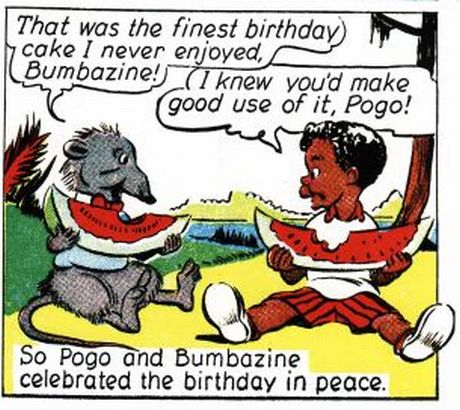
Fiore’s piece is a graceless performance. He spins and sneers, insisting that this image of a black child with a watermelon is not playing into racist jokes about blacks and watermelons because Kelly isn’t malicious and the black kid is portrayed positively so the watermelon must have ended up in there totally by accident, really, it could just as easily have been grapes. There’s no substantive engagement with, or really even mention of, the fact that Kelly’s cartoon blacks are based in blackface iconography, nor any effort to grapple with what that means.

The really depressing thing is that there’s an interesting article struggling to get out from behind Fiore’s special pleading. Jeet Heer, in the comments to the post, argues that (contra Fiore) Kelly did use blackface iconography but that (as Fiore says) Kelly’s depictions of blacks were in fact better than those of some of his contemporaries. Brian Cremins, who has written in an academic context about Kelly, also suggests in comments that the minstrel tradition was very important to Kelly’s art and humor, and that that’s something to be investigated rather than denied or fled from. I’m not a fan of Kelly’s especially, and haven’t read many of his comics, but it’s clear that there’s a discussion worth having about his relationship to race and racism. It sounds, in fact, like Andrae was engaged in such a discussion.

But Fiore isn’t having it. Kelly cannot have been touched by racism — or, if he was, that only goes to show how utterly awesome and virtuous he really is.
 

At the outset, we must presume that Walt Kelly was more enlightened than Thomas Andrae, or you, or me. This is because unlike Walt Kelly’s, our enlightenment is socially assisted. Walt Kelly had to come upon his all on his own. Now, any of us might have been one of the enlightened people in those days, and all of us think we would have been one of the enlightened persons in those days, but the odds say otherwise, and in the actual event Kelly was. We simply embrace the conventional wisdom of our time. Kelly swam against the tide.

The suggestion that you or me or Fiore have reached some level of enlightenment which puts us beyond the touch of racism, and therefore beyond moral censure or praise as regards racism, is perhaps the least of the idiocies in this paragraph. The vision of Kelly as great artist, achieving his goal of perfect equality and watermelons without any input from anyone, inventing anti-racism out of whole cloth, without the intervention or help of any actual black people anywhere, is, for its part, familiar in import. Anti-racism here isn’t really a goal in itself; reading Fiore’s piece, it seems fairly clear that Fiore couldn’t possibly care less about racism, or about black people. Anti-racism is just a accoutrement of (white) genius, like a punchy prose style or a pleasing ink line. Fiore admires Kelly’s humanism; if that humanism is compromised, so is the admiration. Ergo, the admiration being fulsome, no racism can exist. QED.

Fiore’s a longtime TCJ hand, and here he manages to embody some of the least enlightening aspects of old school comics fan culture: its hagiography; its crippling insularity (racial and otherwise); its smug distrust of academia; and most of all its defensiveness.

The last couldn’t be more counter-productive. A critical establishment that reacts with panic and dyspepsia to the suggestion that obvious blackface iconography is obvious blackface iconography is not a critical establishment that anyone beyond the most hard-core nostalgists is going to find welcoming. Join Team Comics! We were using watermelons in a totally non-racist way 70 years ago, pat us on the back! If you want to make your art form look clueless, ridiculous, and not a little repulsive, this would be the way to do it. Fiore’s handwaving doesn’t so much distract from the racism of comics’ past as it raises embarrassing and painful questions about the racism of comics’ present.
________
Update: Brian Cremins has a lovely piece about Pogo, race, and nostalgia here.

Utilitarian Review 4/5/14

On HU

Featured Archive Post: Matthias Wivel on racism and free speech articles in Scandinavia.

Ariel Schrag‘s “Wandering Hands” — Gay Utopia cartoons.

Who is the most overrated 20th century novelist? Hemingway! (we talk about most underrated too.

Chris Gavaler finally unmasks the Joker.

I wrote about YA dystopias and historical romances.

Subdee reviews Noah and the not totally awful apocalypse.

Roy T. Cook wonders if She-Hulk doesn’t superhero, is she still in a superhero comic?

Chris Gavaler on Native American schools and supeheroes.
 
Utilitarians Everywhere

At Salon:

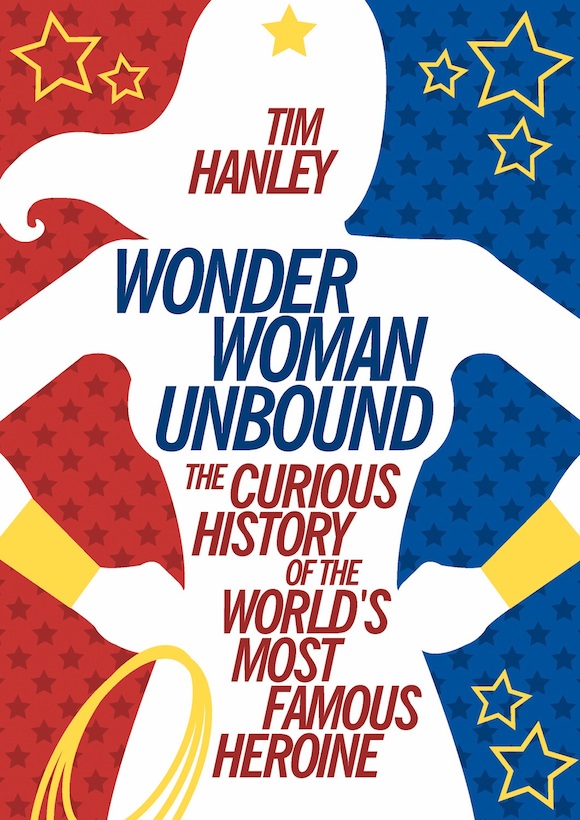
— I asked, ““why should we care about Wonder Woman?” (and reviewed Tim Hanley’s excellent new WW book.)

— I listed 12 great Beyonce mash-ups, from Nirvana to Abba.

At the Atlantic I wrote about James Baldwin’s The Devil Finds Work, the greatest piece of film criticism ever.

At Splice Today I wrote about:

Carlene Carter‘s lovely new album, and how she makes more sense as she ages.

Jonathan Chait telling non-white people of the world to give thanks

— the Rumsfeld bullshit and why we love it.

At the Reader I reviewed an amazing show on the visual culture of Chinese opera.

At Salon Sean McElwee argues that only privileged people get to be writers. He uses a piece I wrote a bit back as a launching pad, and somewhat distorts it to do so, but overall it’s a good piece.

And at Reason I was quoted in this article by Elizabeth Nolan Brown, talking about sex work and Katha Pollitt.
 
Other Links

Monika Bartyzel explaining to Hollywood why it sucks for not making female superhero movies.

There was an interesting conversation on twitter about race and rock music. (I joined in a bit.)

Nic Subtirelu on the linguistics of “bossy”.

Ta-Nehisi Coates on his origin story.

R. Fiore wrote a piece on Walt Kelly’s relationship with race that I disagree with fairly strongly. There are good comments from David Brothers, Sarah Horrocks, Jeet Heer, Brian Cremins and others though. (I left a comment or two as well.)
 

Wonder-Woman-Unbound-Cover