Best Music So Far This Year

We’re almost three months into the new year…so what have folks been listening to from 2014?
 
Just heard this; Tinariwen,drony groove from Mali


I wrote about Akkord on Splice Today; electronica for sun death.


Also really like Be Forest; Italian fey folk.


And the Domains; Spanish death metal the way death metal should be.


Hubba Bubba, where the Thee Oh Sees’ frontman does slowed-down cough-syrup doped electropop:


Katy B, empty-headed shallow British dance pop.


Here’s left field-R&B performer Kelela. I wasn’t that into her album from last year, but this track is pretty great.


There’s this EP by Zikomo which is really nice zoned-out trippy fractured easy-listening hip hop.


Free download available here
 
Marissa Nadler, folksy shoegaze in a Mazzy Star meets Civil Wars vein.


And finally Don Williams new album; just started listening to it but it’s pretty great. He’s definitely an artist who makes more sense the older he gets.
 

So what about you all? What should I be listening to from 2014?

Utilitarian Review 3/15/14

News

We’re thinking of doing a J.M. DeMatteis roundtable, probably sometime in summer. Let me know if you want to participate, either in comments or by emailing me.

There’s also been some discussion of doing a Spielberg roundtable…people still interested in that?

EDIT: Actually, now that I think about it, since we’re doing DeMatteis in the summer, and just did Bloom County, maybe it would be a good thing to do a roundtable that’s not quite so darn white and male.

So…anyone have any ideas? I’d be interested in doing an Octavia Butler roundtable; I’ve been toying with the idea of reading more of her. A romance roundtable might be fun, though perhaps would need to narrow that down. Black cinema? Or comics and fashion was something I’d been thinking about too. Maybe we could do some brainstorming in comments?
&nbasp;
On HU

Featured Archive Post: Shaenon Garrity with an illustration of Wallace Stevens’ Emperor of Ice Cream.

Eric Berlatsky on Alan Moore/Kevin O’Neill’s Black Dossier, feminism, and utopia (part of our Gay Utopia reprint project.)

We had a long thread about underrated and overrated SF. (I said Asimov was overrated, Gwyneth Jones and John Christopher underrated.)

Kristian Williams on Daredevil: Love and War, Sin City, and Frank Miller as accidental feminist.

Samantha Meier on the pioneering women’s underground sex comic Tits & Clits.

Chris Gavaler on Oliver Cromwell as Superman.

Qiana Whitted thinks about non-fiction comics that use fantasy elements (for PPP).

I wrote about Young Avengers, and how laudably diverse doesn’t necessarily mean good.
 
Utilitarians Everywhere

At the Atlantic I talked about:

— breast-feeding, drinking while pregnant, and how folks should just leave mothers alone already.

— Desktop Dungeons and how making non-sexist/non-racist art is hard work.

— the word “bossy,”feminism, and abusive assholes in power.

At Salon I had a list of songs that are almost Beatles covers.

At Splice Today:

— I argue that conservatism is a fandom. (Prompting this response from Jonathan Bernstein, one of my favorite bloggers.)

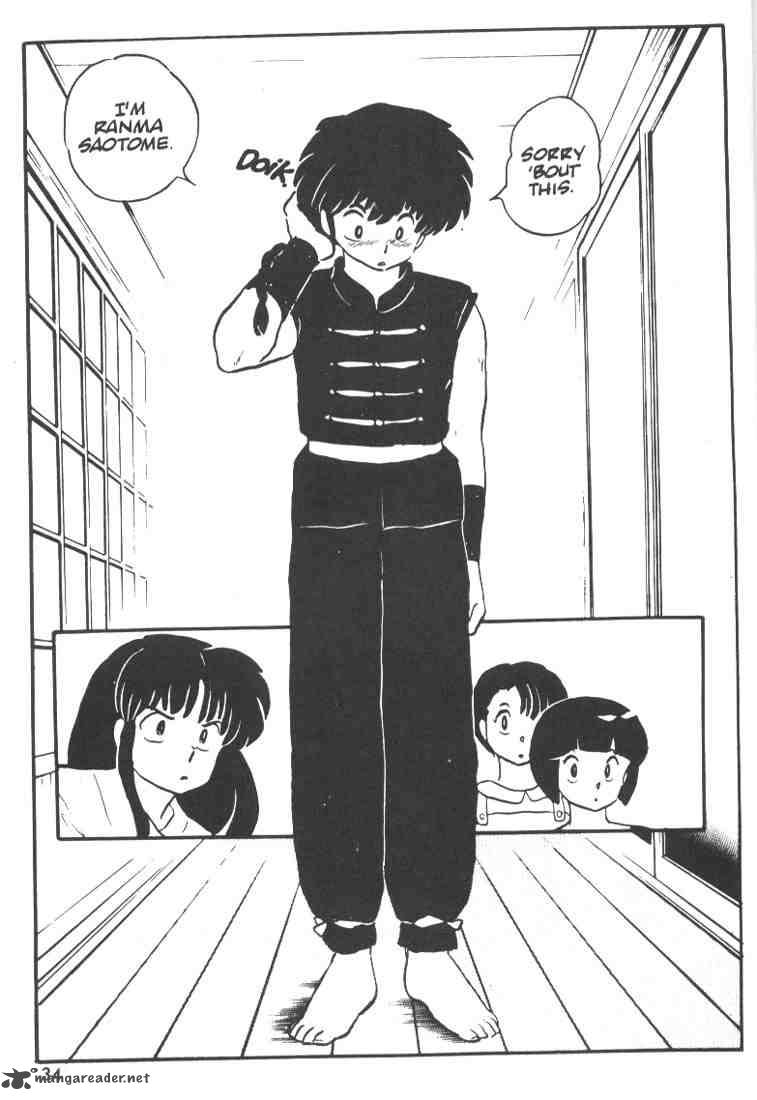
— I talk about the awesome gender-swapping manga Ranma 1/2, out in a new edition from Viz.

— I review the gallery show Teen Paranormal Romance, and talk about appropriating lesser humans.
 
Other Links

Melissa Gira Grant’s book Playing the Whore, about sex work and work, is now available. Y’all should buy it.

Sarah Boxer on Peter Bagge’s comic about Margaret Sanger.

Shaenon Garrity on Irish cow-battle web comics (yes, there are more than one.)

Amanda Hess on how Ezra Klein looks like the old boss.

Stoya on pseudonyms in porn and online.
 

ranma-12-2311835

The Kids Are Mediocre, Albeit Not Utterly Without Charm

Earlier this week I wrote a post at the Atlantic where I talked about the game Desktop Dungeons and how its creators had discovered that, in order not to be sexist, they had to work really hard at it. The intention to be non-racist/non-sexist isn’t enough, because the default tropes used to imagine fantasy game settings and characters are racist and sexist. It takes imagination and effort to overcome that.

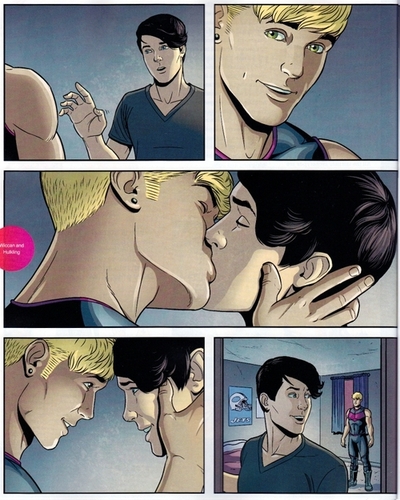
So Kieron Gillen and James McKelvie definitely deserve credit for the extent to which Young Avengers pushes back against decades of accumulated superhero whiteness and sexism. The team includes a gay couple (Wiccan and Hulkling), and a Hispanic child of a lesbian couple (Miss America),along with two other white guys (Marvel Boy and Kid Loki) and a white Hawkeye).

Perhaps more importantly than their numbers, the marginal characters aren’t treated as marginal or other or weird…and the decision not to treat them as marginal or other or weird is nicely linked to the supehero milieu. Hulkling is a green-skinned shapeshifter from another planet; Miss. America is a brown-skinned superhuman from another dimension. Hawkeye is sleeping with the alien Kree Marvel Boy, Wiccan is sleeping with the alien Skrull Hulkling. Amidst all the intricate incoherence of the Marvel multiverse (which Gillen and McKelvie gleefully toss about without much explanation for novices), a non-White superhero as the strongest member of the group or a gay romance as part of the proceedings hardly seems worth mentioning (except, in the later case, as a vehicle for the requisite quotient of intra-team melodrama.)
 

YOUNG-AVENGERS

 
So Gillen and McKevie set the worthy goal of not being sexist, racist assholes, and they followed through with intelligence and some subtlety. Thus, the comic is good. QED.

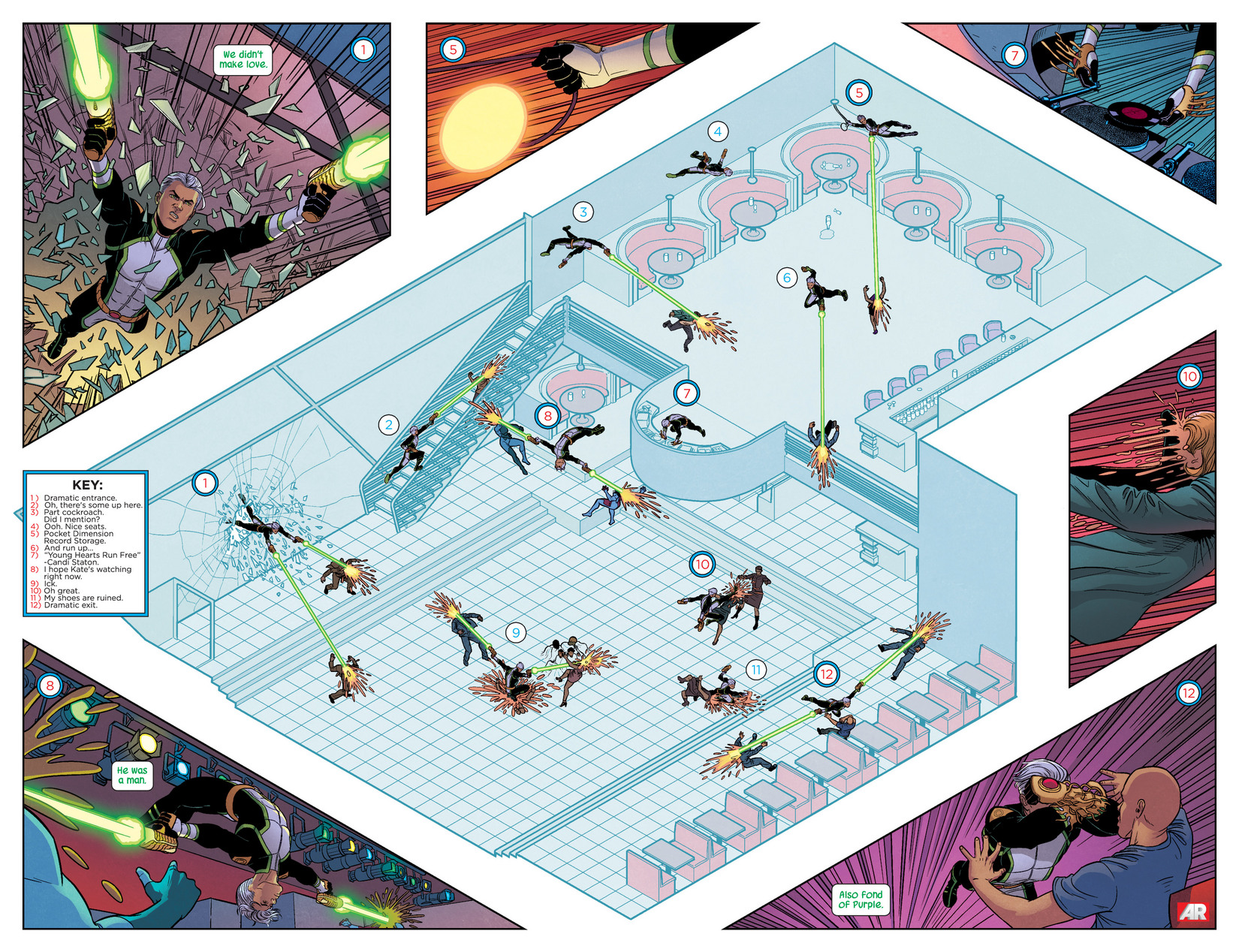
Alas, would that it were so. Not being racist and sexist is hard work, but there are other bits of making a worthwhile piece of art too, and as regards them Young Avengers is less successful. In particular, the artist Jamie McKelvie is, even in the context of crappy mainstream super-hero art, not really any good. His figure drawing is clumsy and haphazard; his poses are stiff when they’re not default; his faces are not particularly distinguishable. But where he is really abysmal is in his layouts, which are consistently confusing and cluttered. Especially in his fight sequences, it’s often almost impossible to figure out what’s happening — and there’s no visual panache (as in say Bill Sienkiewitz) to justify the incoherence. A Chris Ware inspired page is almost laughably incompetent, with tiny figures boucning around in an ugly floorplan that manages to be at one and the same time bulbous, blocky, and boring, the whole thing ringed by uninspired mainstream action sequences, the color scheme of which contrasts garishly with the wannabe-Ware floorplan pastels. Descriptions of the action are set off in a kind of map legend and keyed to numbers because diagrams are what the latest hip comics artists are doing and McKelvie would like to be up to date and hip with all his heart. It’s sort of sweet, if you cover your eyes and don’t look.
 

ya4a

 
Gillen is more competent than that; his dialogue is fun and snappy and pop-culture-aware in a way that seems, if not precisely true to teens, at least true to the sorts of things teens might read. When Kid Loki asks Ms. America why her former super-team broke up and she says, “Musical differences,” I snickered. Same when Hawkeye comments that she knew there was some world threatening catastrophe because Wiccan wasn’t answering his texts every 30 seconds. It’s not genius or anything, but it’s cute. If I can appreciate Taylor Swift, there’s no reason I can’t appreciate this too.

There’s some perhaps interesting thematic material as well, if you squint. We first meet Hulking when he’s shape-shifting in imitation of Spider-Man, hunting down bad-guys as Marvel’s most popular superhero. Later, Wiccan summons Hulking’s dead mother from another dimension…only it turns out to be a shape-shifting soul-eating demon. The other Young Avengers’ parents also end up coming back from the dead as evil glop. You could see the comic then, perhaps, as being about children turning themselves into their parents — or about the way that it’s not just parents who make their kids, but kids who make their parents. The evil parents and the clueless parents (adults can’t see the evil demon mommies) could be a version of the hippie “parents just don’t understand/anyone over 30 can’t be trusted” meme. But you could also see the bad/clueless parents as constructs or dreams — as make-believe parent kids want to/need to create in order to make their own lives. That’s underlined by the fact that the evil parents are the reason for the team coming and staying together; the threat is what makes the book diegetically possible.

Gillen doesn’t ultimately do all that much with this material though. There isn’t, for example, any real anxiety around the evil parents per se — dead moms and dads come back from the dead, but their kids don’t seem much traumatized, or even disturbed. They just trundle on through the by-the-numbers superhero battles, the only real emotional tension being the frustration caused by the fact that, based on McKelvie’s drawings, you can’t actually follow those superhero battles at all.

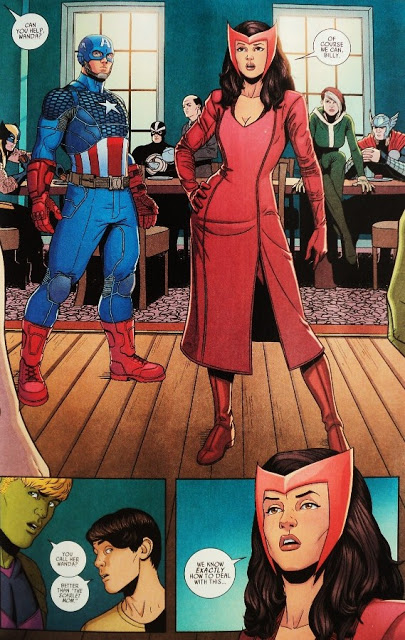
To some degree that’s fine; it’s a competent empty-headed superhero adventure with crappy art, and it doesn’t make much pretense to being anything else. But, inevitably, the mediocrity of the execution has implications for the treatment of gender/sexuality/race as well. McKelvie, for example, tends to draw the usual slim/hot female characters — he certainly doesn’t feel anything like Desktop Dungeons’ commitment to imagining women who don’t look they walked out of Cosmo. The full-length, blank-faced, hip-cocked, wait-let-me-stuff-this-cleavage-in-somehow Scarlet Witch is an especial low-point.
 

b4

 
In a similar vein, Gillen’s insistently shallow writing makes it hard for him to do much with his diverse cast other than have them there. As I said, part of the joy of the comic is that difference is simply treated as normal, so that green skin isn’t much different from brown skin. But while that’s refreshing, it also can feel like a cop out. Is Miss. America really even a Hispanic character, for example, when she’s an advanced human from another dimension who has never experienced prejudice? G. Willow Wilson’s Ms. Marvel deliberately explores what it would mean for a Muslim girl to gain superpowers in terms of her perception of herself and others perceptions of her. Such subtlety is utterly beyond Young Avengers.

So, basically, making art that isn’t mired in stereotypes is hard. And making art that’s good is hard. And those two things put together are even harder, not least because, to some not insignificant degree, you can’t do one without the other.

Most Underrated/Overrated SF

We’ve done music and film in these posts before; thought I’d see if anyone read books.

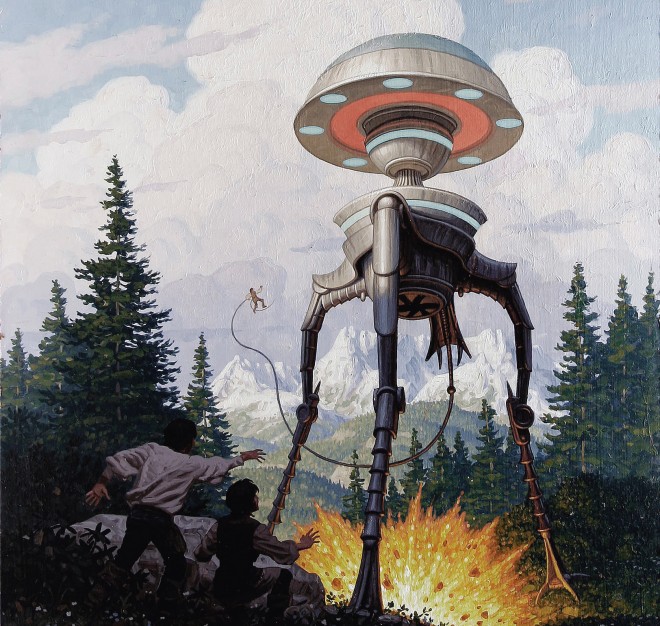
So in terms of the most overrated sci-fi author, I’d go with Isaac Asimov. He’s hugely famous, but his books are really mediocre nothings (at least as I remember them; it’s been a while.) Gimmicky, outlandish plot, paper-thin characters, serviceable prose; just not a whole lot there. Heinlein is at least genuinely weird; the only thing to say for Asimov’s books really is that they thump along and are for the most part inoffensive.

For underrated — hardly anyone knows about John Christopher or Gwyneth Jones, both of whom I think are fantastic writers. (I’ve written quite a bit about both at the links.) (Oh…and one more piece about John Christopher here.
 

tripods-cover-660x626

Utilitarian Review 3/8/14

On HU

Featured Archive Post: Ng Suat Tong on comics adaptations of Lovecraft.

Bert Stabler on the art show “Shojo Manga! Girl Power!” (reprinted from the Gay Utopia; I’m hoping to move posts over from there to here weekly.)

What’s the most underrated band/musical act? Votes for everyone from Sly Stone to Gang of Four to Terence Trent D’Arby.

Alex Buchet lists the original sources for Marvel’s upcoming Guardians of the Galaxy.

Patrick Carland wishes Disney wouldn’t de-evilfy Meleficent.

Chris Gavaler on V for Vendetta, the superhero Alan Moore hates.

Frank Bramlett thinks about representing song and speech in comics for PencilPanelPage.

Me on Tarantino’s Inglorious Basterds and fascists fighting fascism.

Jacob Canfield has updated his review of the Graphic Textbook with extra bonus hate.
 
Utilitarians Everywhere

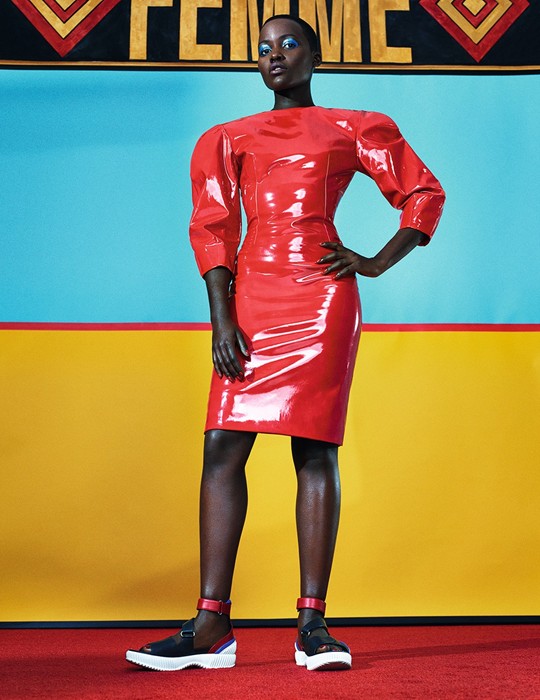
At the Atlantic I argue that Lupita Nyong’o is a fashion icon because she decided to be, not because she’s been fetishized.

At Salon I did a list of 10 songs for Hobbits.

At the Dissolve I reviewed:

Bethlehem, a film about espionage in the Palestinian territories which is the best thing I’ve seen so far this year;

u want me to kill him?, which is a piece of offensive exploitation dreck.

At Splice Today:

— I watched Nightjohn, which is okay but not the masterpiece all the film snobs say it is.

—I argued that decentralization is not a moral good in itself.

And the study guide for the Bourned Identity which I worked on is up at Shmoop.
 
Other Links

Always good to see someone hating Andrew Jackson.

Simon During on how we should stop defending the humanities.

Some idiot opines on why black people like Instagram.

Dahlia Lithwick points out that civil rights attorneys are now disqualified from being confirmed for executive positions.

Mary McCarthy provides blogging advice.
 

1060604

The Basterds Defeat Fascism

Last week I had a piece at Salon where I talked about fascism and the aestheticization of politics in Dead Poets Society. I’d originally intended to talk about Inglorious Basterds as well…but I ran out of space. So I thought I’d try to do it here.

Just to recap: the aestheticization of the political is a phrase coined by Walter Benjamin to describe one of the characteristics of fascism. Quoting trusty Wikipedia, “In this theory, life and the affairs of living are conceived of as innately artistic, and related to as such politically. Politics are in turn viewed as artistic, and structured like an art form which reciprocates the artistic conception of life being seen as art.” So fascism treats political issues as the occasion for pageantry ; differences in power or goals are all subsumed into symbolic unities — like the Nazi arm band or the mass meeting — or symbolic marginalization — like the scapegoating of Jews and blacks.

Inglorious Basterds is, like all of Quentin Tarantino’s films, so kinetic and pulpy that you don’t necessarily think of it as particularly thoughtful, about fascism or anything else. In fact, though, Tarantino seems almost to have made the movie specifically to illustrate Benjamin’s argument. The Nazi’s in Basterds are obsessed with image and aestheticization. The first scenes of Martin Wutke’s ridiciulously mugging Hitler, for example, are set against a backdrop of an artist working on a large, hyperbolically noble wall painting of the dictator. More, the Nazis in the film are presented as being obsessed with Nazis in film. The plot centers on a screening of a re-enactment of a German war triumph in which the hero, Private Zoller, plays himself. At the direction of propaganda minister Goebbels, Zoller the hero becomes Zoller the icon — a politicized propaganda image of himself. That image is so important that Hitler himself comes to the screening, giggling happily (like Tarantino himself?) as screen Zoller shoots dozens of men. Hitler compliments Goebbels enthusiastically on the screen carnage, at which Goebbels almost breaks down in tears — a propagandist who believes in his own imagined Fuhrer.

You could say that the aestheticization of politics dooms the Nazi’s in the film; they’re so obsessed with the propaganda image they’re creating that all of the Nazi brass decide to attend the opening of Zoller’s film, exposing themselves to not one, but several murderous plots. The image of Nazi victory turns into the reality of Nazi defeat — Zoller himself is shot by a French Jewish plotter even as his film self (played by his real self) kills enemy soldier after enemy soldier onscreen. And we get to see Hitler riddled with bullets by Jewish-American soldiers, doomed by his love of (his own) image.

Of course, Hitler wasn’t really killed by a Jewish-American soldier in a movie theater. That’s just a filmed fantasy of victory — a Western mirror image of the Zoller film. Hitler sits himself down to see an iconic, aestheticized encapsulation of his political prejudices, and we do exactly the same thing. Tarantino positions us, watching the Nazis die, in the same place as the Nazis watching their enemies die.

If the Nazis aestheticize the political, in other words, then so does Tarantino, and so, in the same way, do we watching Tarantino’s film. Inglorious Basterds is one suspense tour de force after another, with larger than life characters pirouetting virtuosically through breathtaking set pieces, punctuated with knowing flash-backs, ironic voice overs, and compulsive references to films, films, films, from spaghetti westerns to Triumph of the Will. The violence, the plotting, the revenge narrative and the sheer spectacle are so overwhelming and delightful that the occasional nos to political content is actually jarring. When Jew-Hunter Hans Landa (Christoph Waltz) makes an offhand remark about how he can “think like a Jew,” and compares Jews to rats, it seems gauche, unnecessary. He’s just supposed to order that family shot in a blaze of choreographed violence; linking the bloodbath to some sort of ideological meaning seems wrong.

The implication here is that, in important ways, Western democracy isn’t all that much different than fascism. The politics of both are couched in aestheticized symbols and mass ideology as spectacle. Brad Pitt’s murderous American guerilla Aldo Raine operates on much the same principles as his Nazi enemies; just as they see the Jews as a species, so he sees them as subhuman, marked. As he says, the idea that a Nazi soldier might go home, take off his uniform, and return to civilian life is wrong and inconceivable. A Nazi is always a Nazi, and so Aldo carves a swastika onto the foreheads of his prisoners, to make sure that the categorical difference he sees, the clear division of the races, will remain symbolically visible — political demarkations given aesthetic form. (It’s worth noting too that Aldo is nicknamed the “Apache” for his habit of taking scalps. Tarantino may well be aware aware that the American Indian genocide was a direct source of inspiration for Hitler’s Holocaust.)

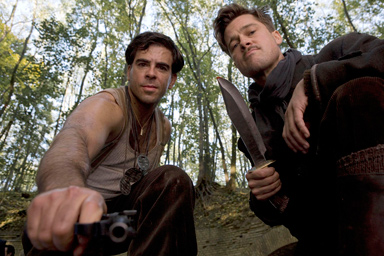
The last image of the film is Aldo and an associate looking out of the screen, supposedly at the swastika Aldo has just carved in Landa’s head. “I think this just might be my masterpiece,” Aldo says. It’s a self-reference; Aldo is a stand-in for Tarantino, who completes his film about Nazis at the same time as Aldo completes his Nazi symbol. But Aldo’s self-satisfied smirk is also (self-)deceptive. The Nazi here is not going to remain a Nazi; as soon as the film ends, in fact, Landa will go back to being Christoph Waltz, who (thankfully) has no swastika carved into his skull. Aldo’s dream of Nazis who are forever Nazi, like Tarantino’s dream of Hitler killed in a movie theater — they’re both just aesthetic fictions. Politics as symbol ultimately fails.

It’s true that part of the giddy rush of Inglorious Basterds is the sense that art can be politics; that we can make Jews take their revenge on Hitler just by representing it as truth. But part of the film’s power is also, contradictorily, the refusal of aestheticization; the insistent artificiality and theatricality remind you that the politics here are aesthetics, and so never allow the first to be subsumed by the second. Aldo can’t really reach out of the film and draw the swastika on our head. The symbol he wants to be totalizing isn’t — which means, maybe, that these bloody fantasies don’t have to control us forever. The real hope of Basterds isn’t that the Nazis will get theirs, but that, maybe, we can take off that uniform, and leave the theater.
 

inglourious_basterds

Most Underrated Band

We did most overrated ban a couple weeks back, so figured I’d try the flip side.

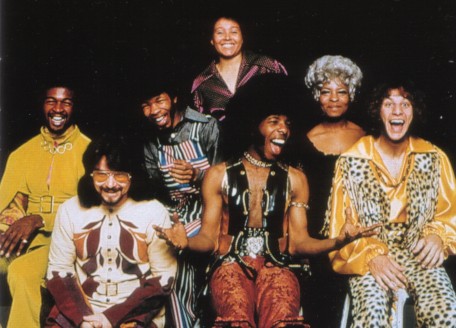
This one’s trickier for me than overrated…but I think I might go with Sly and the Family Stone. They are much admired, but they tend to be sort of an afterthought in terms of great sixties boomer bands, when I think they’re actually way more innovative/important/influential than the Rolling Stones, or Dylan, even Hendrix. Even bands like Funkadelic or Outkast, who owe a huge debt to Sly, tend to get more props.

Other picks…um…I think the Bangles are great, which is not a widely held opinion, I know. I think Destiny’s Child is brilliant and important, which again isn’t a consensus opinion.

What do you folks thinks? What’s the most underrated band/musician?
 

sly_and_family_stone