Monthly Stumblings # 6: Otto Dix

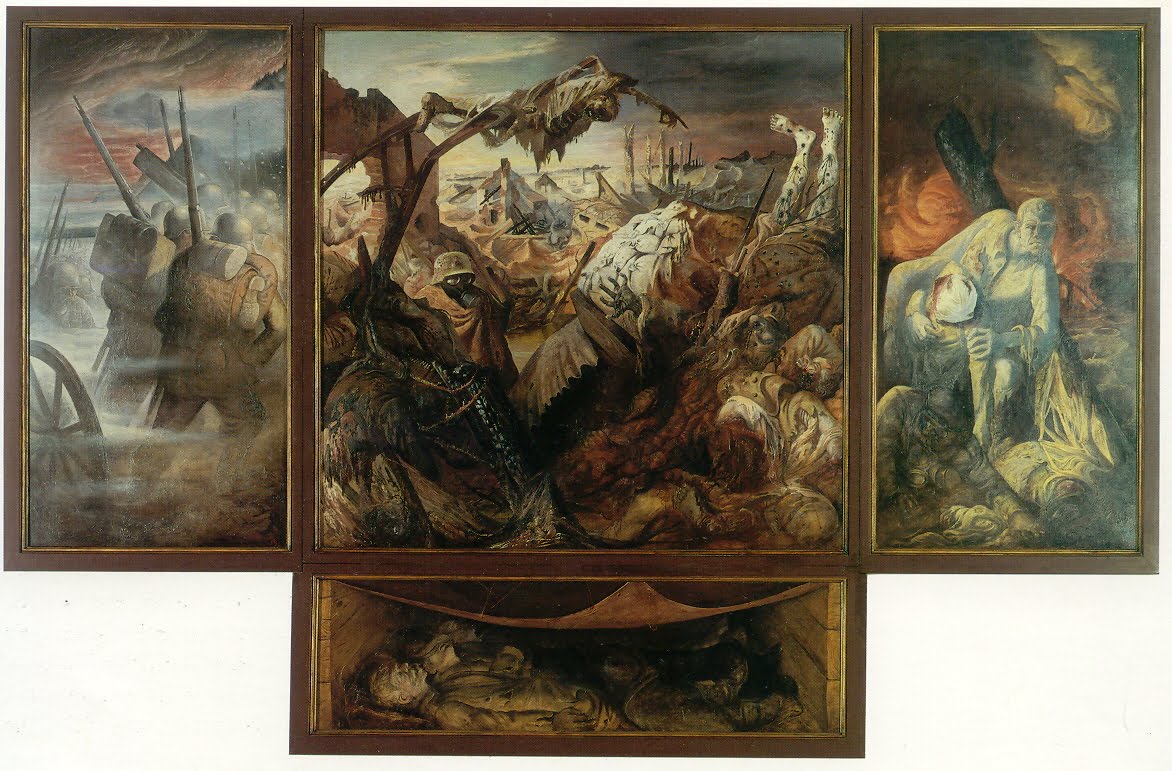
Der Krieg (the war) by Otto Dix

When I think about German Expressionism the Isenheim Altarpiece (1506 -1515) by Matthias Grünewald comes quickly to my mind. I know that it isn’t exactly an Expressionist painting (I’m aware of the anachronism), but all expressionism (and some Surrealism too: Max Ernst, for instance) is there already.

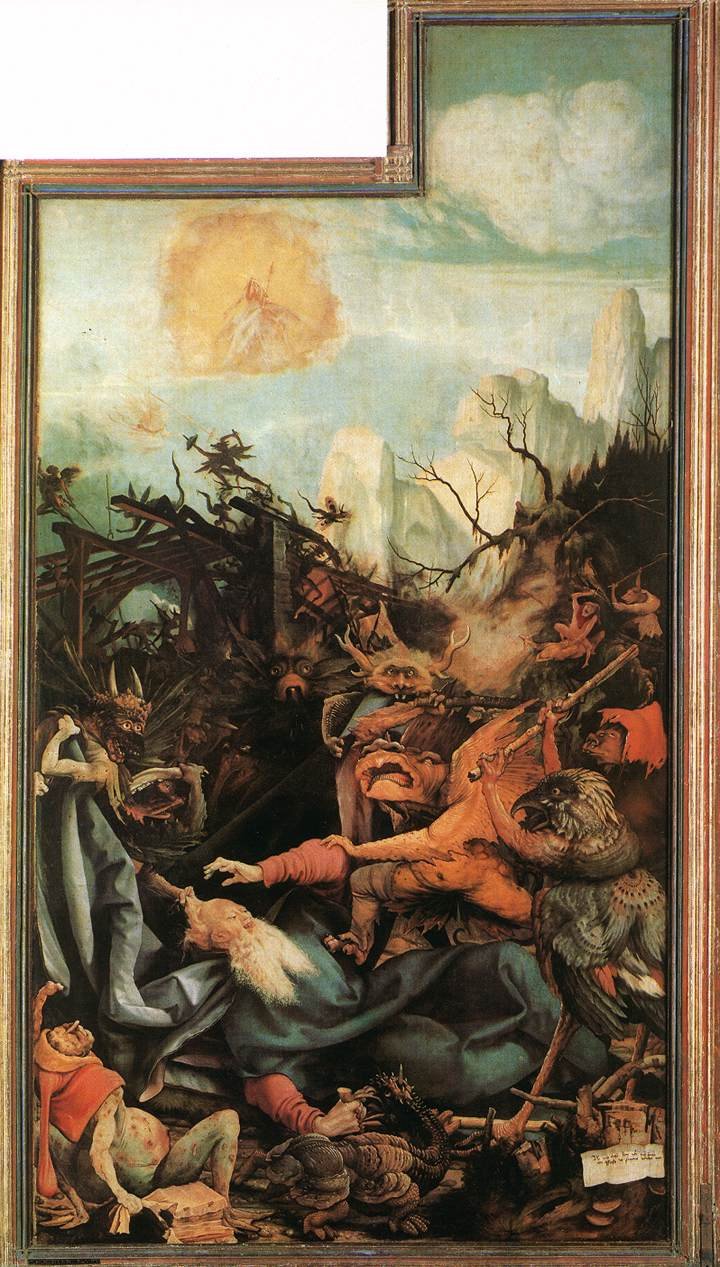
One of the topics explored by Matthias Grünewald in his altarpiece is ergotism, as we can see in the polyptych’s wing shown below:


It represents Saint Anthony being harassed by demons, but if you look closely on the lower left corner of the painting you will see a patient afflicted with Saint Anthony’s fire. This disease was caused by the ingestion of ergot infected rye and other cereals. Ergotism produces  seizures and hallucinations (hence the demons) as well as gangrene of the limbs and peeling. Ergotism also explains the strange look of Matthias Grünewald’s Christ in the aforementioned altarpiece. There was a spiritual connexion between the son of God’s suffering and the suffering of the diseased.

The depiction of human pain (often psychological pain instead of physical agony) isn’t the only theme explored by Expressionist painters (and it certainly isn’t this artistic movement’s monopoly), but it certainly is an important part of the aforementioned style. Otto Dix remembered Matthias Grünewald and the polyptich form (a tryptich with a predella: a gallery comic) when he painted Trench Warfare, 1929 – 1932, his own version of human suffering in WWI:

Continue reading

Utilitarian Review 10/23/10

On HU

Kinukitty reviewed the yaoi manga How to Seduce a Vampire.

Andrei Molotiu examined how it changes our view of comics to see original comics art in a gallery context. (This is the first in a new series edited by Derik Badman reprinting academic articles and essays.)

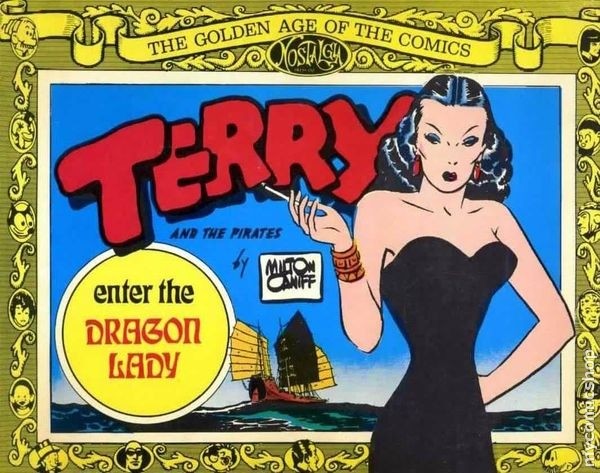
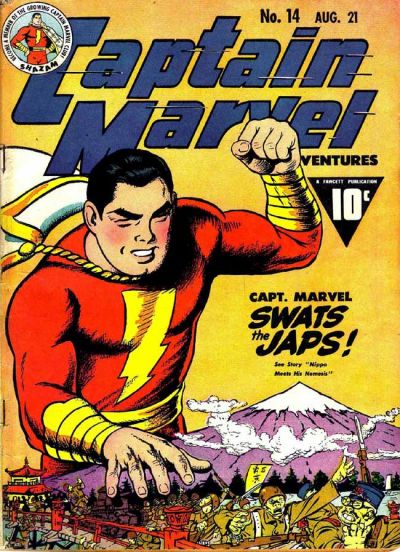
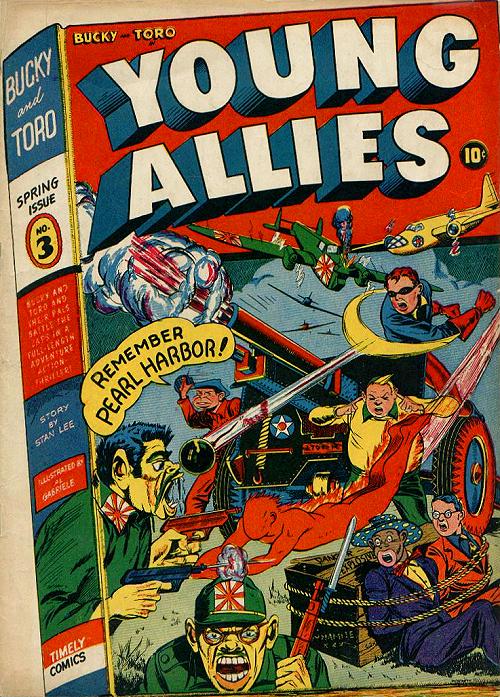
Richard Cook examined 80 years of Asians on mainstream comic book covers.

I talked about Moto Hagio’s short story Angel Mimic.

Vom Marlowe talks about the novel Blackout by Connie Willis.

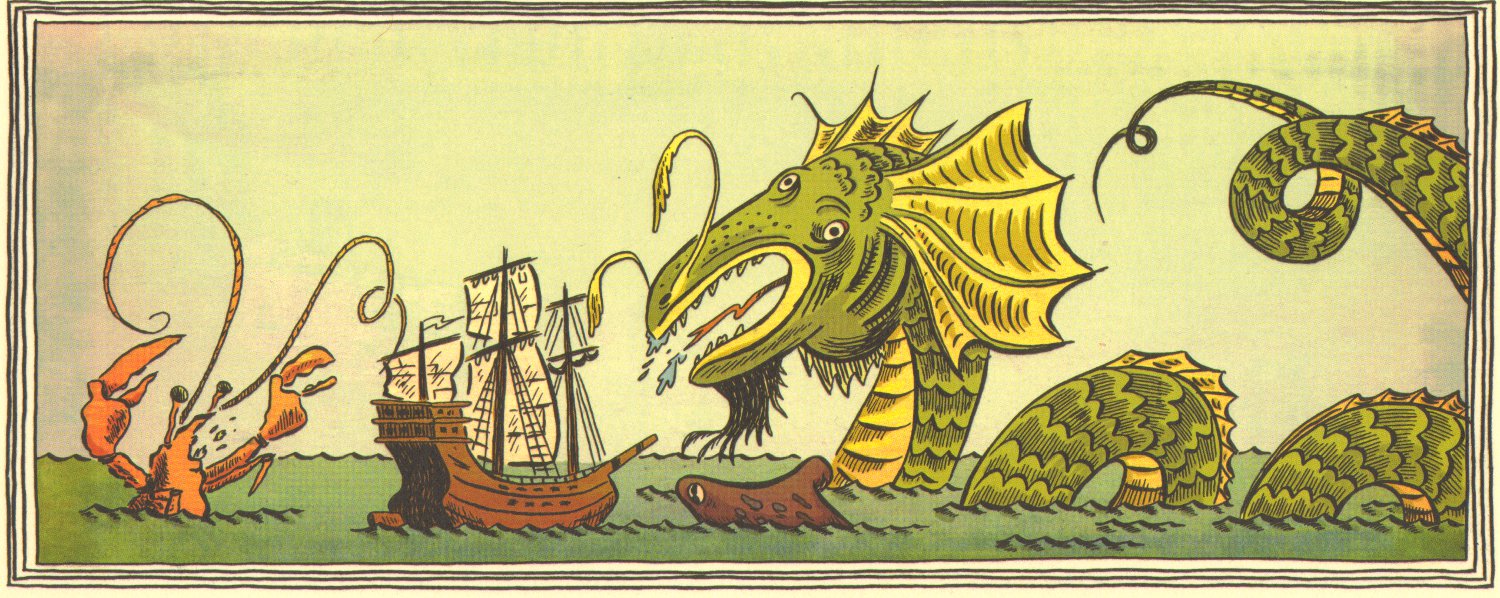
Caroline Small discusses Alexis Frederick Frost’s wordless minicomic Voyage.

Utilitarians Everywhere

At Madeloud I review doom metal band The Body’s album All the Waters of the Earth Turn to Blood.

Other Links
I quite like science blogger John Horgan.

This article, with Sesame Street appearances by Destiny’s Child, Stevie Wonder, and Paul Simon, is great.

Here Be Lovely Monsters: Alexis Frederick-Frost’s Voyage

A couple of categories dominate mini-comics at SPX: the quick-and-dirty ones with simple drawings and simple or no text, usually photocopied, and the visual-artifacts-with-really-nice-art ones, which are beautifully drawn and decently- to well-printed, but often with “stories” that are rarely more than journal entries or slice-of-the-mundane or just random patter – hat racks for the high-quality art.

Exceptions to the hat rack problem are most often found in wordless mini-comics. The best example in my stash is Alexis Frederick-Frost’s simple but gorgeous “Voyage.” (I originally didn’t think this comic had a prose name: it’s not on the comic and I didn’t immediately locate it on his blog; I’ve been calling it “The Here Be Monsters Mini-Comic.” I was a little disappointed to discover that it did have a title!)

Continue reading

Still not a comic, Blackout by Connie Willis

It’s been a long time since Connie Willis, author of To Say Nothing of the Dog, has come out with a book.  She’s been working on a book about World War II for years, and it is finally finally out.  It was so large that it had to be divided into two volumes, in fact.  Blackout was released in spring and the conclusion, All Clear was released this week.

Today I’ll be talking about Blackout.  This review contains some spoilers for Blackout, but (because the mysteries are fairly crucial ones), I have tried hard not to include any spoilers that go through to All Clear.  All spoilers (which are general and I hope minor) for Blackout are beneath the jump cut.  If you want to know whether you might enjoy Blackout and haven’t yet bought it, or if you bought it but kind of gave up because you became confused, bored, or puzzled, here’s what I loved:

Blackout is about war.  Not war in the trenches, which is ably covered elsewhere and which I hope (fervently) that I will never see, but a war at home.  It is about the civilian side of war, where everyone, in a sense, becomes a soldier.  It covers the Blitz in London and it covers the Evacuation of the children to the country, and it covers that most amazing of events the evacuation at Dunkirk, where the British Expeditionary Force was rescued by a lot of Sunday sailors and fishermen.  (If you don’t know about this, go find out.  It always makes me cry.)

Continue reading

Moto Hagio: “Angel Mimic”

I’m blogging my way through Fantagraphics’ Moto Hagio collection, “A Drunken Dream.” You can read the whole series of posts here.
_________________________________

Hanshin: Half-God and A Drunken Dream were both more plot hole than story; odd broken fairy tales with glimpses of trauma breaking through the prevailing aphasia. They’re unique, bizarre, and lovely.

“Angel Mimic” is, alas, much better constructed. There’s foreshadowing, thematic development, a final shock reveal — in short, all the elements of a traditional plot. As for what that plot is… Joe McCulloch over at Comics Comics has a good summary.

while a double-barreled blast of soap opera sees a suicidal girl hauled off death’s doorstep by a rough but handsome man who *gasp* turns out to be her new biology professor, resulting in detailed, evolution-themed educational segments (not unlike the learning bits in Golgo 13 or a Kazuo Koike manga) inevitably lashed to Our Heroine’s Dark Secret. “I wonder if humans will evolve into angels?” she muses, probably gauging the reader’s appetite for comics of this tone.

Joe’s a kinder man than I, so he doesn’t quite come out and say it, but — yeah, this is godawful. In her better stories, the fact that Hagio’s characters never for a second seem real gives her world an eerie air of unreality, like they’re pasteboard props erected to conceal an abyss. Here, though, more of the cracks are filled in, and Tsugiko ends up seeming less like a mask concealing wells of emotion and more like a hollow doll being pushed by rote towards the inevitable epiphany. There’s initial tension with the man who saves her — he wanders back into her life — they are thrown together by circumstance — they happen to meet her ex — they separate — they come back together — the secret is revealed — happy ending.

That secret (and hey, I’m going to spoil this crappy story now, so be alerted)….

Continue reading

Permanent Ink: Comic-Book and Comic-Strip Original Art as Aesthetic Object by Andrei Molotiu

Editor’s Introduction: This is the first of what we hope will be a monthly column, “Sequential Erudition”, which will reprint academic work in the field of comics studies. The numerous discussions around the Best American Comics Criticism volume brought up how divorced the academic writing about comics is from popular writing about comics, not because of style, content, or interest, but because so much of the academic work is not easily available to the average reader (those without access to an academic library). In an attempt to help spread some of this academic work to a broader audience, this column will be reprinting works from journals and other academic venues. If you are an academic who is interested in having his/her work reprinted, please contact me, Derik Badman (email: first name dot last name at gmail dot com). Much thanks to Andrei for agreeing to have his article reprinted. -Derik.


Permanent Ink: Comic-Book and Comic-Strip Original Art as Aesthetic Object by Andrei Molotiu

[Author’s Note, 2010: I gave an early version of this article as a talk at the 2006 meeting of the College Art Association, in a session, organized by Christian Hill, on “Gallery Comics.” Expanded from that talk, the article was then published in the Fall 2007 issue of the International Journal of Comic Art, as part of a symposium on the same topic; hence the references to “gallery comics” in the first section, below. While, as a concerted movement, gallery comics seem more or less to have fizzled since, the notion of combining the comic form with the display context of the gallery wall clearly still informs the practice of many contemporary artists (or cartoonist/artist hybrids), such as Mark Staff Brandl (another participant in the session and symposium), Warren Craghead and, well, me; not to mention many other comics artists who have turned to showing their work in gallery spaces in recent years, such as Mat Brinkman or Ben Jones.

In any case, I mention this original presentation and publication context just to explain some references that might otherwise seem puzzling (Christian opened both the CAA session and the symposium with a presentation introducing the notion of gallery comic; even in the absence of his text, though, I think the definition of this new-ish artform should be pretty clear from my discussion of it); I primarily used the topic to introduce my main subject: the display on gallery and museum walls of comic art that had not originally been intended for this purpose, and how this new display context affected our appreciation of it.

The text below varies in a few minor points from the version published in 2007; in one or two instances I re-thought the wording, and I have also added, in brackets, a couple of notes expanding or correcting some of my earlier claims. -Andrei Molotiu]

While the aesthetics of comics have received increased scholarly attention over the last couple of decades, most of this attention has been paid to comics in their final, printed form, with little of it devoted to original comic art.[1] At the same time, traditional drawings experts have shied away from art that is often seen not as an end in itself but as a tool in a creative process, the end of which is the printed comic. Of course, the lowly status of “popular” culture has also played a large role in this neglect. However, original comic art deserves significantly more study from comics scholars, art historians, museum curators, and even from critics and theorists. I would like to make the case for it by emphasizing the specificity of original art as aesthetic object, and by distinguishing between the aesthetics of the printed comic and those of the actual original-art object, as collected and displayed.

Comic Art Originals as Gallery Comics

Continue reading