Anthology of Chinese Experimental Music, 1992-2008

This first ran at Madeloud (a site that I think may no longer be online.)
________________

The Anthology of Chinese Experimental Music, 1992-2008. I read that title and I think to myself, “This may be great, it may be awful, but either way it’s going to be some weird-ass shit the likes of which I have never heard before in my life.”

Just goes to show what I know. Maybe it’s because, as the liner notes indicate, China’s indigenous cultural heritage was in many ways severed by the Maoist Cultural Revolution. Or maybe it’s because, just as today country music doesn’t mean rural, and rhythm and blues doesn’t mean the blues, experimental music just isn’t especially experimental. Whatever the reason, though, little on this four CD set qualifies as startling. From the first track (Li Chin Sung’s ambient static-and-cricket-noises on “Somewhere”) to the last (Simon Ho’s echoey, ambient, static-and-plane-taking-off-noises on “5”), we’re solidly within the avant-garde laptop paradigm. Some loud feedback, some snips of sound, a little techno bleepery here, a little static there….check, check, check, and check. I should have known; if you want , you need to head for Bollywood or Japanese pop, or, hell, American pop. Anything calling itself experimental is going to be just a little too pretentious to be truly goofy.

Which isn’t to say this set is bad. Four CDs may be more droning and squeaking than I really need in my life right now, but there are definitely a decent number of worthwhile moments scattered throughout. Torturing Nurse, for example, lets loose with some truly crazed shrieking to open CD 3; the rest of the track is 14 minutes of what appears to be a free-jazz combo caught in industrial machinery. SUN Dawei’s “Crawling State”, from CD 2, combines Baaba Maal-sounding African vocals and rhythms with more jittery computerized beats. The following track, Nara’s “Dream a Little Dream,” is very Aphex Twin; frantic bleeps undergirding a melody that’s all lyrical bliss. Fathmount’s “A Yoke of Oxen,” on the other hand, suggests Sonic Youth if the band were forced to ingest a substantial amount of mellowing weed — the detuned guitars gently weave and ploink without ever getting around to the brutal feedback rock climax. I even enjoyed some of the one-liners; I don’t actually want to sit for 4:47 and listen to a crane operate, but I appreciate that someone (a performer known as Fish, specifically) has given me the opportunity.

And you know what? Listening to Tats Lau’s “Face the Antagonist” again, I realize that it actually does sound like some sort of odd computer-nerd version of Bollywood, complete with earnest, soaring vocals, industrial clanging, and an odd warped mouth-harp-like twanging throughout which may or may not be entirely synthesized. That is pretty weird, after all.
 

An-Anthology-of-Chinese-Experimental-Music-1992-2008

Old Enough to Be Confused

This first ran on Splice Today.
__________

61sj-BslTtL._SY300_

 
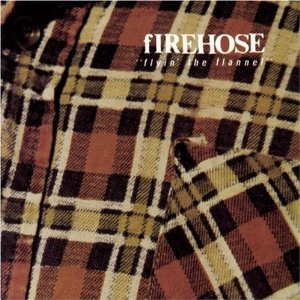
It’s taken me somewhere in the neighborhood of 20 years to appreciate fIREHOSE. A friend taped it for me back in the early 90s, maybe a year or three after its release in 1991. I didn’t hate it or anything, and I listened to it a fair amount because my friend said I should like it and I felt like I should keep trying. But it was only when I started to listen to it again last month after that two decade hiatus that I ended up falling in love — and buying all of fIREHOSE’s other albums.

It’s appropriate that I had to wait, and wait, and wait, to really appreciate the band. Most rock at least makes some pretense at aiming for the kids, but fIREHOSE really is music for aging decadents. Bassist Mike Watt and drummer George Hurley were already punk legends when the band coalesced — they’d been two thirds of the Minutemen, before guitarist D. Boon died. The new guitarist and vocalist, Ed Crawford, substituted for Boon’s youthful political charge a jaded, wigged out irony — everything the band does sounds like it’s in quotes. One of their songs, from 1993’s Mr. Machinery Operator is even called “More Famous Quotes.” Another, from 1987’s If’n, is called “For the Singer of REM” and is a gleefully goofy skewering of Michael Stipe, with Crawford burbling about how “the door’s a symbol for/these objects in your drawer,” while Watt and Crawford somehow imitate REM’s folk-rock shimmer exactly while still sounding like their own spiky, funky selves. It’s as if they’ve contemptuously swallowed their target whole.

As that parody suggests, there’s a little Weird Al in fIREHOSE’s makeup — but it’s Weird Al as he would have been if he was more musically talented and more ambitious than any of the bands he parodied. fIREHOSE is undoubtedly joking throughout Flyin’ the Flannel, but the jokes are so fractured and bizarre and cool-as-shit that they end up slipping over into the sublime. It’s the greatest chortling grandpa music ever.

Most of the songs on Flyin’ the Flannel are only one to two minutes long, and they all seem put together out of spare pieces, shards, and novelty items. “Can’t Believe” is a joyful power-pop ode to love into which someone has inadvertently dropped a barrel-full of amphetamines and the lunatic what swallowed them. Crawford wails his Michael Nesmith lines like Rob Halford with head trauma, while Watt and Hurley burp and stutter, turning the wannabe triumphant hook into a series of strutting pratfalls. On the band’s version of Daniel Johnston’s “Walking the Cow,” Mike Watt emotes like a slowed down Elvis, while the band turns the fey original into a faux-soulful stroll, with the meaty bass insisting that there really is a cow lowing over there. “Flyin’ the Flannel” is a cock rock roar about the need for tailors, interspersed with fruity folksy interludes, as Watt’s base meditatively scuffles about in the underbrush And then there’s “Towin’ the Line,” which is maybe the album’s closest song to actual funk. Though it’s still all slowed down and spaced apart, like George Clinton leisurely bouncing around the studio on a pogo stick.

Talking about individual tracks is a little deceptive though. The songs tend to blur into each other, not because they all sound the same, but, again, because they’re each so fragmented. The whole feels less like a whole than like an assemblage, stiched together out of Hurley’s weird shifting beats, Watt’s weird shifting bass runs, and Crawford’s weird shifting riffs and wails. You end up with this tattered, limping thing, which keeps trying to rock and then gets tired and goes off to snark or fart or sit down for a rest, or bellow at the kids on the lawn. Maybe I felt like it was bellowing at me once upon a time, I don’t know. But whatever my problem was, I’m glad I finally got old enough to like my music this distracted and crotchety and glorious.
 

Romance>Lit Fic

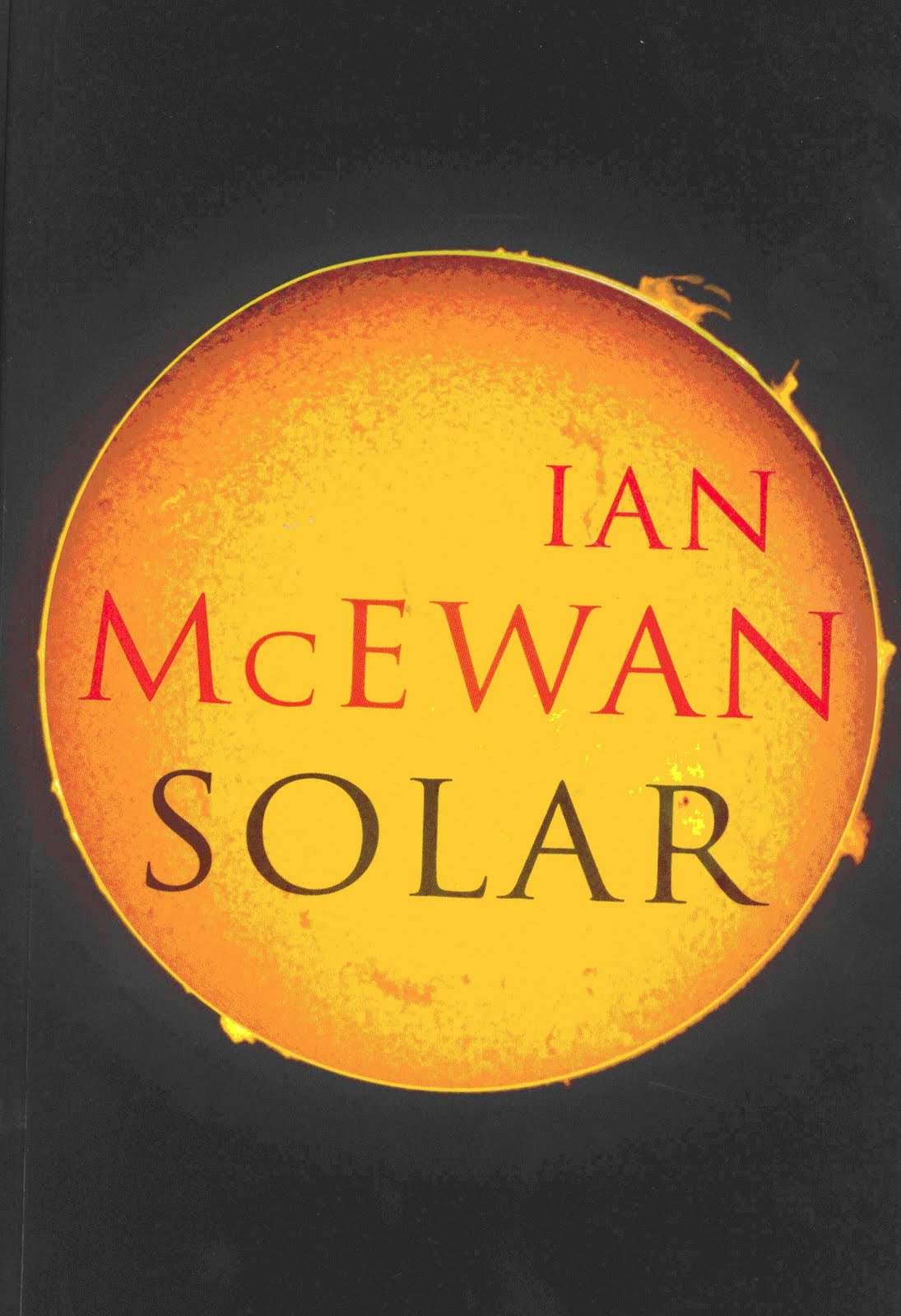
Cover-SolarIan McEwan secretly writes romance. He’s supposed to be a lit fic author, but most of the books of his I’ve read — The Innocent, Atonement, and Sweet Tooth — all function like category romances, with a bit of meta-fictional trickery (which isn’t exactly foreign to category romance either. The last of these I read, Sweet Tooth, even works as a kind of love letter to the fan fic wing of romance. The book is narrated by Serena Frome, a low-level operative in MI-5 tasked with secretly funding propaganda funds to likely anti-communist literary sorts. She falls in love with Tom Haley, a novelist she’s gotten into the program…and then (spoiler!) it turns out at the end that she isn’t actually the narrator; instead, Tom is the narrator writing as her. The romance trope of switching between male and female protagonist consciousnesses is both tweaked and perfectly fulfilled, as is the fan fic genre trope of telling the same story from different characters perspectives. It’s a tour de force, not because it upends romance conventions, but because it fulfills them so gleefully and perfectly. Quite possibly McEwan doesn’t read category romance or fan fic—but he has enough common roots with the genre that he understands them, and loves them and makes them his own— or, if you prefer, lets them make him theirs.

So it was with some disappointment that I read McEwan’s “Solar”and realized that it was not a romance. It’s just literary fiction. And you can tell it’s literary fiction not because it dispenses with genre tropes, but because the genre tropes of literary fiction are all in place. The aging priaptic professor and his string of wives; the jabs at academic politics, the ironies, the metafictional asides (the main character, Beard embellishes a story “not because, or not only because, he was a liar, but because he instinctively knew it was wrong to dishonor a good story.”) And of course the inevitable, drearily happy unhappy ending, where everyone figures out that the main character is a horrible person and all his lies catch up to him, and so we’re left dangling in media res with disaster delightfully coming. Yawn. It’s almost as drearily cliché as the end of Edward P. Jones’ “The Known World” where the last scene is of the characters literally gazing at a rich tapestry. No, really.

Genre fiction, and especially romance, is generally thought of as predictable and structurally uncreative. Lit fic requires idiosyncratic genius. But for McEwan, at least in the four books I’ve read, the opposite is the case. Romance seems to inspire him to play with the genre; to stretch it out and move the bits around, to see just how far he can push his characters and his readers while still retaining their love. In lit fic, though, the pretense of no formulas seems to mean he can’t even see the formulas, and so he just goes trudging through them, without even bothering with variation or wit or invention. The box you know is there becomes an inspiration; the box you refuse to see is the one that holds you.

This isn’t to say that Solar is utterly without merit; there’s an incredibly funny bit involving sub zero urination and the consequences thereof. But the amusing set pieces never add up to anything interesting, because lit fic’s non formula-formula robs McEwan of invention as surely as his main character is (inevitably) bereft of inspiration and genius. Without genre, lit fic is at the mercy of its formulaic conventions.

Utilitarian Review 8/1/15

On HU

Featured Archive Post: I try to turn poetry into comics criticism. (Perhaps the post on the site least likely to ever find an audience.)

Robert Stanley Martin with on sale dates of comics in late 1944. Pretty covers!

Leonard Pierce on Marvel’s hip hop variant covers and their crappy history with black characters and creators.

Kim O’Connor on the problems with Scocca’s On Smarm.

I wrote an open letter to Axel Alonso about Marvel’s hip hop variants and his comments about me.

Chris Gavaler on the convergence of lit fic and pulp.

Jimmy Johnson on SVU and sex work stigma.
 
Utilitarians Everywhere

At Quartz I wrote about how inequality is behind the deaths of both black people and Cecil the Lion.

At Urban Faith I wrote about Ta-Nehisi Coates’ Between the World and Me and tradition as a gift.

At the Guardian I profiled science-fiction author N.K. Jemisin. We talked about race, change, and the status quo.

At Playboy I interviewed Monica Byrne about diversity in literature and criticism.

At TNR I wrote about Jack and Jack and the disturbingly bland future of independent music.

At Splice Today I wrote about

Salon and Gawker hitting each other.

—how Harper Lee’s reputation should be tarnished.

A short blurb about SZA in the Chicago Reader’s Lollapalooza coverage.
 
Other Links

Claire Napier on why Emma Frost’s wardrobe is idiotic.

Kenny Keil parodies Marvel with way better hip hop covers than theirs.

Emily Shire on Lena Dunham and others pushing to criminalize sex work.

Robert Stanley Martin on Birth of a Nation.
 

cf78ccc9-1f6a-492b-8ea3-45dfd4d7533c-2060x1236

The author N.K. Jemisin


An Open Letter to Axel Alonso

Mr. Alonso,

Hi. I’m Noah Berlatsky. I’m the critic who you mocked (without mentioning my name) in your interview with Albert Ching at Comic Book Resources last week.

That interview, as you know, focused on criticism of Marvel’s hip hop variant covers. Many writers have argued that Marvel has a poor history of employing creators of color, and that, therefore, its variant cover project seems to celebrate the work of black art at a company that has largely ignored black people. I made that argument myself at the Guardian. In doing so, I failed to acknowledge that Marvel had hired many people of color to do the cover variants. I apologized for that on twitter. And, as I said, you took that as an opportunity to throw some elbows my way.

I have no objection to the elbows. I screwed up. I erased people of color when I was trying to highlight the ways in which they are erased, and for that I deserve ridicule. As one injured party, whose good efforts I should have acknowledged, you’re well within your rights to pile on.

However, I was distressed to see that you used my error as a way to dismiss, not just me, but everyone who had expressed concern about this marketing initiative. You wrote,

A small but very loud contingent are high-fiving each other while making huge assumptions about our intentions, spreading misinformation about the diversity of the artists involved in this project and across our entire line, and handing out snap judgments like they just learned the term “cultural appropriation” and are dying to put it in an essay.

That may well be an apt description of me. But you have to be aware that many other writers, who did not make the same errors I did, have raised objections, both to Marvel’s failure to employ black creators and to its generally dismissive tone when confronted. Why, in short, are you responding to one white writer who screwed up, rather than engaging with the many black writers and POC writers who have discussed this issue? I’m sure all of these folks have already been drawn to your attention, but in case you missed them, people who have tried to talk to you about this problem include David Brothers, J.A. Micheline, Shawn Pryor, and Osvaldo Oyola.

Many more people have weighed in on social media. Perhaps this is just a “small” contingent compared to Marvel’s whole audience. But it is part of the “dialogue” with hip hop you claim to want Marvel to engage in. People want to know why Marvel claims to love hip hop, but won’t hire black creators to write and draw its ongoing comics. And your response is to, very deliberately, engage with a white critic who made a mistake, while ignoring all the black people and people of color who have voiced serious concerns. That doesn’t seem like you want a dialogue with hip hop, or with anyone. It seems, instead, like you want the credibility of hip hop without engaging with the community and without doing the work.

Along the same lines, it’s great that artists like de la Soul and Nas like their covers; you gave them props, and they responded enthusiastically. However, I wish you would take a moment to go back to them and explain that you are using their endorsement as a way to avoid discussing the lack of black artists on Marvel’s regular comics line. Perhaps they would be fine with that. But it seems like you should give them the opportunity to say so, rather than making assumptions.

I suspect you will never see this letter. I had hoped CBR would give me the chance to post this on their site, especially since, in my view, their interview was sycophantic and broadly unworthy of them. Unfortunately, for me, and I feel for their integrity, they decided not to give space to a reply.

But since you made your response to criticism all about me, I felt like I should try to tell you, even if only in a small voice, that it isn’t about me. Because, as I hope you’re aware, hip hop is way bigger than me. It’s bigger than you, too. And yes, it’s even bigger than Marvel. The folks criticizing you are asking you to live up to this music and art and movement that you’re claiming that you love. As it is, the only bit of hip hop you are demonstrating real affection for is industry rule #4080. If you’d like to change that, you need to maybe stop talking and start listening — though not, in the first place, to me.

Thank you for your time,

Noah Berlatsky

Utilitarian Review 7/25/15

On HU

Featured Archive Post: Bert Stabler on Bloom County as the last realist comic strip.

Robert Stanley Martin with on sale dates for comics from mid 1944, including lots of Walt Kelly.

Chris Gavaler on Zorro, secret identities, and homosexuality.

Phillip Smith tries to figure out what cartoonist Brandon Graham is doing with the sex and 9/11 references. There’s a longish, interesting thread about porn and criticism and other issues, where Sarah Horrocks, Darryl Ayo, and other folks show up to chat.

Me on freelance pitching and how to get rejected while trying pretty hard.

Kate Polak on gun violence and the limits of empathy.

Jimmy Johnson on Mr. Monk and toxic masculinity.
 
Utilitarians Everywhere

At Qz.com I wrote about

—why ending the drug war won’t address our incarceration problem.

Southpaw and the dangers of masculine vulnerability.

At Vice I explained why Ant Man is white.

At the Guardian I wrote about the problems with the new Marvel hip hop variant covers.

At Playboy I wrote about

—Stephen Crane’s story The Monster, and white people writing about race.

—how nostalgia means the new Bloom County isn’t as good as the old Bloom County.

At Ravishly I wrote about Ant Man and shrinking men and women into their respective gender roles.

At Splice Today I wrote about

—why I’m glad blacklivesmatter protestors interrupted Bernie Sanders.

—my favorite albums at midyear.

The Shmoop study guide I worked on for Albee’s Zoo Story.

The Shmoop Study guide I worked on for Melville’s Piazza Tales.
 
Other Links

Shawn Pryor on Marvel’s hip hop variants.

James Kilgore on why anti-poverty and decarceration have to go together.

Hillary Rodham Clinton is good at politics.

Kathleen Gilles Seidel has put several books online for digital sales, including one of my favorites, “Again”.
 

1522023_690817180949038_1062062659_n

How To Get Rejected While Trying Pretty Hard

Freelance has been somewhat kicking my butt this week, so I thought I’d reprint this piece, first published on Splice Today.
____________
The worst thing about freelancing is the constant rejection. No matter how battle-scarred and hard-hearted you are, it still sucks to have people constantly showing up in your inbox to tell you that your ideas aren’t good enough and also that they are not going to pay you. Like other writers, I would like to learn some secret formula — any secret formula — that would allow me to get to the point where only 40% of my pitches are rejected, rather than half of them or more. And so New York Times culture editor Adam Sternbergh has kindly attempted to help, by posting a series of tweets (some storified here, laters added here which explain just what editors are looking for in a pitch, and how you can make sure you don’t get pushed to the bottom of the electronic slush pile.

There’s only one problem. Sternbergh’s advice isn’t very good. In fact, based on my own experience as a freelancer who pitches constantly to outlets large, small, and in between, much of Sternbergh’s advice is largely useless, and in places its actively misleading.

Now, “largely useless” here does not mean “entirely useless.” In fact, if your goal is to pitch specifically to the New York Times culture section, Sternbergh has a bunch of detail that I’m sure would be valuable. Sternbergh says that he wants short pitches. He says he wants stories with characters and conflict, not ideas. He says that he doesn’t want to talk on the phone. Those are good, practical details about what Sternbergh wants, and if I ever get up the gumption to pitch him at the NYT, I’ll definitely keep them in mind.

But the conversation around Sternberghs’ suggestions (at the storify link for example) seems to be couched at least in part in general terms — not as a style guide for what the NYT in particular wants, but as advice for what editors more broadly want. And the problem here is that different editors want really different things. Most editors don’t want to talk to you on the phone, it’s true…but I’ve had some who did. Some editors may want short pitches, but others seem to like more detail. Some editors are looking for ideas, not stories — and in a lot of cases, ideas and stories are both really secondary to having a good news hook.

In fact, one of the most important things about freelancing is that there isn’t a formula. That’s the nature of the job. You’re working for a bunch of different clients, and pitching to a bunch of different outlets, and none of them will have the exact same procedures or expectations. This is a good thing to some degree, because it means that if your pitch gets rejected one place, it might be accepted somewhere else with different priorities. But it’s a frustrating thing too, because it means that you can’t get into a groove (or even a friendly rut) the way you can when you work for a single employer.

Sternbergh addresses this in a tweet from earlier this week, where he writes (https://twitter.com/sternbergh/status/474275132824096768) : “If you’re not sure if your idea is right for that magazine you shouldn’t be pitching that magazine. Not until you’re sure.” Again, there’s some truth to that; you should be at least somewhat familiar with the venues you write for. Pitch the story about the local Chicago arts show to the Chicago Reader, not to the Atlantic. Pitch the story about Chris Ware to the Comics Journal, not the Dissolve. That may seem somewhat obvious, but I know, for example, that the Comics Journal would sometimes get pitches about stand-up comedy — so if you do just a little research, you’re going to be ahead of at least some folks.

But Sternbergh’s broader point here seems like it’s designed not to help freelancers, but to make them despair. Sternbergh says that you should be “sure” your idea is right for a magazine before you pitch— but, again as someone who pitches all the time, the one thing I’m sure of is that you’re never sure. If I waited till I was sure something would work, I’d never pitch. Even with magazines I’ve worked with frequently, even with outlets I work with weekly, even with editors I talk to all the time, I still don’t know when a pitch will be accepted. I’ve had hope and a prayer pitches taken because they struck an editor’s fancy; I’ve had things I thought were certainties turned down. You can read a magazine, but you can’t read an editor’s mind — and even if you could, that still wouldn’t necessarily help you. I’ve had pieces turned down because the editor didn’t get a chance to look at the pitch until after the news hook went cold. I’ve had pieces turned down because the editor was over budget and just couldn’t afford to run them. I’ve had pieces turned down because they were too good a fit, and the editor already had something similar in the works. I’ve had pieces turned down because the editor I had a relationship with left, and the new editor just wasn’t that interested in my work. And so forth. There are as many reasons for rejection as there are pitches to reject. If you throw a ball into the air, gravity will bring it down. If you throw a pitch into the Internet, more likely than not it will come back to you with a “no”.

The ugly truth is that successful pitching often has less to do with the form of the pitch or how many paragraphs it’s got, and more to do with that somewhat humiliating ritual known as “networking”. But that’s hardly unique to freelancing; if you’re lucky enough to know someone who knows the right person, you can get past a lot of the hoops that are set up expressly to provide overworked employers/editors/whoever with some rubric for weeding people out. When you’re pitching cold without an introduction, there’s not much you can do but try to do due diligence, follow the submission instructions if any, give it your best shot, and cross your fingers. Nobody can tell you how to do more than that, because there’s nothing more than that to be done. And yes, that can be a little disheartening. But, on the other hand, at least you’ll know that getting rejected doesn’t mean you’re doing it wrong. It just means you’re a freelancer. Welcome to the club.