Utilitarian Review 1/17/15

Wonder Woman News

My book was (finally!) released this week. There were a number of reviews and interviews and such.

The Atlantic printed an excerpt adapted from the book’s intro.

Alex Deuben interviewed me at Comic Book Resources.

Paul Semel interviewed me at his site.

Suzette Chan reviewed the book at Sequential Tart.

Tim Hanley reviewed it at The Comics Journal. (Tim had a little more to say at his blog here.

Sheryl Kirby reviewed my book and Jill Lepore’s together.
 
On HU

This was a kind of overwhelming week on HU. We had a bunch of posts about my Wonder Woman book release, and then everybody wanted to write about Charlie Hebdo.

So Wonder Woman first:

I interviewed Carla Speed McNeil about how Marston/Peter’s take on gender inspires her.

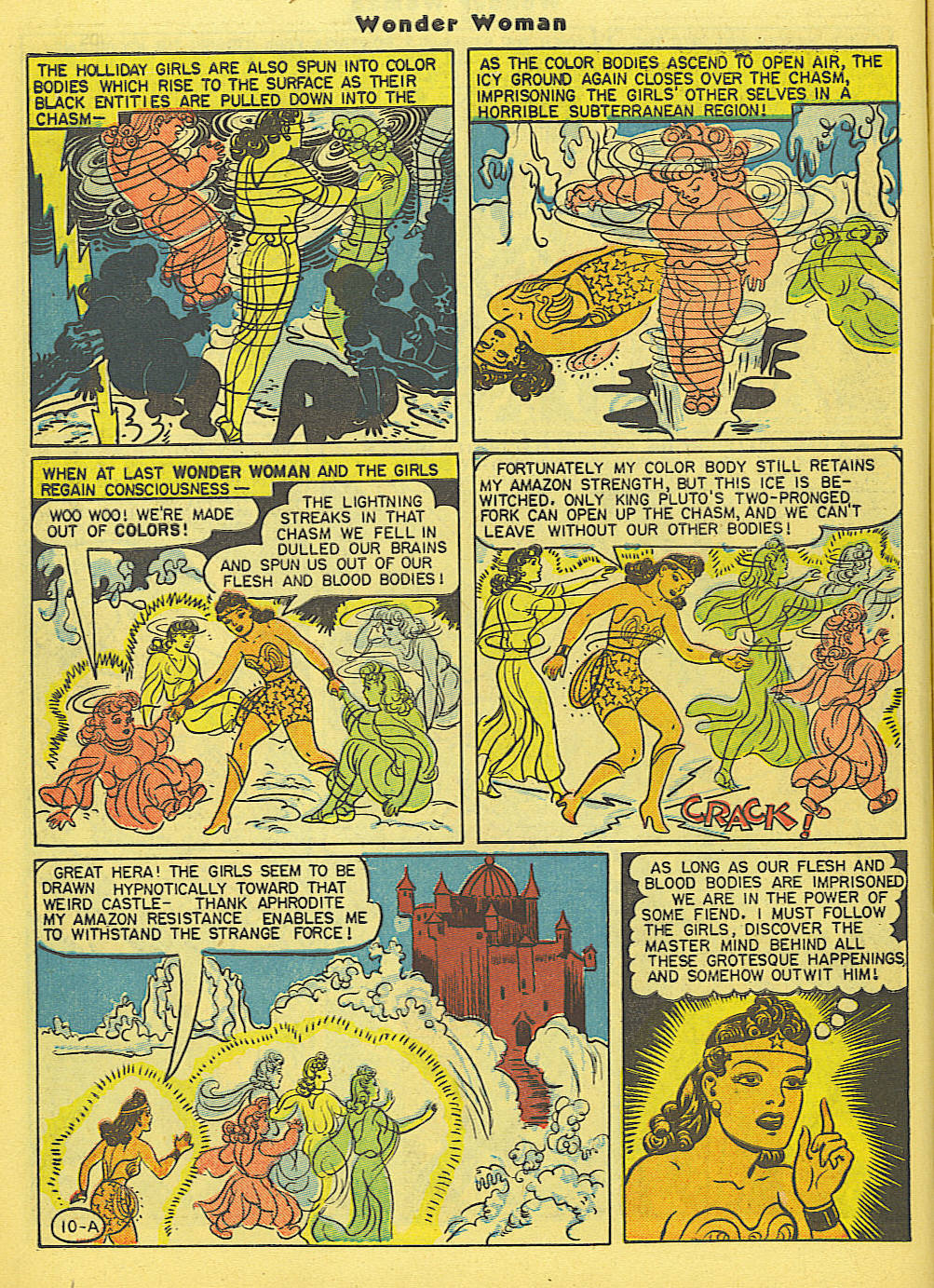
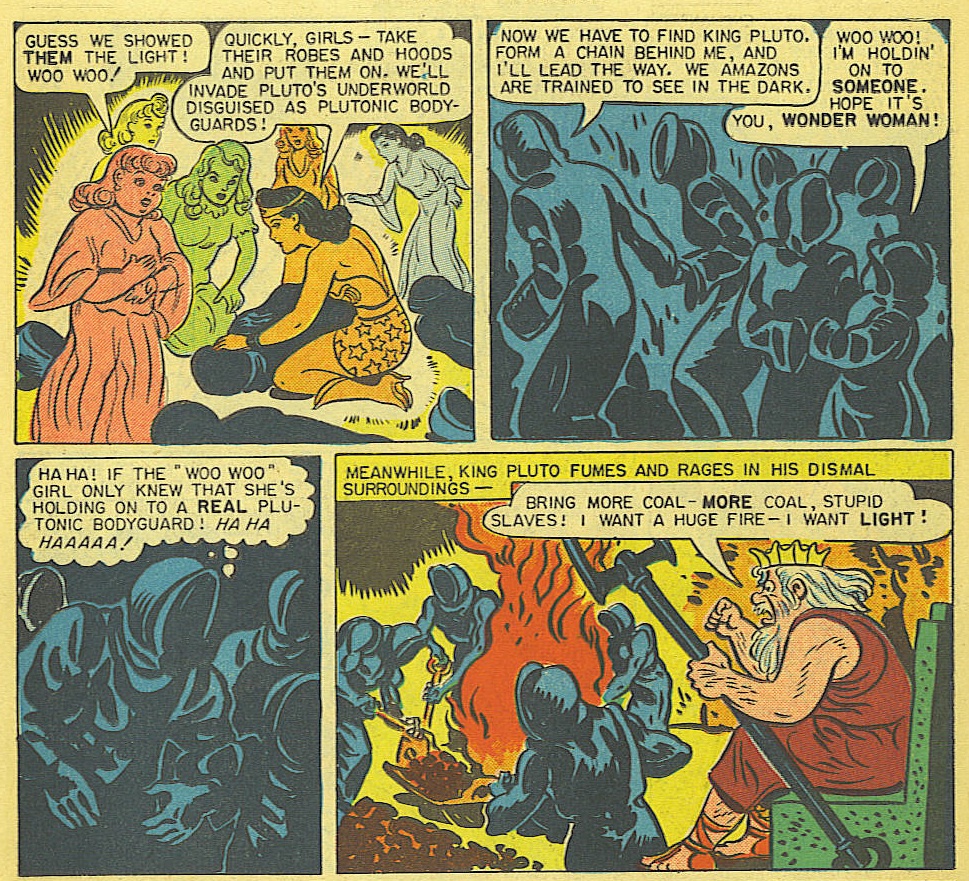
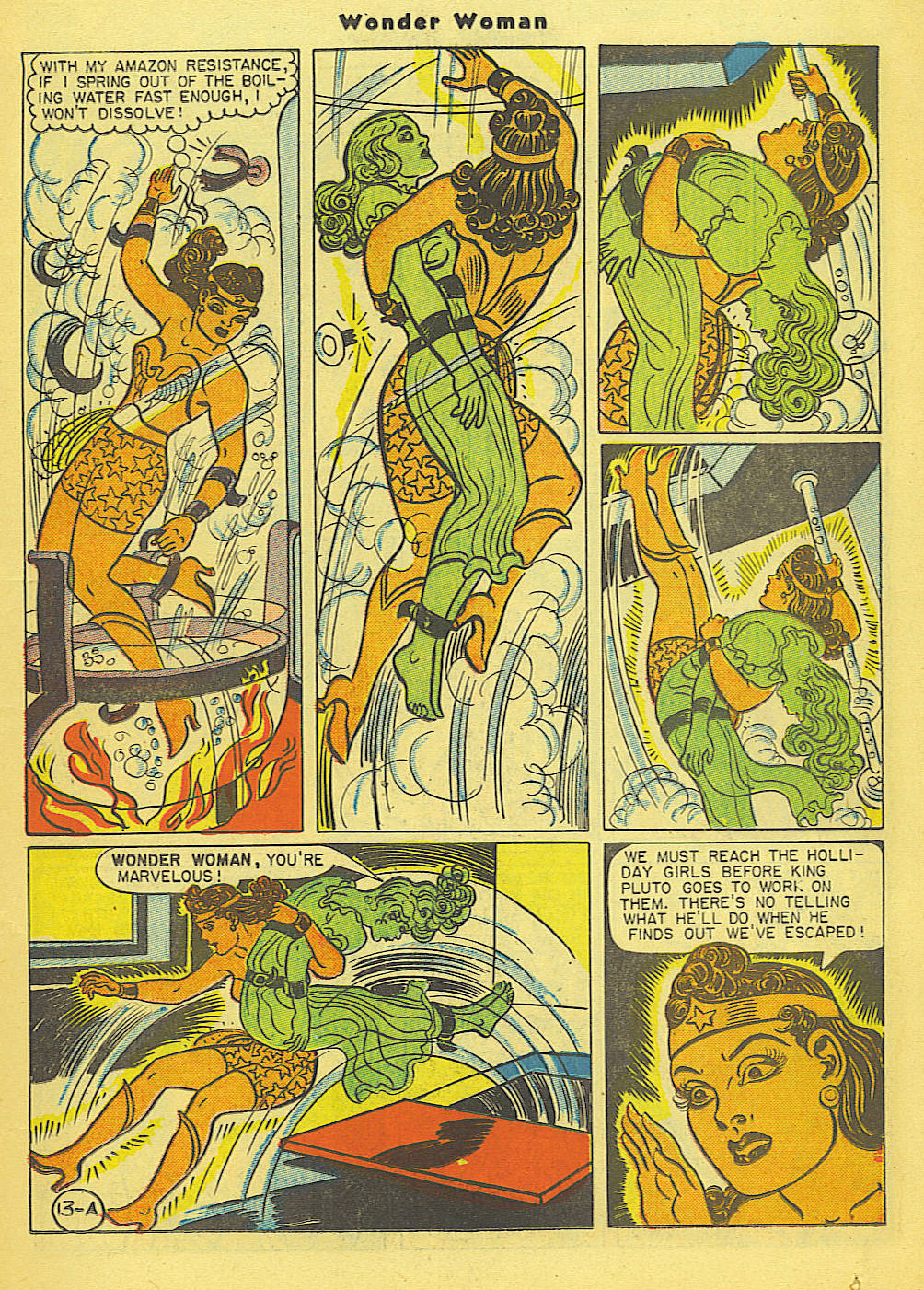
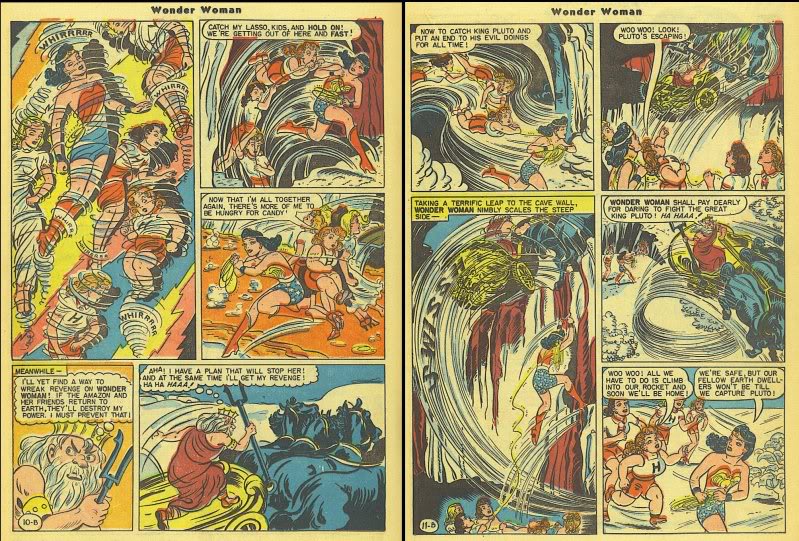
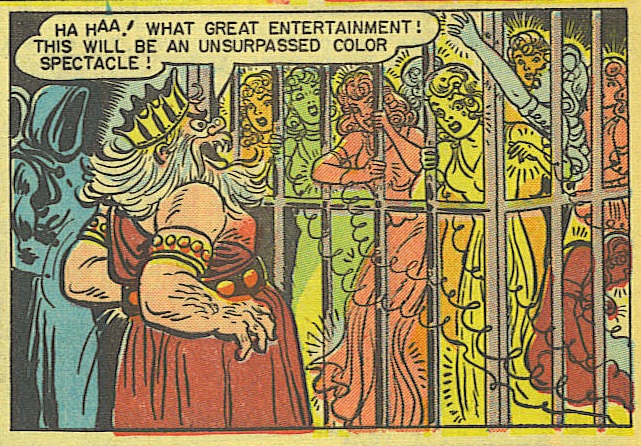
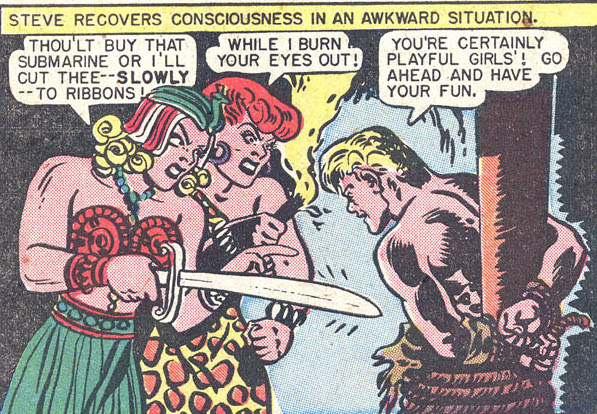
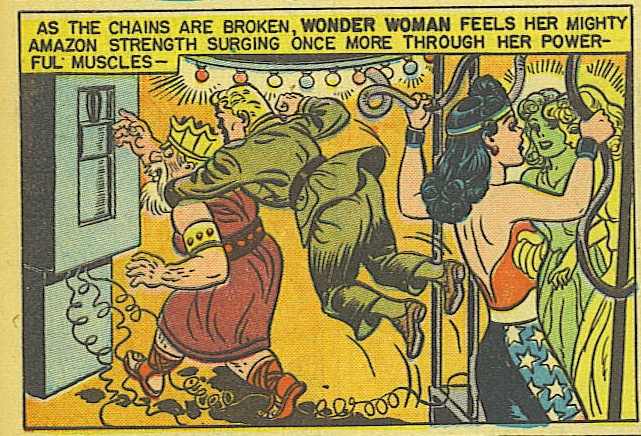
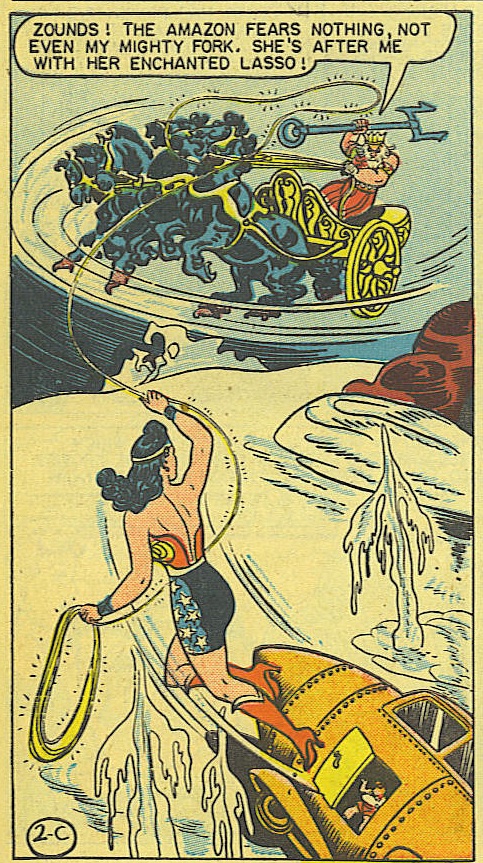
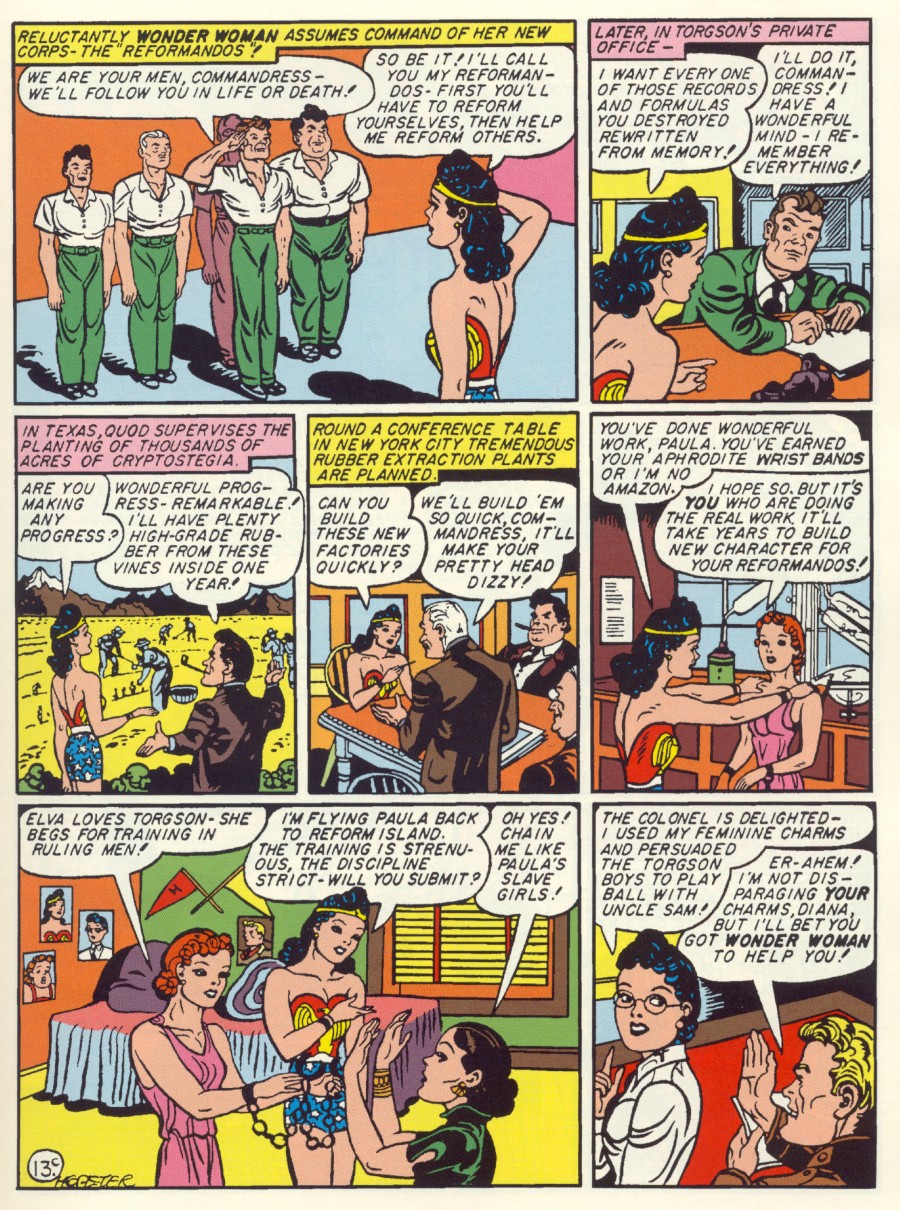
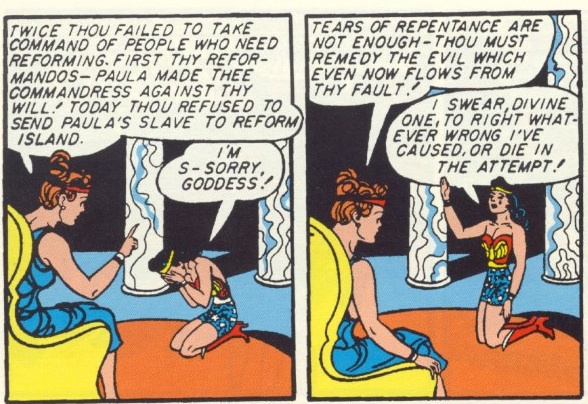
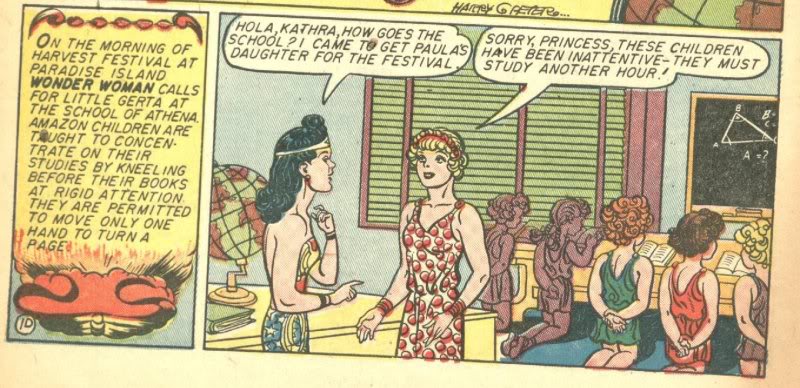
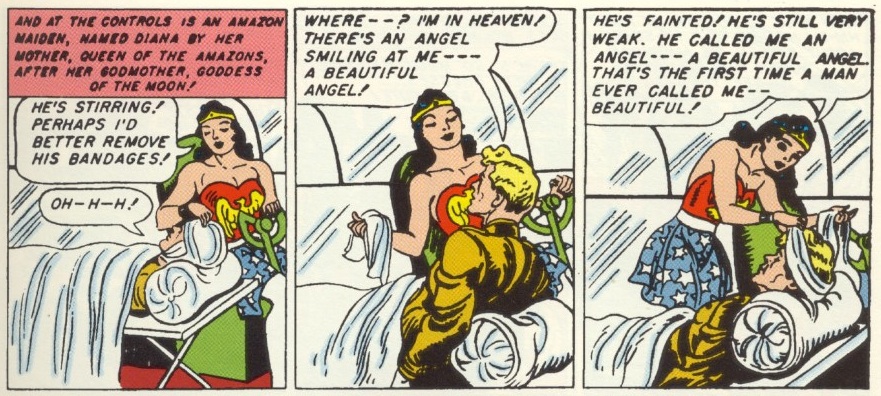
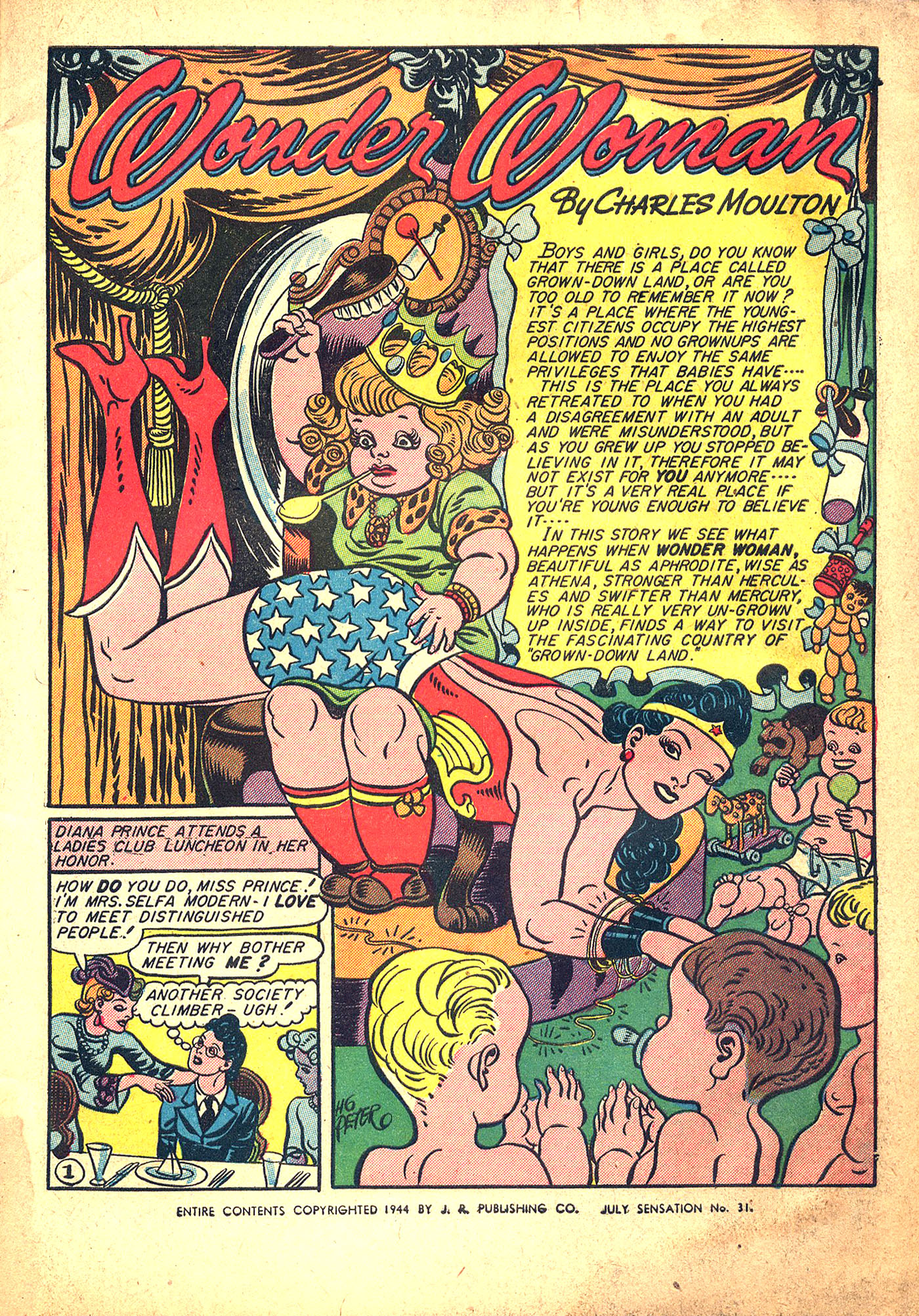
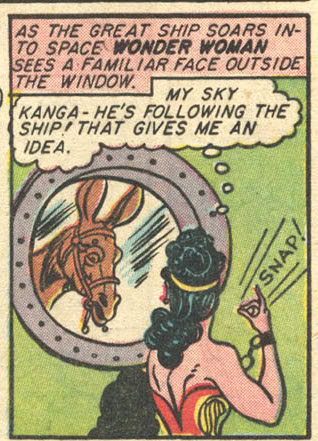
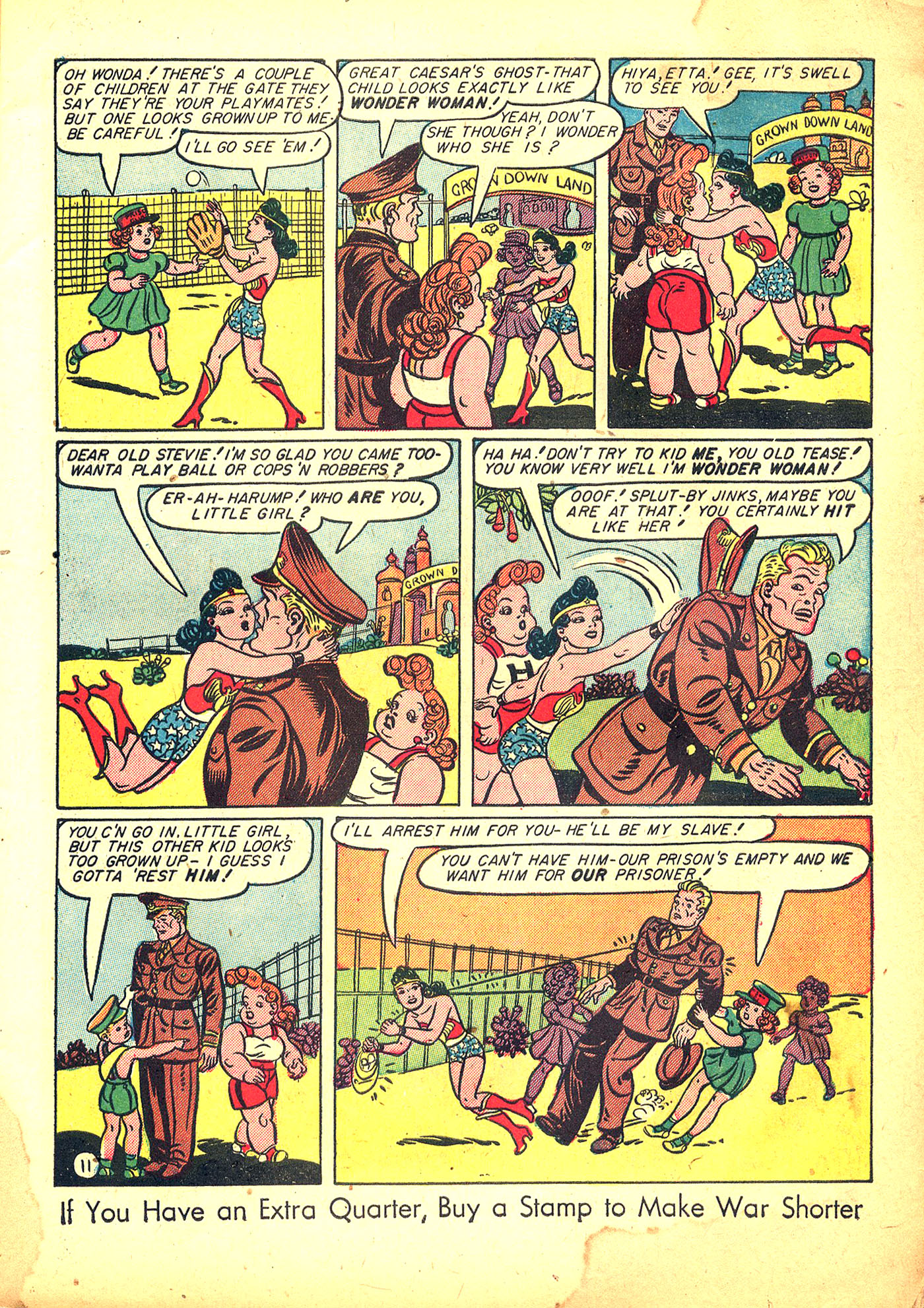
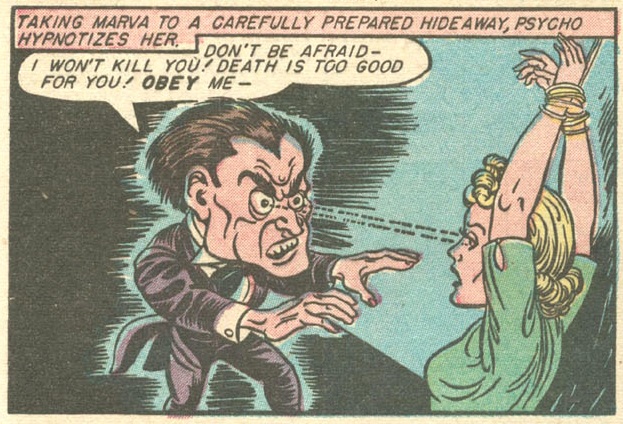
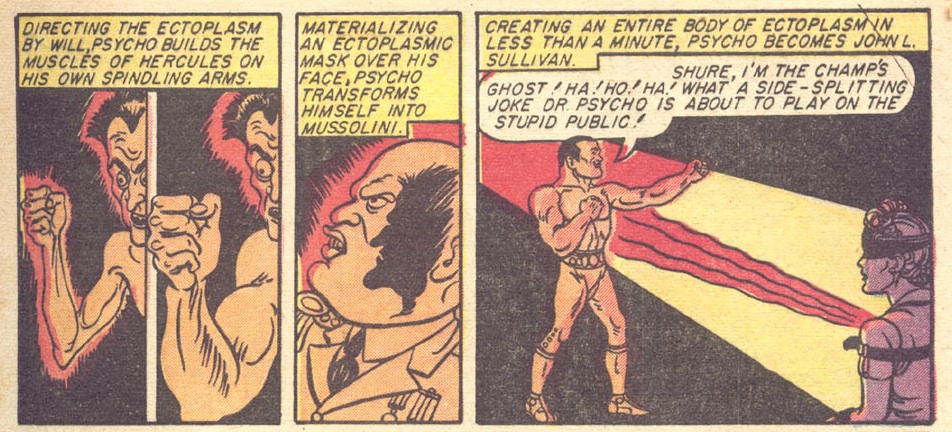
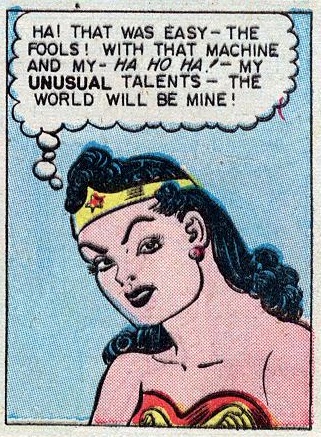
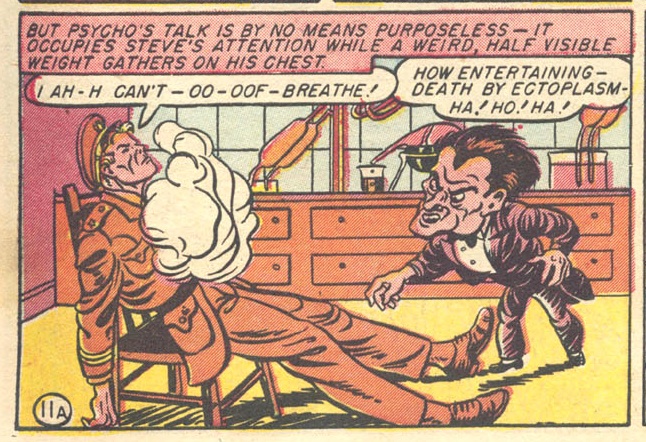
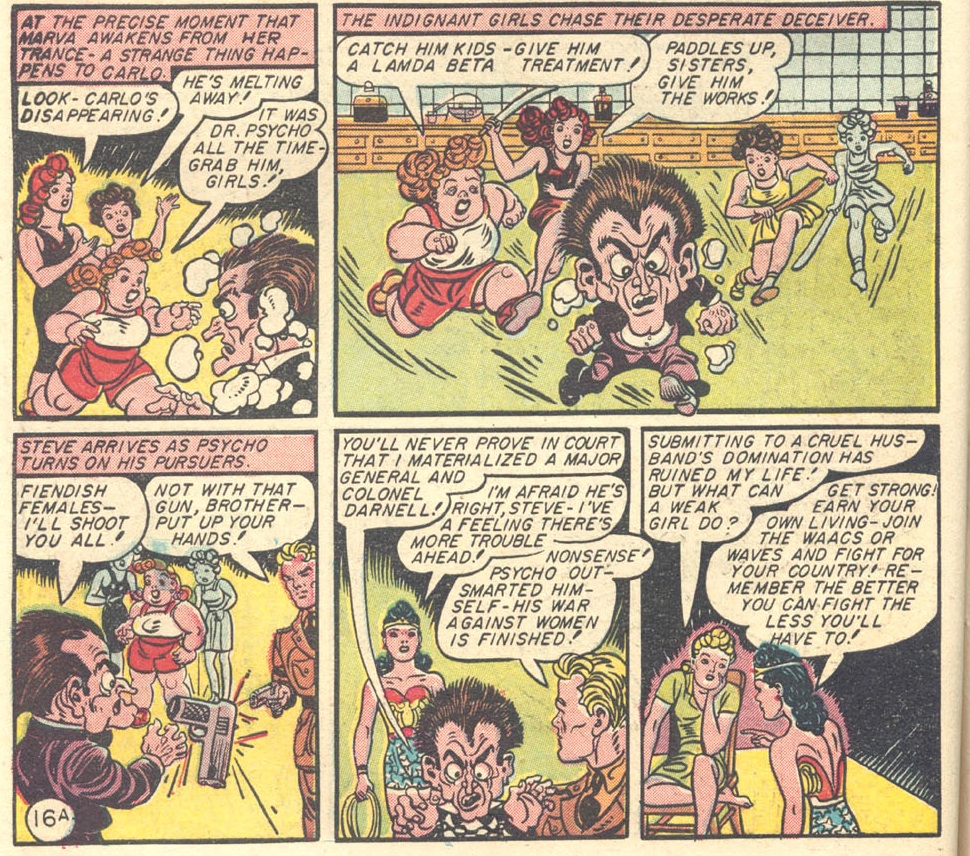
I posted a gallery of images from my book.

Kailyn Kent wrote a review of my book and talked about how boring super-hero movies are.

I interviewed Trina Robbins about her love of the Marston/Peter comics (and got her to admit there’s a lot of bondage in them!)

And now Charlie Hebdo:

Kim O’Connor, listens as comics speaks to you.

Michael Kupperman on cartooning for the NYT and being edited by hobbits.

Marguerite Dabaie on Arab cartoonists whose repression has been sidelined in the Charlie Hebdo discussion.

Caroline Small on satire and empathy and the disconnect between the two.

Ben Saunders on why Charlie Hebdo should not be blamed for the attacks.

Bert Stabler on why Joe Sacco’s Charlie Hebdo cartoon was wishy-washy and awful.

Janell Hobson on how racism is, and is not, lost in translation.

Whew! It’s been nice to have so much interest, but a bit exhausting too. It’ll be nice to get back to just posting once a day and I presume being ignored by most of the internets.
 
Utilitarians Everywhere

At Pacific Standard I wrote about plus-sized models and the gaze of the sociologist.

At Ravishly:

— I wrote about how even in death, you can have privilege.

—I did a list of great women of gospel.

— I wondered whether a romance novel needs a happy ending.

— I wrote about the Adam West Batman and manly violence.

At Splice Today

— I explained that the Senate is not undemocratic.

—I endorsed Romney for President.
 
Other Links

There’s too much here already; no more links this week.
“How wonderful, a woman’s world”: Trina Robbins on Wonder Woman

Editor’s Note: This is the week my book, Wonder Woman: Bondage and Feminism is released. I’ve put together a week-long roundtable to celebrate.
_________

Longtime comix artist Trina Robbins is also one of Wonder Woman’s biggest fans; she’s talked and written on numerous occasions about her love of the Marston/Peter comics in particular. I interviewed her after she’d read (at least some of) my book.

Trina: So you should know I’m only in the middle of your second chapter. It’s a bit of a slog. You do have a good sense of humor and I like some things about your writing. You just so over-analyze that it just becomes a slog.

Noah: (laughs) Well, that’s the academic thing, you know.

Trina: I know. Thank god I’m not an academic.

Noah: All right…well, could you talk a little about what you like about the Marston/Peter comics?

Well, as a kid, I foudn the mythology extremely liberating. And I’m still into the mythology. And of course people like Brian Azzarello obviously knows kowing nothing about mythology or just doesn’t care.

I mean, for me, Jewish girl, brought up in a not super orthodox home, for me Judaism was very boring. At the synagogue they spoke Hebrew, which I didn’t know. One God, and this very boring and very patriarchal guy with a white beard. I didn’t like that at all. And I couldn’t relate to it. And Wonder Woman had goddesses. A whole pantheon of gods and goddesses. The gods weren’t particularly nice, but the goddesses were wonderful. And this was so liberating for me as a kid to read this. It was almost as though Marston had given us permission to believe that there was something other than the patriarchal bearded guy.

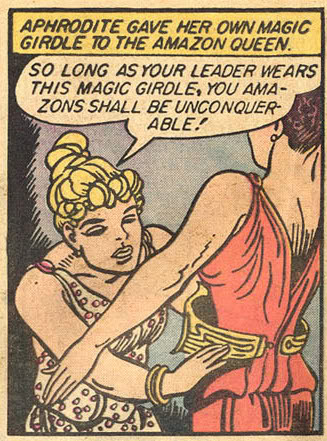
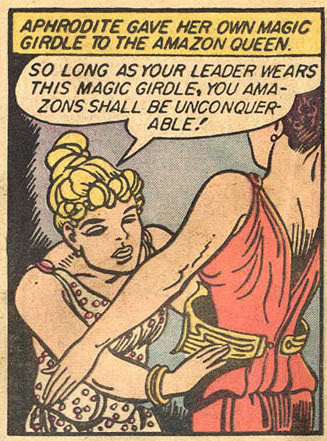
And also just the concept of Amazons. I think I was introduced to the concept of Amazons in Wonder Woman. This whole tribe of beautiful women alone on an island, no men. You have to understand that as a girl…boys were threatening. Not all boys, I had some nice male cousins. But in general they were threatening. They were bigger than me, and they tended to be a little nasty — women were wonderful. I grew up during the war when women wore bright red lipstick, and most of the guys were off at war anywhere. And women were much more interesting. It’s interesting because I’m totally heterosexual, but these are just the feelings I had.
 

Figure 25

 
An island full of women in pretty little dresses and they were all beautiful. It was just a wonderful thing to me. And as for the rest, what little girl doesn’t want princesses. She was an Amazon princess. So that’s what I saw in it. I saw stories in which women are all the ones who are the active ones. Not just Wonder Woman, but the Amazons and the HOliday girls, they’re active participants, they all fight the bad guys. It was wonderful for me.

Noah: One of the things we’ve disagreed about before is on how much bondage there is in the comics, and how important bondage is in them.

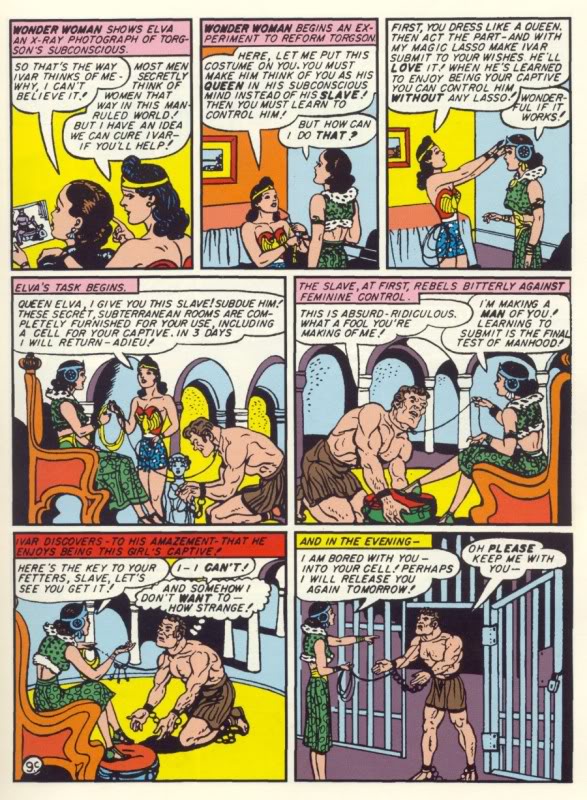
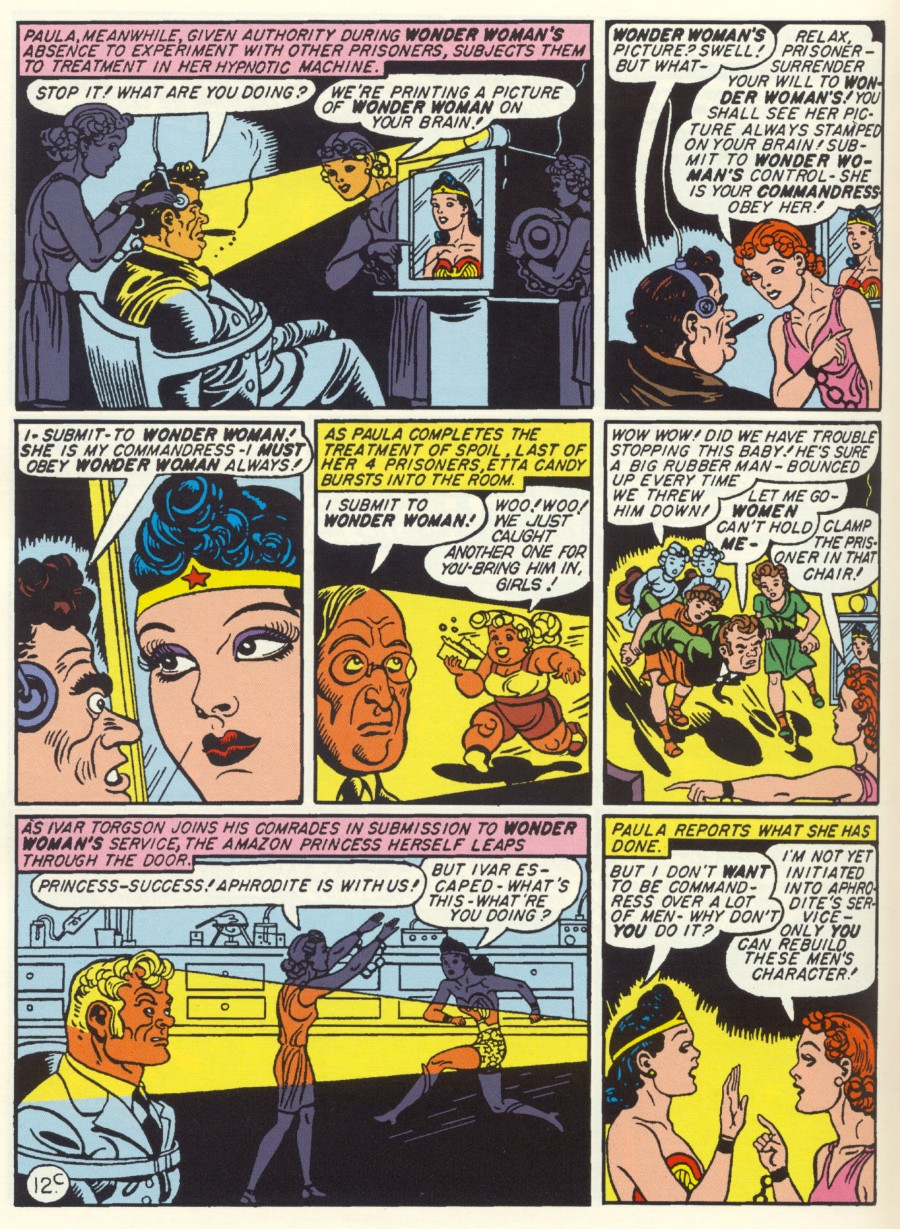
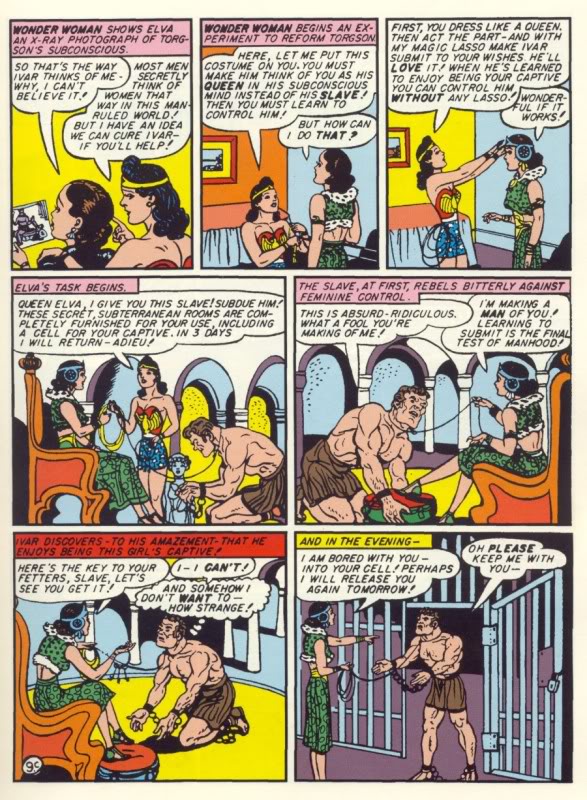
Trina: Well the thing is, as a kid I didn’t even notice the bondage. It went totally over my head. Obviously there are people who noticed it. I think they tended to be grownups. You know, like that soldier who wrote to Marston [about how he was a bondage fetishist and therefore loved Wonder Woman.] But I didn’t see it. Or if I did see it, I looked at all the other comics. It was traditional in Golden Age comics for people to get tied up. I’ve just been scanning in Girl Commandos drawn by Jill Elgin, and they always get tied up in each comic.
 

Figure 23

 
Noah: Tim Hanley recently counted how much bondage there was in Wonder Woman, and found it was more than in most other comics of the era…

Trina: Obviously he’s right, because he counted, and numbers don’t lie. But I didn’t see that, I can tell you. Because in all the other comics people got tied up too, and I didn’t count!

Noah: I’m curious about the lesbianism in the comics and what you think about that.

Trina: Not many people have talked about that except for Frederic Wertham in Seduction of the Innocent. And he’s a riot. The connections he makes with Holliday equals gay are just hilarious.

But of course there are hints of lesbianism. But for me it was more about women interacting with other women. In the British girls comics it’s always girls saving other girls. But if you look at the comics for the same period for the same age, it’s always the love triangle. Betty and Veronica fighting over Archie. It’s almost as though they’re trying to show, look we can do comics about girls, but don’t worry, they’re not lesbians.

Noah: Marston was not worried about that.

Trina: But as a kid I just thought, how wonderful. How wonderful, a woman’s world.

Noah: Marston would be quite happy with that, I’m sure.

I wondered if you had thoughts on the relationship between Olive and Elizabeth and Marston?

Trina: Well, definitely they were polyamorous. And I think it’s pretty probable that Elizabeth and Olive were lovers.

It’s very funny because…Spain Rodriguez, I don’t want to speak ill of the dead, and he was a dear friend of mien — and he’s still a dear friend of mine, even though he’s no longer with us. But he was so funny, he used to say, “See, he lived together with two women!” As though, ha, ha, he wasn’t a feminist. And I was like, Spain, if Susan would let you, wouldn’t you like to live with two women?”

Noah: It wasn’t like he was living with them without their consent.

Trina: Exactly.

Noah: I presume…I mean they lived together afterwards. It doesn’t seem like it was just…

Trina: They weren’t doing it just for him, or they would have moved away after he died. Of course.

Noah: I know you had harsh words for the Azzarello run on Wonder Woman…

Trina: It’s not just…he’s so arrogant! He’s so fucking arrogant. There was this one shot, it was a Wonder Woman run shot which was about Wonder Woman as a girl. It was intended to be some kind of parody of the Stan Lee comics of the 60s. Which of course doesn’t make sense anyway, since it’s a DC character and it’s completely different. But he doesn’t even know as a writer and a historian — he’s trying to make it old fashioned, so he has Princess Diana use the term “shan’t.” Well, by 1955, no one was saying “shan’t”.

And then in case you thought that he was not trying to be an arrogant asshole…you know how the old Marvel comics, Stan Lee would give everyone nicknames like “Jolly Jack Kirby.” So he signs his name as Brian “Kiss My” Azzarello.” That’s his statement. The innermost circles of Hell for him.

Noah. You really didn’t like his Wonder Woman run.

Trina: (laughs) You could tell.

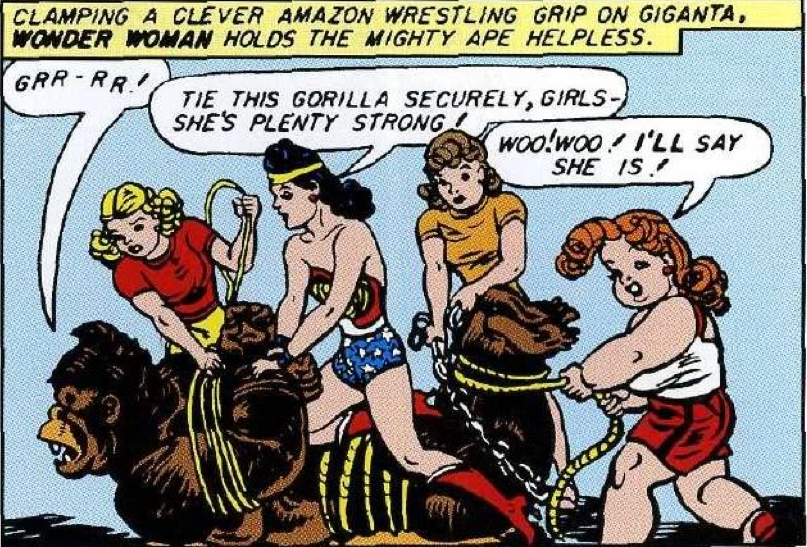
I loved what Gail Simone did. Her white gorillas were the equivalent of the Holliday girls I just loved what she did.

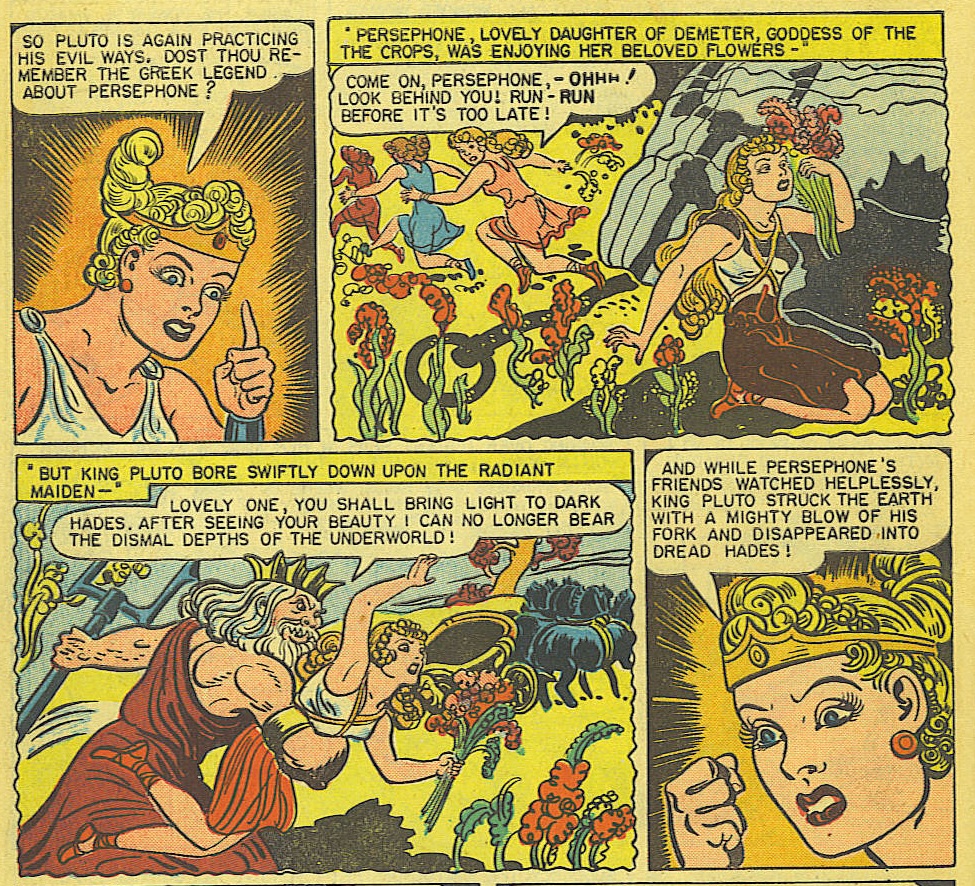
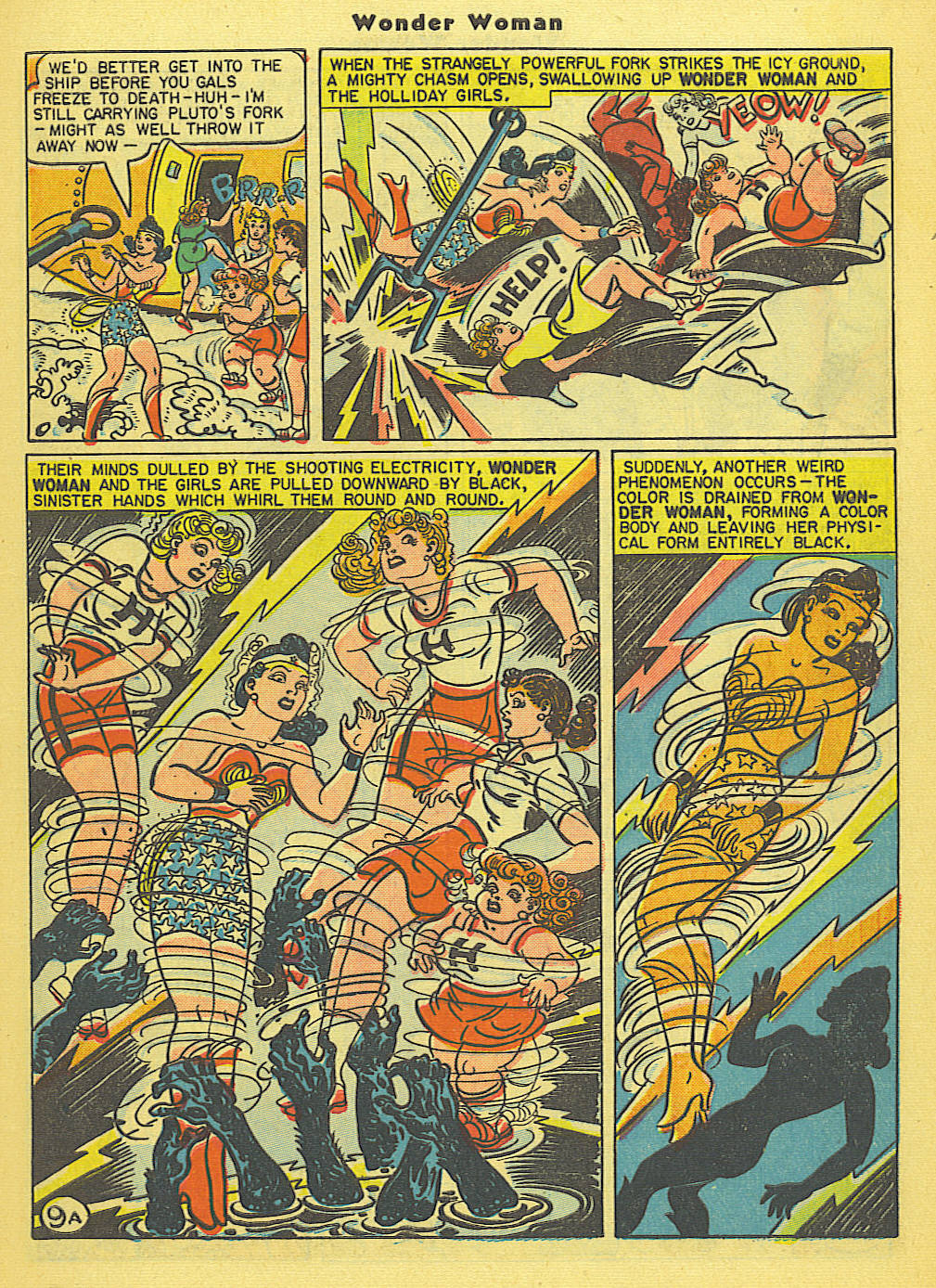
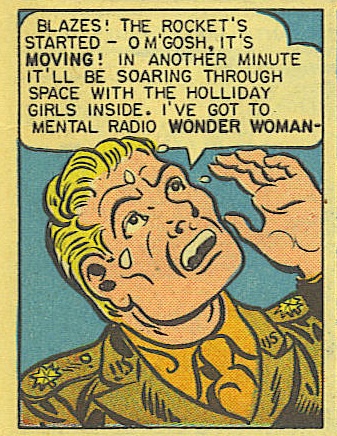
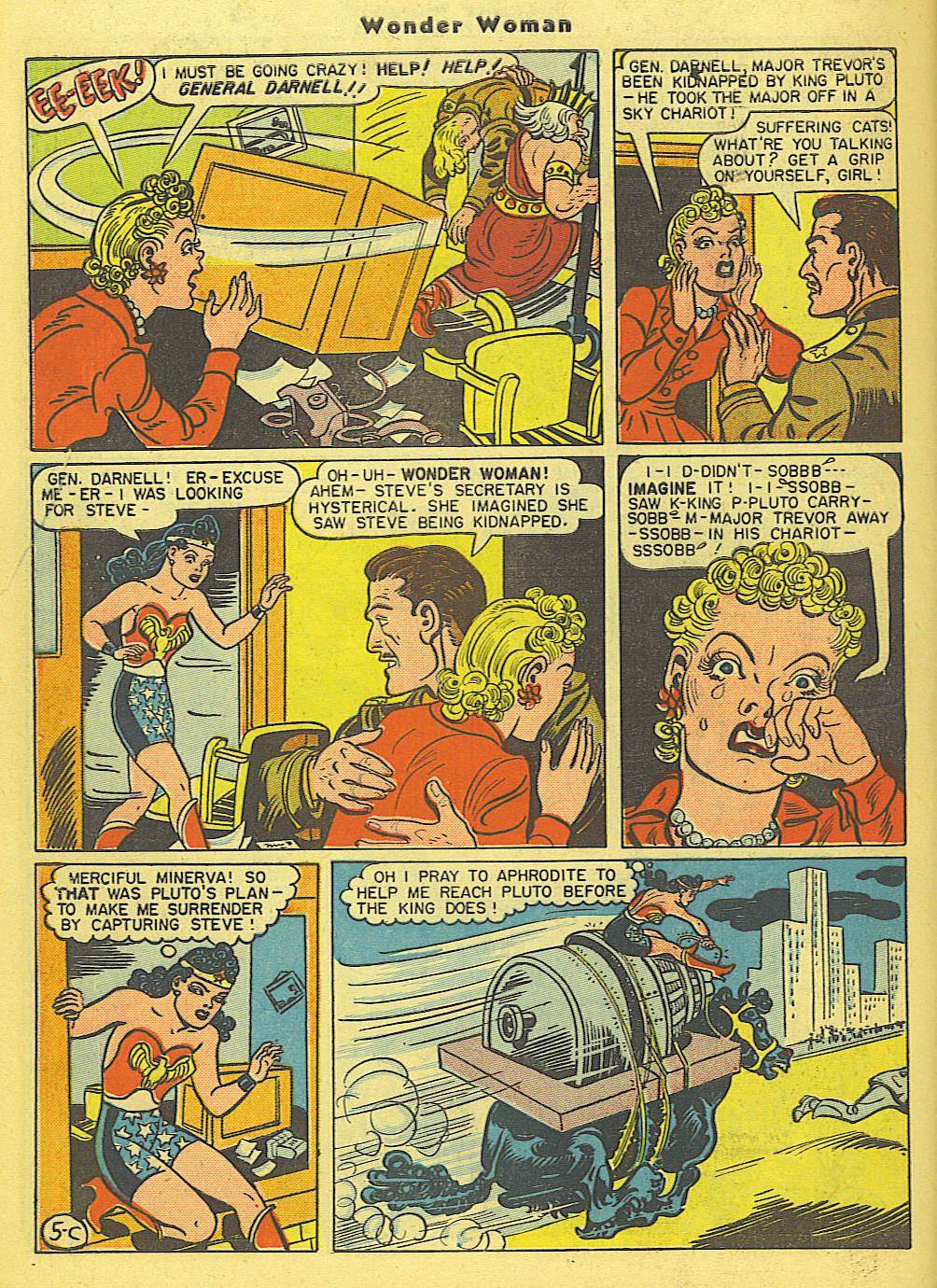
Color Illustrations for “Wonder Woman: Bondage and Feminism”

My book, Wonder Woman: Bondage and Feminism is out today! I’m doing a little roundtable to celebrate.

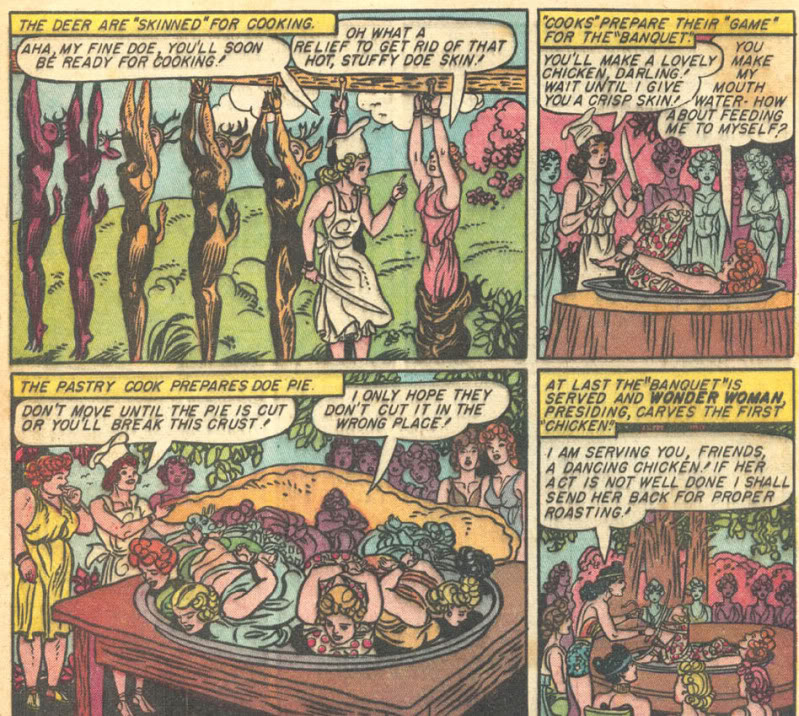
The book includes a number of illustrations from the Marston/Peter Wonder Woman comics. Alas, in the print edition, the images aren’t in color — and, of course, even in the digital version, I wasn’t able to include as many images as I wanted.

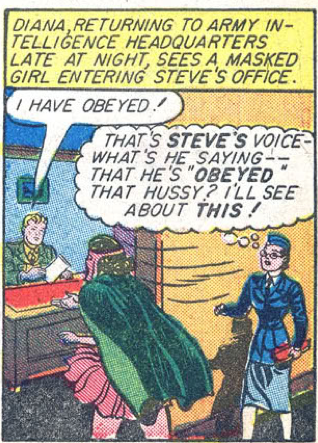
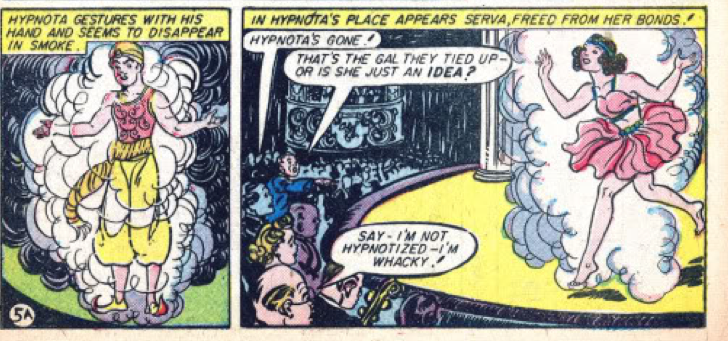
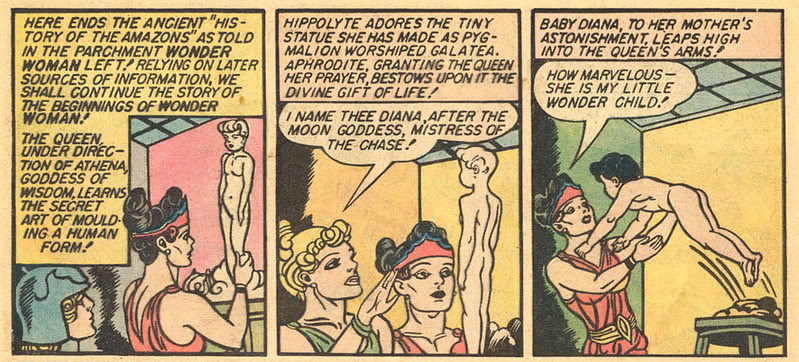
So, I figured I would try to give folks a chance to see everything I wanted to put in here. For those who have the book and want to match images to the discussion in the text, I’ve included the figure numbers (for those included in the book) and the corresponding text pages of my book for everything else.

All images are by William Marston and Harry Peter’s run on Wonder Woman, unless otherwise noted. I’ll try to give issue numbers in most cases, but their may be a few where I’ve lost them. In many cases you should be able to click on the picture for a magnified look.
_____

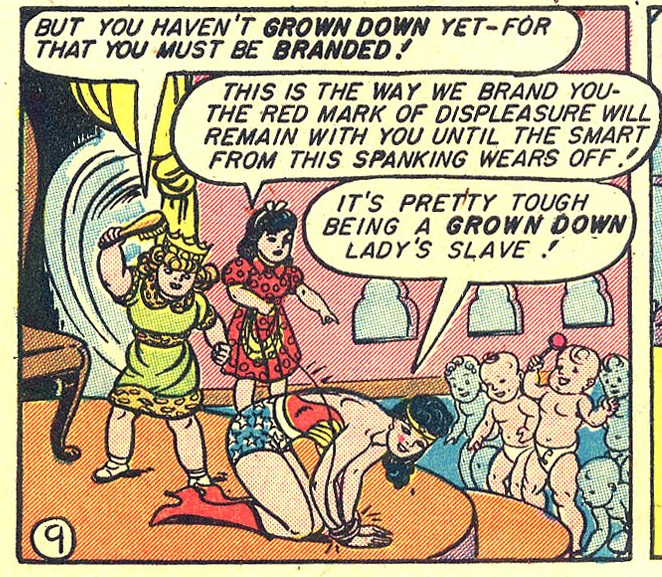
Figure 1, page 17, Wonder Woman #18

Figure 1

 
page 20, Wonder Woman #9

Screen Shot 2015-01-01 at 1.52.37 PM

 
Figure 2, page 27, Wonder Woman #16

Figure 2

 
Figure 3, page 29, Wonder Woman #16

Figure 3

 
Figure 4, page 32, Wonder Woman #16

Figure 4

 
page 37, Wonder Woman #16

Figure 5

 
pages 37-38, Wonder Woman #16

Figure 6

 
Figure 5, page 47, Wonder Woman #16

Figure 5

 
pages 51-52, Wonder Woman #16

Figure 8

 
page 53, Wonder Woman #16

Figure 9

 
pages 54-55, Wonder Woman #16

Figure 10

 
Figure 6, page 56, Wonder Woman #16

Figure 6
 
Figure 7, page 61, Wonder Woman #28

Figure 7

 
Figure 8, page 67, Wonder Woman #16

Figure 8

 
Figure 9, page 72, Wonder Woman #16

Figure 9

 
page 77, Alan Davis, The Nail

nail177

 
pages 80-81, Stan Lee and Steve Ditko, Amazing Fantasy #15

Figure 15

 
page 86, Wonder Woman #1

Figure 16

 
Figure 10, page 84, Wonder Woman #4

Figure 10

 
Figure 11, page 91, Wonder Woman #4

Figure 11

 
Figure 12, page 97, Wonder Woman #4

Figure 12

 
Figure 13, page 98, Wonder Woman #7

Figure 13

 
Figure 14, page 105, Sensation Comics #1

Figure 14

 
Figure 15, page 105, Sensation Comics #1

Figure 15

 
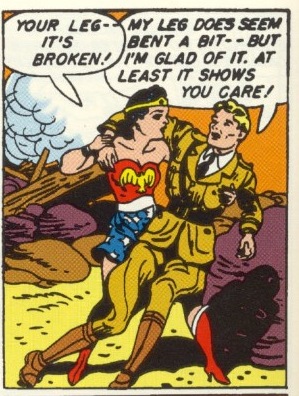
page 110, Wonder Woman #4

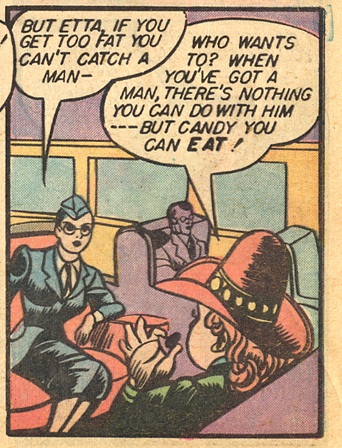
Figure 23

 
Figure 16, page 113, Wonder Woman #1

Figure 16

 
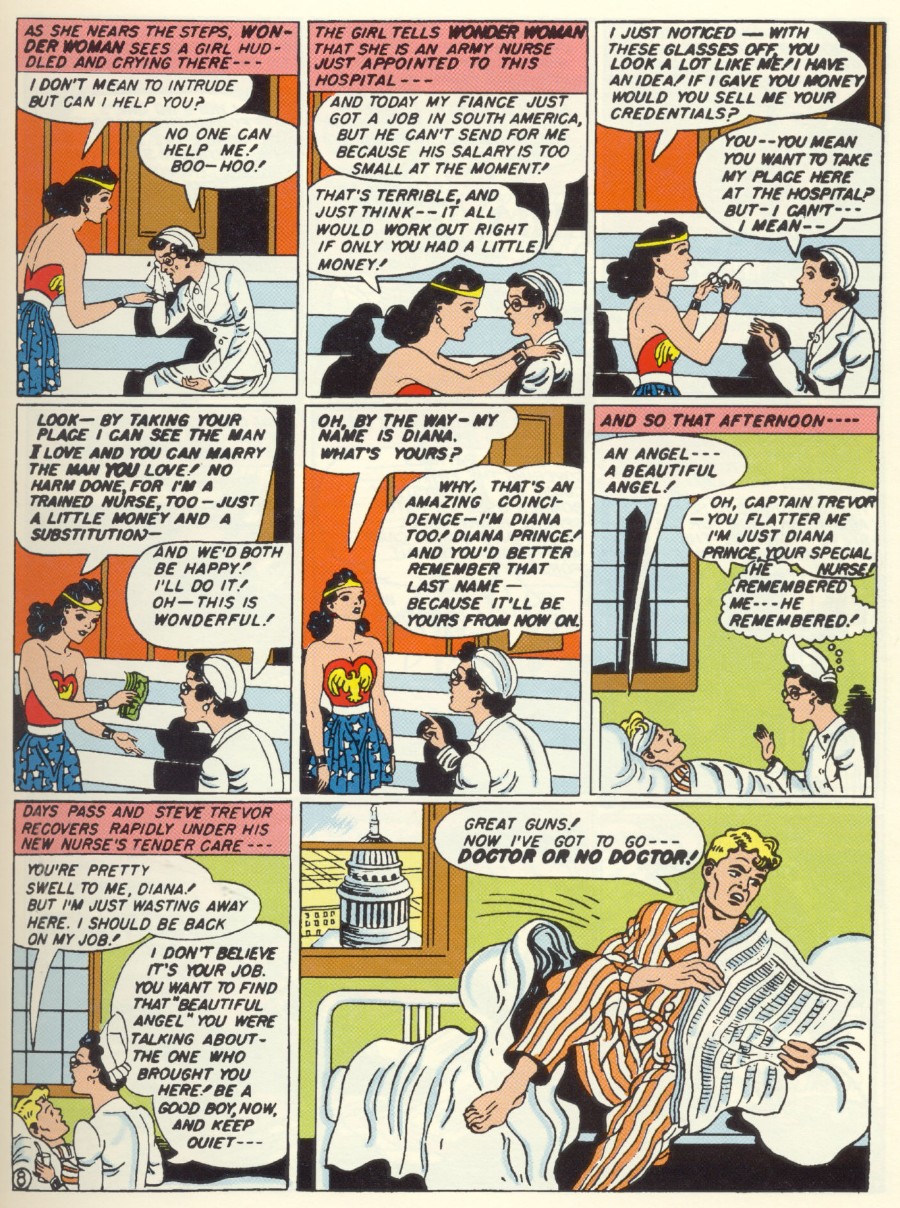
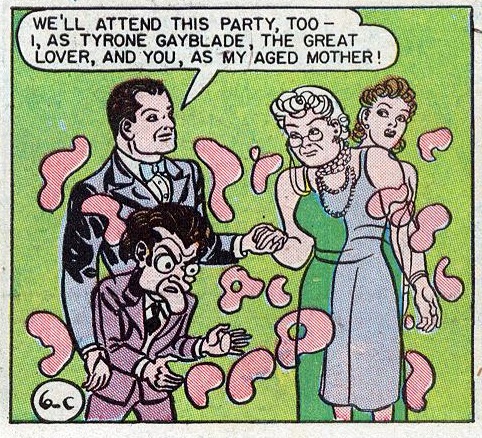
page 113, Wonder Woman #1

Figure 25

 
Figure 17, page 116, Sensation Comics #31

Figure 17

 
Figure 18, page 121, Sensation Comics #1

Figure 18

 
Figure 19, page 129, Wonder Woman #1

Figure 19

 
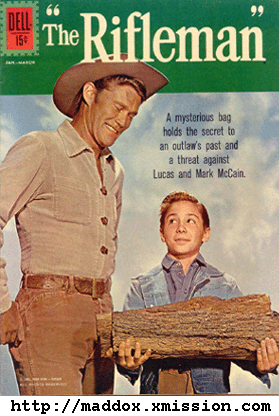
page 130, The Rifleman (creators unkown)

Figure 29

 
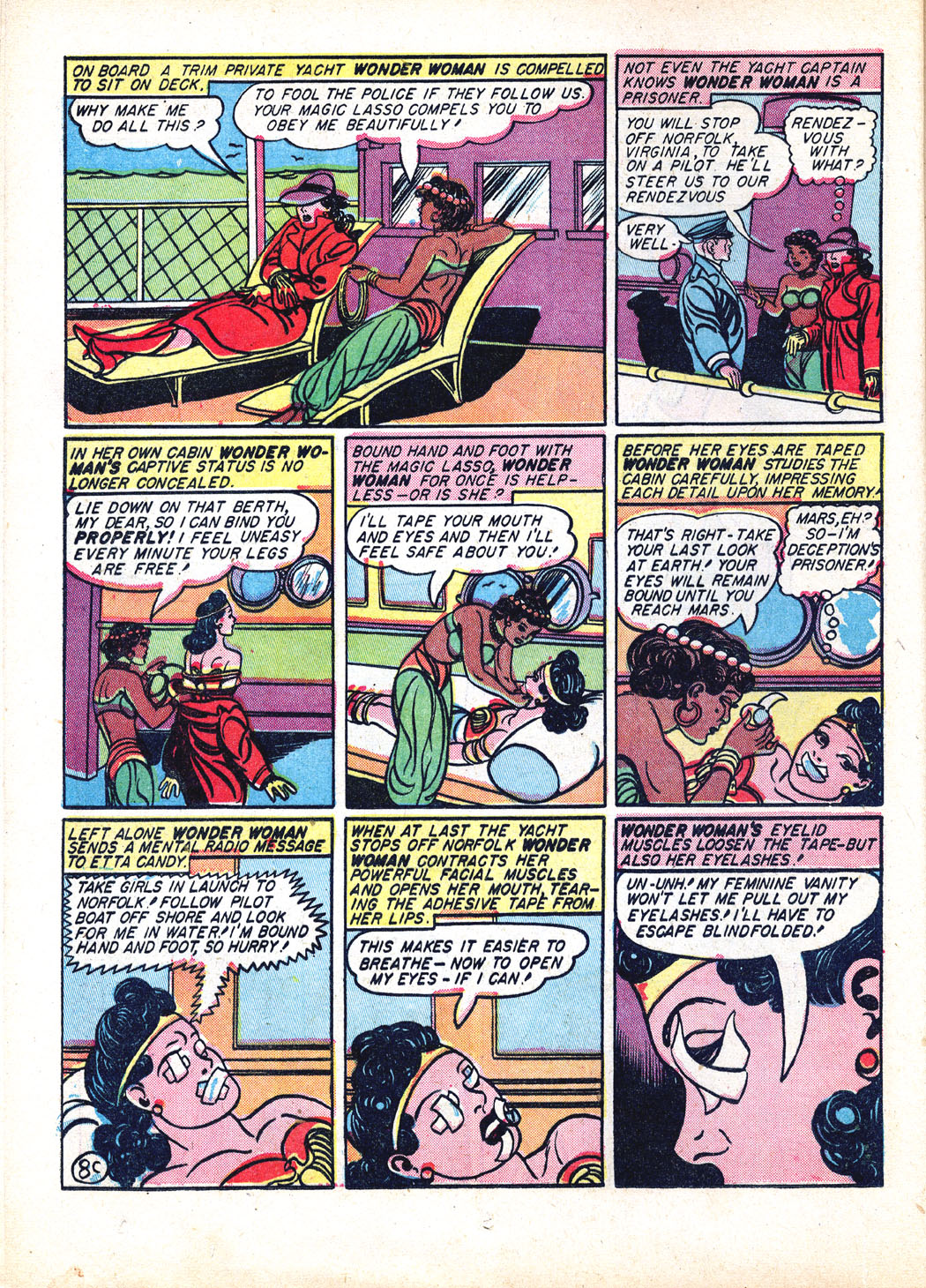
page 133, Wonder Woman #18

Figure 30

 
Figure 20, pages 134-135, Wonder Woman #2

Figure 20

 
Figure 21, page 139, Sensation Comics #31

Figure 21

 
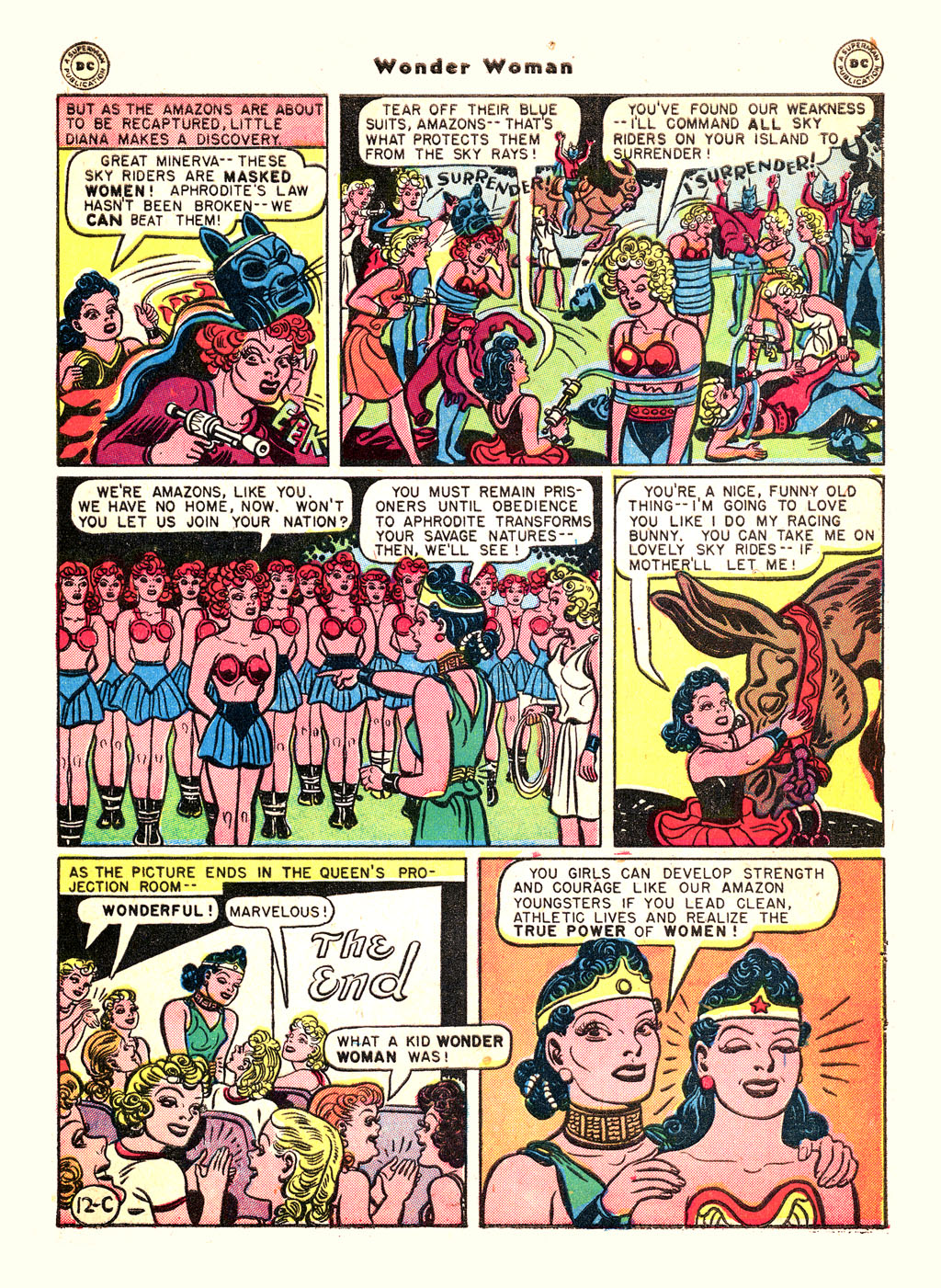
Figure 22, page 141, Wonder Woman #5

Figure 22

 
page 140, Sensation Comics #31

Figure 33

 
Figure 23, page 143, Wonder Woman #3

Figure 23

 
Figure 24, page 155, Wonder Woman #5

Figure 24

 
page 155, Wonder Woman #5

Figure 37

 
page 156, Wonder Woman #18

Figure 38

 
Figure 25, page 157, Wonder Woman #5

Figure 25

 
Figure 26, page 166, Wonder woman #5

Figure 26

 
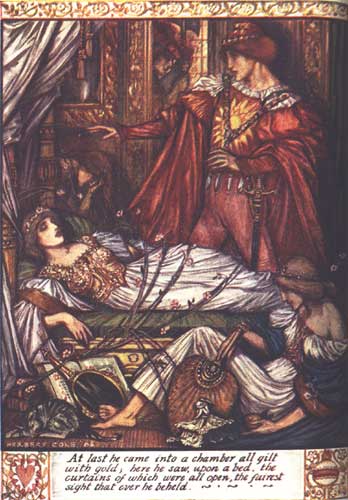
page 167, Herbert Cole, illustration of Sleeping Beauty

Figure 42

 
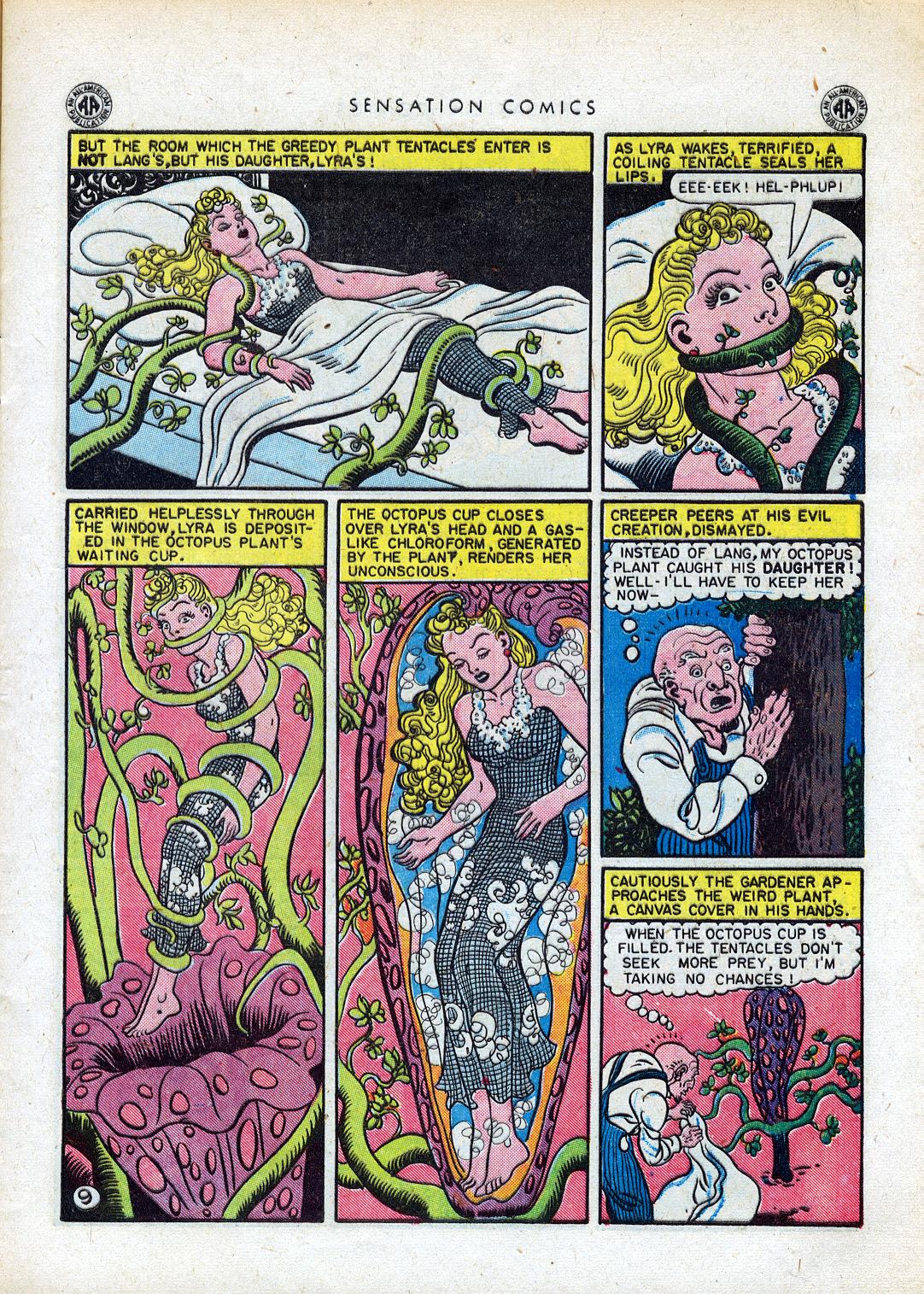
Figure 27, page 168, Sensation Comics #41

Figure 27

 
Figure 28, page 171, Wonder Woman #11 (the issue number is mislabeled in the book alas)

Figure 28

 
Figure 29, page 177, Wonder Woman #23 (issue number also mislabeled in the book. Sigh.)

Figure 29

 
page 178, Wonder Woman #11

Screen Shot 2014-12-31 at 10.49.25 PM
 
page 179, Wonder Woman #11

Screen Shot 2014-12-31 at 10.50.25 PM

 
Figure 30, page 183, Wonder Woman #1

Figure 30

 
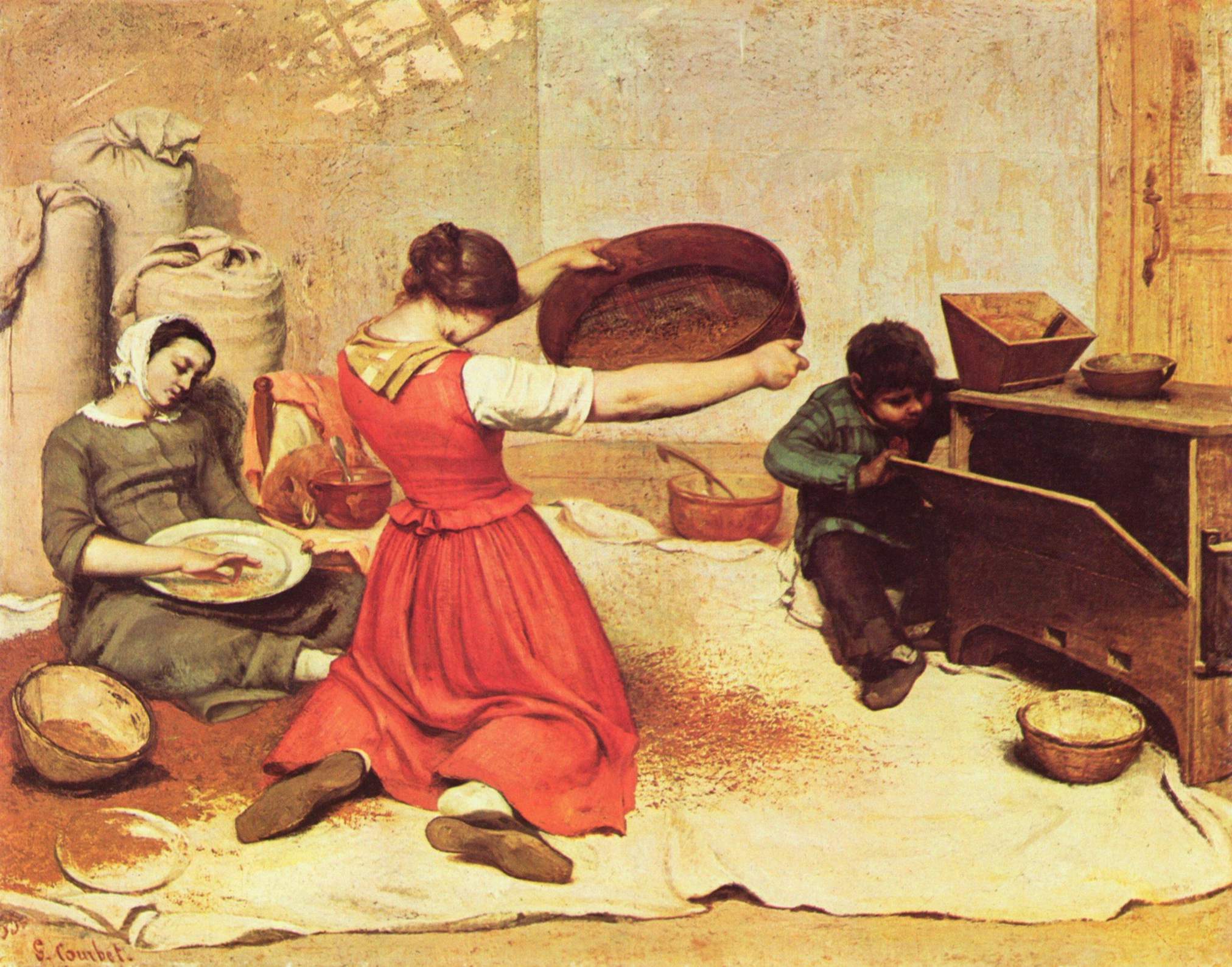
page 184, Courbet, The Grain Sifters

Figure 45

 
This last one is NSFW


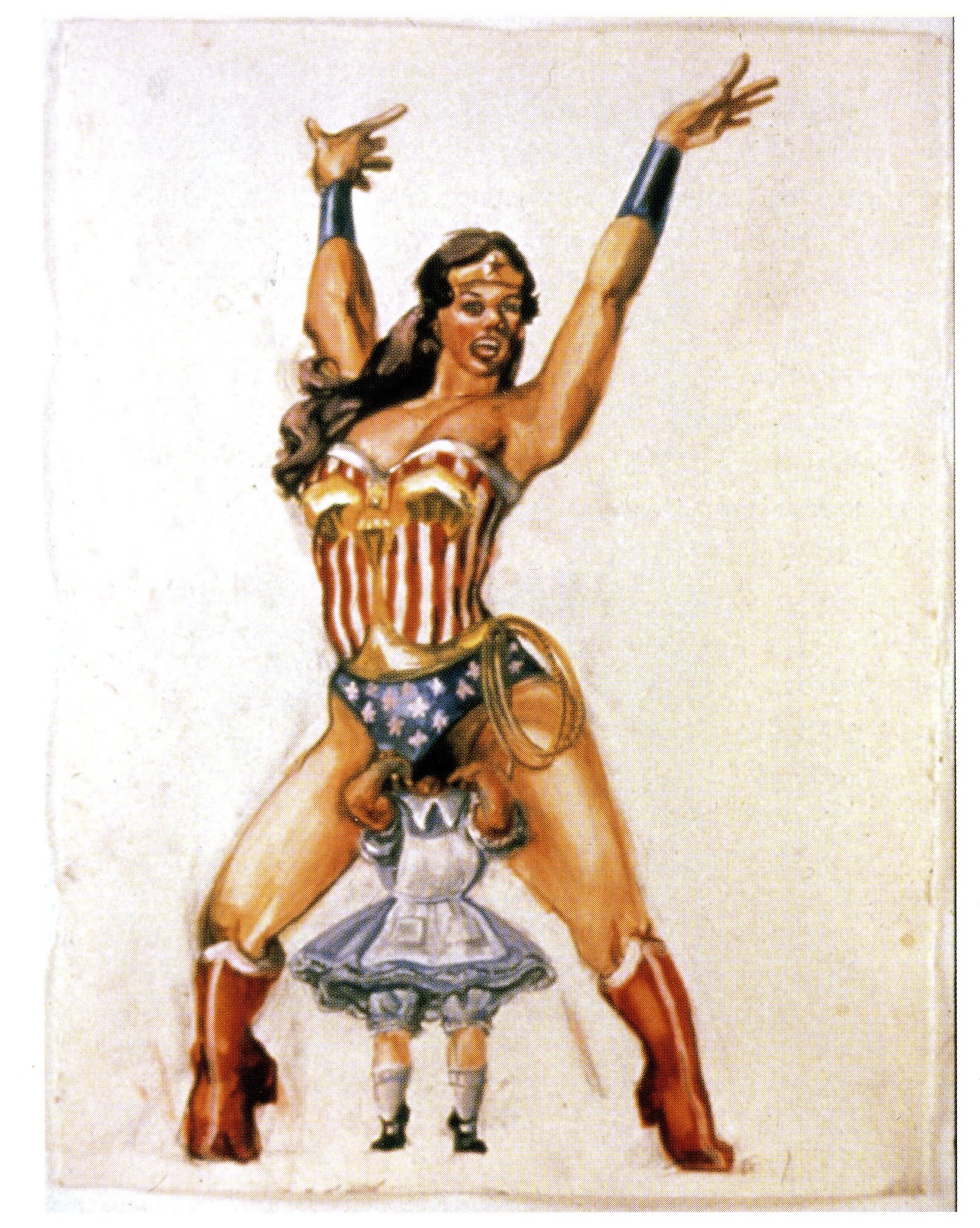
Figure 31, page 307, Nicole Eisenman, Alice in Wonderland, 1996, ink on paper, 30 x 22.5

Figure 31

“I am fond of hidden agendas:” Carla Speed McNeil on Wonder Woman

This is the week my book, Wonder Woman: Bondage and Feminism is released upon a waiting and/or unsuspecting world. I’ve got a number of posts to celebrate, all of which will be posted under the “Bound to Be Released” tag.

This is the first; an interview about Marston, Peter, gender, and feminism with Carla Speed McNeil, creator of Finder.
______

Noah: Are you a Wonder Woman fan of longstanding? What did (or didn’t) attract you to the character?

Carla: I’m not. I’ve only recently become attracted to super-heroes, I never really understood them as a reader. I thought they were science fiction, and since science fiction progresses from unfolding concepts (at least, the kind I enjoy does), they didn’t seem to be very GOOD science fiction. I’m getting a better grasp on them now, and I find I like the ones that have a blasting-powder mix of realism and fantasy to them, that are weird and dreamlike in ways. The closer a look I take at Wonder Woman, the more she surprises me. She turns up everywhere. I never knew until this past summer that my older sister is a huge WW fan. She’s got the look, too, maybe I’ll use her as a model if I ever draw her.

I know you’re said you’re a fan of the Marston/Peter comics. What do you like about them? Do you have a favorite Wonder Woman comic from their run, or a favorite aspect of those comics?

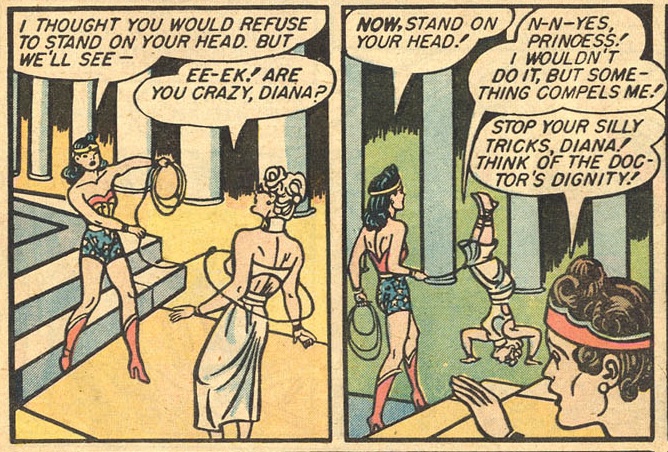
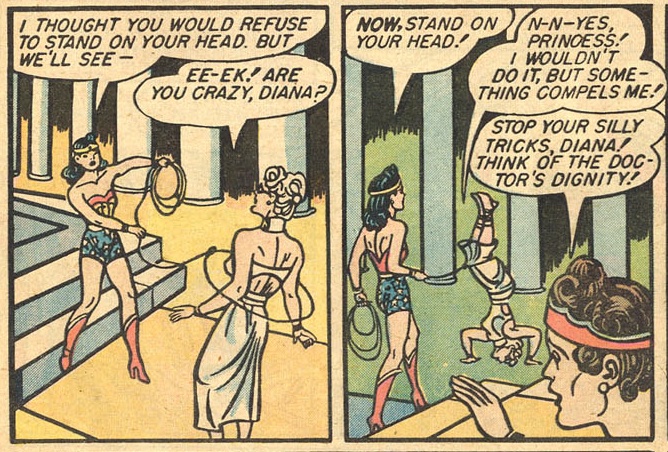
I like their sheer absurdity. I like their playfulness. I like the fact that Diana is superlative in many ways but is also very, very human. She may be some breed of demigoddess, but she’s also full of passions and humor. The fact that the first thing I saw her do with her lasso was to compel a dignified older Amazon to stand on her head just delights me.
 

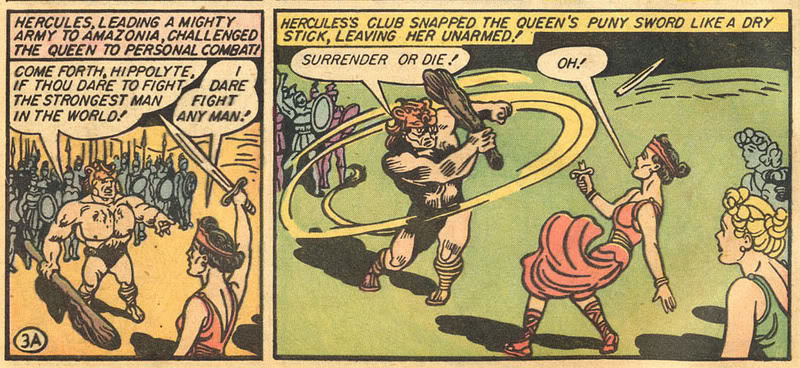
Figure-16

 
She’s not above-it-all. It’s hard to write White Knights, because our definition of what constitutes a Galahad is so narrow. They’re not allowed to just do stupid things. Labeling nearly all human characteristics “flaws” and shaving them off of your paragons is like trying to make a cake having removed every ingredient.

Also, I am fond of hidden agendas. Not pamphleteering, but deeply-held beliefs and a desire to cast them into fiction. Dickens and Poe would never have written a line without them. Spider-man wouldn’t have been what he was, then or now, without Ditko, and Wonder Woman wouldn’t have existed without Marston’s agenda. He wasn’t unlike the Futurists.

There have, of course, been many other interpretations of Wonder Woman over her years. I plan on digging into them as well. But it’s wonderful to me that she has this time-of-legends quality to her early existence.

Your comic, Finder, plays with gender and drag in ways that are at least somewhat similar to what Marston and Peter are doing. How is your work similar to or different from theirs?

Wonder Woman is a “female man,” a woman from a world of women, living in “man’s world” where she exists as a cultural ambassador as well as an active, energetic person who doesn’t just stand on a box proselytizing. Although the campus evangelists would be pretty damned entertaining with her in the mix. It’s exactly the kind of thing I like to play with. I didn’t realize, when I designed Jaeger, my usual main character, how pretty I’d made him. Not until I realized that I can’t stand using any more than the least suggestion of modeling around his bottom lip, anyway– I step on my colorist all the time. “Don’t give him LIPS! I can’t take him seriously if he’s pouty!” Similarly, I created a “world of women” in the form of an extended family, a “clan,” in which all the members look vaguely like Marlene Dietrich. There are males in this family, but they all look like women too. There is a “world-of-men” clan in which there is a fairly strict division of labor; men are soldiers and cops, women are doctors and nurses. There is still another clan in which all members are attracted to their same sex, and are accustomed to marry only in same-sex pairs, making contractual arrangements for the conception, custody, and raising of children. The permutations are endless.
 

9781595826510two

from Carla Speed McNeil Finder: Voice

 
Marston’s idealized Themyscira was populated only by women. Given how much fun she has in man’s world, I can’t think that he thought separatism was the answer. I don’t know if other Amazons left the island to do the same, and if so, how many. I definitely need to get caught up.

Utilitarian Review 1/10/15

News

First, my book is officially out next week. We will have a bunch of Marston/Peter content out next week and possibly into the week after, including reviews, interviews and more. So stay tuned!

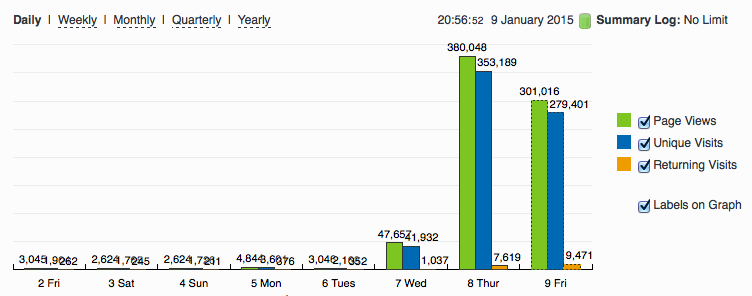
Also, as folks probably know, Jacob Canfield‘s post on the Charlie Hebdo shootings went viral. We’ve gotten exponentially more traffic than we got even when the Sean Michael Robinson and Joy DeLyria’s post went viral way back in March 2011. Since the post went up on Wednesday, we’ve gotten close to as much traffic as we received in the entirety of last year. The site has done better with it than I thought it would, but we’re still somewhat glitchy and erratic. I’m hoping that with the weekend things will calm down and we’ll start getting back to normal.

More after a brief appearance by our preposterous stats graph for this week.
 

Screen Shot 2015-01-09 at 8.57.02 PM

 
On HU

Besides Jaob’s monster, here are the other pieces that went up on HU this week.
Featured Archive Post: Betsy Phillips on Sleepy John Estes and the poetics of place.
A list of my best writing of the year from around the web.

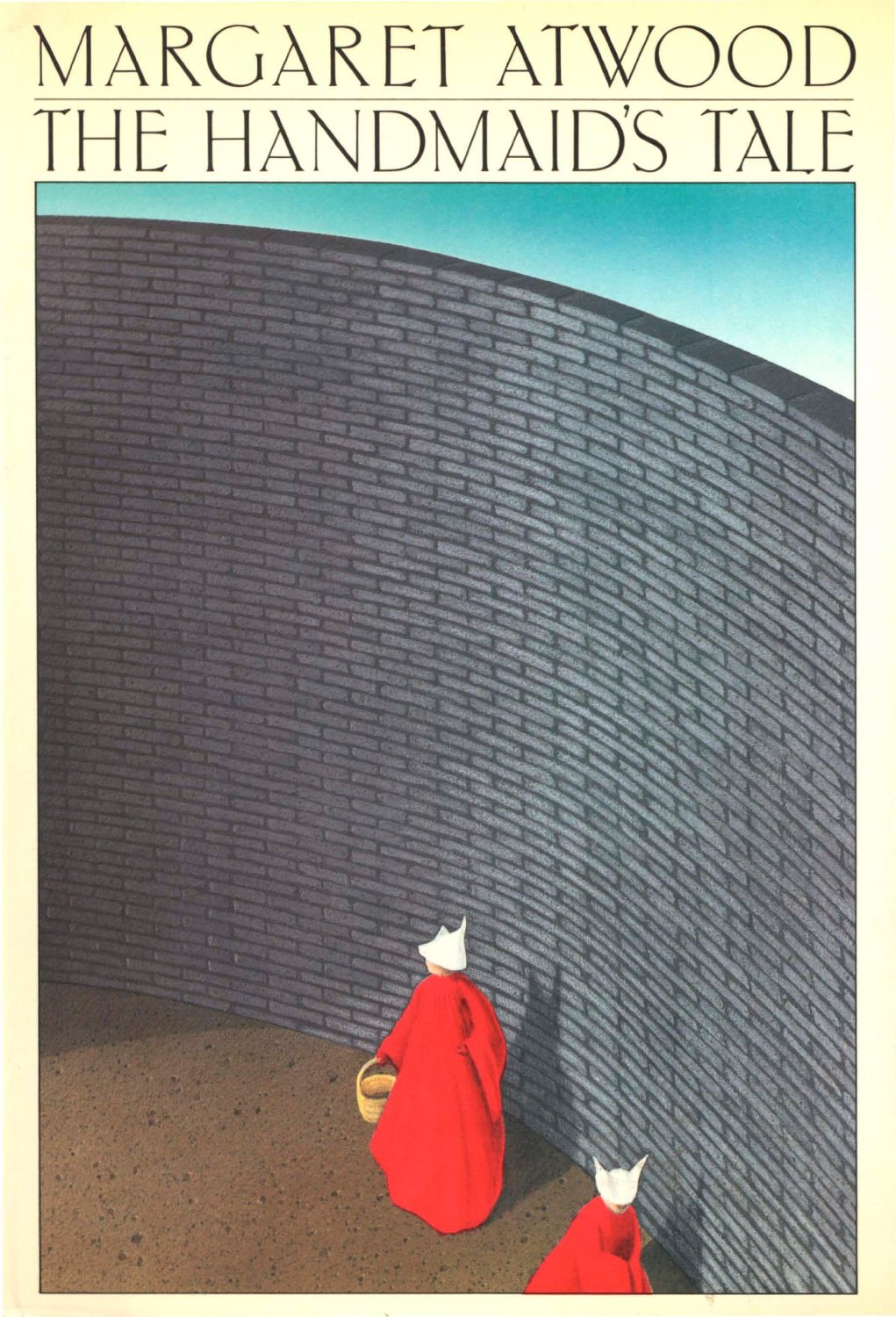
On the Handmaid’s Tale and bad slavery comparisons.

Michael Arthur on furry and profiling your own damn fandom.

Alex Buchet gives credit to the comic-book creators who developed the characters in Marvel’s Age of Ultron film.

Chris Gavaler on why we should get away from the term “genre ghetto”.

Isaac Butler on Joe Sacco’s BUMF#1, and why we need satire.
 
Utilitarians Everywhere

At the Atlantic I wrote about Kanye West and Paul McCartney’s lovely new song, and how no one needs to know who Paul is.

At the Atlantic I interviewed DeRay Mckeeson, one of the organizers of the Ferguson protests, about the importance of social media to the movement.

At Ravishly I wrote about feminism as the patriarchal ogre father.

At Ravishly I wrote about the fact that the James Bond films are white supremacist, and why casting Idris Elba won’t necessarily change that.

At Splice Today I wrote about how you can’t trust book release dates.

At Splice Today I explained why Islamophobia can be racist.

At the Pacific Standard I wrote about evidence that images of effective torture can convince people that torture is okay.

At the Chicago Reader I got to write about great grunge primitives Bionic Cavemen.
 
Other Links

Anne N. Bornschein on the scholarly study of romance.

Tim Hanley on the Marston/Peter Wonder Woman newspaper strips.

Serene Khader on Charlie Hebdo and racism.

On life without police in Bed Stuy.

Jesse Walker points out that sources lie to reporters.

Tauriq Moose is skeptical of public marriage proposals.

The Handmaid’s Tale and Bad Slavery Comparisons

This first appeared on Splice Today.
_______
91LKGqgWzYL._SL1500_According to Godwin’s Law, whoever compares their opponents to Hitler first in an online argument loses. Maybe it’s time to develop a similar rule of thumb for comparisons to chattel slavery. Stop Patriarchy an activist group which presents itself as fighting for reproductive rights in Texas has been especially busy recently in promulgating poorly thought through slavery comparisons, as in this tweet. “BREAK THE CHAINS! BREAK! BREAK! THE CHAINS! IF WOMEN DON’T HAVE RIGHTS WE ARE NOTHING BUT SLAVES.” Just to make sure you don’t think it’s a one-off mistake, their twitter bio helpfully declares, “End Pornography & Patriarchy: The Enslavement and Degradation of Women!”

Local Texas anti-abortion groups have responded by fervently telling Stop Patriarchy to cut it out and go away. The all caps declamations do make you wonder though; why on earth does Stop Patriarchy think this is a good idea? What exactly is the comparison supposed to accomplish? What is appealing in taking this other, different oppression and casting it in the language of slavery? Is it just a particularly clumsy way to say, “curtailing reproductive rights is really bad”? Or what?

One way to answer that question is to consider one of the most famous feminist novels of the last thirty years: Margaret Atwood’s The Handmaid’s Tale. Atwood’s novel, published in 1985, is set in a dystopian near future in which right-wing family-values religious fanatics have taken control of the United States. The nameless protagonist and narrator was a librarian prior to the coup. The new rulers stripped her of her money, her profession, and her child and marriage, the last of which is considered invalid since her husband was previously divorced. She is forced by the new government of Gilead to become a Handmaid, assigned to various important men as a kind of official mistress, in hopes that she will bear them children — an imperative since chemical and radioactive pollution has sterilized much of the population.

The Handmaid’s Tale clearly owes a debt to other totalitarian dystopias, most notably 1984. But it also borrows liberally from the experiences of non-white women. In fact, the novel’s horror is basically a nightmare vision in which white, college-educated women like Atwood are forced to undergo the experiences of women of color.

This transposition is not especially subtle, nor meant to be. Handmaids wear red, full-body coverings and veils which reference the burqa. In case the parallel isn’t sufficiently obvious, Atwood has her narrator directly compare the Handmaids waiting to perform their procreative duties to “paintings of harems, fat women lolling on divans, turbans on their heads, or velvet caps, being fanned with peacock tails, a eunuch in the background standing guard.” The narrator has been teleported into an Orientalist fever dream, the irony only emphasized early in the novel by a group of modern, Japanese tourists, who stare at the debased Occidental women just as Westerners stereotypically stare at the debased women of the Orient. The stigma against Islam is leveraged along with, and blurs into, the stigma against prostitutes; the horror here is that middle-class, college-educated white women will be forced into the position of sex workers.

Slave experiences are appropriated with similar bluntness. The network that secretly ferrets Handmaid refugees over the border to Canada in the novel is called, with painful obliviousness, the Underground Femaleroad. We learn, in an aside, that the regime hates the song “Amazing Grace” — originally an anti-slavery song. It’s reference to “freedom” has been repurposed here to apply to Gilead’s gender inequities. The specific oppressions the Handmaids face also seem lifted from slave experience — they have their children taken from them; they are not allowed to read; they need passes to go out; if they violate any of innumerable rules, they are publicly hanged. The tension between white mistresses and black women on slave plantations is even reproduced; the narrator’s Commander wants to see her outside of the proscribed procreation ceremony. She of course can’t refuse — even when she finds out it provokes the commander’s wife to dangerous sexual jealousy. This is a familiar dynamic from any number of slave narratives (12 Years a Slave is a high-profile recent example) with the one difference that here, not just the oppressor, but the oppressed, is white.

Atwood is hardly the first science-fiction author to create a white future from elements of past non-white oppression. As I’ve written before , this kind of reversal is central to the genre; H.G. Wells, explicitly compares the invasion of the Martians in The War of the Worlds to European colonization of Tasmania. Wells explicitly presents this parallel as a moral lesson; he asks Europeans to imagine themselves in the position of the colonized, and to think about how that would feel. You could argue, perhaps, that Atwood is doing something similar — that she’s trying to get white people, and particularly white women, to imagine themselves in the position of non-white women, and to be more appreciative of and sympathetic to their struggles. You could see The Handmaid’s Tale as analogous to Orange Is The New Black, where a white women is a convenient point of entry to focus on and think about the lives of non-white women.

Orange Is the New Black actually includes Black and Latina women as characters, though.The Handmaid’s Tale emphatically does not. The book does say that the Gilead regime is very racist, but the one direct mention of black people in the book is an assertion of their erasure. The narrator sees a news report which declares that “Resettlement of the Children of Ham is continuing on schedule.” Here Atwood and Gilead seem almost to be in cahoots, resettling black people somewhere else, so that we can focus, untroubled by competing trauma, on the oppression of white people.

Atwood and Gilead are in cahoots in some sense; Atwood created Gilead. You can hear an echo of the writer’s thoughts, perhaps, in Moira, the narrator’s radical lesbian friend, who is not shocked by the Gilead takeover. Instead, the narrator says, “In some strange way [Moira] was gleeful, as if this was what she’d been expecting for some time and now she’d been proven right.” The Handmaid’s Tale presents a world in which white middle-class women are violently oppressed by Christian religious fanatics. As such, it is not just a dystopia, but a kind of utopia, the function of which, as Moira says, is to prove a certain kind of feminist vision right.

That vision is one in which women — and effectively white women — contain all oppressions within themselves. The Handmaid’s Tale is a dream of vaunting, guiltless suffering. Maybe that’s why Stop Patriarchy finds the slavery metaphor so appealing as well. Using slavery as a comparison is not just an intensifier, but a way to erase a complicated, uncomfortable history in which the oppressed can also sometimes be oppressors.

Utilitarian Review 1/3/15

Wonder Woman News

I got my first negative review on Goodreads! Not ideal, obviously, but it seems fair; he wanted a more fannish book and got an academic one.

More hearteningly, Amazon reports on book sales from brick and mortar stores, and it looks like I sold 48 copies last week across the country (!) Which is way better than I’d expected to do. Not sure how long we’ll see that level of interest continue, but still; it was a nice start.

On HU

Featured Archive Post: Caroline Small on why Jaime Hernandez is (unfortunately) not a soap opera.

On 2001: A Superhero Odyssey.

A five-minute hate for Steven Spielberg

An interview with Marguerite Van Cook and James Romberger about their graphic memoir The Late Child and Other Animals.

Odessa Jones on romance, empathy, and why Korean drama is better than the Golden Age of TV.

Chris Gavaler on being a dad when girls are from Mars.

A roundup of the highlights from the Hooded utilitarian in 2014.

Roy T. Cook on comics definitions and why comics studies is so predictable.
 
Utilitarians Everywhere

At the Los Angeles Review of Books

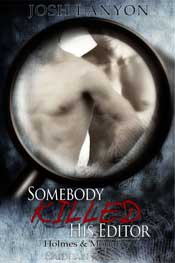
— Josh Lanyon’s m/m Holmes and Morirarity series and the closet.

— I wrote about the virtues of know-nothing criticism.

At CBR I wrote about Ms. Marvel and the realism of non-violence.

At the Atlantic I explained why readability is a myth.

For Ravishly

— I explained why metalgate had failed.

— I did a list of awesome women in metal.

At Splice Today I wrote about

—the authenticity of Iggy Azalea, or lack thereof.

— Jessie J’s acoustic performances and their authenticity, or lack thereof.
 
Other Links

Katherine Cross on why women’s fashion isn’t for men.

Sarah E. Brown on why the media was right to share Leelah Alcorn’s suicide note.

Congress almost passed a bill banning funding for the study of romance.

A nice piece on multiple online Ayn Rand film reviews.
 

somebody_killed