Lois Lane’s Rooftop Riunite

Wine is not part of the American visual vocabulary of virtue, in the way that breakfast cereals, completely undeservingly, are.
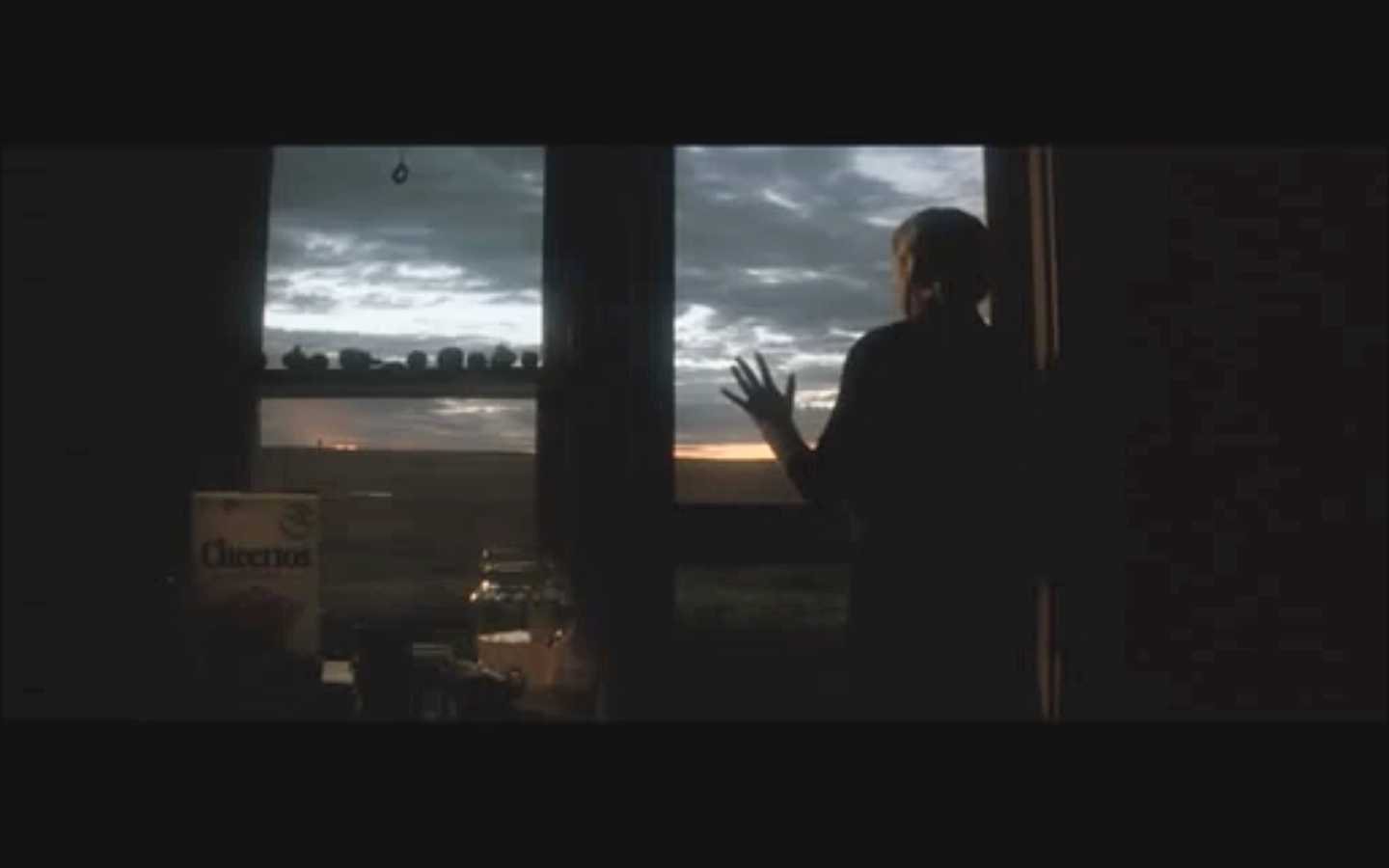
 

cheerios1

 
Look there in the bottom left hand corner of the frame. While more a function of product placement than set-design, the Kent family’s box of Cheerios implies happy childhoods and growing children, a story unbrokenly told by generations of marketers through summery television commercials. If a director alternatively placed a Cheerios box amongst domestic strife, it would read like it automatically belonged there. Perhaps it should, complicit as it is in the destruction of small family agriculture in America. Yet marketing triumphs, while the Kents innocently harbor the agent of their coming obsolescence. In a way, the Cheerios box stands alongside Mrs. Kent, also looking out onto the grown Clark, knowing it has raised him well, understanding that he will soon be heading out for the adult world of coffee and hotel breakfast buffets.
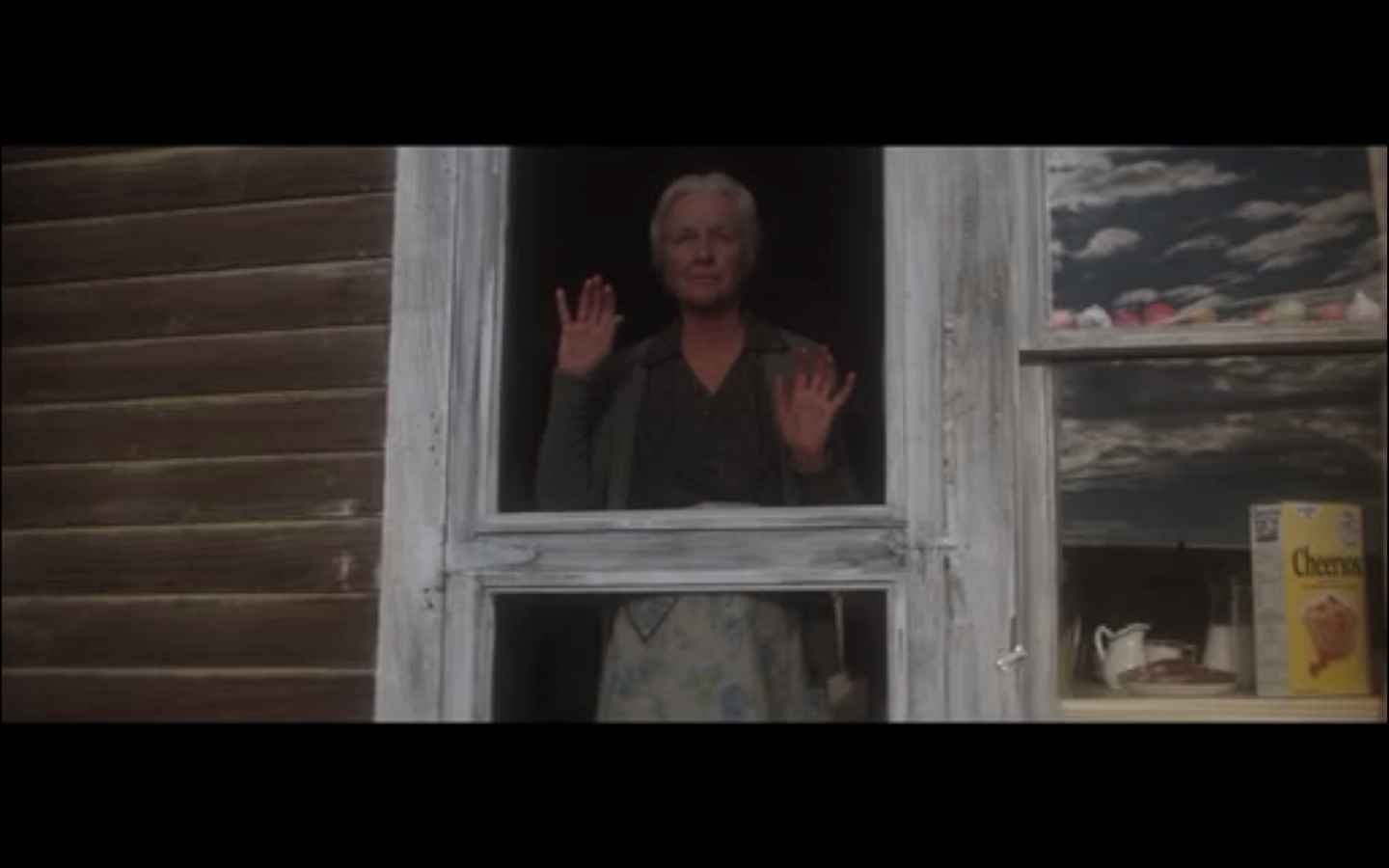
 

cheerios2

 
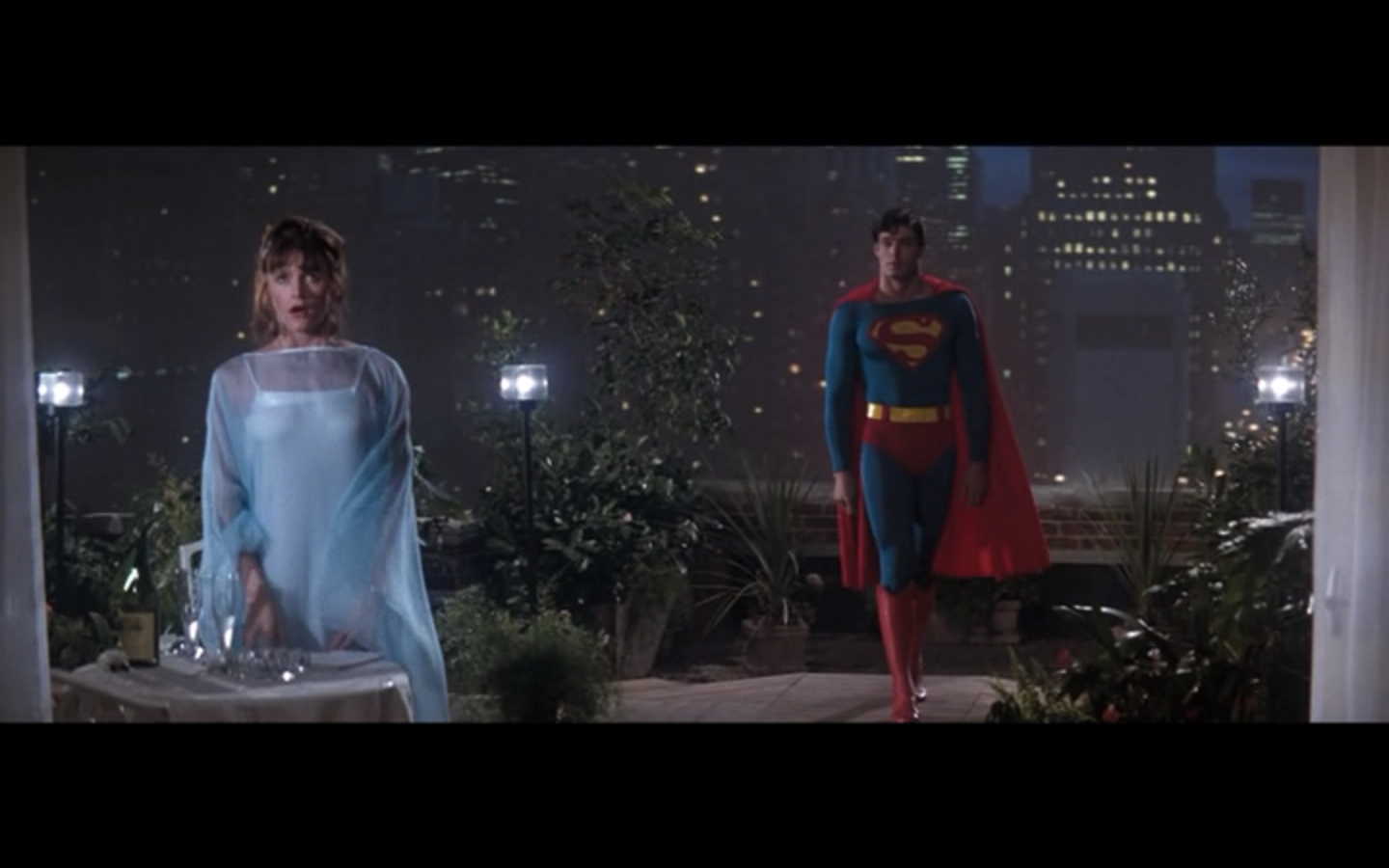
I digress. Of course wines are not depicted as a nostalgic childhood artifacts– at least not for protestant, white, American families following WWII. Things are slowly changing, and filmmakers and sitcom directors increasingly picture it on dinner tables, and as a relatable half-vice for full-time mothers– just not often in sight when the kids are around. Light substance abuse is a hallmark of dysfunctional family comedies, and wine’s refined enough to seem a little less scary. Wine can be a part of family, with reservations. Yet when does wine become a part of childhood fantasy and play acting? If there ever was a Champagne or Martini Barbie, its assuredly retired, but that doesn’t prevent young girls from imaginatively filling in the blanks, and the tiny pink play glasses. Wine, consistently portrayed as a feminine and aristocratic drink in America, plays a trickier role in fantasies about masculinity. Bruce Wayne might drink it as part of his alias– but would Batman? Would Professor X from the X-Men, because he’s sophisticated and European? Catwoman, because she’s a femme fatale?  These seem the most likely– the image becomes incongruous with the Punisher, Deadpool or Spiderman. Oenophiliac villains would be another conversation, as would romantic interests.  Which brings us to the other brand-name consumer good not-so-prominently placed in the 1978 film Superman: A bottle of sparkling white wine with an  obscured, and perhaps defaced label, pounded by Lois Lane while anxiously awaiting an ‘interview session’ with Superman.
&nbsp.
superman_balcony4
 
superman back of bottle
 
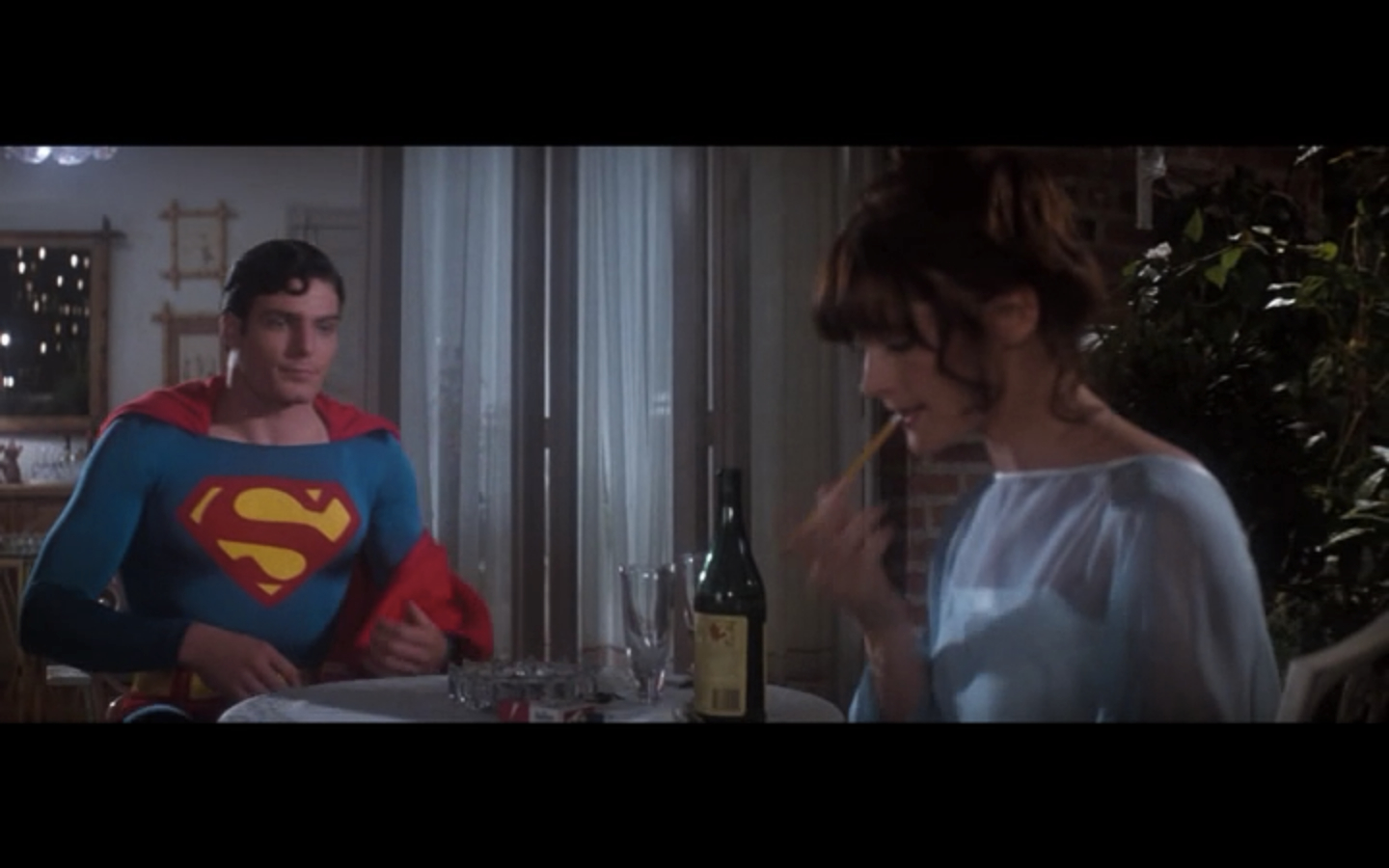
Through most of the scenes, the filmmakers turn the label away from the camera, exposing a prominent bar code and a back label likely filled with marketing copy. Lois might live in a penthouse with a landscaped roof deck, but she drinks a reliable, commercial brand. More mysteriously, she’s brought out Champagne flutes, but the bottle doesn’t look like a sparkling wine. Champagne bottles and their imitators typically have long neck foils, and a horizontal label. With the exception of the collar label, it somewhat looks like a bottle of Riunite from the advertisement below, also from 1978.
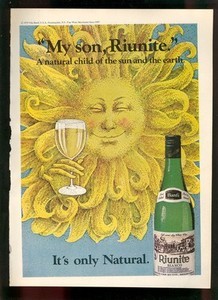
 

Riunite blanco

 
For those unfamiliar with the slogan “Riunite on Ice, That’s Nice,” Riunite was like the brand-specific prosecco of its day– cheap, fizzy and from northern Italy. Riunite is a prominent brand of Lambrusco, a type of sparkling red wine from Emilia-Romagna, which is northeast of Tuscany. Sparkling red wine is a bit of an anomaly, and while there are a handful produced around the world (particularly in Australia,) Lambrusco might be the most traditional– less a fun experiment, and more of a regional speciality. Different provinces make different variations, which differ in terms of dryness and sweetness, and what kinds of grape varietals are used.  Riunite is an example of the sweetest and darkest type of Lambrusco, Lambrusco Reggiano, which is made with a higher percentage of Ancellotta grapes:

This is the wine that took America by storm in the late 1970s and early 1980s, when the Cantine Riunite of Reggio nell’Emilia, a consortium of co-operatives, succeeded in exporting up to 3 million cases per year to the United States. So successful has Lambrusco been on export markets that special white, pink, and light versions have perversely been created, the colour and alcohol often being deliberately removed.

-Daniel Thomases and David Gleave, The Oxford Companion  to Wine

 
Riunite combated this with the claim that Riunite white “is natural,” a good reminder to natural wine producers everywhere that the term is easily pirated by industrial producers. If Lois is in fact drinking white Riunite, it shows her to be rather tasteless– a charming, bizarre twist on the luxurious tableau she presents to Superman.  Her choice is fashionable, but uneducated. It doesn’t look like Lois grew up around wine, or has taught herself wine. Does Lois make enough at the Daily Planet to afford her designer wardrobe and penthouse? Or did she inherit it? Superhero stories are all about origin narratives, but despite Lois’s status as “the archetypal ‘comic book love interest,'”  her biography isn’t part of the cultural consciousness (or even immediately discoverable on Wikipedia.) Lois is a well-dressed, spunky career woman living in a beautifully appointed home, partaking of the best known brands of 1978– not unlike a Barbie doll with corporate tie-ins. But where did she come from?
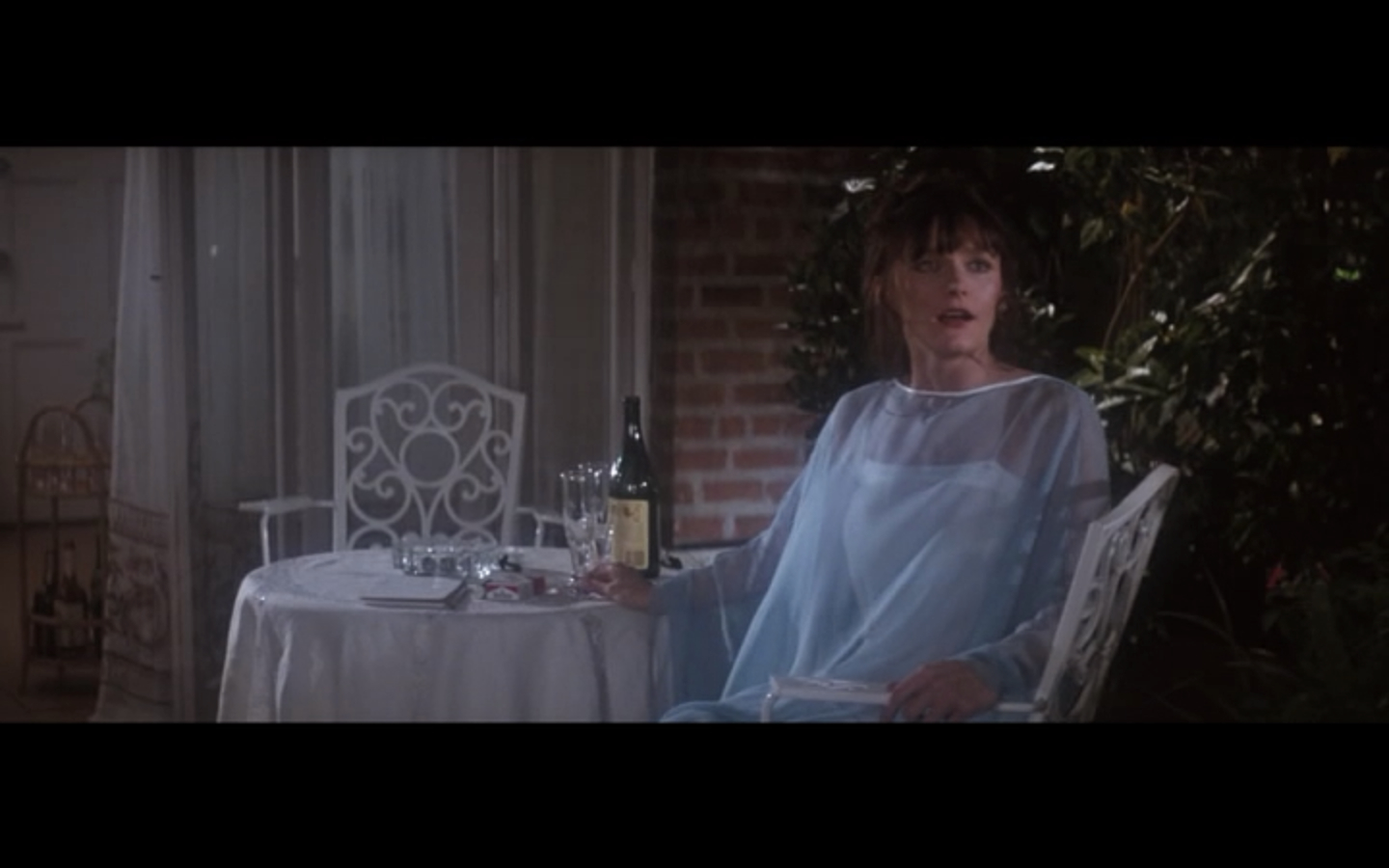
 
superman_balcony3
 
Still, its possible she is not drinking Riunite. The logo isn’t very visible on Lois’ bottle, nor is there a screwcap wrapper. A motivated set crew could have blotted out and removed labels and foils so as to deny Riunite accidental sponsorship, or incorporation into the Superman brand. Its possible they needed a bottle of wine, ran to the nearest liquor store, and picked out a bottle from a prominent case display. It’s hard to know how clued in these guys were to detail, considering that two different sets of wine glasses appear on the table over the course of the interview.

Besides giving Lois a little liquid courage, the wine gives Superman the opportunity to look good abstaining, to make a half-joke, (“I never drink when I fly.”) When she writes up the piece, Lois assumes that Superman doesn’t drink at all, which makes Eve Teschmacher, Lex Luthor’s girl friend, coo with desire. After a bout of disarmingly cute sex banter, supposedly a hard-news interview, Lois and Superman fly over Manhattan and into the night sky, where Lois free-styles a rhyming poem. Utterly smitten after the visit, she monikers him, (“What a super… man.”) The winning performances and odd-ball quality of these moments easily make them the best part of the movie not involving Gene Hackman. After dropping Lois back off at the apartment, Superman swings around as his alter-ego Clark Kent, reminding a dazzled and distracted Lois that they have a date. This affords Superman a chance to make one more joke about the wine, this time at Lois’ expense. “You haven’t been–hmm?” He asks, miming her drinking with his pinky extended, lips puckered, and eyelids semi-closed.
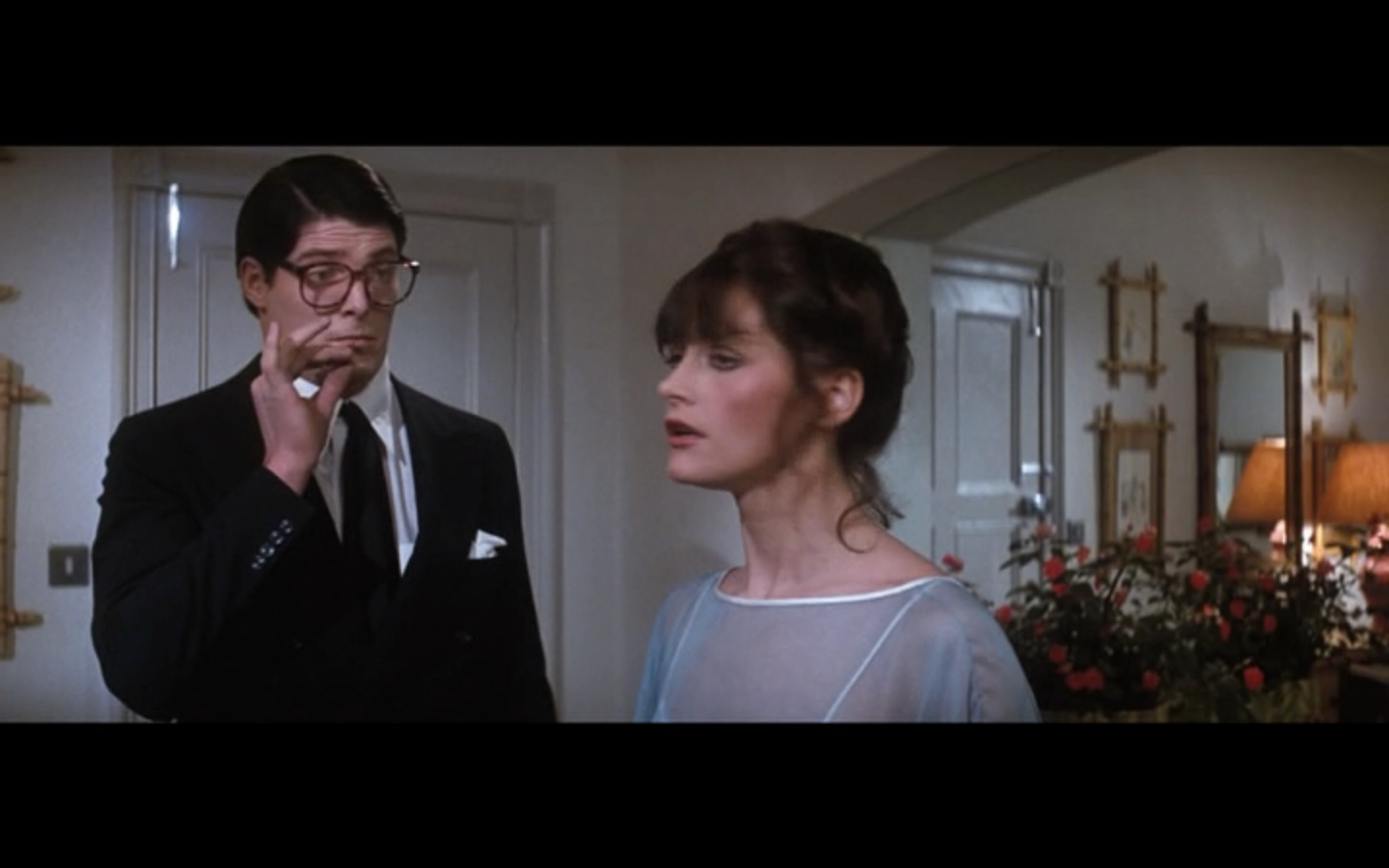
 
superman_haveyoubeendrinking?
 
Of course she was drinking. You were there, jerk. And of course you know the real reason she’s swooning. Lois Lane is savvy, but she’s comedic relief. And despite the overblown comparisons of Superman to Jesus, (only exacerbated in the 2013 Man of Steel,) Superman isn’t a saint. He’s duplicitous enough to schedule two dates with Lois as two different people, just for voyeuristic kicks. He seems charmed by her  imperfections, but not in awe of her abilities, (although he appreciates her wit.) Superman isn’t a farm boy innocent, falling head over heels in love. He’s effortlessly in control, and he’s amused by her inability to see his true identity, and only passingly guilt-ridden. Superman acts less ‘salt of the earth,’ than like a cheeky business-school brat. Lois is the love interest not because she is ‘super’ herself, but because she’s a normal girl who was there at the right place, at the right time. She makes adorable, and sometimes deadly, mistakes– she publishes Superman’s weakness in the public paper, and can’t think fast enough to escape a broadening fault line. She drinks cheap, trendy plonk while dressed like a timeless Egyptian princess. Lois Lane could be anyone, so why do audiences need to know anything about her? She’s ultimately helpless– a remarkably feminine ‘Common Man’ that Superman dedicates his life to love and save. And drop thousands of feet above the ground. And get mugged at gunpoint. No hard feelings.

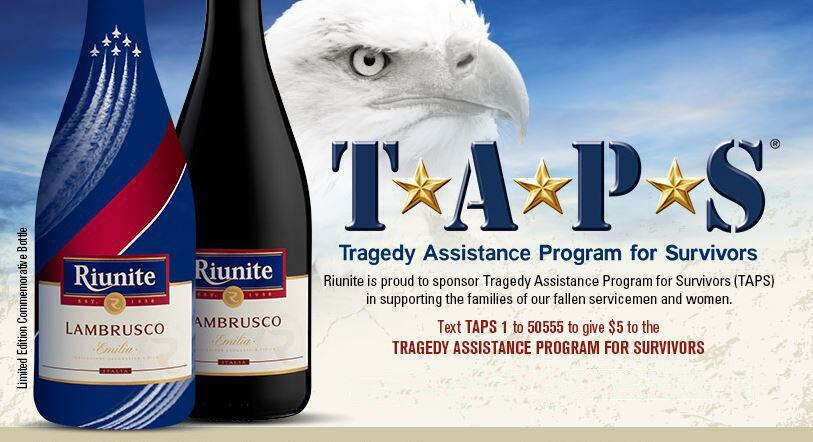
And what’s happened to Riunite since 1978? It didn’t age well, but sales are still holding strong in states with more labyrinthine liquor laws, like Pennsylvania and Ohio. Riunite, once advertised as the wine of happening twenty-somethings, is now a proudly-unfashionable staple of the heartland. Riunite’s producers understand that, releasing a highly publicized TAPS campaign for veterans, an RV tour, and a smart line of ads riffing on the datedness of their jingle from 1985. One could imagine that they’d love to be the favorite of Superman’s girlfriend—the Cheerios or Malboros of wine.
 
Taps

This is part of a series called What Were They Drinking? co-posted at my wine and social criticism blog, The Nightly Glass. 

Also recommended– the archive of old advertisements on the Riunite website. The theme-song might get stuck in your head, but they’re pretty amazing cultural artifacts.
Red Dawn, 2012: Imperialists, Insurgents, and Role Reversal

Red-Dawn-2012-Movie-Title-Banner1

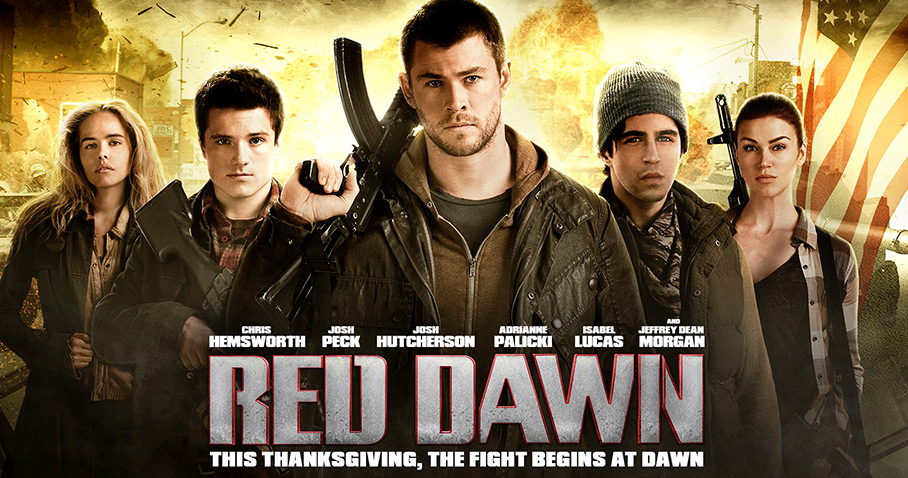
I expected the 2012 Red Dawn remake to push jingoistic hyper-patriotic borderline-racist propaganda.  And it does.

I did not expect it to carry a subtext urging a re-evaluation of the War on Terror.  But it does that, too.

The original (1984) version of Red Dawn was a Cold War fantasy of Communist aggression and brave American teenagers heading to the mountains of Colorado as resistance fighters against a Russian/Cuban/Nicaraguan invasion. The kids call themselves the “Wolverines,” after their high school mascot.  The remake keeps that same basic plot, except the leader of the guerrilla band is a marine home on leave after a tour in Iraq, the action has been relocated to Washington state, and the invading enemy is North Korea.

“North Korea?” one of the young partisans says, incredulously.  “That doesn’t make any sense.”

“Well, there’s a bigger picture here,” his older brother replies, vaguely.

They’re both right.  It doesn’t make any sense, but there is a larger bigger picture.  That bigger picture might be called the real world.

In the real world of 2012, the United States was not being invaded — not in danger of being invaded — by North Korea or anyone else.  We were, however, winding up occupations in Iraq and Afghanistan, two countries where we had faced ruthless, bloody insurgencies.  What Red Dawn asks of its audience is that we imagine ourselves in the place of the insurgents.

“When I was overseas,” the Marine lectures, “we were the good guys.  We enforced order.  Here, we are the bad guys, and we create chaos.”  The irony is cutting.  For in the story the movie tells, it is obvious that these American kids, fighting for freedom, defending their homes, are the good guys; and what does that suggest about Iraq?

He also says:

“I don’t want to sell it to you, it’s too ugly for that.  It’s ugly and it’s hard.  But when you’re fighting in your own back yard, when you’re fighting for your family, it all hurts a little less and it makes a little more sense.  For them, this is just some place, but for us this is our home.”

It’s the moment in the film when the subtext is most explicit, and it is so important that, with variations, the speech is repeated at the end of the movie.  But there are numerous other points when the War on Terror makes its uncomfortable appearance.  The Korean authorities, for instance, continuously refer to the rebels as “insurgents” and “terrorists.”  They create an internment camp for suspect elements, dressing them in orange jump suits and using shipping containers for cells — like the Americans did at Bagram Air Base.  Their propaganda and their oratory have an kitschy, cliched, Cold War aesthetic, but beneath the red veneer, there’s a standard hearts-and-minds kind of appeal.  In their speeches, the occupying army insists that “We are not your enemies,” but liberators — bringing freedom, delivering security, and rebuilding the country.  “Helping You Back On Your Feet,” one propaganda poster advertizes.  “Repairing Your Economy,” promises another.  What they ask in return is for “your cooperation in bringing these cowardly Wolverine terrorists to justice.”  The rhetoric sounds hollow, but no more hollow coming from a Korean commissar than it did from Paul Bremer.  The familiarity, as well as the falsity, seems to be part of the point.

Perhaps I shouldn’t be surprised.  Maybe the anti-imperialist role reversal was there in the original.  Back in 1984, Andrew Kopkind wrote in The Nation:

“If you swivel the politics about 45 degrees to the left, Red Dawn begins to look more like a celebration of people’s war than a horror movie about the evil empire. . . .  [Director John] Milius has produced the most convincing story about popular resistance to imperial oppression since the inimitable Battle of Algiers.”

Kopkind goes on to compare the Commies’ summary execution of unreliable elements to the CIA’s Phoenix Program, targeting Viet Cong supporters.  He then suggests that we should “read Red Dawn as a parable of American intervention in Central America.”

Apparently the US Military didn’t get the memo.  The 2003 mission to capture Saddam Hussein was codenamed, “Operation Red Dawn,” and the two sites the Army searched were dubbed “Wolverine 1” and “Wolverine 2.”

The point I’m trying to make has nothing to do with the dangers of a Communist invasion.  It’s about propaganda and interpretation.  Politics are sometimes a struggle over meaning, and such meanings are never really fixed or settled.  But this observation raises more questions than it answers:  Given that there is always the possibility for subversive subtexts and resistant readings, how does one produce or evaluate political propaganda?  Is Red Dawn a right-wing movie, undermined and co-opted by left-wing critics?  Or is it a left-wing movie cheered by conservatives too dumb to understand what they’re watching?  Neither?  Both?

And to what degree is the meaning created in the social practices surrounding the text, as opposed to residing in the movie itself?  Do Blake’s “Jerusalem” and Springsteen’s “Born in the USA” become patriotic anthems because large groups of people treat them that way — “dark, satanic mills” and “the shadow of the penitentiary” notwithstanding?
Was Bradley’s more explicit 2012 Red Dawn a reclamation, a recompense for the US military’s tone-deaf and nuance-free embrace of the first film?  Or are both films just object lessons concerning what happens when action movies try to be too clever — or when critics do?

Works Cited

William Blake, “Jerusalem [from Milton],” William Blake: Selected Poems. ed. Ian Hamilton (New York: Bloomsbury Publishing, 1994) 114.

Andrew Kopkind, “Red Dawn,” The Nation, September 15, 1984.

Red Dawn, dir. Dan Bradley (Metro-Goldwyn-Mayer, 2012).

Red Dawn, dir. John Milius (United Artists, 1984).

Bruce Springsteen, “Born in the USA,” Born in the USA (Columbia Records, 1984).

Bio
Kristian Williams is the author of American Methods: Torture and the Logic of Domination, Hurt: Notes of Torture in a Modern Democracy, and an editor of Life During Wartime: Resisting Counterinsurgency.

The Fall of Superheroes

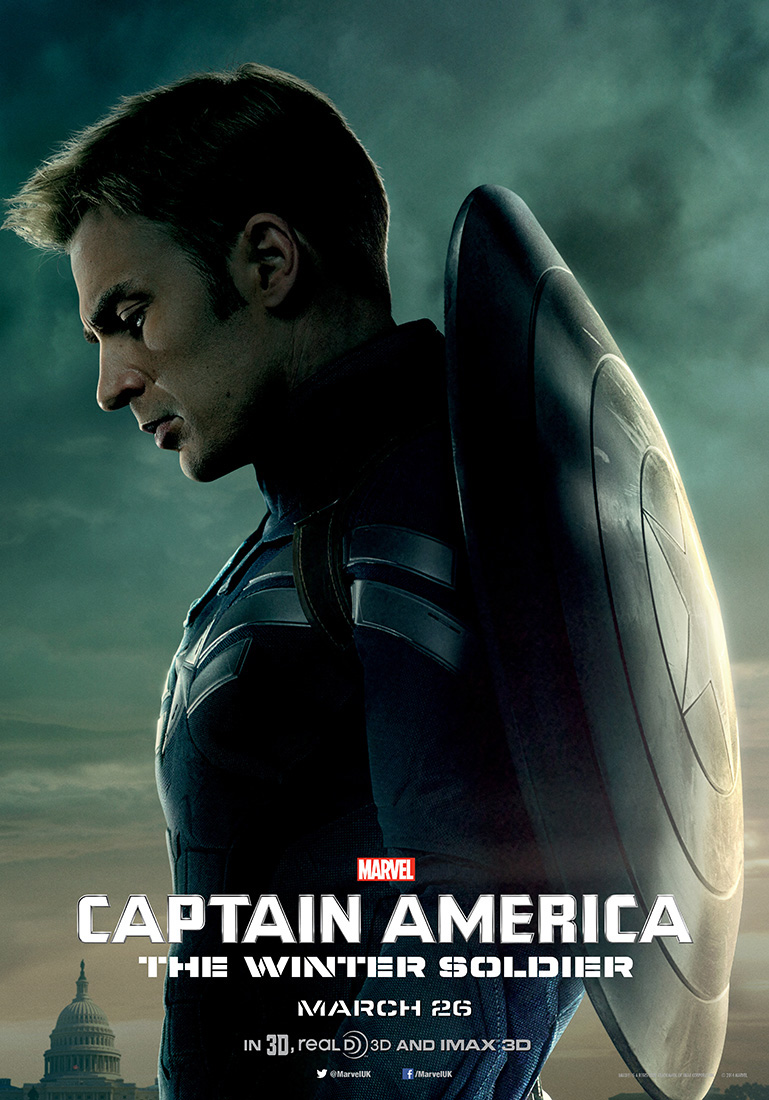
Remember when the end of summer meant the end of superheroes? If you could get past August you were free of the masked and superpowered until spring. Six months. That’s the minimum period of regenerative hibernation required before the next explosive, power-punching, evil-thwarting onslaught of hyperbolic do-goodery. This past year Captain America: The Winter Soldier opened in April,

Captain-America-The-Winter-Soldier2


followed by Amazing Spider-Man 2 in May,

asm2


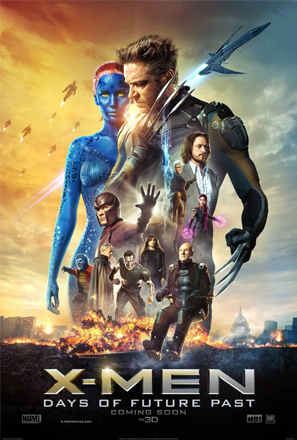
before X-Men: Days of Future Past spilled into June.

X-Men_Days_of_Future_Past_poster


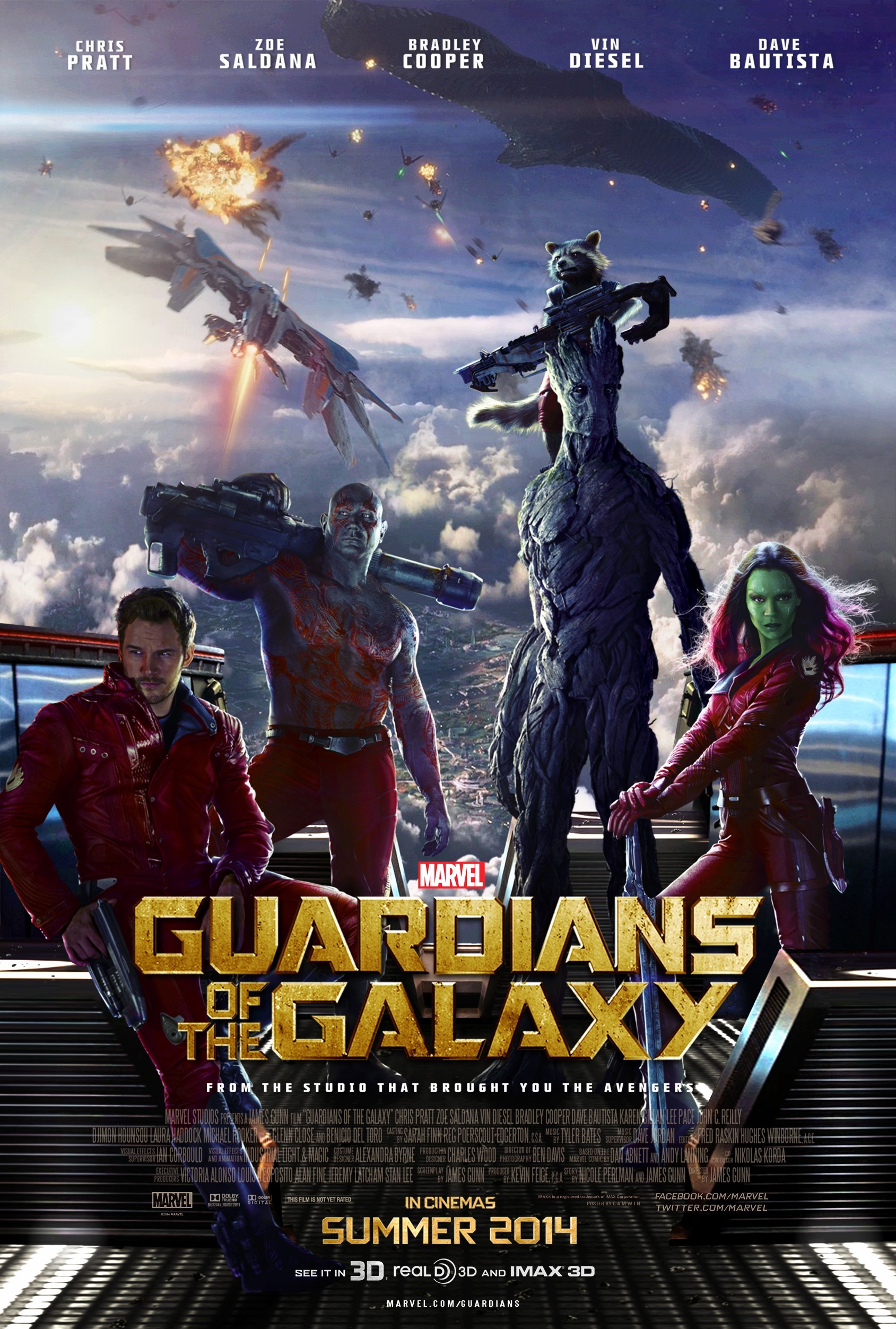
July offered only the semi-superheroic duo Lucy and Hercules, but August made up with Guardians of the Galaxy.

Marvel's Guardians Of The Galaxy...Milano..Ph: Film Frame..?Marvel 2014

I admit to seeing all but one of them, but something changed for me this year. Maybe it was the death of Gwen Stacy. It felt like Hollywood’s way of punishing an uppity girlfriend. How dare Gwen figure out how to defeat Electro when Peter couldn’t—and imagine if he had actually followed her to England. Superhero as trailing spouse? Obviously the woman had to die. The seventh installment of the X-Men franchise restored me a bit, with its mildly complex characters making occasionally unexpected choices. Sure, the cast members from the original 2000 film are looking a bit gnarled these days, but we can’t all have anti-aging mutant powers. And, hey, who didn’t have an absolute ball at Guardians? Funniest superhero movie yet. A week later I could barely recall a scene, but that’s normal. It was August. My superhero processing systems were cycling down already. Time to tuck the capes and cowls away for a well-deserved cryogenic nap.

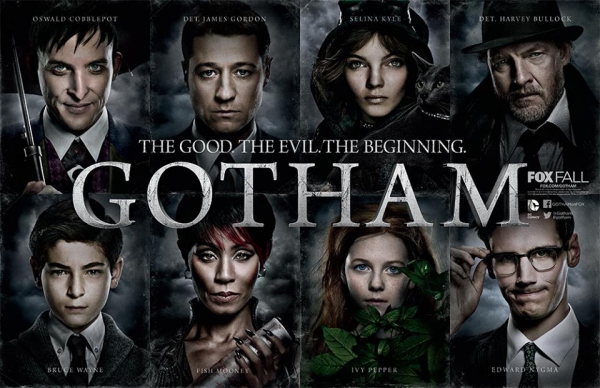
Except, wait, why do I still hear the thumping of a bombastic soundtrack? Superheroes aren’t hibernating this year. They just shrunk down a bit. September has already brought the TV premiere of Gotham

gotham

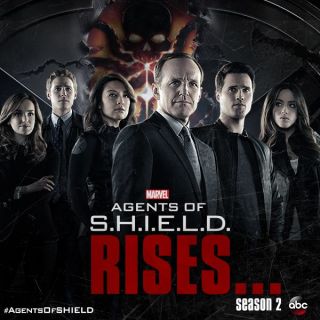
and season two of Agents of S.H.I.E.L.D.

shield 2

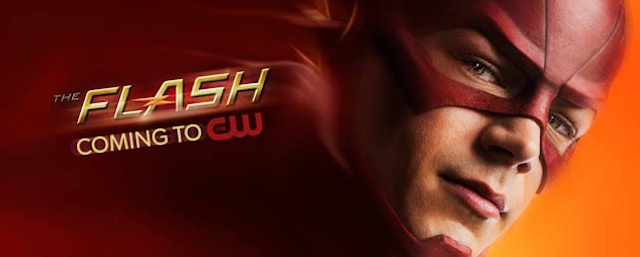
October promises Flash

flash-show-bar-640

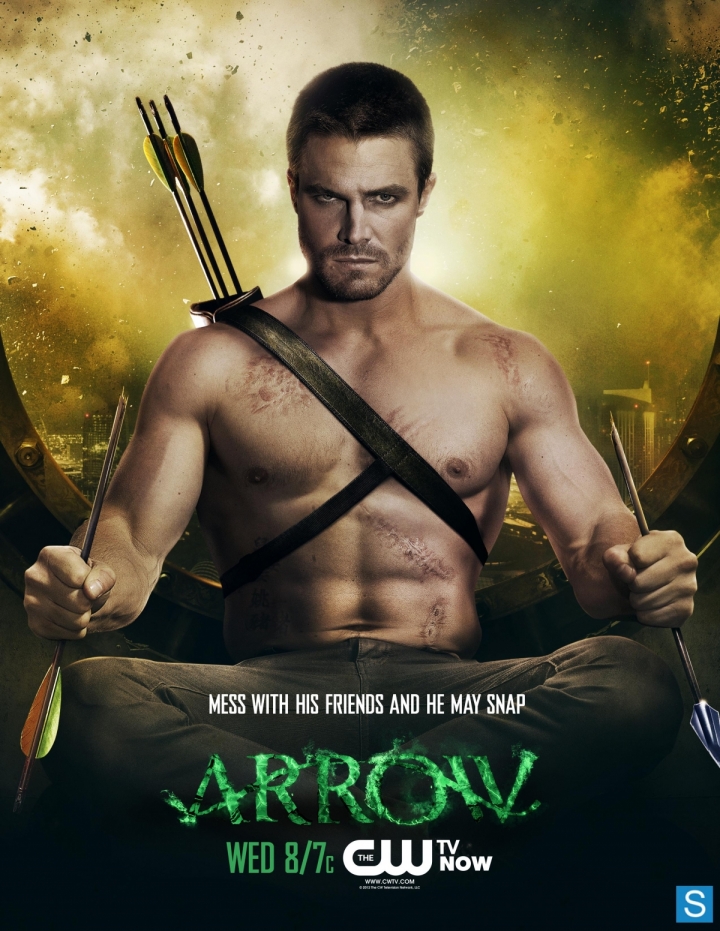
and season three of Arrow.

arrow 3

 Add Constantine, Agent CarterSupergirl, Teen Titans, and the four Marvel shows in production at Netflix, and the power nap is over. We’ve seen plenty of superheroes on primetime before—Batman, Wonder Woman, Hulk, and Greatest American Hero all boasted multi-year runs in the 70s and 80s—but never so many simultaneously. I can’t resist them any more than I resisted their summer siblings, but I do worry how long the onslaught is going to last.

I actually requested a show like Gotham two years ago. The Fox production isn’t exactly what I described, but I won’t quibble. And I named every supervillain-in-his-youth cameo for my son and wife as we watched. Though was it really necessary to film the Wayne murder scene yet again? Imagine arriving at the crime scene with Gordon and glimpsing little Bruce for the first time. Cut three minutes from the script and that opening could have been dynamic just through a POV change. Instead we get a repeat, something closer to Nolan’s Batman Begins than Burton’s Batman.  The WB has managed to throw in some bare-chested goofiness into Green Arrow’s character, but DC is keeping its dark and dire palette for the bigger network.

S.H.I.E.L.D. had a firmer grip. Last year’s series premiere was flawed but hopeful—and then the follow-up episodes were some of the worst TV I’ve ever sat through. I don’t know how they made it to mid-season, but I’m glad they did, because the final season arc was one of the best long-term plotting coups a series ever pulled off. This year opened at a sprint, with the expanded cast and juggled originals introduced with gloriously little exposition—a huge trick given the upheavals in status quo the last Captain America film forced on the show. Though my favorite moment was a narrative sleight-of-hand employed for the new characterization of an old but radically altered returning character—one of those look back and reevaluate a half dozen scenes when you realize brain-damaged Fitz is only hallucinating Simmons. Oh, and bad Ward grew a beard and lives in the basement now—just like the dragon in the first season of the BBC’s Smallville-inspired Merlin.

So, yes, I guess I can’t complain about the superhero’s autumnal shift to the small screen. I’m their audience. But what happens next spring? Will we have recovered enough for The Avengers 2: Age of Ulton in May? Or Ant-Man in July? Or Fantastic Four in August? Or the following year when have to go see X-Men Origins: Deadpool and Batman v Superman: Dawn of Justice and Captain America 3 and X-Men: Apocalypse and Teenage Mutant Ninja Turtles 2 and Doctor Strange and Shazam! and Sinister Six? All that after having just watched Daredevil, Luke Cage, Jessica Jones, and Iron Fist combine forces on Netflix’s The Defenders? Plus the other seven planned superhero shows airing fall and winter?

It’s not quite genre domination–there are still more cops and doctors and lawyers on TV than I can list–but have two publishing companies ever generated so many simultaneous franchises? Marvel and DC are spreading their genes faster than the zombie plague. The superhero apocalypse is here. Will we survive it?

What We Don’t Plan For

This post was supposed to be about Brian K. Vaughn and Niko Henrichon’s Pride of Baghdad, the fictional graphic novel based on the true story of the pride of lions that escaped from the Baghdad Zoo after the initial bombing campaign in Iraq in 2003. Although that work has become freakishly and horrifyingly topical again, given the recent decision by the Obama administration to wage such a campaign against ISIS, my mind is elsewhere this week.

Last week, my students finished Jeremy Love’s brilliant Bayou Volume I, the story of African-American Lee Wagstaff and white Lily Westmoreland, two young friends negotiating the racial politics of 1933 Mississippi. The class was oddly silent for much of the second day, and when one of my (few) African-American students brought up a recent news item in our region, I knew I would be ashamed of myself if I didn’t discuss it.

Our class takes place on the idyllic Wittenberg University campus in Springfield, Ohio. Just a little ways down the road, in Beavercreek, John Crawford III was shot to death by the police inside of a Wal-Mart. He was holding a toy pellet gun. Another customer had apparently called the police, claiming that a man was waving a gun around in the store in a threatening manner. After weeks of refusing to release the video for fear of tainting the grand jury, Attorney General Mike DeWine allowed the security footage to be released tonight, only hours after the grand jury declined to indict the officers. The video is horrific. Appalling. “Cold-blooded murder” is the most obvious phrase that pops to mind.

Of course, it was also precisely what I expected.

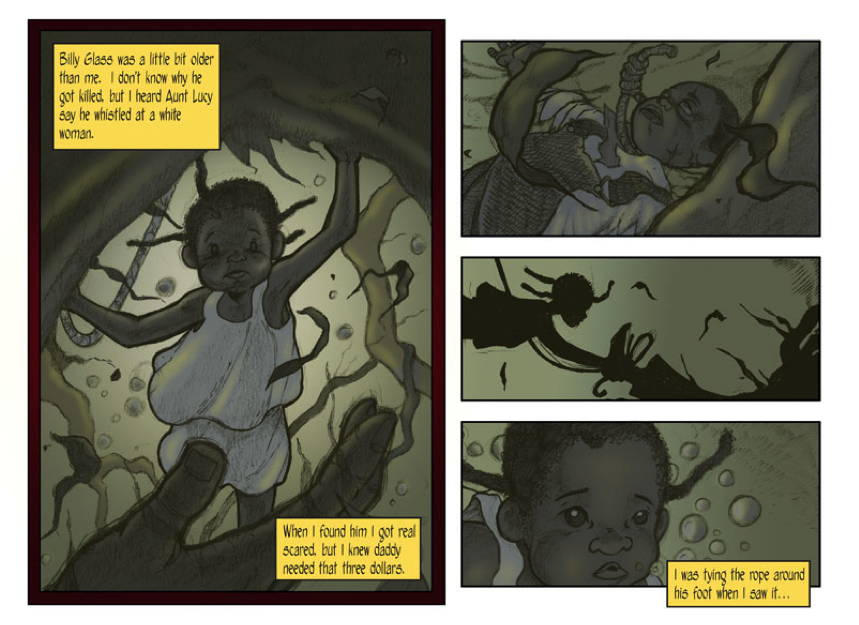
Last week, we didn’t have the grand jury decision, nor did we have the video. What we did have was one volume of a bizarre little comic that riffs off of Alice in Wonderland. By way of summary, the work opens with Lee by the bayou, preparing to jump in to tie a rope so as to haul up the lynched body of Billy Glass (a character meant to stand in for Emmett Till). Glass had been lynched for supposedly whistling at a white woman, his body left in the water.
 

bayou1a

 
While she is in the bayou, Lee sees a vision of Billy’s soul, and as we turn the pages, we realize that what we have seen is her memory of the incident, which she is recounting to Lily.
 

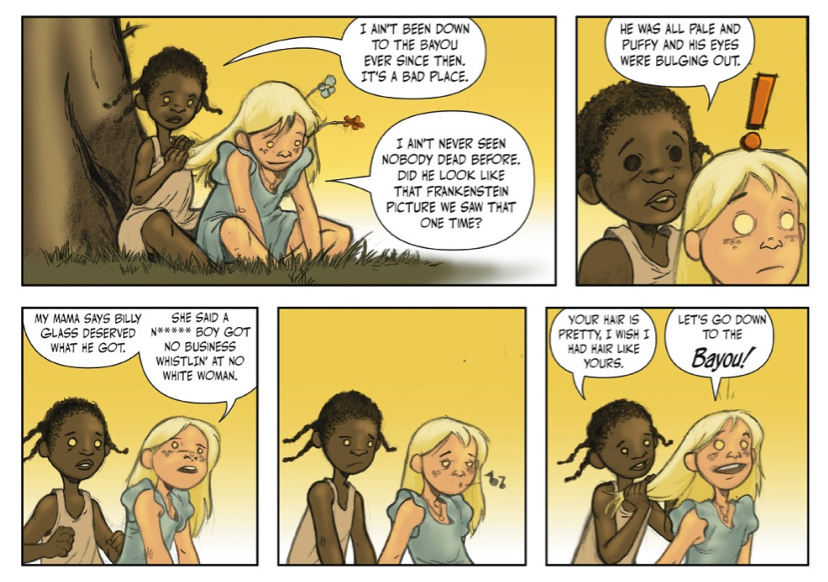
bayou1

 
Lily expresses curiosity about the appearance of the dead body (as opposed to Lee’s genuine fear) and even goes so far as to parrot her mother’s racist diatribe about Billy “deserving what he got.” Qiana Whitted’s close reading of this scene is exquisite, telling us that

What we hear, then, in Love’s visual rendering of Lily’s whistle interests me greatly, for those tiny eighth notes generate a tremendous sound. We hear echoes of anti-miscegenation panic, a fear that reverberates unease even as the conversation hastily resumes. We hear the sense of white privilege that attends Lily’s ability to whistle freely, carelessly one could argue, in spite of her naïveté as a child repeating her mother’s words. But I believe that what Love also wants us to hear in this sequence is the “wolf whistle” of a murdered black child, along with the memory of just how much that sound costs. Perhaps what resonates most deeply in the white girl’s whistle are the sounds that Billy (and Emmett) are no longer able to make, were never free to make at all.

Furthermore, the iconic rendering of their faces invites identification, but that identification remains ambivalent. They are both iconic, so neither is closed off. While the racism Lily spews certainly inclines the reader to retract any sympathetic engagement, she is also a child copying her mother’s words. We should all know better, but, the implication is that sometimes we don’t.

Later, Lily loses her locket in the bayou, and blames the loss on Lee, prompting Mrs. Westmoreland to demand Lee work to pay back the value of the locket, a demand to which Calvin, Lee’s father, promptly accedes because he doesn’t want to see his child “hurt over some white girl’s locket.”

While Lily would seem to be a bumbling villain at this point, she tries to go down to the bayou to find the locket and fix her relationship with Lee. She is eaten whole/kidnapped by a Cotton-Eyed Joe, a giant white man, while Lee watches, shaking in fear. As Lee runs away from the bayou in terror, a vision of lynched black bodies in the trees materializes, and she frantically runs through their feet.

Lee’s father is accused of the crime, although there is no evidence, and in a scuffle with the deputies, she is summarily knocked out by a white adult.

She journeys to the prison to see her father, who has been beaten mercilessly, where he tells her that her aunt will take care of her now, assuming that he will be lynched shortly. She decides to enter the bayou to find Lily and clear her father’s name. In this “through-the-looking-glass” moment, she enters a world in which racist caricatures are both personified and aggressive, and her only help is found in Bayou, a slave grown monstrous in his bondage, although he remains kind and fearful of the master.

She falls into one of Cotton-Eyed Joe’s traps immediately after reaching the land on the other side of the bayou, and while Bayou the character stitches her up, the spirit of Billy Glass tells her that she has very little time.

When I approach Bayou, the complexity of Love’s rendering of the racial landscape echoes not only America’s complicated and genocidal past, but also a present in which blacks are put in the unconscionable position of apologizing for history even while demanding justice. When we step through the bayou/looking-glass, we are stepping into America’s hysterical relationship to race, in which we must frequently repeat that it doesn’t matter now even when we encounter the most obvious evidence that it does.

Part of Bayou’s charm is feisty, spunky Lee, who insists that Bayou the character be courageous about his own life. We root for her, even though she is effectively a dead girl walking by the end of volume one. On the other hand, Love makes it clear again and again that Lee does not understand the limitations placed on her in the social structure, and she is hurt because of it. She is our heroine, but she is also before her time. While she may prevail in her quest to exonerate her father and to free Lily, we’ve already been told she won’t survive. Furthermore, we’ve seen her undergo obscene abuse at the hands of white adults, and her dreams or hallucinations indicate to a close reader that she is already—at minimum—a victim of psychological trauma as well.

As we discussed the circumstances of the work, my students tended to stress the historical context. “What it was like back then” was a phrase used frequently during the week we spent on the volume. Still, I stretched. “Why would Love write this in the 2000s?” “It was published in 2009. What was happening during this period that might make this relevant?” There were only 20 minutes left in class when someone bit. She brought up Ferguson, and referenced Beavercreek as well. The room was suddenly evacuated of sound, except for my “very good,” turning to scratch out another tick in the “Contemporary Contexts” on the board. I turned back to the classroom, and I could feel the white students receding. Not all, but many. There was shifting. There was uncomfortable fidgeting. And worst of all, eyes glazed.

They didn’t want this to be another lesson in how whitey was bad, but it was exactly the kinds of reactions I was seeing that I was hoping to critique. I drew attention to my own whiteness by way of tacitly acknowledging the discomfort. I asked—rhetorically—what it meant to have such conversations about race in the contemporary age.

Students of color and a few white students were energized, and we gabbed on about how Bayou could enrich our reactions to these current discussions for 10 minutes. The remainder of the class was lively, but I couldn’t shake the feeling of that moment of out-of-hand rejection of a text that was trying to teach us more productive ways to respond to discussions of race in contemporary America, and by the end of class, I felt deflated.

Perhaps I was more deflated more than usual after a rough class, because I’m currently working on a presentation for MLA on the science of memory, recent neuroscientific findings, and Bayou. I was invested in the text, and contexts, in ways I could only gloss in class. Tentatively entitled “My Children Will Remember All of the Things I Tried to Forget,” I ask us to imagine a mouse alone in a cage whose feet are exposed to electric shocks. Alongside of the shocks, the scent of cherry blossoms is piped into the cage. This is repeated until the mouse demonstrates an aversion to the aroma, and then the mouse has children. The pinkies are isolated from the parents and are never exposed to similar conditions, but nonetheless show a similar antipathy; the scent of cherry blossoms inspires only terror. I recount a study published recently in Nature Neuroscience, in which researchers found that mice do indeed transmit aversion between generations without actual social contact. Somehow, traumatic experience is genetically encoded, etched into the make-up of these animals. I ask if it is not too far of a stretch to believe that, perhaps, humans function in the same way.

Such a finding has fascinating repercussions for the study of intergenerational trauma, long the province of literature scholars, dwelling on the outskirts of “proper” psychological and neuroscientific literature. The finding suggest in part that slavery is not over, and that the subsequent abuses have been writ small on our genetic codes. There are ample studies (some ongoing) demonstrating lingering prejudice in even the most devoted progressives, yet popular thought still turns away.

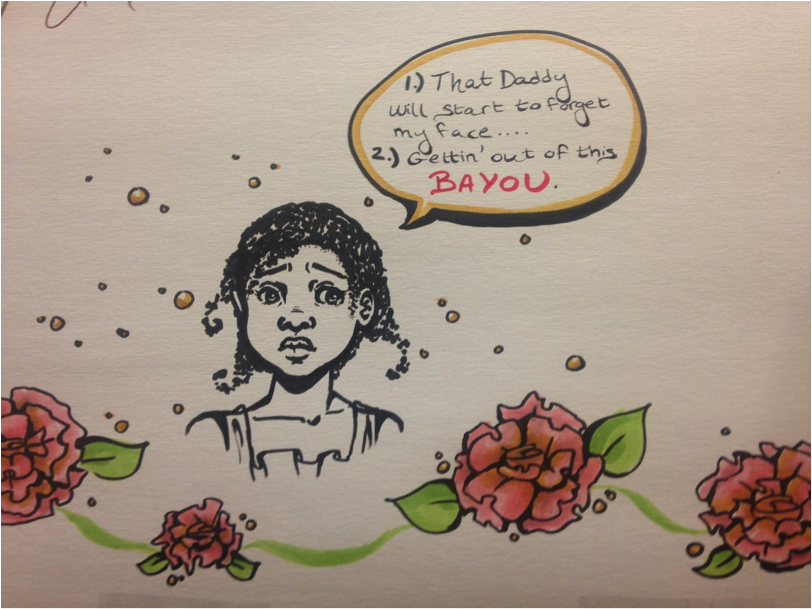
I spent the weekend trying to shake off the lingering feeling of profound failure, as well as worrying about the grand jury convening on Monday in Xenia, just up the road from my home. What had I said? What had I failed to say? On Monday, I drove into campus a bit before 6am, hoping to plan myself into a less agitated state. And I arrived to find the illustration below on a poster I made at the beginning of the semester, with a cartoon of myself asking “What are you most worried about? What are you most excited about?”
 

bayou3

 
Clearly, someone was listening. Or at least, they were hearing between the lines.

Race, Class, and Iggy Azalea

This first ran on Splice Today.
 
From Elvis to Miley Cyrus, it sometimes seems like the only way white people can interact with black music is through appropriation. The latest example of this tiresome American tradition is Iggy Azalea, a white woman who has broken chart records for Beatles. “Iggy is..an heiress to white supremacy, the mix of unearned racial privilege and racial fetish that has historically made black music without black people big business,” Travis L. Gosa writes at The Root, while Britney Cooper points with disgust at Azalea’s adoption of a Southern black accent. “I maintain that there is no triumph and no celebration when we embrace a white girl who deliberately attempts to sound like a Black girl, in a culture where Black girls can’t get no love.”

Gosa and Cooper aren’t wrong — but it’s worth pointing out that Azalea has to some degree anticipated their criticisms. Or, at least, the debut single and video from her album The New Classic, seems to deliberately reject racial appropriation as a reading of her music. Instead, the video suggests that her connection to hip hop is based, not on race, but on class.


Class is right there in the title of the song: “Work.” The track starts with Azalea talking directly about working crap jobs.

Two feet in a red dirt, school skirt
Sugar cane, back lane
3 jobs took years to save
But I got a ticket on that plane
People got a lot to say
But don’t know shit bout where I was made
Or how many floors that I had to scrub
Just to make it past where I am from

The video is in some ways even more directed; Azalea walks through a desert setting, passing by a woman taking in laundry, a spitting, grizzled guy in a trucker’s cap, trucks, and a trailer park. It’s not clear whether this is supposed to take place in Azalea’s native Australia or in Florida, where she moved when she came to the U.S. (“No money, no family. 16 in the middle of Miami.”) Probably it’s supposed to be the latter, and to show the continuity between the two — being poor and white in Australia is not all that dissimilar to being poor and white in Florida.

Poverty isn’t just figured as a white phenomenon though. Instead, work is something that Azalea sees as uniting black and white women both. Early in the video a black dancer twerks in front of a truck; later Azalea twerks (more convincingly than Miley at least) in a strip club for a skuzzy patron while rapping.

“Valley girls giving
Blow jobs for Louis Vuitton
What you call that?
Head over heels?”

She then steals his keys and races out of the joint with a couple of black women, taking the guy’s car.

When I interviewed sociologist Tressie McMillan Cottom recently about hick hop, a genre blending country and rap, she argued that “we don’t have any class stuff happening in popular culture, period.” She added, “Hip hop, country, and hick hop—the merging of the two—are all part of the larger cultural domain, which has become a place where we just don’t have class.” Hick hop, or country rap crossovers, are increasingly popular, as Cottom has written, but they tend to be built around black and white men partying. The shared interracial experience is lust, rather than class per se (as an example, check out this Florida Georgia Line/Nelly video.)

Azaela’s track doesn’t completely reverse that: the video certainly provides black and white gyrating female bodies for the pleasure of a male audience. But black and white women are not just the object of the gaze for Azalea; they’re also objects of class exploitation. Black and white women work cleaning floors; black and white women work as strippers — a job that doesn’t look like much fun given the guy Azalea has to cozy up to. And black and white women work in this video, stripping and twerking, almost as if the entertainment industry and the sex industry aren’t all that different. Florida Georgia Line and Nelly bond on the basis of their gender in a milieu which deliberately elides class. Azalea, on the other hand, presents herself as having a common experience with black women that is based both in gender and in class. “Pledge allegiance to the struggle,” isn’t quite a line out of the Communist Manifesto, but Marx would still appreciate the sentiment.

The class statement here still has lots of problems. While the track is in part about work as exploitation, it also presents work as path-to-success; the poor kid worked, and now she’s rich, like Horatio Alger. Moreover, appropriation remains a real issue; Azalea’s twerking while stripping seems like a way to define black women in terms of sex work, then associate herself with both the sexiness and the struggle to make herself look edgy and real. When a white woman declares solidarity with black women in this context, who is really benefiting?

Still, for all its limitations, there’s no way around the fact that “Work” is about work. Criticizing Azalea for racial appropriation is fair. But doing so can’t help but erase, or discard, her argument — which is that hip hop speaks, or can speak, not just to race, but to an experience of poverty and labor which is meaningful to people, and especially to women, of different races and nationalities. Azalea may not be entirely convincing, but still, there’s something to her claim that hip hop is hers because she worked for it.
 

iggy-azalea-work-look-4a

Utilitarian Review 9/27/14

On HU
Featured Archive Post: Caroline Small on why David Lowery is a lousy spokesman for the future of music.

Chris Gavaler on Superman in France.

A list of 10 books that have stayed with me (or possibly more than 10.

Kim O’Connor on Gabrielle Bell and how men and women’s autobio comics are treated differently by critics.

Ng Suat Tong on how to read Luke Pearson’s Hilda, for adults.

Chris Gavaler on how Watchmen lowered the number of words per page in superhero comics.

Qiana Whitted talks about how she self-censored the comics she taught to elementary school students.

James Romberger reviews comics he found at SPX.
 
Utilitarians Everywhere

At Pacific Standard I wrote about stigma against sex workers and stigma against black women and how the two affect each other. N’jalie Rhee and Pia Glenn have a discussion about the article on TWIB Nation.

At the Atlantic I wrote about J. Lo and Nicky Minaj and lesbian eroticism.

I was on CNN talking about Emma Watson and misogyny; the Daily Caller made fun of my hair.

At Splice Today I write about:

—why people are more worried about inflation than unemployment.

— gamersgate and knowing the critics you review.

At the Chicago Reader I have a brief review of Marty Stuart and his Fabulous Superlatives.
 
Other Links

Alexis Coe interviews Karen Abbott on historical nonfiction and the differences in the way that historical nonfiction by women is treated.

Russ Smith on the greatest hippie song ever.

Jillian Keenan on how spanking should be for sex, not for kids.
 

large_357603

Draw Better! Put Your Eyes Out!

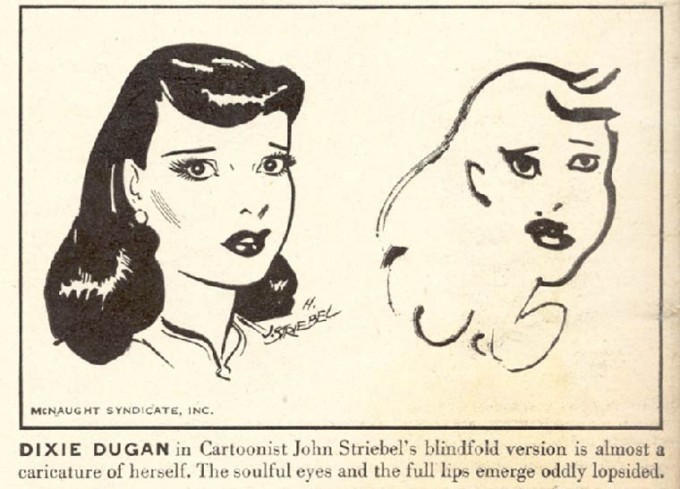
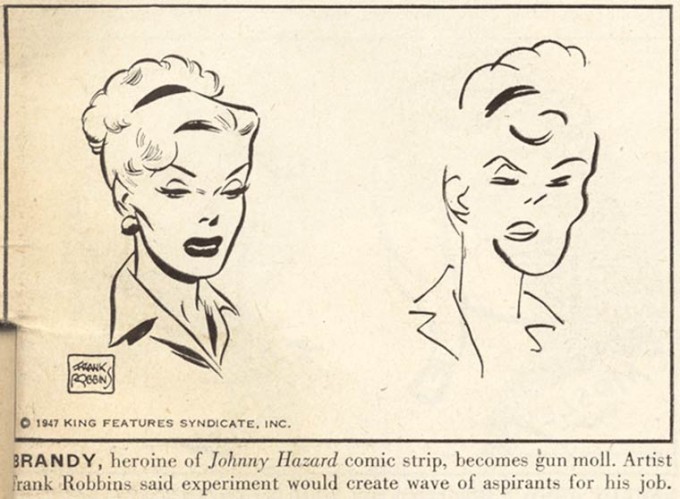
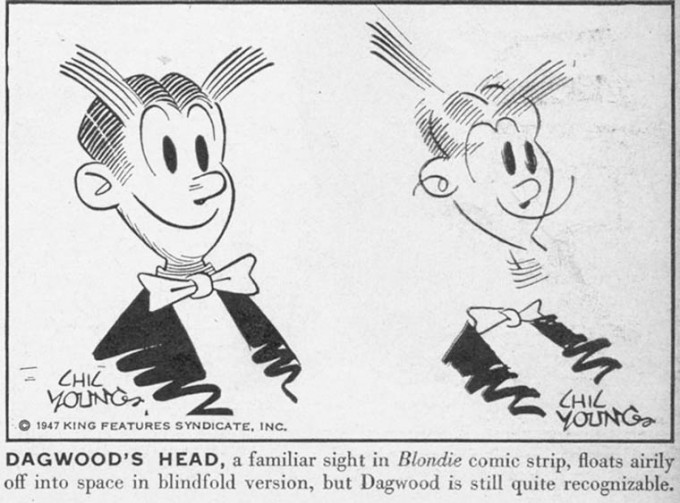
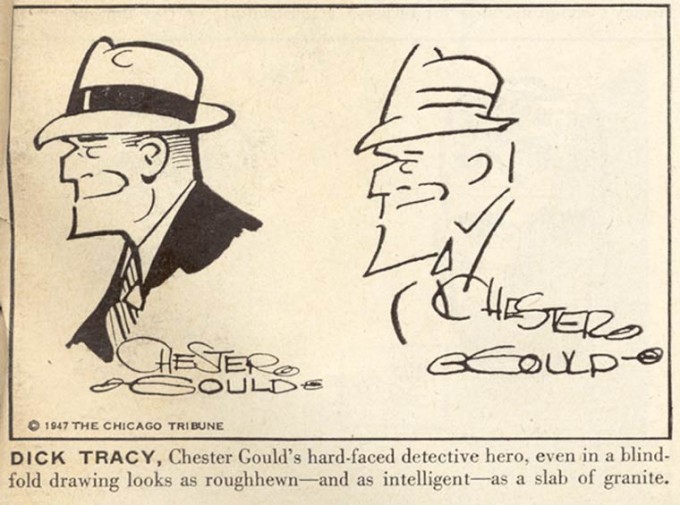
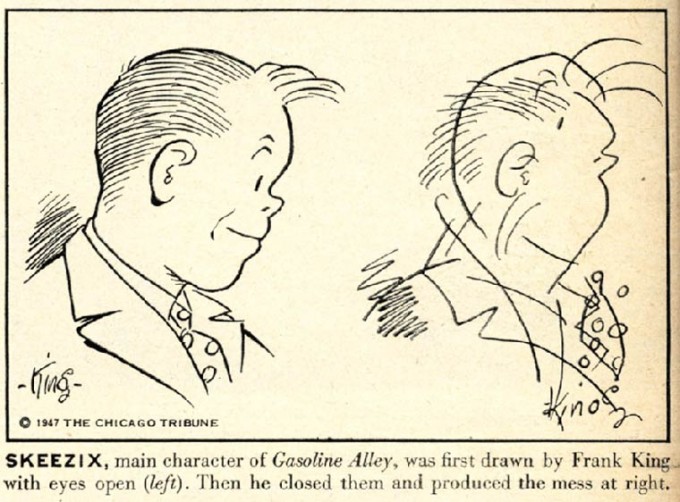
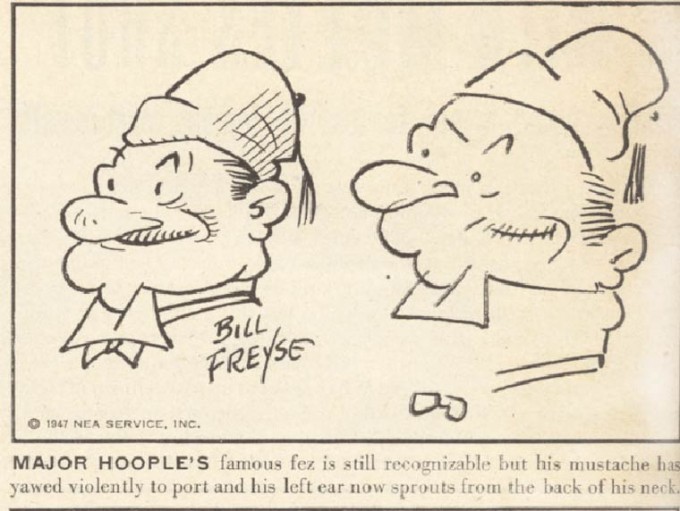
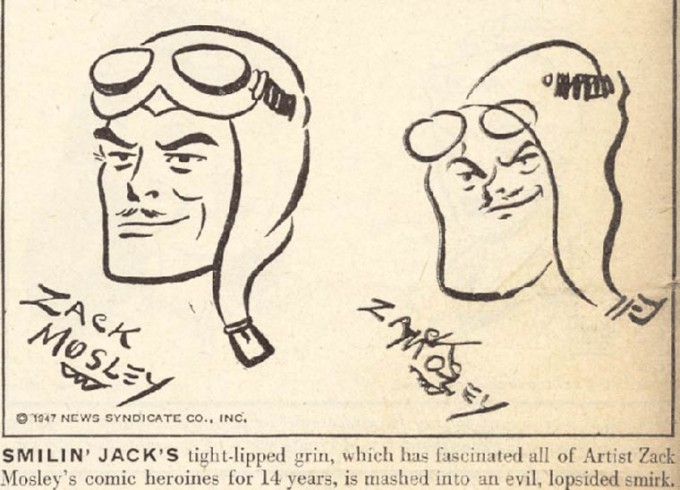
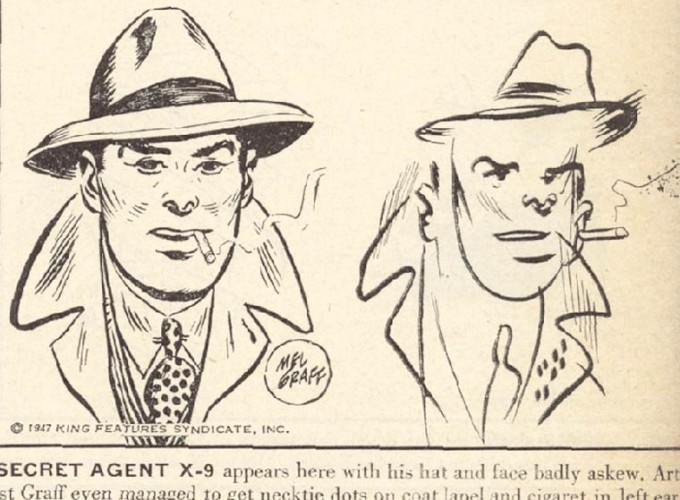
In 1947, Life Magazine asked a bunch of famous cartoonists to draw their famous characters blindfolded. The result? Hilarious hi-jinks, of course…and something that looked an awful lot like high art.
 

illustrators-40s-1-680x489


illustrators-40s-2-680x492

 
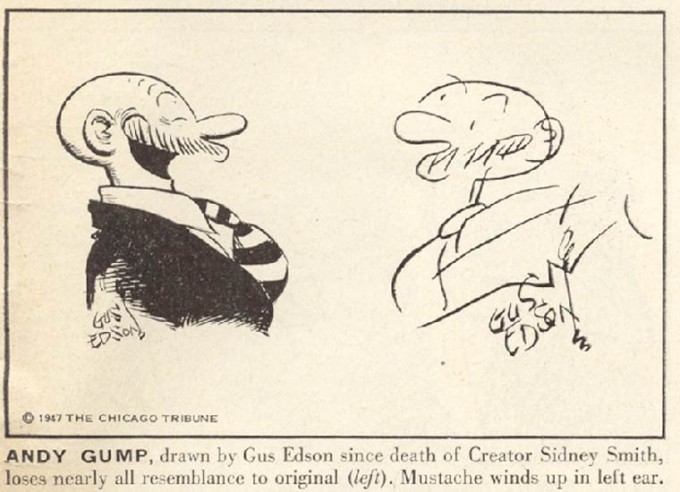
That’s not exactly how Life presented the exercise. The editors instead emphasized the wacky wrongness of the characters; the anatomical, inconsistencies. Dixie Dugan is “almost a caricature of herself”, the eyes and “full lips” appearing “lopsided”. Gus Edson’s Andy Gump “loses nearly all resemblance to the original” and his moustache ends up by his ear. Suddenly, these folks who can draw can’t draw, and that’s funny.

Half a century further down the road of deskilling though, it doesn’t look all that funny. Rather, the drift off-brand is validating. Striebel’s tight, eyes-open illustration of Dixie Dugan looks like bland advertising boilerplate; the blindfolded version, with the loose, gestural strokes and the varied line-weights, has a lot more energy — a highbrow modernist sketch emphasizing individualistic brio rather than a commercial hack job. Similarly, Edson’s perfected Gump looks fusty and antiquated in its slick cartoonishness, while the stick figure outline looks like the work of someone who’s seen Fort Thunder, and knows the joys of messiness.

You could argue that this exercise exposes the shallowness of high art pretensions and the idiocy of contemporary art. “Look, my kid could do that,and with his eyes closed no less!” Or you could say that it reveals the dullness of the cartoonists, whose drab workmanlike images need a shot of modern art practice to give them life.

Less polemically, though you could instead see the exercise as an object lesson (with illustrations) of why deskilling has become so central to contemporary art, and to highbrow/lowbrow distinctions. Comic strips emphasize professional finish, reproducibility, and iconic characters — the point is a recognizable, consistent product, which obscures the contribution of the artist, so that (for example) Gus Edson can replace Sidney Smith, and the Gump remains the same.
 

illustrators-40s-3-680x499


illustrators-40s-4-680x503
 
But with eyes closed, the artists are no longer able to be professional. The practiced memes fracture and come apart; literally in the case of Chic Young’s Dagwood, whose head leaves his body. Imperfection equals idiosyncrasy. To draw the same thing over and over perfectly is to be a drone, an assembly line worker. To be an artist, you have to be less sure; the marks have to be placed, not out of habit, but from individual inspiration. Dagwood’s perfect collar disintegrates, and what’s left behind are pen strokes as pen strokes. By closing his eyes, the artist reveals his hand.
 

illustrators-40s-5-680x505

illustrators-40s-6-680x502

 
The fact that, in the blink of an eye, Frank King can move from cartoon to cubism is a reminder that the low-art/high-art divide is both more arbitrary, and less wide, than either side likes to admit. Once we recognize that, the juxtaposition can allow us to perceive some of the pleasurable oddness and wrongness in the original drawings — the weird way Dick Tracy’s mouth seems to curve up his cheek and head towards his nose, or those tufts of hair making a bid for freedom on Skeeziks’s brow. And it also lets us think about the cute, iconic professionalism behind modernist semi-abstraction, in which the artist’s tics become their own marketing meme.
 

illustrators-40s-7-680x511

illustrators-40s-10-680x490

 
Thisexercise also demonstrated, though, how absolute the high art/low art divide can be. Life’s editors were familiar with Picasso I’m sure; Boing Boing’s bloggers (which who reprinted the piece) have seen modern art. Yet the genre assumptions are a barrier, or a blindfold, to seeing what’s happening on the page and/or screen in front of their eyes. For Life (and for the artists themselves), the blindfolded cartoonists are still cartoonists; the drawings with eyes covered are mistakes, or failed attempts, or entertainingly silly errors. Deskilling is seen as a bug, rather than a feature; the drawings are comics that don’t look like comics, rather than something else which looks like itself.
 

illustrators-40s-8-680x500

 
I’ve mentioned before Carl Freedman’s point that genre precedes art — by which he means that preconceptions about genre determine what we see as art, and what we see when we see art. Are those images above bad comics? Or are they succesfully deskilled high art? Part of what’s especially enjoyable about them is that they’re both and neither. If genre determines what we see as art, then art that messes with genre can cross up the way we see — like looking with our eyes uncovered, or with a blindfold on.
 

LasVegas-600

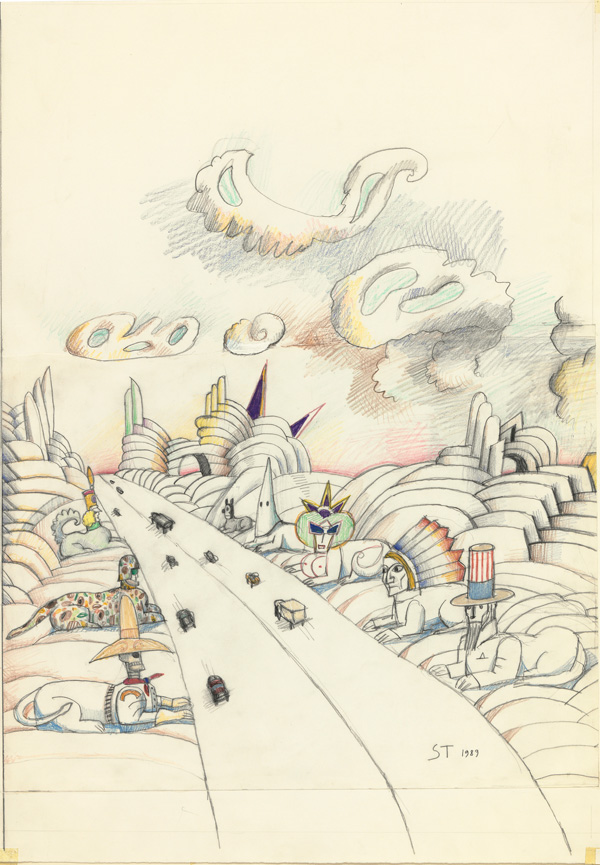
Saul Steinberg, “Las Vegas”