Welcome to the Patriarchy

imagesJanice Radway is not popular with romance scholars. Back in 1984, Radway’s Reading the Romance was one of the first scholarly books to take romance seriously, but its anthropological approach and its mixed assessment of the genre have made it unpopular with fans and academics alike. When I cited Radway positively in an essay at Salon, romance aficionados lined up to kick her (and me!)

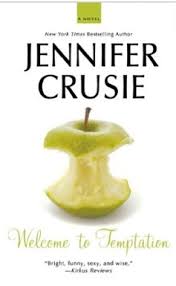
Maybe the best anti-Radway brief I’ve read is Kate Moore and Eric Murphy Selinger’s wonderful analysis of Jennifer Crusie’s novel Welcome to Temptation. Moore and Selinger argue very persuasively that Welcome to Temptation is a direct response to/takedown of Radway.

To summarize very quickly, when she interviewed a (small) group of romance readers, Radway found that many of them felt that romance novels were empowering because they provided a form of self-care. Women Radway talked to were the caretakers in their family; they had to look after kids and husbands, and provide love and support. But they had little opportunity to receive love and support themselves. Reading a romance novel was a way to demand personal time. Moreover, the plots of romance novels, in which a hard, dangerous, difficult man, revealed depths of love and care, acted out, or mirrored, the act of self-care, presenting women as worthy of love and imagining a world in which men could be motherly too.

Moore and Selinger suggest that Radway rejected, or was skeptical, of this interpretation offered by her interviewees. I think it’s a little more complicated than that; in my reading, Radway didn’t refuse to believe what her informants said, but rather wondered if romance’s function as emotional compensation might end up distracting from programs or efforts for real-world change.

In any case, as Moore and Selinger say, Crusie’s novel is constructed as a kind of refutation of these worries. The protagonist, Sophie, is a Radwayian caregiver; raised by a single and irresponsible father, she spent most of her childhood caring for her younger sister and brother, and she continues to organize her life around taking care of them to such an extent that she isn’t even able to articulate her own wants. The first step for empowerment for her is admitting to, or carving out a space for, her own interests and desires.

Sophie is in the town of Temptation working on a photo shoot with (or really, for) her sister Amy, when she meets Phin, the town’s mayor. He and Sophie are attracted to each other, and one night after a few drinks Phin offers to, essentially, be Sophie’s romance novel, by performing oral sex on her and giving her “an orgasm you don’t have to work for.” Sophie shilly-shallies, quoting Tootsie (“I’ve read The Second Sex. I’ve read The Cinderella Complex. I’m responsible for my own orgasm.”) But eventually she says yes. The result is not (as Radway would have it) disempowering, but quite the reverse. By letting Phin take care of her, she becomes more able to take care of herself. She is inspired to write some sex scenes for the movie she and her sister are making, and begins to be more aggressive about what she wants in her life and her relationships, refusing to take care of Amy any more, and asking Phin first for more sex and then for marriage.

Moore and Selinger argue that one of the ways that Sophie is empowered is through a greater ability to read. Phin (besides being a mayor) is an owner of a bookstore; he represents both reading and sex (or romance novels, in other words.) When she comes to Temptation, Sophie is so alienated from her self that she can’t see what’s in front of her; she “reads” Phin as a small-town, callous, patriarchal ass, based on her own bad experiences with such folks. Letting him take care of her helps her take care of herself, and allows her to act more forcefully and (relatedly) to think more clearly.

So that’s a (very simplified) paraphrase of Moore and Selinger’s argument. I’d urge you to read the whole thing in order to see the way they fully and ingeniously flesh out the thesis. It’s a lovely piece of work, and, again, I think it’s very convincing.

However, I have (to no one’s surprise) some caveats. First is Phin himself. Again, Phin is the owner of a bookstore, and he often talks about getting Sophie to read more. He is definitely symbolically supposed to stand for romance novels, and for greater skill with texts, as Moore and Selinger argue.

However, that symbol often seems more symbol than actuality. The book tells us Phin is a reader, but it doesn’t do much to show us he’s a reader. Phin isn’t associated with particular authors; we don’t know what he’s reading, or what books are central to him as a person, the way we learn that (for example) Houseman and D.H. Lawrence are important to Robbie Turner in Atonement. It’s been a couple weeks since I read Crusie’s novel, but I can’t remember a single scene of Phin reading in Welcome to Temptation. He talks about how he needs to get Sophia to read, but we don’t see them exchanging books or talking about what they’ve read. He’s supposed to be a reader; it’s symbolically important for him to be a reader; but the book does little to convince us that he’s actually a reader.

Instead, Phin is defined not by books, but by pool. He says at one point that pool is the closest thing he has to a religion, and we see him engaged in multiple games — with Sophie’s brother, with Sophie herself — at important points in the plot. The most vividly imagined detail of the bookstore is not a book, but the pool table.

Pool is (unlike reading) very gendered male, both physically (those long sticks) and in the mano-a-mano competitive ethos. In vacillating between Phin-as-reader and Phin-as-pool-shark, then, Crusie is also vacillating between a vision of reading-as-empowerment and a vision of empowerment as embedded in more standard (patriarchal?) pursuits. It’s as if Crusie herself doesn’t quite believe Radway’s interlocutors when they say that reading or self-care is empowering. If you’re going to show empowerment, someone has to beat someone else — and, indeed, Sophie’s moment of triumph occurs when she defeats Phin at pool, convincing him he has to marry her. It’s as if Crusie, with Radway, can’t quite imagine the transformative effects of reading; helplessly, power becomes about phallic symbols.

Along these lines, the end of the novel seems more ambiguous than Moore and Selinger claim. When Sophie comes into town, she sees a sign saying, “Tucker for Mayor: More of the Same.” Sophie imagines that mayor is some aging patriarch that no one would want to have sex with, only to discover that the mayor in question is the very attractive Phin. The Tucker for Mayor signs have been in Phin’s family for a long time; The Tuckers have been mayors for generations, always using the same sign (they have boxes of them.) Phin doesn’t really want to be mayor; he does so out of family tradition and a sense of obligation. When he and Sophie agree to marry, he decides he’s going to retire after his next term — and Sophie suddenly realizes that she, herself, could be the next Tucker mayor. As Moore and Selinger say, “The slogan will remain unchanged, still offering “more of the same,” but the gender and background of the “Tucker” in question will actually be quite different.”

But how different is this difference? We’re supposed to be on Sophie’s side, and agree with her that she would make a good mayor, just as Phin did before her. But if you take a step back, the politics of Temptation don’t look quite so beneficent. Phin is on a town council that includes his mother and a bunch of friends. All of them appear to be white and middle-class; all are families that have known each other forever. The town government is incestuous, homogenous, and nepotistic. Are there black or Hispanic people in town? If so, what do they think about the generations and generations of white male Tucker rule? If there aren’t, then that means that sometime, somewhere in the past, some Tucker took steps to make sure there weren’t (see James Loewen’s Sundown Towns.)

Phin’s power is validated because he is, as Moore and Selinger say, “something of an unhappy patriarch” — much like our current President is supposed to be. But patriarchy isn’t fundamentally changed just because the guy in charge makes a big deal about having a conscience. Nor is it fundamentally changed just because the patriarch in question is of a different gender. A corrupt, exclusionary, dynastic government is a corrupt, exclusionary, dynastic government whatever the personal predilections of whoever happens to be lucky enough to hold the strings of power. Empowerment, for Sophie, doesn’t mean overthrowing or changing the patriarchy. It just means that she gets to be the patriarch. Like the sign says, she’s “More of the Same.”

In the end, then, I don’t think Crusie refutes Radway. On the contrary, I think she confirms most of her insights. Radway felt that romances could provide a sense of personal empowerment and strength for women (which is certainly feminist), but that they failed to envision, or engage with, broader social change. And, sure enough, Welcome To Temptation provides Sophie with power and agency, but gives her little to do with that agency except win at pool and fit seamlessly into the existing power structure. For Crusie, Temptation, and patriarchy, don’t need to be changed — you just need to read enough romance that you feel welcome there.

Best Essays I Wrote In 2013

I thought I’d list 10 or so of the non-HU essays I wrote this year I was happiest with. So here goes, in no particular order.

At the Atlantic I wrote about rape and rape fantasy and Nancy Friday’s Secret Garden. I think this is my favorite thing I wrote this year.

At Slate I wrote about 7 Miles A Second by David Wojnarowicz, James Romberger, and Marguerite Van Cook, in which I talked about the way the book links marginal pulp trash and marginal sexual identities.

At Public Books I contributed to a great 50 Shades of Grey roundtable,in which I argued that the novel fetishizes incompetence.

At Salon I had a long two part piece on Orson Scott Card’s defense of genocide, first in Ender’s Game, then in Speaker for the Dead.

At the Chicago Reader I had a kind of diptych about comics in the gallery. First on the MCA’s anxious and mediocre Dan Clowes show, then on the quietly glorious MCA Lilli Carré” show.

At Reason I wrote about the history of school reform failure,as discussed in Jal Mehta’s great book The Allure of Order.

At the Atlantic I had a piece about not having sex in college and being a virgin for a really long time. And sort of as a follow-up to that I had a piece about how the male gaze gets men at Splice Today.

I had two pieces at the Atlantic on 12 Years a Slave, one on the way it refuses to make slavery about masculinity, and one about slave narratives and truth, or the lack thereof.

At Wired I wrote about the music bargain bin and mysterious Japanese fusion.

And I wrote about different versions of I Can’t Make You Love Me at Splice Today.

Droll Hunting

This first appeared on Splice Today.
___________
 

large_the-troll-hunter-3

 
Imagine if crossed the Blair Witch Project with This Is Spinal Tap. Now set it in Norway with trolls — and you’ve got Trollhunter.

You may be asking yourself, do we need another Blair Witch knock-off? Do we need another Spinal Tap knockoff? Even together? Even in Norway? And the answer to all of your questions would be no. No, not really. Like the trolls it purports to document, the film’s existence is both superfluous and kind of ridiculous.

That’s not to say that the film is bad, exactly. Just that there’s something oddly mysterious in its unmotivated lumbering.

It’s possible something crucial has been lost in the translation from the Norwegian. Or, alternately, Trollhunter may suffer from excess of appetite. The eponymous government troll hunter Hans (Otto Jesperson), in one of his many quirky troll anecdotes, discusses a troll he saw who was so dumb it tried to eat its own tail. The movie itself seems to miss the mark in a similar way. It tries to be comedy; tries to be horror; staggers back and forth a little and then, getting into the swing of it, settles for just roaring a lot and knocking things over.

(Spoilers follow, if you care about that sort of thing.)

The dilemma is perhaps best summed up during what’s probably supposed to be an emotional highpoint; the death of one of the teenaged main characters three-quarters of the way through the film. The protagonists and Hans are trapped in a cave with marauding trolls. The doomed kid (the cameraman), in a panic, frantically rubs disgusting troll stink all over himself, hoping to hide his scent. Unfortunately, though, he is, as it turns out, a Christian, which means that the trolls can smell him. Shortly thereafter, he’s eaten, leaving his companions to wail at the uncaring heavens, “Why didn’t he just say he was a Christian!”

So that’s the joke, and it’s moderately funny in a ha-ha-we’re-all-atheists-here kind of way. It could almost be a really low-key Monty Python sketch — except that up to this moment, the dead character has been treated as an actual person, rather than a goofy gag line. Not that there’s a ton of character development or anything, but for purposes of the previous horror-movie-running-away-and-screaming, there’s been at least some effort to pretend that what happens to this guy matters. And then, all of a sudden, he’s just thrown away. And then you see everyone else grieve for a minute or so…and then they stop, and get a replacement cameraperson (who’s a Muslim, so trolls probably can’t smell her — only Christians, not Muslims. Get it?) The whole thing just ends up being not just crass, but unbelievable. This kid just died; there’s no investigation? No explanation to the police? The other teenagers don’t stop and say, you know, our friend just died; screw the trolls, I’m headed home?

Instead, on they go, trundling from set piece to dry-humored set piece. Hans dresses in armor to fight a troll; Hans explains that the trolls’ extra heads are just growths designed to impress other males and attract females; Hans talks about the trauma of killing troll infants; a veterinarian explains the improbable biology of trolls turning to stone when sunrise hits them. It’s amusing enough, and the trolls themselves, as special effects, are goofily effective. Over the entire film, though, the archness becomes tedious. The Last Exorcism, with its hand-held camera horror, was not a great movie, but it cared about its main character, about its genre, and about the story it had to tell. This Is Spinal Tap was a goof, but it clearly had great affection for the hapless band it parodied. Trollhunter, in comparison, has no real characters, no real story, no real point —just extended snickering and occasional enjoyable special effects.

In a way, it almost makes you hope for the inevitable English-language remake. If somebody cares about the thing enough to purchase the rights, maybe they’ll care enough to give the film some kind of direction. Laughing at the trolls is all right in limited doses, but if this is going to work, someone out there needs to love them a little as well.

Utilitarian Review 1/4/14

On HU

Featured Archive Post: Matt Seneca interviews CF.

Me on romance definitions, Pamela Regis, and the defensive crouch.

Chris Gavaler on real life superheroes and vigilantes.

A list of some highlights from 2013 at HU.

Brian Cremins for PPP on Otto Binder and Joe Orland’s “I, Robot” as protest.

Kaily Kent on the underrated achievement of Jillian and Mariko Tamaki’s Skim.
 
Utilitarians Everywhere

At the Atlantic I talked about Sankofa and the need for more slavery films.

At Splice I reviewed the two albums from my that I hadn’t managed to write about yet. Those are:

— Guy Clark’s My Favorite Picture of You.

—Jeri Jeri’s 800% Ndagga.
 
Other Links

Can’s remember if I linked this before, but worth doing again; Tom Spurgeon has a long interview with Brian Cremins.

In praise of snark as an alternative to smarm.

Someone else noticed that the Pajama Boy discussion was linked to anti-semitism.

From a bit back; science blogging has some of the same problems with sexual harassment that comics do it looks like.

Ami Angelwings talks about dealing with transphobia on OK cupid.

Man is this Wax Audio Metallica vs. Herbie Hancock mashup amazing.
 
mark-ernestus-presents-jeri-jeri-800-ndagga-colectivo-futuro-1024x1024

Utilitarian Year in Review — 2013

Happy new year! Nostalgia for 2013 starts now, so here’s a list of some of the highlights from the last year at HU.
_________

Our roundtable on Django, Unchained, started in 2012, but most of it was this year.

Domingos Isabelinho on Fred.

A Twilight roundtable.

Brian Cremins reflets on found art and the Comics Buyer’s Guide.

I talk about gender in the comics of Derik Badman and Lilli Carré

Attack of the Literaries, a roundtable on comics, literariness, and Eddie Campbell

James Romberger interviews Tom Kaczynski

Robert Jones Jr. explains why he’s giving up superhero comics.

RM Rhodes on Ted White’s year editing Heavy Metal

I did a number of posts on Imperialism and Science Fiction

Kailyn Kent on splash pages.

Aishwarya Subramanian on Timpa, an Indian comic strongly influenced by Herge.

Sarah Shoker on Harry Potter, race, and British multiculturalism.

Me on comics vs. fashion editorials.

A massive comics and music roundtable.

Jog on Bollywood sci-fi spectaculars.

Michael Arthur on Madoka

William Leung on the overwhelming awfulness of Before Watchmen.

Kailyn Kent on comics and deskilling.

Me on how homosexuality will make your comic real.

Jog defends After Earth.

The best post ever on the internet if you want it to be.

Jones One of the Jones Boys on the 8 greatest superheroes you never heard of.

Jacob Canfield on consistency from panel to panel.

Patrick Carland on neoliberalism in the Hunger Games and Battle Royale.

Isaac Butler on video games and narrative.

Alex Buchet’s 8 part prehistory of the superhero.

Me on violence and comics conventions in We3, Spy vs. Spy, and Martyrs.

Patrick Carland on Russian animation.

Subdee on Attack on Titan and Pacific Rim.

Ng Suat Tong on Dan Clowes’ Justin M. Damiano

Osvaldo Oyola on queer silence and the Killing Joke.

Vom Marlowe on censorship at Goodreads.

Our Indie Comics vs. Context roundtable.

Robert Stanley Martin on Jim Shooter’s interactions with Tony Isabella, Steve Englehart, and Gerry Conway.

Chris Gavaler on Carrie White and Jean Grey.

Bert Stabler destroys Art Spiegelman, Scott McCloud, and others.

Ng Suat Tong on how even comics critics don’t care about comics criticism.

Chris Gavaler on Thor vs. the Dark World of DC.

Ng Suat Tong questions whether Michael DeForge is the greatest comics artist of his generation.

Kristian Williams on Watchmen, Fail Safe, and Eichmann in Jerusalem.

The blog PencilPanelPage joined HU, and kicked off with a roundtable on Krazy Kat.

Mahendra Singh on Art Spiegelman’s draftsmanship.

Jacob Canfield on Benjamin Urkowitz’s Real Rap

A statement of purpose of sorts for HU.

Emily Thomas explains why the Nao of Brown’s take on mental illness is not helpful.

Pam Rosenthal on romance, lit fic, and Jo Baker’s Longbourn.

Orion Martin asks, what if the X-Men were black?

Romance and the Defensive Crouch

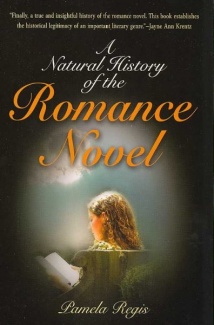
4As someone who writes and reads about comics, I’ve see a lot of criticism practiced from the stance of defensive crouch. So Pamela Regis’ Natural History of the Romance Novel was, depressingly, familiar.

Regis’ position is certainly understandable. Romance novels are even more loathed than comics. As Regis says, academic discussion of romance has traditionally presented the romance genre as corporate crap and romance readers as deluded fools. There are almost never mainstream reviews or discussion of romance, even though (as Regis says) the genre is more popular than ayn other; 55.9% of mass market paperbacks were romance novels in 1999.

Regis stated goal is to confront and refute the prejudice against romance novels. The book is meant to show that “the romance novel contains serious ideas” (contra literay critics) and that it is “not about woman’s bondage” (contra feminist critics) but “about women’s freedom.”

Regis uses two main arguments here. First, she says that the happy endings of romance novels do not erase or trap the heroine, because marriage and happy endings are freeing, not constricting. Second, she argues that the romance novel has a long-standing, stable form, and that current romance novels are the direct heirs of classic, canonical works by Austen, Trollope,and Forster.

The first of these arguments is unconvincing. Regis argues that heroines in romance novels overcomes barriers to union with the hero. “Heroines are not extinguished,” she enthuses, “they are freed. Readers are not bound by the form; they rejoice because they are in love with freedom.” But if the choice is always the same choice, how is that freedom? Of course the novels present passionate monogamy as joyful. But critics like Janice Radway and Tania Modleski point out, with some justice, that monogamy and marriage, in real life are not always joyful, and that marriage as an institution is often constricting for women. They question whether the constant insistence that joy comes only with heterosexual marriage is actually liberating, or whether, instead, it might be in some ways a limiting failure of imagination. In Pamela, for example, which Regis sees as the earliest romance, is it really a happy ending when the heroine ends up marrying a rich asshole who has spent much of the novel attempting to rape her? Regis says that romance readers can tell rape in fiction from rape in real life, which I’m sure is true — but if fiction doesn’t influence real life at all, what’s all this about romance novels being freeing?

Regis’ second argument — that books like Pamela and Pride and Prejudice are romances — is much stronger, and in many ways does the work for romance that she wants it to. If Pride and Prejudice and A Room With a View are romance novels, after all, then most people would agree that romance novels can be great literature. Indeed, Pride and Prejudice and Jane Eyre are significantly more canonical than just about anything that mystery genre or sci-fi has to offer.

The problem is that Regis tries to prove the older works are romances by arguing that romance has a single structure, defined by eight narrative elements. Pam Rosenthal summarized these as follows:

definition of society (“always corrupt, that the romance novel will reform”); the meeting between the heroine and hero; their attraction; the barrier to that attraction; their declaration that they love each other; point of ritual death; recognition that fells the barrier; and betrothal.

The definition tself works as well as these things can be expected to (though I’ll talk a bit more about this later.) But once having established the rubric, it tends to put a straight-jacket on the rest of the discussion. Most of Regis’ book is given over to book summaries showing that the plots fit Regis’ categories. First classic works are discussed, and they fit — and then modern works are discussed, and they fit. But the fact that they fit doesn’t necessarily mean that they’re any good. Nor does Regis’ repeated assertions that Nora Roberts or Janet Dailey are masterful creators convince me that they are. On the contrary, Dailey’s books sound wretched, as do Jayne Anne Krentz’s. Perhaps they have some historical interest (Dailey was one of the first important authors to use American and Western settings) but Regis certainly doesn’t make the case for any merit beyond that.

In fact, the insistence on defining romance by eight narrative elements does the exact opposite of what Regis claims she wants to do. Rather than making romance seem serious, it makes it appear rote and formulaic. If the best you can say for someone like Dailey is that she knows the form and uses it, then why should anyone care about her? Even Austen and Forster and Bronte seem to wilt under the faint praise. They all filled in the blanks skillfully? Whoopee.

Regis’ difficulty is that she wants to defend all romance. She is fighting for the honor of romance as a genre, or as a whole. She never, once, in the entire book, admits that any single romance, anywhere, might be formulaic, or badly written. She acknowledges that the Sheik is racist only in order to dismiss it rather than (for example) to think about how the “dangerous man” fantasies in so many romance novels indebted to the Sheik might also be touched by class and racial stereotypes, or to talk about how white women’s liberation so often seems to be symbolically assured by association with non-white people.

I’m not saying all romances are evil crap. I don’t think all romances are evil crap. But many romances are crap, and it seems like you need to acknowledge that somewhere if you’re going to make the case that some romances are good. And one important way to start thinking about romances as various is, I think, to chuck the formula. Yes, many romances can be made to fit into Regis’ pattern. But then, many can’t. Wuthering Heights, Anna Karenina and Gone With the Wind are books that are very often discussed as romance novels, and which don’t fit Regis’ pattern in important respects.Regis talks about Gone With the Wind specifically, saying that readers who identify it as a romance are “misreading”; that they’re substituting in a happy ending based on their familiarity with the genre. In other words, Regis suggests that romance readers are so wedded to their narratives that their basic reading comprehension suffers. This is supposed to be a defense of romance fans how, exactly?

Why not, instead, accept that lots of romance readers see Gone With the Wind as a romance — which means, maybe, that romance novels don’t have to conform to a single formula? Similarly, Trollope’s most famous romance, between Lily Dale and Johnny Eames, didn’t end in a relationship — which was (as Trollope astutely noted) precisely why it was so famous and successful. Villette almost, almost consummates its romance, only to end in tragedy. And, for that matter, A Room With a View, which Regis sees as a romance with a happy ending, has an afterword which (as Kailyn Kent has noted) refuses and refutes the formula. Is A Room With a View not a romance if you include the afterword? Or, possibly, is there more room in romance than Regis’ formula allows?

Though Regis is reluctant to admit it, romance novels have been commodified and rationalized since the days of Forster and Trollope; the standard endings are, I think, more insisted upon. And yet, you can see leeway still. In Jennifer Crusie’s Bet Me, most of the characters get married off, but at least one, Liza, remains a serial dater, too restless to settle down, and happy enough in that restlessness. Ian McEwan’s Atonement, which is certainly devastatingly romantic, gets much of its power from its commitment to, and interruption of, the romance narrative as a narrative — by both giving and withholding the happy ending. I read Atonement like three times in a couple of weeks and cried every one. If that’s not a romance novel, I don’t know what is.

This isn’t to say that only books that refuse the romance ending to some degree can be great novels. But it is to say that the possibility of resistance seems to me central to the possibility of freedom, and even to the possibility of variety. Maybe, rather than saying that romance novels bind women, or that romance novels free women, it might be better to think of romance novels as fascinated by, or concerned with, the issues of autonomy and love. Some writers may handle those themes thoughtfully, others not so much. But all romance novels don’t speak with one voice, any more than all women do.

Utilitarian Review 12/28/13

On HU

Featured Archive Post: Tom Crippen with a gallery of Robert Binks’ Christmas cards.

Me on sadism and Jess Franco’s Sinister Eyes of Dr. Orloff.

Kailyn Kent and Osvaldo Oyola on the X-Men as assimilationist melodrama.

Bert Stabler on teaching cartoons and failing to teach cartoons.

Chris Gavaler on Jesus Christ vs. Superman.

Best albums of 2013.

Superheroes are about fascism but don’t necessarily promote fascism.

Who gains from a lack of diversity in sci-fi?
 
Utilitarians Everywhere

At Salon I write about:

why Love Actually is no good and you should read a romance novel instead.

22 great duets.

At Splice Today I write about:

arcade games and cyborg nostalgia.

pajama boy and anti-semitism

Also I participated in the 2013 Splice Today best music poll.
 
Other Links

Rachel Edidin on Scott Lobdell’s weak apology for sexually harassing Mari Naomi onstage during a comics panel. Brigid Alverson also has a good post about the issues involved.

Alyssa Rosenberg on the Duck Dynasty mess.

Osvaldo Oyola on Oglaf, the fantasy sex comic.

Amazon cracks down on monster porn.

Carolina D. on Her and disembodied femininity.